David G. Roskies - Böcker
Visar alla böcker från författaren David G. Roskies. Handla med fri frakt och snabb leverans.
7 produkter
7 produkter
310 kr
Skickas inom 10-15 vardagar
"Roskies has illuminated a path to further self-understanding of who Jews are and the type of bridges used to reach a usable past." —Lifestyles Magazine"[The author has] an exceptional gift for historical reconnection . . . The force of the shtetl, if not its romance, remains very much within him." —Irving Louis Horowitz, Congress Monthly" . . . fine new volume of essays . . . " —David Singer, Commentary"These studies, each a gem unto itself, together reveal how Jews cope with loss and catastrophe and illustrate that it is exactly by coping with loss and tragedy that Jews create a usable past and in, in the process, define their present and shape their future." —ChoiceAfter redrawing the map of modern Jewish memory, David G. Roskies takes the reader on a grand tour of major memory sites, each of which is built upon foundations of rebellion, rupture, and loss. Among them: chronicles of catastrophe from the Warsaw ghetto; a gallery of rabbis and zaddikim who are really rebels in disguise; a failed revolution recast into an Honor Row of magnificent tombstones; and a Holy Land where the search for a sacred space is led by those least likely ever to find it. The creativity with which Jews have coped with loss and catastrophe in modern times is richly revealed in this lively account.
498 kr
Skickas inom 5-8 vardagar
This volume presents The Dybbuk, S. Ansky's well-known drama of mystical passion and demonic possession, along with little-known works of his autobiographical and fantastical prose fiction and an excerpt from his four-volume chronicle of the Eastern Front in the First World War, The Destruction of Galacia.
381 kr
Skickas inom 11-20 vardagar
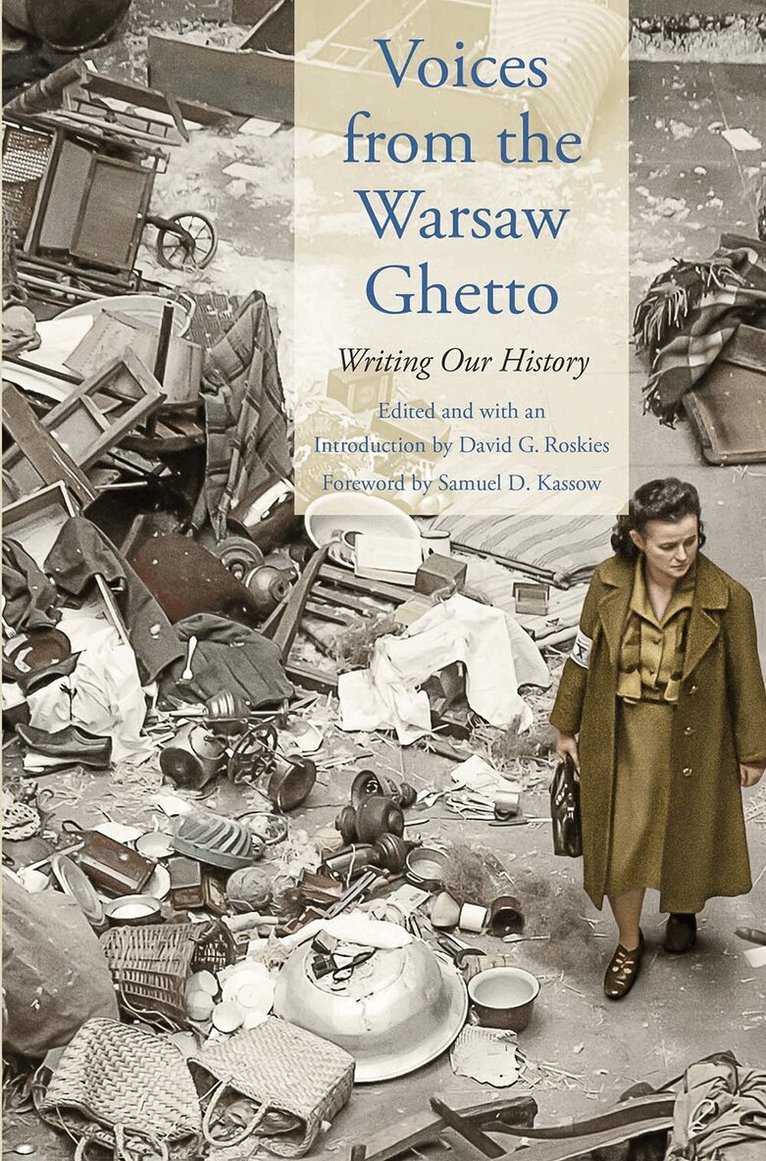
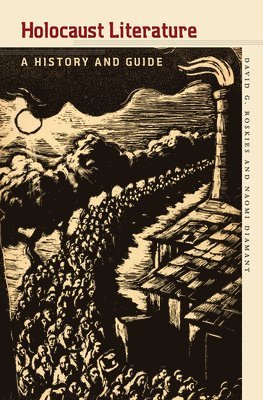
The powerful writings and art of Jews living in the Warsaw GhettoHidden in metal containers and buried underground during World War II, these works from the Warsaw Ghetto record the Holocaust from the perspective of its first interpreters, the victims themselves. Gathered clandestinely by an underground ghetto collective called Oyneg Shabes, the collection of reportage, diaries, prose, artwork, poems, jokes, and sermons captures the heroism, tragedy, humor, and social dynamics of the ghetto. Miraculously surviving the devastation of war, this extraordinary archive encompasses a vast range of voices—young and old, men and women, the pious and the secular, optimists and pessimists—and chronicles different perspectives on the topics of the day while also preserving rapidly endangered cultural traditions. Described by David G. Roskies as “a civilization responding to its own destruction,” these texts tell the story of the Warsaw Ghetto in real time, against time, and for all time.
348 kr
Skickas inom 10-15 vardagar
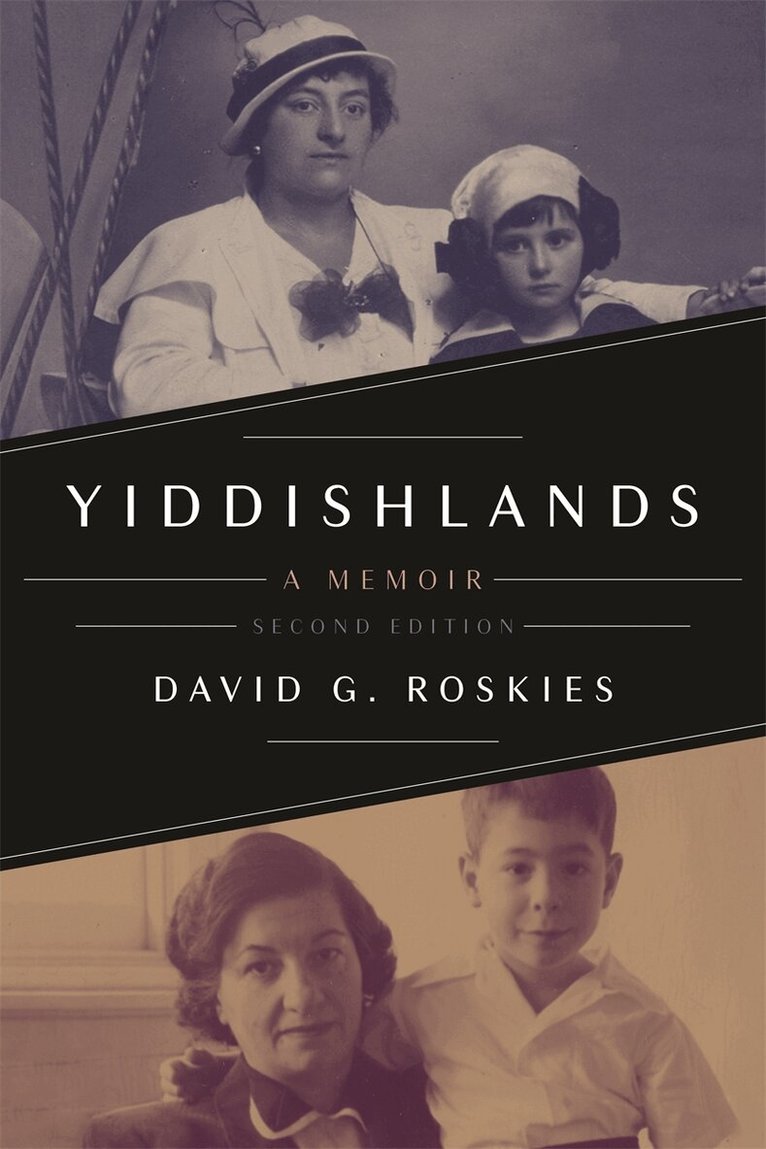
A rich, sweeping memoir by David G. Roskies, Yiddishlands proceeds from the premise that Yiddish culture is spread out among many different people and geographic areas and transmitted through story, song, study, and the family. Roskies leads readers through Yiddishlands old and new by revisiting his personal and professional experiences and retelling his remarkable family saga in a series of lively, irreverent, and interwoven stories. Beginning with a flashback to his grandmother’s storybook wedding in 1878, Yiddishlands brings to life the major debates, struggles, and triumphs of the modern Yiddish experience, and provides readers with memorable portraits of its great writers, cultural leaders, and educators.Roskies’s story centers around Vilna, Lithuania, where his mother, Masha, was born in 1906 and where her mother, Fradl Matz, ran the legendary Matz Press, a publishing house that distributed prayer books, Bibles, and popular Yiddish literature. After falling in love with Vilna’s cabaret culture, an older man, and finally a fellow student with elbow patches on his jacket, Masha and her young family are forced to flee Europe for Montreal, via Lisbon and New York. It is in Montreal that Roskies, Masha’s youngest child, comes of age, entranced by the larger-than-life stories of his mother and the writers, artists, and performers of her social circle. Roskies recalls his own intellectual odyssey as a Yiddish scholar; his life in the original Havurah religious commune in Somerville, Massachusetts, in the 1970s; his struggle with the notion of aliyah while studying in Israel; his visit to Russia at the height of the Soviet Jewry movement; and his confrontation with his parents’ memories in a bittersweet pilgrimage to Poland. Along the way, readers of Yiddishlands meet such prominent figures as Isaac Bashevis Singer, Melekh Ravitch, Itsik Manger, Avrom Sutzkever, Esther Markish, and Rachel Korn.With Yiddishlands, readers take a whirlwind tour of modern Yiddish culture, from its cabarets and literary salons to its fierce ideological rivalries and colorful personalities. Roskies’s memoir will be essential reading for students of the recent Jewish past and of the living Yiddish present.
329 kr
Skickas inom 7-10 vardagar
This lively and irreverent memoir explores the settings where Yiddish—a language of song, rebellion, and eternal longing—has thrived: in the cabaret and café, the kitchen and classroom, the literary salon and mystical commune, the partisan brigade and on pilgrimage to Poland. Inspired by his mother's recitations of their family saga in his youth, author David Roskies uncovers a tale of survival, intrigue, sacrifice, and divided loyalties that began over 4,000 miles away and two generations ago. A careful reconstruction of the details of his parents' escape from Europe at the outbreak of the Second World War is juxtaposed with his personal odyssey in the postwar center of Yiddish culture that was Montreal. Roskies embarks on a search for other speakers of his mother tongue with very different stories to tell, which takes him on a journey through the upheavals of 1960s America, the struggle for Soviet Jewry, the Six-Day War and Yom Kippur War, the fall of the Iron Curtain, and the revival of Jewish life here, there, and everywhere. Along the way, he encounters great Yiddish poets and their widows, survivors of the Holocaust, artists, actors, scholars, and teachers. Yiddishlands is essential reading for students of the recent Jewish past and the living Yiddish present.
143 kr
Tillfälligt slut
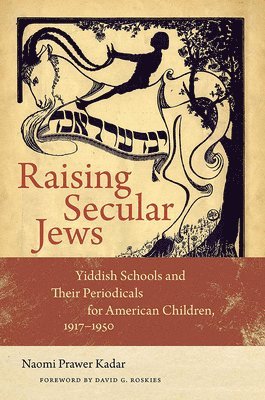
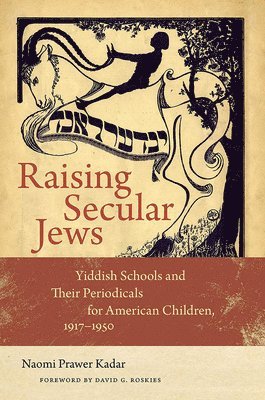
Raising Secular Jews
Yiddish Schools and Their Periodicals for American Children, 1917–1950
Häftad, Engelska, 2016
284 kr
Skickas inom 7-10 vardagar
This unique literary study of Yiddish children’s periodicals casts new light on secular Yiddish schools in America in the first half of the twentieth century. Rejecting the traditional religious education of the Talmud Torahs and congregational schools, these Yiddish schools chose Yiddish itself as the primary conduit of Jewish identity and culture. Four Yiddish school networks emerged, which despite their political and ideological differences were all committed to propagating the Yiddish language, supporting social justice, and preparing their students for participation in both Jewish and American culture. Focusing on the Yiddish children’s periodicals produced by the Labor Zionist Farband, the secular Sholem Aleichem schools, the socialist Workmen’s Circle, and the Ordn schools of the Communist-aligned International Workers Order, Naomi Kadar shows how secular immigrant Jews sought to pass on their identity and values as they prepared their youth to become full-fledged Americans.