David Gil – författare
Visar alla böcker från författaren David Gil. Handla med fri frakt och snabb leverans.
9 produkter
9 produkter
E-bok
PDF, Engelska, 20058 579 kr
Läs direkt efter köp
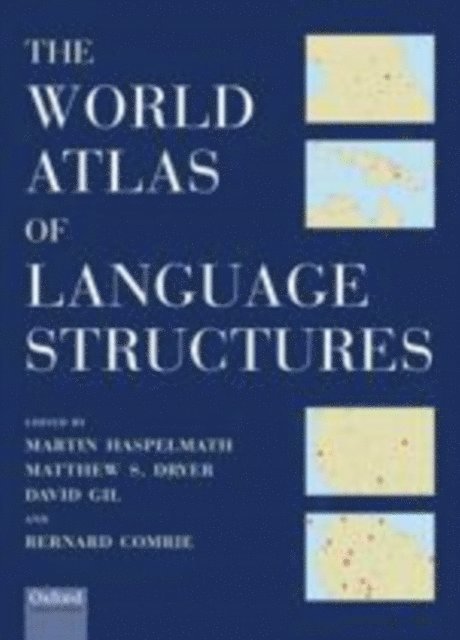
The World Atlas of Language Structures is a book and CD combination displaying the structural properties of the world's languages. 142 world maps and numerous regional maps - all in colour - display the geographical distribution of features of pronunciation and grammar, such as number of vowels, tone systems, gender, plurals, tense, word order, and body part terminology. Each world map shows an average of 400 languages and is accompanied by a fully referenced description of the structural feature in question. The CD provides an interactive electronic version of the database which allows the reader to zoom in on or customize the maps, to display bibliographical sources, and to establish correlations between features. The book and the CD together provide an indispensable source of information for linguists and others seeking to understand human languages. The Atlas will be especially valuable for linguistic typologists, grammatical theorists, historical and comparative linguists, and for those studying a region such as Africa, Southeast Asia, North America, Australia, and Europe. It will also interest anthropologists and geographers. More than fifty authors from many different countries have collaborated to produce a work that sets new standards in comparative linguistics. No institution involved in language research can afford to be without it.
E-bok
PDF, Engelska, 2009535 kr
Läs direkt efter köp
This book presents a challenge to the widely-held assumption that human languages are both similar and constant in their degree of complexity. For a hundred years or more the universal equality of languages has been a tenet of faith among most anthropologists and linguists. It has been frequently advanced as a corrective to the idea that some languages are at a later stage of evolution than others. It also appears to be an inevitable outcome of one of the central axioms of generative linguistic theory: that the mental architecture of language is fixed and is thus identical in all languages and that whereas genes evolve languages do not. Language Complexity as an Evolving Variable reopens the debate. Geoffrey Sampson''s introductory chapter re-examines and clarifies the notion and theoretical importance of complexity in language, linguistics, cognitive science, and evolution. Eighteen distinguished scholars from all over the world then look at evidence gleaned from their own research in order to reconsider whether languages do or do not exhibit the same degrees and kinds of complexity. They examine data from a wide range of times and places. They consider the links between linguistic structure and social complexity and relate their findings to the causes and processes of language change. Their arguments are frequently controversial and provocative; their conclusions add up to an important challenge to conventional ideas about the nature of language. The authors write readably and accessibly with no recourse to unnecessary jargon. This fascinating book will appeal to all those interested in the interrelations between human nature, culture, and language.
Del 13 - Studies in the Evolution of Language
Language Complexity as an Evolving Variable
Inbunden, Engelska, 2009
825 kr
Skickas inom 5-8 vardagar
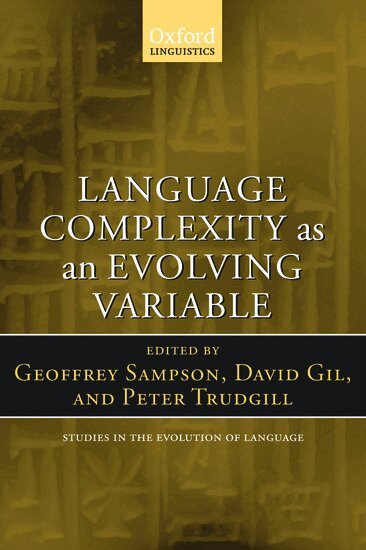
This book presents a challenge to the widely-held assumption that human languages are both similar and constant in their degree of complexity. For a hundred years or more the universal equality of languages has been a tenet of faith among most anthropologists and linguists. It has been frequently advanced as a corrective to the idea that some languages are at a later stage of evolution than others. It also appears to be an inevitable outcome of one of the central axioms of generative linguistic theory: that the mental architecture of language is fixed and is thus identical in all languages and that whereas genes evolve languages do not. Language Complexity as an Evolving Variable reopens the debate. Geoffrey Sampson's introductory chapter re-examines and clarifies the notion and theoretical importance of complexity in language, linguistics, cognitive science, and evolution. Eighteen distinguished scholars from all over the world then look at evidence gleaned from their own research in order to reconsider whether languages do or do not exhibit the same degrees and kinds of complexity. They examine data from a wide range of times and places. They consider the links between linguistic structure and social complexity and relate their findings to the causes and processes of language change. Their arguments are frequently controversial and provocative; their conclusions add up to an important challenge to conventional ideas about the nature of language. The authors write readably and accessibly with no recourse to unnecessary jargon. This fascinating book will appeal to all those interested in the interrelations between human nature, culture, and language.
Del 13 - Studies in the Evolution of Language
Language Complexity as an Evolving Variable
Häftad, Engelska, 2009
754 kr
Skickas inom 7-10 vardagar
This book presents a challenge to the widely-held assumption that human languages are both similar and constant in their degree of complexity. For a hundred years or more the universal equality of languages has been a tenet of faith among most anthropologists and linguists. It has been frequently advanced as a corrective to the idea that some languages are at a later stage of evolution than others. It also appears to be an inevitable outcome of one of the central axioms of generative linguistic theory: that the mental architecture of language is fixed and is thus identical in all languages and that whereas genes evolve languages do not. Language Complexity as an Evolving Variable reopens the debate. Geoffrey Sampson's introductory chapter re-examines and clarifies the notion and theoretical importance of complexity in language, linguistics, cognitive science, and evolution. Eighteen distinguished scholars from all over the world then look at evidence gleaned from their own research in order to reconsider whether languages do or do not exhibit the same degrees and kinds of complexity. They examine data from a wide range of times and places. They consider the links between linguistic structure and social complexity and relate their findings to the causes and processes of language change. Their arguments are frequently controversial and provocative; their conclusions add up to an important challenge to conventional ideas about the nature of language. The authors write readably and accessibly with no recourse to unnecessary jargon. This fascinating book will appeal to all those interested in the interrelations between human nature, culture, and language.
Inbunden, Engelska, 2013
1 329 kr
Skickas inom 5-8 vardagar
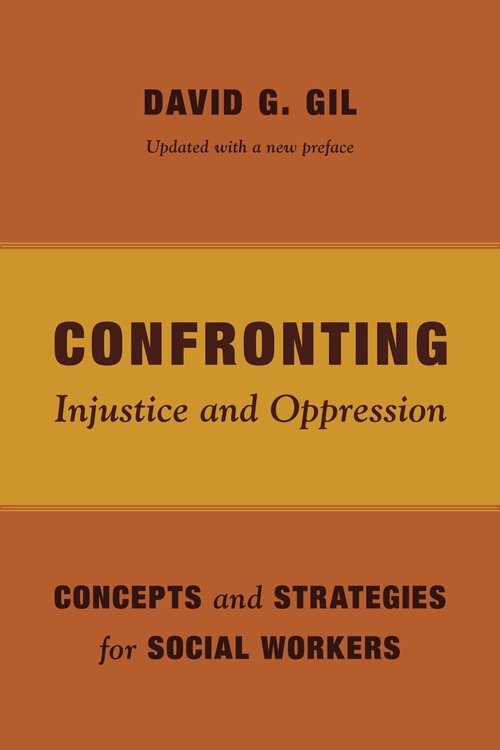
More urgent than ever, David G. Gil's guiding text gives social workers the knowledge and confidence they need to change unjust realities. Clarifying the meaning, sources, and dynamics of injustice, exploitation, and oppression and certifying the place of the social worker in combating these conditions, Gil promotes social-change strategies rooted in the nonviolent philosophies of Mahatma Gandhi and Martin Luther King Jr. He shares suggestions for transition policies intended to alleviate poverty, unemployment, and discrimination and examines modes of radical social work practice compatible with the UN Universal Declaration of Human Rights and President Roosevelt's proposed "Economic Bill of Rights." For this updated edition, Gil considers the factors driving two crucial developments since his volume's initial publication: the Middle East's Arab Spring and the U.S. Occupy Wall Street movement.
Häftad, Engelska, 2013
340 kr
Skickas inom 5-8 vardagar
More urgent than ever, David G. Gil's guiding text gives social workers the knowledge and confidence they need to change unjust realities. Clarifying the meaning, sources, and dynamics of injustice, exploitation, and oppression and certifying the place of the social worker in combating these conditions, Gil promotes social-change strategies rooted in the nonviolent philosophies of Mahatma Gandhi and Martin Luther King Jr. He shares suggestions for transition policies intended to alleviate poverty, unemployment, and discrimination and examines modes of radical social work practice compatible with the UN Universal Declaration of Human Rights and President Roosevelt's proposed "Economic Bill of Rights." For this updated edition, Gil considers the factors driving two crucial developments since his volume's initial publication: the Middle East's Arab Spring and the U.S. Occupy Wall Street movement.
Häftad, Spanska, 2013
164 kr
Skickas inom 5-8 vardagar
Inbunden, Spanska, 2013
356 kr
Skickas inom 5-8 vardagar
E-bok
Spanska, 2025140 kr
Läs direkt efter köp
Candy es un destilado de la cocina dulce creada en los restaurantes de elBarri a largo de toda una década (2011-2021). La última fase de su confección coincidió con la clausura de elBarri: ese irrepetible parque de atracciones gastronómico del que formaban parte Tickets, Bodega 1900, Hoja Santa, Pakta y Enigma. Para Albert Adrià y David Gil —alma mater y jefe de pastelería de elBarri, respectivamente—, este libro representa un alto en mitad de sus carreras, una pausa que ha traído consigo un bien de incalculable valor: la oportunidad de volver la vista atrás, de evaluar los éxitos alcanzados y replantearse las próximas metas.Hemos querido que Candy se exprese de dos maneras distintas: mediante un libro con las fotografías de los postres, acompañadas de una breve explicación de su concepto para que las imágenes hablen por sí mismas; y mediante un recetario, en el cual se explica de forma detallada la elaboración de cada plato.