David J. Bailey - Böcker
Visar alla böcker från författaren David J. Bailey. Handla med fri frakt och snabb leverans.
12 produkter
12 produkter
1 362 kr
Skickas inom 10-15 vardagar
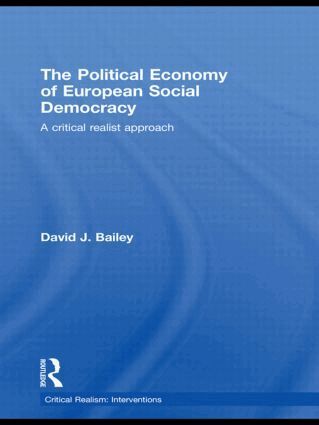
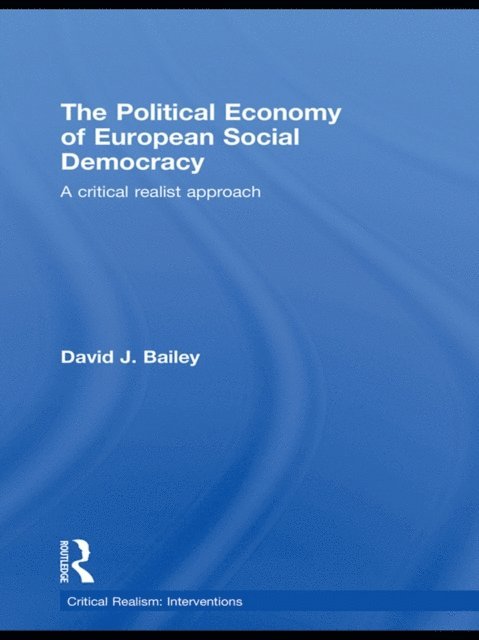
This book takes an in-depth look into recent developments in European social democracy. It begins by highlighting the somewhat paradoxical turn by a number of social democratic parties towards enhanced support for European integration, a move that has occurred despite the apparently ‘neoliberal’ direction of much of EU policy-output. A critical realist method is adopted, informed by both Marxist and anarchist critiques of social democratic parties, to argue that we can view this paradoxical development as resulting from the inherently unstable representation of constituents’ demands for decommodification, a process central to traditional social democratic parties. In making this argument, the book traces the transformation from ‘traditional’ to ‘new’ (or ‘third way’) social democratic parties in the UK, Sweden, France, Italy and Spain. It also outlines some of the most important developments in social democratic policy-making at the European level. The book therefore provides an in-depth, theoretically-original, analytical narrative of the key empirical developments to affect contemporary social democratic parties in recent years. In highlighting some of the contradictions inherent to both ‘traditional’ and ‘new’ social democratic parties, the book does much to suggest some of the reasons for their continued decline over the past three decades.David Bailey completed his PhD at the London School of Economics, and currently teaches at the University of Birmingham. His research focuses on social democratic parties and European integration. He has published articles in the Journal of Common Market Studies, and Comparative European Politics.
441 kr
Skickas inom 10-15 vardagar
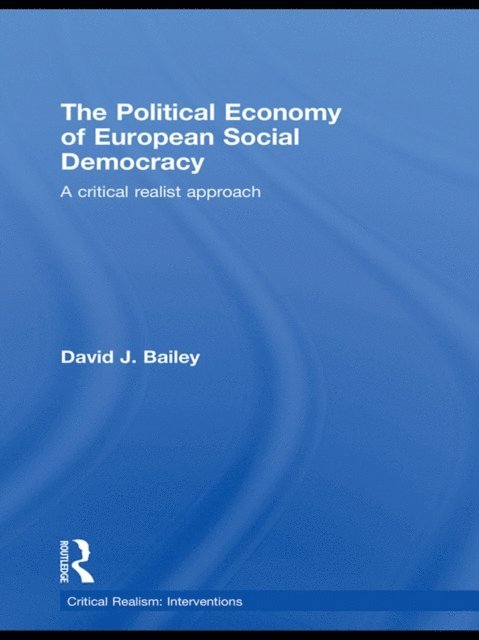
This book takes an in-depth look into recent developments in European social democracy. It begins by highlighting the somewhat paradoxical turn by a number of social democratic parties towards enhanced support for European integration, a move that has occurred despite the apparently ‘neoliberal’ direction of much of EU policy-output. A critical realist method is adopted, informed by both Marxist and anarchist critiques of social democratic parties, to argue that we can view this paradoxical development as resulting from the inherently unstable representation of constituents’ demands for decommodification, a process central to traditional social democratic parties. In making this argument, the book traces the transformation from ‘traditional’ to ‘new’ (or ‘third way’) social democratic parties in the UK, Sweden, France, Italy and Spain. It also outlines some of the most important developments in social democratic policy-making at the European level. The book therefore provides an in-depth, theoretically-original, analytical narrative of the key empirical developments to affect contemporary social democratic parties in recent years. In highlighting some of the contradictions inherent to both ‘traditional’ and ‘new’ social democratic parties, the book does much to suggest some of the reasons for their continued decline over the past three decades.David Bailey completed his PhD at the London School of Economics, and currently teaches at the University of Birmingham. His research focuses on social democratic parties and European integration. He has published articles in the Journal of Common Market Studies, and Comparative European Politics.
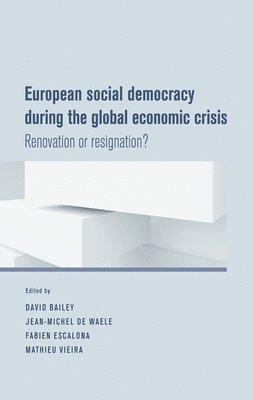
European Social Democracy During the Global Economic Crisis
Renovation or Resignation?
Inbunden, Engelska, 2014
1 130 kr
Skickas inom 5-8 vardagar
This book makes an important contribution to the existing literature on European social democracy in the wake of the 2008 financial crash and ensuing recession. It assesses how social democratic parties have responded, at the national as well as at the European Union level. A wide range of leading political scientists provide the reader with an in-depth understanding of the prospects for social democracy in the midst of an unprecedented crisis for neoliberalism. The book benefits from an analysis of social democratic parties’ experiences in 6 different countries – the UK, Sweden, Germany, France, Spain and Greece – along with a number of chapters on the fate of social democracy in the institutions of the EU.
459 kr
Tillfälligt slut
610 (County of Chester) Squadron was formed in February 1936 as a bomber squadron. With personnel recruited from the local area for the expanding Auxiliary Air Force, these `weekend fliers' were moulded into a cohesive fighting unit at Hooton Park, Cheshire. However, as the Second World War loomed, 610 Squadron transferred to Fighter Command, ultimately operating the iconic Supermarine Spitfire. Flying from Gravesend, 610 Squadron suffered seven pilots killed and one wounded whilst desperately protecting the Dunkirk evacuation. The Squadron then played a key role in the Battle of Britain, claiming a heavy toll on the Luftwaffe whilst operating from Biggin Hill and Hawkinge. After further tragic losses, 610's veterans moved to Acklington, Northumberland, to train replacement pilots. Despite the famous photographs of its men and aircraft during 1940, 610's valiant history remains largely unknown. This detailed book recounts their heroic story for the first time, combining the Operations Record Book with Combat Reports, pilots' Log Books, ground crew and relatives' testimonies, plus a rare interview with Wing Commander Brian Smith, a founding Squadron member who fought during 1940. Finally, this fascinating story is brought to life with many unpublished photographs from the Squadron's Association, to recognise 610 Squadron's brave sacrifice.
Del 48 - Studies in Hispanic and Lusophone Cultures
Naturalism Against Nature
Kinship and Degeneracy in Fin-de-siècle Portugal and Brazil
Inbunden, Engelska, 2020
1 255 kr
Skickas
Del 48 - Studies in Hispanic and Lusophone Cultures
Naturalism Against Nature
Kinship and Degeneracy in Fin-de-siècle Portugal and Brazil
Häftad, Engelska, 2022
206 kr
Skickas inom 5-8 vardagar
1 572 kr
Skickas inom 10-15 vardagar
How successful are social movements and left parties at achieving social and political change? How, if at all, can movements and parties work together to challenge existing hierarchies? Is the political left witnessing a revival in contemporary politics? This book highlights some of the key achievements of left parties and protest movements in their goal of challenging different types of inequality – and considers the ways in which their challenge to authority and power could be intensified. It combines new theoretical ideas with rich empirical detail on the debates and concrete activities undertaken by left parties and protest movements over a broad historical period, from the early European labour movement to the recent anti-austerity global protests. The book will offer unique insight into the broad history and theory of emancipatory politics; as well as making an important contribution to ongoing debates between left-leaning academics, researchers and activists.
568 kr
Skickas inom 10-15 vardagar
How successful are social movements and left parties at achieving social and political change? How, if at all, can movements and parties work together to challenge existing hierarchies? Is the political left witnessing a revival in contemporary politics? This book highlights some of the key achievements of left parties and protest movements in their goal of challenging different types of inequality – and considers the ways in which their challenge to authority and power could be intensified. It combines new theoretical ideas with rich empirical detail on the debates and concrete activities undertaken by left parties and protest movements over a broad historical period, from the early European labour movement to the recent anti-austerity global protests. The book will offer unique insight into the broad history and theory of emancipatory politics; as well as making an important contribution to ongoing debates between left-leaning academics, researchers and activists.
3 397 kr
Skickas inom 10-15 vardagar
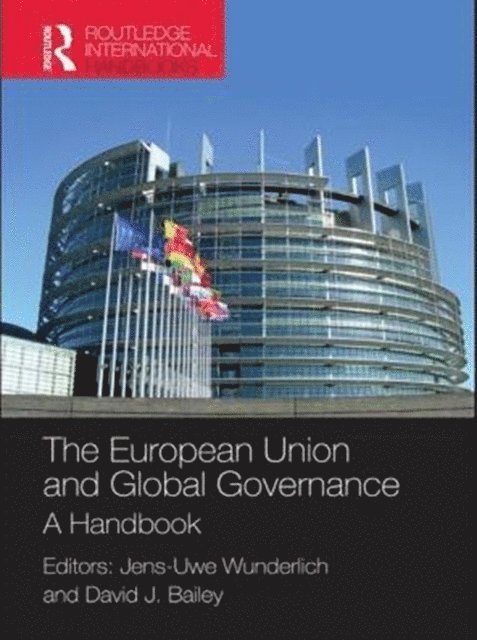
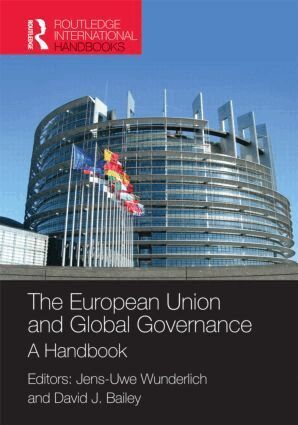
The role of the European Union in global politics has been of growing interest over the past decade. The EU is a key player in global institutions such as the World Trade Organization (WTO) and NATO. It continues to construct an emerging identity and project its values and interests throughout contemporary international relations. The capacity of the EU to both formulate and realise its goals, however, remains contested. Some scholars claim the EU’s `soft power’ attitude rivals that of the USA’s `hard power’ approach to international relations. Others view the EU as insufficiently able to produce a co-ordinated position to project upon global politics. Regardless of the position taken within this debate, the EU’s relationship with its external partners has an increasingly important impact upon economic, political and security concerns on an international level. Trade negotiations, military interventions, democracy promotion, international development and responses to the global economic crisis have all witnessed the EU playing a central role. This has seen the EU become both a major force in contemporary institutions of global governance and a template for supranational governance that might influence other attempts to construct regional and global institutions. This volume brings together a collection of leading EU scholars to provide a state-of-the-art overview covering these and other debates relating to the EU’s role in contemporary global governance. The Handbook is divided into four main sections:Part I: European studies and global governance – provides an overview and critical assessment of the leading theoretical approaches through which the EU’s role in global governance has been addressed within the literature.Part II: Institutions – examines the role played by the key EU institutions in pursuing a role for the EU in contemporary international relations.Part III: Policy and issue areas – explores developments within particular policy sectors, assessing the different impact that the EU has had in different issue areas, including foreign and security policy, environmental policy, common commercial policy, the Common Agricultural Policy, development policy, accession policy, the Neighbourhood Policy and conflict transformation.Part IV: The global multilevel governance complex and the EU – focuses on the relationship between the EU and the institutions, regions and countries with which it forms a global multilevel governance complex, including chapters on the EU’s relationship with the WTO, United Nations, East Asia, Africa and the USA.The editors are Jens-Uwe Wunderlich (Aston University) and David J. Bailey (University of Birmingham). Jens-Uwe Wunderlich’s research and teaching focuses on international relations theory, European integration and globalization and on comparative regionalism; he has recently published Regionalism, Globalisation and International Order–Europe and Southeast Asia (Ashgate) and A Dictionary of Globalization (Routledge, 2007). David Bailey has published on trends in European governance in the Journal of European Public Policy, Comparative European Politics, and Journal of European Social Policy.
861 kr
Skickas inom 10-15 vardagar
The role of the European Union in global politics has been of growing interest over the past decade. The EU is a key player in global institutions such as the World Trade Organization (WTO) and NATO. It continues to construct an emerging identity and project its values and interests throughout contemporary international relations. The capacity of the EU to both formulate and realise its goals, however, remains contested. Some scholars claim the EU’s `soft power’ attitude rivals that of the USA’s `hard power’ approach to international relations. Others view the EU as insufficiently able to produce a co-ordinated position to project upon global politics. Regardless of the position taken within this debate, the EU’s relationship with its external partners has an increasingly important impact upon economic, political and security concerns on an international level. Trade negotiations, military interventions, democracy promotion, international development and responses to the global economic crisis have all witnessed the EU playing a central role. This has seen the EU become both a major force in contemporary institutions of global governance and a template for supranational governance that might influence other attempts to construct regional and global institutions. This volume brings together a collection of leading EU scholars to provide a state-of-the-art overview covering these and other debates relating to the EU’s role in contemporary global governance. The Handbook is divided into four main sections:Part I: European studies and global governance – provides an overview and critical assessment of the leading theoretical approaches through which the EU’s role in global governance has been addressed within the literature.Part II: Institutions – examines the role played by the key EU institutions in pursuing a role for the EU in contemporary international relations.Part III: Policy and issue areas – explores developments within particular policy sectors, assessing the different impact that the EU has had in different issue areas, including foreign and security policy, environmental policy, common commercial policy, the Common Agricultural Policy, development policy, accession policy, the Neighbourhood Policy and conflict transformation.Part IV: The global multilevel governance complex and the EU – focuses on the relationship between the EU and the institutions, regions and countries with which it forms a global multilevel governance complex, including chapters on the EU’s relationship with the WTO, United Nations, East Asia, Africa and the USA.The editors are Jens-Uwe Wunderlich (Aston University) and David J. Bailey (University of Birmingham). Jens-Uwe Wunderlich’s research and teaching focuses on international relations theory, European integration and globalization and on comparative regionalism; he has recently published Regionalism, Globalisation and International Order–Europe and Southeast Asia (Ashgate) and A Dictionary of Globalization (Routledge, 2007). David Bailey has published on trends in European governance in the Journal of European Public Policy, Comparative European Politics, and Journal of European Social Policy.
92 kr
Tillfälligt slut
266 kr
Skickas inom 5-8 vardagar