David Jacob Kramer – författare
Visar alla böcker från författaren . Handla med fri frakt och snabb leverans.
2 produkter
2 produkter
Inbunden, Engelska, 2023
478 kr
Skickas inom 3-6 vardagar
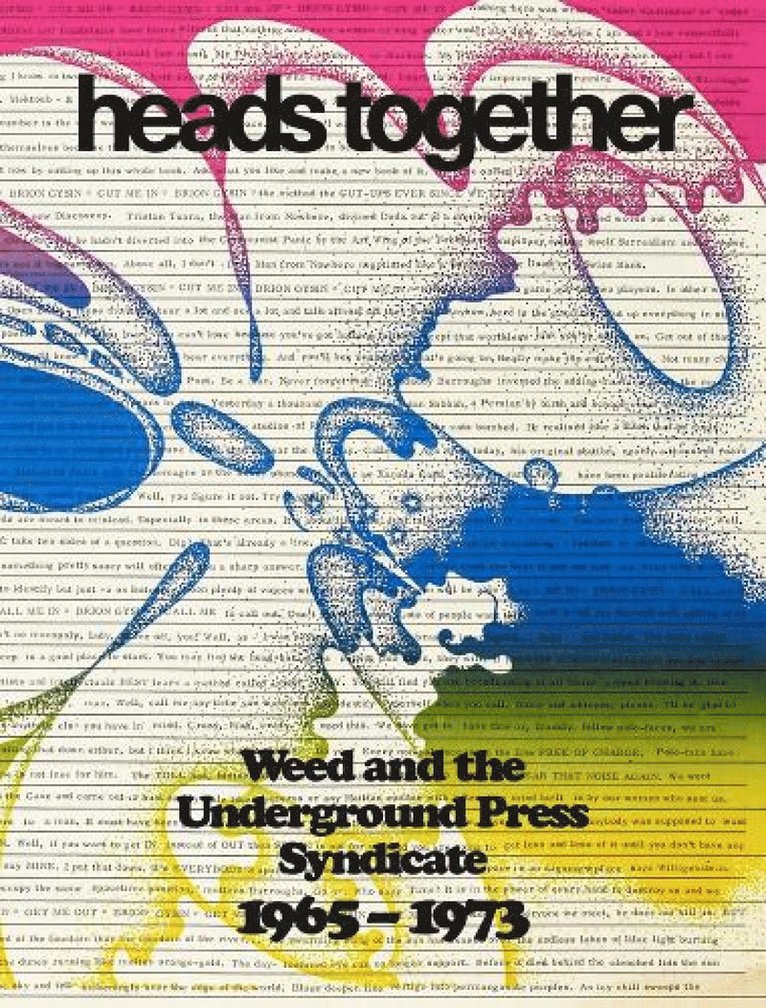
The youth uprising, now simply called “The Sixties,” was fed by one of the greatest booms in publishing history. The Underground Press Syndicate (UPS) began as a loose confederation of five papers in 1966, and within a few years swelled to over 500 across the world, reaching millions of readers. They “spread like weed,” said the UPS director, weed-dealer, and eventual founder of High Times, Tom Forcade. The metaphor was apt: the UPS spurred the legalization movement, and weed became its totem. Weed was so pervasive it became a helpful means for government agencies to crack down on the UPS. Weed came to emblematize activist groups, and added a touch of flair to the mastheads of UPS titles. Weed permeated UPS pages, with gaps in text crammed with weed-inspired “spot illustratios”. Heads Together collects these drawings, shining a light on lesser-known names in the stoner-art canon, and many who weren’t names at all, as no signature was attached. It also compiles guides for growing weed from the period that were treated like contraband by the CIA. Activist-oriented, psychedelic rolling papers are showcased too. As pot now fast-tracks toward legalization in the U. S. and beyond, its once incendiary status is brought into odd relief. Pot’s profiteers of the corporate market today do not reflect those who fought for legalization, or the Black and Latino populations strategically criminalized for pot well before hippies were targeted, and long after. The art in this book speaks to a time when pot was smoked with optimism, as something potentially good for society and people, capable of activating profound transformation in the face of corrupt and powerful forces.
Häftad, Engelska, 2026
800 kr
Skickas inom 3-6 vardagar
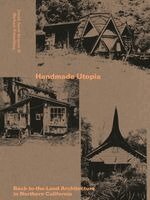
Half a century ago, young idealists dropped out of society and went “back to the land,” one of the largest urban-to-rural migrations in American history. Northern California became the movement’s epicenter, where utopian communes gave rise to radical, handbuilt, sometimes otherworldly homes. Handmade Utopia: Back-to-the-Land Architecture in Northern California traces those still committed to this way of life, capturing their buildings and the stories behind them at the tail end of a generation’s social experiment. Handmade Utopia travels through Northern California, along hidden dirt roads and into redwood forests, uncovering handmade homes concealed for decades. Schmelling’s photography documents these structures today, while Kramer’s oral histories with 38 back-to-the-landers recount how they came to be, complemented by archival materials, historical texts, and locally produced publications from the movement’s heyday. These pioneers taught themselves to farm, embraced alternative lifestyles, and developed architectural approaches that influenced broader building practices— through imaginative design, ecological materials, and energy efficiency. In pursuit of a different way of living, they rethought what a home could be. Only a few remained after the Summer of Love. Now in their seventies and eighties, they raise the question of what will remain. These homes were never constructed for their resale promise, anti-capitalistic to their foundations, and they are rapidly disappearing. Handmade Utopia presents them as artworks in their own right—captured before they are lost.