David L. Hull - Böcker
Visar alla böcker från författaren David L. Hull. Handla med fri frakt och snabb leverans.
8 produkter
8 produkter
1 067 kr
Skickas
The aim of this series is to bring together important recent writings in major areas of philosophical inquiry, selected from a variety of sources, mostly periodicals, which may not be conveniently available to the university student or the general reader. The editors of each volume contribute an introductory essay on the items chosen and on the questions with which they deal. A selective bibliography is appended as a guide to further reading. The philosophy of biology today is one of the most exciting areas in philosophical inquiry. Drawing on work of the past decade, this volume brings together articles from the philosophy, history, and sociology of science, as well as many branches of the biological sciences, to consider issues including the nature of evolutionary theory, biology and ethics, the challenge from religion, and the social implications of biology today (in particular the Human Genome Project). The 36 articles in this collection are divided into 10 parts, each with an introduction by the editors. Spanning issues from epistemology across to ethics, the volume delves into the latest theoretical controversies as well as burning questions of contemporary social importance. Throughout the volume an attempt is made to offer positions from different perspectives, so that the reader will be challenged as well as informed. The Philosophy of Biology will be essential and fascinating reading for students of philosophy and biology as well as the general reader with an interest in the natural sciences and evolution.
Science as a Process
An Evolutionary Account of the Social and Conceptual Development of Science
Häftad, Engelska, 1990
375 kr
Skickas inom 7-10 vardagar
"Legend is overdue for replacement, and an adequate replacement must attend to the process of science as carefully as Hull has done. I share his vision of a serious account of the social and intellectual dynamics of science that will avoid both the rosy blur of Legend and the facile charms of relativism. . . . Because of [Hull's] deep concern with the ways in which research is actually done, Science as a Process begins an important project in the study of science. It is one of a distinguished series of books, which Hull himself edits."—Philip Kitcher, Nature "In Science as a Process, [David Hull] argues that the tension between cooperation and competition is exactly what makes science so successful. . . . Hull takes an unusual approach to his subject. He applies the rules of evolution in nature to the evolution of science, arguing that the same kinds of forces responsible for shaping the rise and demise of species also act on the development of scientific ideas."—Natalie Angier, New York Times Book Review"By far the most professional and thorough case in favour of an evolutionary philosophy of science ever to have been made. It contains excellent short histories of evolutionary biology and of systematics (the science of classifying living things); an important and original account of modern systematic controversy; a counter-attack against the philosophical critics of evolutionary philosophy; social-psychological evidence, collected by Hull himself, to show that science does have the character demanded by his philosophy; and a philosophical analysis of evolution which is general enough to apply to both biological and historical change."—Mark Ridley, Times Literary Supplement"Hull is primarily interested in how social interactions within the scientific community can help or hinder the process by which new theories and techniques get accepted. . . . The claim that science is a process for selecting out the best new ideas is not a new one, but Hull tells us exactly how scientists go about it, and he is prepared to accept that at least to some extent, the social activities of the scientists promoting a new idea can affect its chances of being accepted."—Peter J. Bowler, Archives of Natural History "I have been doing philosophy of science now for twenty-five years, and whilst I would never have claimed that I knew everything, I felt that I had a really good handle on the nature of science, Again and again, Hull was able to show me just how incomplete my understanding was. . . . Moreover, [Science as a Process] is one of the most compulsively readable books that I have ever encountered."—Michael Ruse, Biology and Philosophy
3 726 kr
Skickas inom 7-10 vardagar
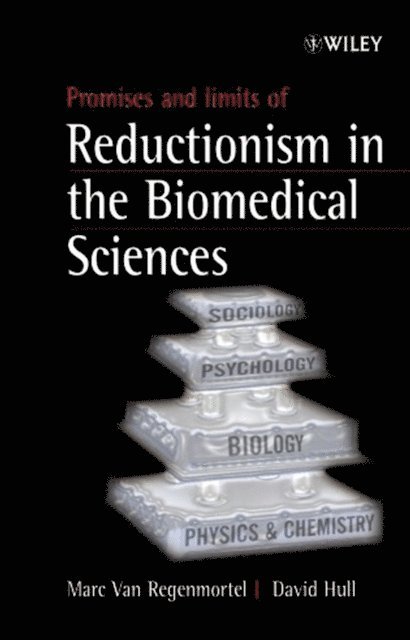
Reductionism as a scientific methodology has been extraordinarily successful in biology. However, recent developments in molecular biology have shown that reductionism is seriously inadequate in dealing with the mind-boggling complexity of integrated biological systems.This title presents an appropriate balance between science and philosophy and covers traditional philosophical treatments of reductionism as well as the benefits and shortcomings of reductionism in particular areas of science.Discussing the issue of reductionism in the practice of medicine it takes into account the holistic and integrative aspects that require the context of the patient in his biological and psychological entirety.The emerging picture is that what first seems like hopeless disagreements turn out to be differences in emphasis. Although genes play an important role in biology, the focus on genetics and genomics has often been misleading. The consensus view leads to pluralism: both reductionst methods and a more integrative approach to biological complexity are required, depending on the questions that are asked.* An even balance of contributions from scientists and philosophers of science - representing a unique interchange between both communities interested in reductionism
460 kr
Skickas inom 7-10 vardagar
The philosophy of biology is one of the most exciting new areas in the field of philosophy and one that is attracting much attention from working scientists. This Companion, edited by two of the founders of the field, includes newly commissioned essays by senior scholars and up-and-coming younger scholars who collectively examine the main areas of the subject - the nature of evolutionary theory, classification, teleology and function, ecology, and the problematic relationship between biology and religion, among other topics. Up-to-date and comprehensive in its coverage, this unique volume will be of interest not only to professional philosophers but also to students in the humanities and researchers in the life sciences and related areas of inquiry.
Science and Selection
Essays on Biological Evolution and the Philosophy of Science
Inbunden, Engelska, 2000
675 kr
Skickas inom 11-20 vardagar
One way to understand science is as a selection process. David Hull, one of the dominant figures in contemporary philosophy of science, sets out in this 2001 volume a general analysis of this selection process that applies equally to biological evolution, the reaction of the immune system to antigens, operant learning, and social and conceptual change in science. Hull aims to distinguish between those characteristics that are contingent features of selection and those that are essential. Science and Selection brings together many of David Hull's most important essays on selection (some never before published) in one accessible volume.
Science and Selection
Essays on Biological Evolution and the Philosophy of Science
Häftad, Engelska, 2000
435 kr
Skickas inom 7-10 vardagar
One way to understand science is as a selection process. David Hull, one of the dominant figures in contemporary philosophy of science, sets out in this 2001 volume a general analysis of this selection process that applies equally to biological evolution, the reaction of the immune system to antigens, operant learning, and social and conceptual change in science. Hull aims to distinguish between those characteristics that are contingent features of selection and those that are essential. Science and Selection brings together many of David Hull's most important essays on selection (some never before published) in one accessible volume.
1 311 kr
Skickas inom 7-10 vardagar
The philosophy of biology is one of the most exciting new areas in the field of philosophy and one that is attracting much attention from working scientists. This Companion, edited by two of the founders of the field, includes newly commissioned essays by senior scholars and up-and-coming younger scholars who collectively examine the main areas of the subject - the nature of evolutionary theory, classification, teleology and function, ecology, and the problematic relationship between biology and religion, among other topics. Up-to-date and comprehensive in its coverage, this unique volume will be of interest not only to professional philosophers but also to students in the humanities and researchers in the life sciences and related areas of inquiry.
Selection Theory and Social Construction
The Evolutionary Naturalistic Epistemology of Donald T. Campbell
Häftad, Engelska, 2001
382 kr
Tillfälligt slut
Top scholars examine the work of Donald T. Campbell, one of the first to emphasize the social structure of science.In his long career, Donald T. Campbell made important contributions to social psychology, anthropology, sociology, education, science studies, and epistemology. In this anthology, the authors concentrate on his epistemology, in particular his evolutionary, naturalistic epistemology. The four philosophers, two psychologists, a sociologist, and specialists in science studies and education discuss Campbell's contributions, explaining and criticizing them in a comprehensive way. Campbell and his ideas are treated in a strikingly new light-Campbell enters the new millennium.