David Lamb – författare
1 904 kr
Skickas inom 5-8 vardagar
1 632 kr
Läs direkt efter köp
70 kr
Läs direkt efter köp
71 kr
Läs direkt efter köp
1 688 kr
Skickas inom 10-15 vardagar
497 kr
Skickas inom 10-15 vardagar
1 408 kr
Skickas inom 10-15 vardagar
497 kr
Skickas inom 10-15 vardagar
1 478 kr
Skickas inom 10-15 vardagar
497 kr
Skickas inom 10-15 vardagar
289 kr
Skickas inom 3-6 vardagar
2 179 kr
Skickas inom 10-15 vardagar
848 kr
Skickas inom 10-15 vardagar
2 316 kr
Skickas inom 10-15 vardagar
721 kr
Skickas inom 10-15 vardagar
2 244 kr
Skickas inom 10-15 vardagar
568 kr
Läs direkt efter köp
Originally published in 1985, this book examines the concept of death against the background of dramatic changes in medical technology. The book argues that ‘brain death’ can be precisely defined and that a biological concept of death such as ‘brain death’ can be philosophically well-grounded. It examines traditional criteria for death and various formulations of the concept of death in both medical literature and philosophical texts. Definitions of ‘brain death’ – some of which have become statute law – are critically examined. The author also examines ethical and social policy questions which arise out of attempts to redefine the boundaries of life.
568 kr
Läs direkt efter köp
Originally published in 1985, this book examines the concept of death against the background of dramatic changes in medical technology. The book argues that ‘brain death’ can be precisely defined and that a biological concept of death such as ‘brain death’ can be philosophically well-grounded. It examines traditional criteria for death and various formulations of the concept of death in both medical literature and philosophical texts. Definitions of ‘brain death’ – some of which have become statute law – are critically examined. The author also examines ethical and social policy questions which arise out of attempts to redefine the boundaries of life.
568 kr
Läs direkt efter köp
Originally published in 1990, this study of the moral problems bound up with transplant therapy addresses a finely balanced distinction between ethical issues relating to its experimental nature on the one hand and those which arise when transplantation is routine on the other. Among the issues examined are proposals for routine cadaveric harvesting, criteria for organ and tissue procurement from living donors, foetuses, non-human animals and current ethical problems with artificial implants. Written as a contribution to practical philosophy, this book will interest ethicists and health care professionals.
568 kr
Läs direkt efter köp
Originally published in 1990, this study of the moral problems bound up with transplant therapy addresses a finely balanced distinction between ethical issues relating to its experimental nature on the one hand and those which arise when transplantation is routine on the other. Among the issues examined are proposals for routine cadaveric harvesting, criteria for organ and tissue procurement from living donors, foetuses, non-human animals and current ethical problems with artificial implants. Written as a contribution to practical philosophy, this book will interest ethicists and health care professionals.
573 kr
Läs direkt efter köp
Originally published in 1987, this volume reflects the diversity in Hegelianism and every branch of philosophy which he contributed to. It includes essays on his contribution to contemporary social philosophy, logic and the philosophy of religion. His work is examined in relation to Marx, Wittgenstein and his social philosophy discussed from a feminist standpoint.
568 kr
Läs direkt efter köp
Originally published in 1987, this volume reflects the diversity in Hegelianism and every branch of philosophy which he contributed to. It includes essays on his contribution to contemporary social philosophy, logic and the philosophy of religion. His work is examined in relation to Marx, Wittgenstein and his social philosophy discussed from a feminist standpoint.
242 kr
Skickas inom 5-8 vardagar
974 kr
Läs direkt efter köp
974 kr
Läs direkt efter köp
852 kr
Läs direkt efter köp
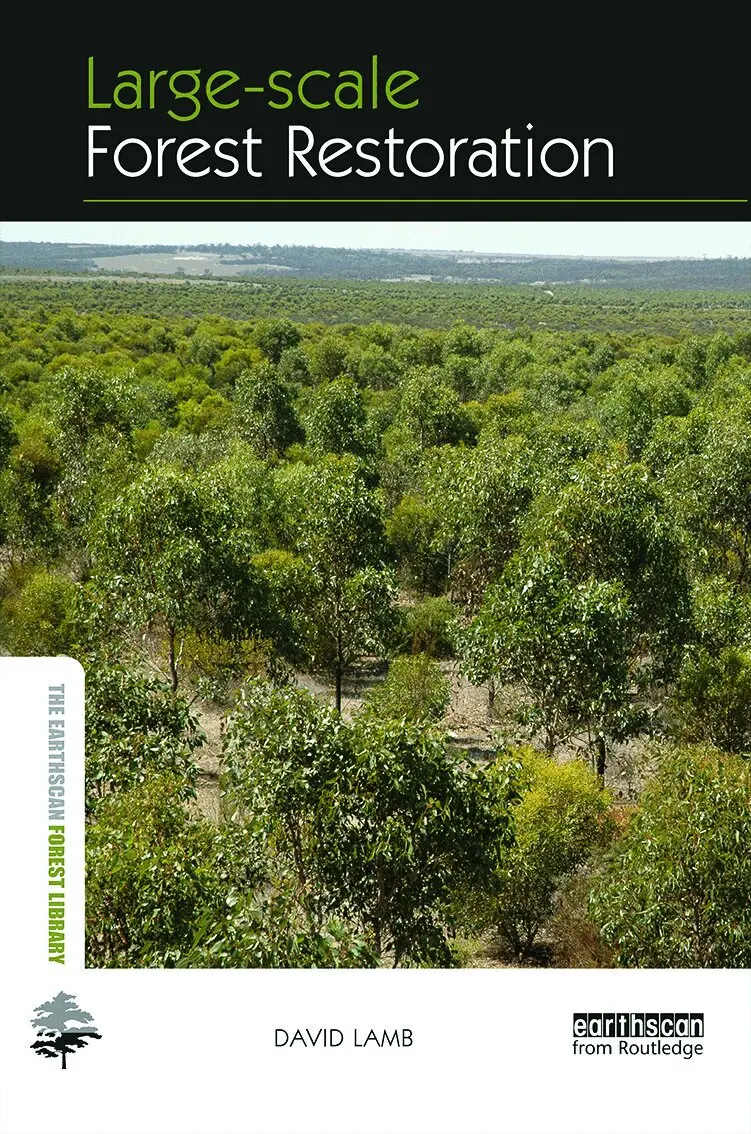
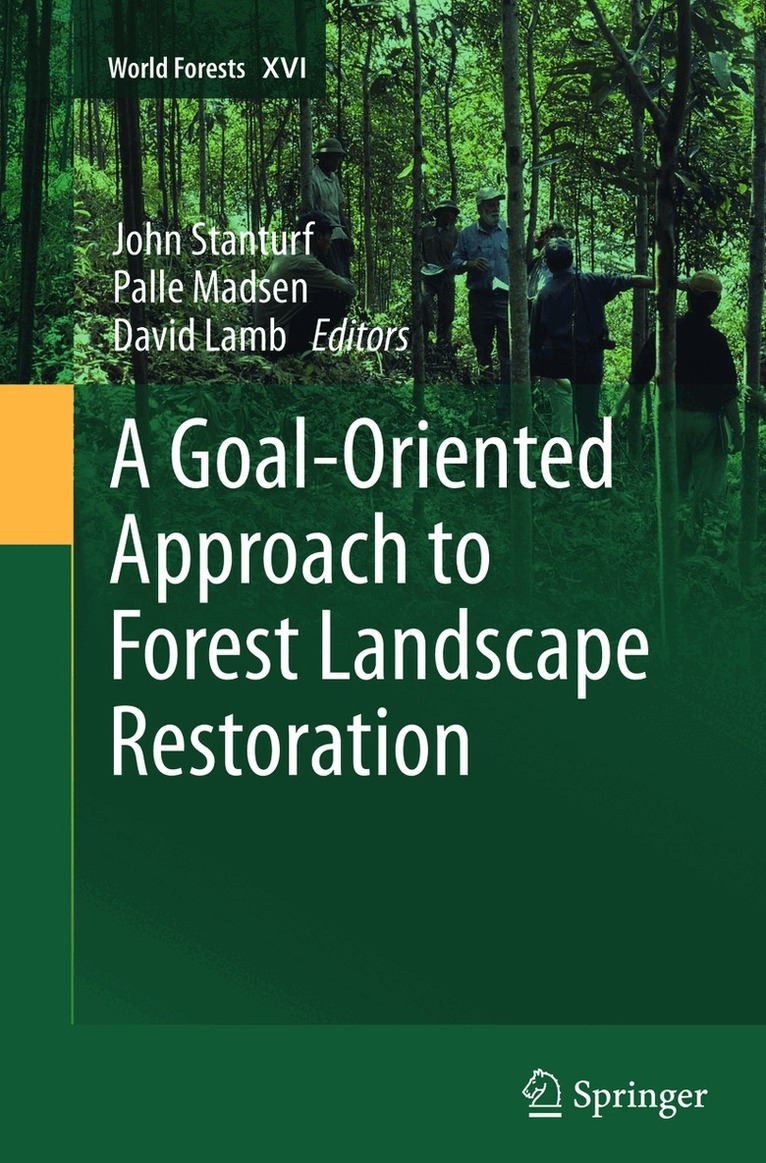
Landscapes are being degraded and simplified across the globe. This book explores how forest restoration might be carried out to increase landscape heterogeneity, improve ecological functioning and restore ecosystem services in such landscapes. It focuses on large, landscape-scale reforestation because that is the scale at which restoration is needed if many of the problems that have now developed are to be addressed. It also shows how large-scale forest restoration might improve human livelihoods as well as improve conservation outcomes.
A number of governments have undertaken national reforestation programs in recent years; some have been more successful than others. The author reviews these to explore what type of reforestation should be used, where this should be carried out and how much should be done. For example, are the traditional industrial forms of reforestation necessarily the best to use in all situations? How can forest restoration be reconciled with the need for food security? And, are there spatial thresholds that must be exceeded to generate economic and environmental benefits?
The book also examines the policy and institutional settings needed to encourage large-scale reforestation. This includes a discussion of the place for incentives to encourage landholders to undertake particular types of reforestation and to reforest particular locations. It also considers forms of governance that are likely to lead to an equitable sharing of the costs and benefits of forest restoration.
852 kr
Läs direkt efter köp
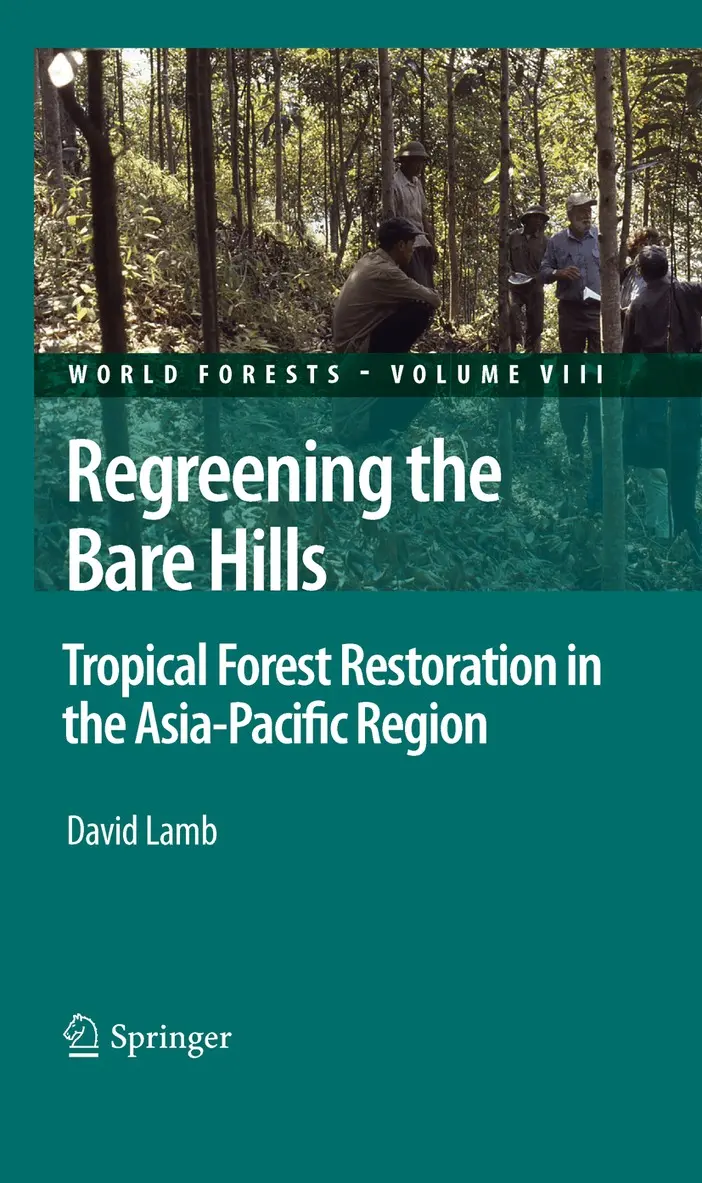
Landscapes are being degraded and simplified across the globe. This book explores how forest restoration might be carried out to increase landscape heterogeneity, improve ecological functioning and restore ecosystem services in such landscapes. It focuses on large, landscape-scale reforestation because that is the scale at which restoration is needed if many of the problems that have now developed are to be addressed. It also shows how large-scale forest restoration might improve human livelihoods as well as improve conservation outcomes.
A number of governments have undertaken national reforestation programs in recent years; some have been more successful than others. The author reviews these to explore what type of reforestation should be used, where this should be carried out and how much should be done. For example, are the traditional industrial forms of reforestation necessarily the best to use in all situations? How can forest restoration be reconciled with the need for food security? And, are there spatial thresholds that must be exceeded to generate economic and environmental benefits?
The book also examines the policy and institutional settings needed to encourage large-scale reforestation. This includes a discussion of the place for incentives to encourage landholders to undertake particular types of reforestation and to reforest particular locations. It also considers forms of governance that are likely to lead to an equitable sharing of the costs and benefits of forest restoration.
909 kr
Läs direkt efter köp
A `slippery slope'' argument in medical ethics is one that opposes itself to a new proposal on the grounds that it is not per se intolerable but will lead to a situation that is. Lamb evaluates such arguments, demonstrating their centrality to the subject.
909 kr
Läs direkt efter köp
A `slippery slope'' argument in medical ethics is one that opposes itself to a new proposal on the grounds that it is not per se intolerable but will lead to a situation that is. Lamb evaluates such arguments, demonstrating their centrality to the subject.
792 kr
Skickas inom 10-15 vardagar