• Fri frakt över 249 kr
  • •
  • Snabba leveranser
  • •
  • Billiga böcker
Kundservice

Du är på sajten för privatpersoner.

Företag, bibliotek eller offentlig verksamhet?

Du handlar på classic.bokus.com, där alla dina funktioner finns intakta.
Till classic.bokus.com
Bokus logotyp. Gå till startsidan.
  • Erbjudanden
  • Nyheter
  • Student
  • Topplistor
  • Barn & ungdom
  • Bokus Play
  • E-böcker
  • Pocketböcker
  • Spel & pussel

10% rabatt på allt med kod: NYSTART10 →

Sidfot

Mina sidor

    Hjälp

    • Kundservice
    • Vanliga frågor och svar
    • Frakt och leverans
    • Retur vid ångerrätt
    • Reklamera vara
    • Betalning
    • Köpvillkor
    • Allmänna villkor
    • Information om webbplatsens tillgänglighet

    Om Bokus

    • Om oss
    • Pressrum
    • För studenter
    • För företag
    • För bibliotek och offentlig verksamhet
    • För leverantörer
    • Hållbarhet

    Populärt

    • Aktuella erbjudanden
    • Presentkort
    • Studentlitteratur
    • Nya böcker
    • Topplistor
    • Signerade böcker
    • Engelska böcker

    Inspiration

    • Boktips
    • BookTok
    • Populära bokserier
    • Barnbokskaraktärer
    • Populära författare
    Logotyp för Bokus
    Följ oss på Facebook (extern länk)Följ oss på Instagram (extern länk)Följ oss på YouTube (extern länk)Följ oss på TikTok (extern länk)
    bokus @ CookiesAnpassa cookiesIntegritetspolicyKöpvillkor
    Till Citymail hemsida (extern länk)Till Budbee hemsida (extern länk)Till Postnord hemsida (extern länk)Till Schenker hemsida (extern länk)Till Early Bird hemsida (extern länk)Till Walleys hemsida (extern länk)
    1. Naturvetenskap och teknik
    2. Geovetenskap
    3. Miljövetenskap och miljöpolitik

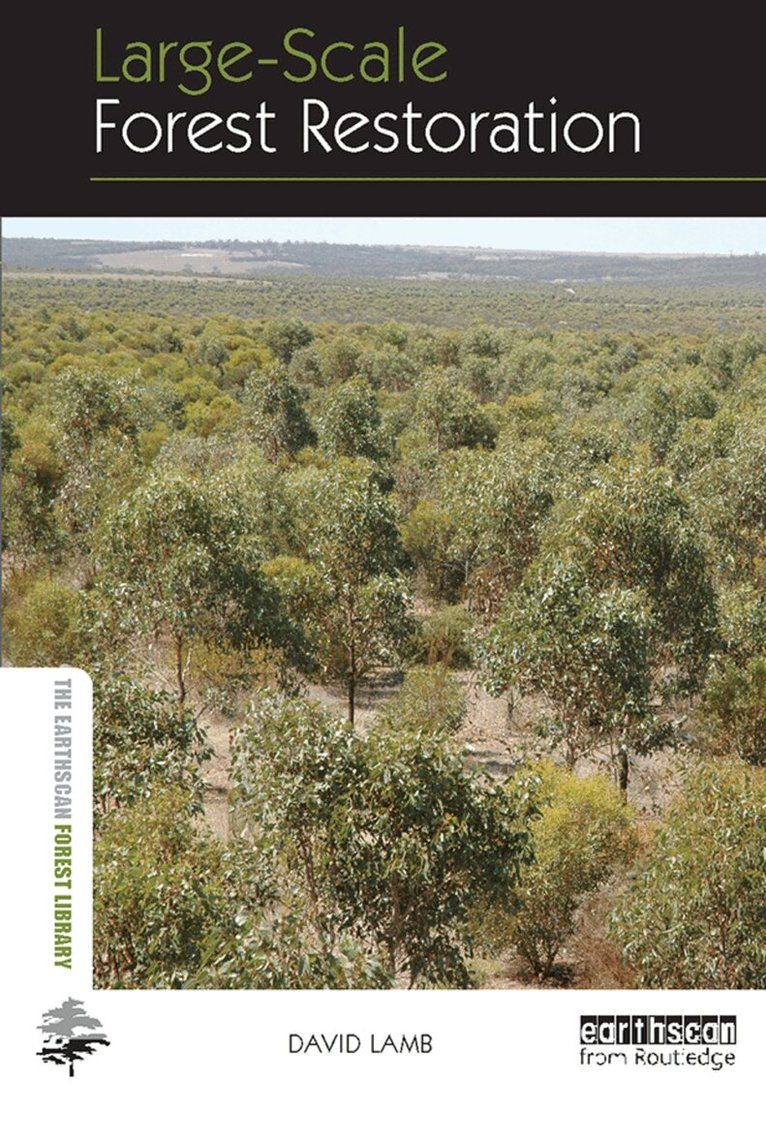
    Large-scale Forest Restoration

    AvDavid Lamb

    Häftad, Engelska, 2017

    Del i serien Earthscan Forest Library

    765 kr

    Beställningsvara. Skickas inom 10-15 vardagar. Fri frakt över 249 kr.

    Fler format och utgåvor

    Inbunden

    2 493 kr

    E-bok

    935 kr

    E-bok

    933 kr

    Beskrivning

    Landscapes are being degraded and simplified across the globe. This book explores how forest restoration might be carried out to increase landscape heterogeneity, improve ecological functioning and restore ecosystem services in such landscapes. It focuses on large, landscape-scale reforestation because that is the scale at which restoration is needed if many of the problems that have now developed are to be addressed. It also shows how large-scale forest restoration might improve human livelihoods as well as improve conservation outcomes.A number of governments have undertaken national reforestation programs in recent years; some have been more successful than others. The author reviews these to explore what type of reforestation should be used, where this should be carried out and how much should be done. For example, are the traditional industrial forms of reforestation necessarily the best to use in all situations? How can forest restoration be reconciled with the need for food security? And, are there spatial thresholds that must be exceeded to generate economic and environmental benefits? The book also examines the policy and institutional settings needed to encourage large-scale reforestation. This includes a discussion of the place for incentives to encourage landholders to undertake particular types of reforestation and to reforest particular locations. It also considers forms of governance that are likely to lead to an equitable sharing of the costs and benefits of forest restoration.

    Produktinformation

    • Utgivningsdatum:2017-10-12
    • Mått:156 x 234 x 25 mm
    • Vikt:453 g
    • Format:Häftad
    • Språk:Engelska
    • Serie:Earthscan Forest Library
    • Antal sidor:320
    • Förlag:Taylor & Francis Ltd
    • ISBN:9780415663205

    Utforska kategorier

    • Miljövetenskap och miljöpolitik inom Naturvetenskap och teknik
    • Skogsbruk inom Naturvetenskap och teknik
    • Offentlig förvaltning inom Samhälle och politik

    Mer om författaren

    David Lamb taught forest ecology at the University of Queensland, Australia, for 30 years and has since undertaken consultancy work on forest restoration for a range of international organizations and aid agencies, including the World Bank, FAO, AusAID and GTZ. He is a member of the Commissiono n Ecosystem Management of IUCN.

    Recensioner i media

    "Covering plantation forestry, natural forest regrowth, and ecological restoration of degraded forests, Dr. Lamb explains how to achieve effective, large-scale reforestation or restoration in tropical and extra-tropical regions alike. This book comes at just the right time, and is based on a lifetime of experience and reflection. Don’t miss it." – James Aronson, Restoration Ecologist, CEFE / CNRS, France, and Missouri Botanical Garden. "Large-scale forest restoration is needed globally to improve human livelihoods and ecological functioning. David Lamb uses his wealth of experience to explore the socioeconomic, legal, and historic context of the challenge. Authoritative case studies illustrate the complexity of restoration in practice." – John A. Stanturf, Senior Research Ecologist, US Forest Service, USA. "David Lamb has thought deeply about large-scale forest restoration, and provides us with carefully researched insights on where and how to go about it. His analysis is informed by lessons learned from around the world over the past 100 years. This book is immensely informative and timely – a valuable resource as we mobilize our collective efforts to restore millions of hectares of deforested and degraded land to benefit people and the planet." – Bob Winterbottom, Senior Fellow, Restoration Initiative, World Resources Institute, USA.

    Innehållsförteckning

    • 1. The need for large-scale forest restoration2. Lessons from the last hundred years3. Natural forest regrowth4. Types of planted forests5. Where in the landscape should forest restoration take place?6. How much forest restoration is needed?7. Creating multi-functional landscapes: choices and trade-offs8. Making it happen: policies and institutions9. Final discussion