David M. Bourg – författare
305 kr
Skickas inom 5-8 vardagar
380 kr
Skickas inom 5-8 vardagar
436 kr
Läs direkt efter köp
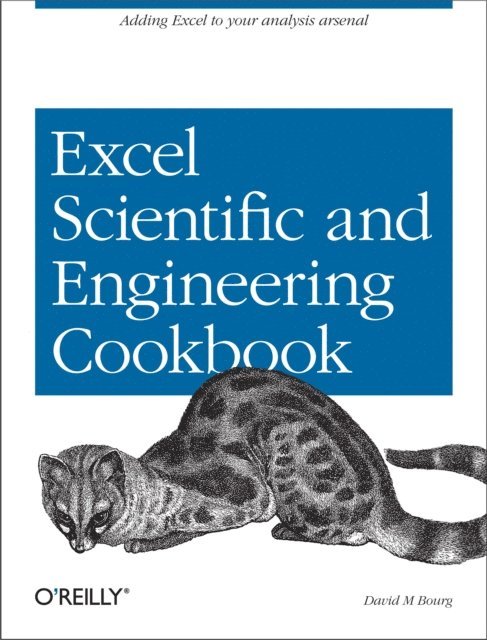
Given the improved analytical capabilities of Excel, scientists and engineers everywhere are using it--instead of FORTRAN--to solve problems. And why not? Excel is installed on millions of computers, features a rich set of built-in analyses tools, and includes an integrated Visual Basic for Applications (VBA) programming language. No wonder it''s today''s computing tool of choice.
Chances are you already use Excel to perform some fairly routine calculations. Now the Excel Scientific and Engineering Cookbook shows you how to leverage Excel to perform more complex calculations, too, calculations that once fell in the domain of specialized tools. It does so by putting a smorgasbord of data analysis techniques right at your fingertips. The book shows how to perform these useful tasks and others:
Use Excel and VBA in generalImport data from a variety of sourcesAnalyze dataPerform calculationsVisualize the results for interpretation and presentationUse Excel to solve specific science and engineering problemsWherever possible, the Excel Scientific and Engineering Cookbook draws on real-world examples from a range of scientific disciplines such as biology, chemistry, and physics. This way, you''ll be better prepared to solve the problems you face in your everyday scientific or engineering tasks.
High on practicality and low on theory, this quick, look-up reference provides instant solutions, or "recipes," to problems both basic and advanced. And like other books in O''Reilly''s popular Cookbook format, each recipe also includes a discussion on how and why it works. As a result, you can take comfort in knowing that complete, practical answers are a mere page-flip away.
391 kr
Läs direkt efter köp
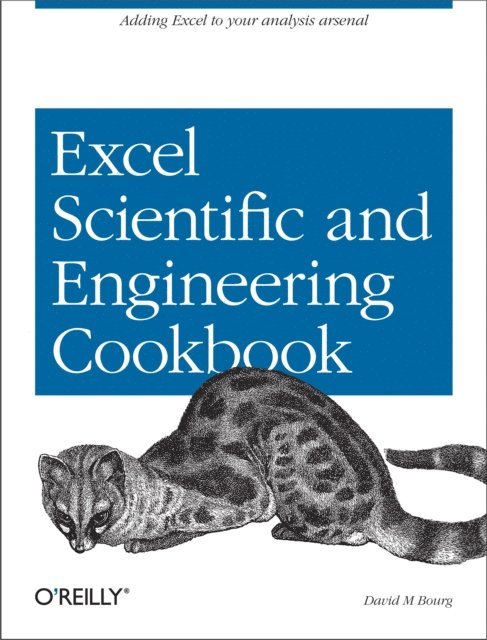
Given the improved analytical capabilities of Excel, scientists and engineers everywhere are using it--instead of FORTRAN--to solve problems. And why not? Excel is installed on millions of computers, features a rich set of built-in analyses tools, and includes an integrated Visual Basic for Applications (VBA) programming language. No wonder it''s today''s computing tool of choice.
Chances are you already use Excel to perform some fairly routine calculations. Now the Excel Scientific and Engineering Cookbook shows you how to leverage Excel to perform more complex calculations, too, calculations that once fell in the domain of specialized tools. It does so by putting a smorgasbord of data analysis techniques right at your fingertips. The book shows how to perform these useful tasks and others:
Use Excel and VBA in generalImport data from a variety of sourcesAnalyze dataPerform calculationsVisualize the results for interpretation and presentationUse Excel to solve specific science and engineering problemsWherever possible, the Excel Scientific and Engineering Cookbook draws on real-world examples from a range of scientific disciplines such as biology, chemistry, and physics. This way, you''ll be better prepared to solve the problems you face in your everyday scientific or engineering tasks.
High on practicality and low on theory, this quick, look-up reference provides instant solutions, or "recipes," to problems both basic and advanced. And like other books in O''Reilly''s popular Cookbook format, each recipe also includes a discussion on how and why it works. As a result, you can take comfort in knowing that complete, practical answers are a mere page-flip away.
352 kr
Läs direkt efter köp
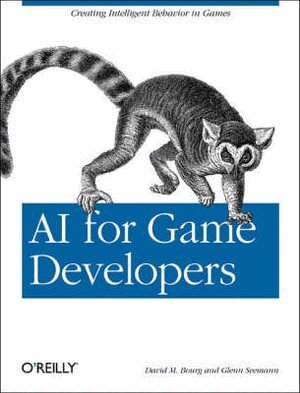
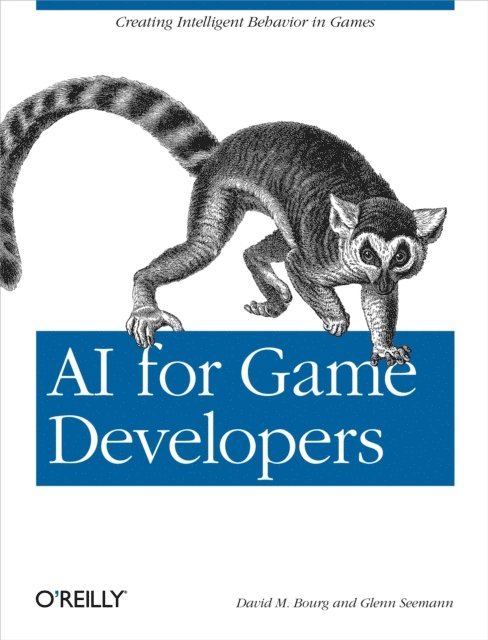
Advances in 3D visualization and physics-based simulation technology make it possible for game developers to create compelling, visually immersive gaming environments that were only dreamed of years ago. But today''s game players have grown in sophistication along with the games they play. It''s no longer enough to wow your players with dazzling graphics; the next step in creating even more immersive games is improved artificial intelligence, or AI.Fortunately, advanced AI game techniques are within the grasp of every game developer--not just those who dedicate their careers to AI. If you''re new to game programming or if you''re an experienced game programmer who needs to get up to speed quickly on AI techniques, you''ll find AI for Game Developers to be the perfect starting point for understanding and applying AI techniques to your games.Written for the novice AI programmer, AI for Game Developers introduces you to techniques such as finite state machines, fuzzy logic, neural networks, and many others, in straightforward, easy-to-understand language, supported with code samples throughout the entire book (written in C/C++). From basic techniques such as chasing and evading, pattern movement, and flocking to genetic algorithms, the book presents a mix of deterministic (traditional) and non-deterministic (newer) AI techniques aimed squarely at beginners AI developers. Other topics covered in the book include:
Potential function based movements: a technique that handles chasing, evading swarming, and collision avoidance simultaneouslyBasic pathfinding and waypoints, including an entire chapter devoted to the A* pathfinding algorithmAI scriptingRule-based AI: learn about variants other than fuzzy logic and finite state machinesBasic probabilityBayesian techniquesUnlike other books on the subject, AI for Game Developers doesn''t attempt to cover every aspect of game AI, but to provide you with usable, advanced techniques you can apply to your games right now. If you''ve wanted to use AI to extend the play-life of your games, make them more challenging, and most importantly, make them more fun, then this book is for you.494 kr
Läs direkt efter köp
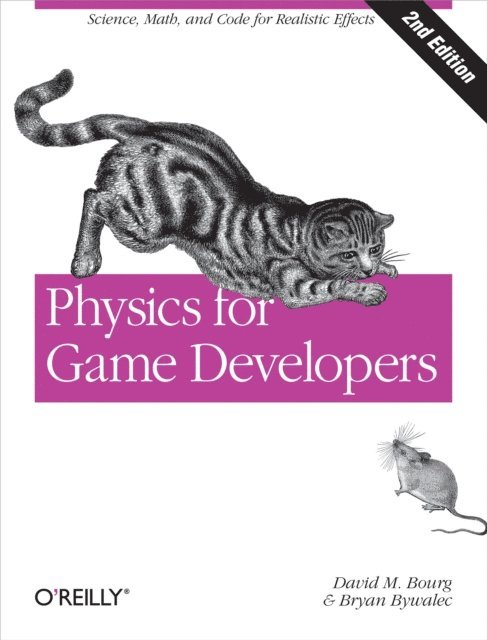
If you want to enrich your game’s experience with physics-based realism, the expanded edition of this classic book details physics principles applicable to game development. You’ll learn about collisions, explosions, sound, projectiles, and other effects used in games on Wii, PlayStation, Xbox, smartphones, and tablets. You’ll also get a handle on how to take advantage of various sensors such as accelerometers and optical tracking devices.
Authors David Bourg and Bryan Bywalec show you how to develop your own solutions to a variety of problems by providing technical background, formulas, and a few code examples. This updated book is indispensable whether you work alone or as part of a team.
Refresh your knowledge of classical mechanics, including kinematics, force, kinetics, and collision responseExplore rigid body dynamics, using real-time 2D and 3D simulations to handle rotation and inertiaApply concepts to real-world problems: model the behavior of boats, airplanes, cars, and sports ballsEnhance your games with digital physics, using accelerometers, touch screens, GPS, optical tracking devices, and 3D displaysCapture 3D sound effects with the OpenAL audio API368 kr
Skickas inom 5-8 vardagar
390 kr
Läs direkt efter köp
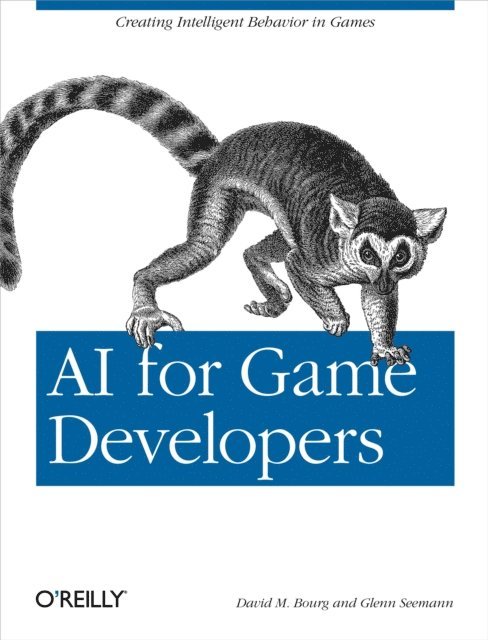
Advances in 3D visualization and physics-based simulation technology make it possible for game developers to create compelling, visually immersive gaming environments that were only dreamed of years ago. But today''s game players have grown in sophistication along with the games they play. It''s no longer enough to wow your players with dazzling graphics; the next step in creating even more immersive games is improved artificial intelligence, or AI.Fortunately, advanced AI game techniques are within the grasp of every game developer--not just those who dedicate their careers to AI. If you''re new to game programming or if you''re an experienced game programmer who needs to get up to speed quickly on AI techniques, you''ll find AI for Game Developers to be the perfect starting point for understanding and applying AI techniques to your games.Written for the novice AI programmer, AI for Game Developers introduces you to techniques such as finite state machines, fuzzy logic, neural networks, and many others, in straightforward, easy-to-understand language, supported with code samples throughout the entire book (written in C/C++). From basic techniques such as chasing and evading, pattern movement, and flocking to genetic algorithms, the book presents a mix of deterministic (traditional) and non-deterministic (newer) AI techniques aimed squarely at beginners AI developers. Other topics covered in the book include:
Potential function based movements: a technique that handles chasing, evading swarming, and collision avoidance simultaneouslyBasic pathfinding and waypoints, including an entire chapter devoted to the A* pathfinding algorithmAI scriptingRule-based AI: learn about variants other than fuzzy logic and finite state machinesBasic probabilityBayesian techniquesUnlike other books on the subject, AI for Game Developers doesn''t attempt to cover every aspect of game AI, but to provide you with usable, advanced techniques you can apply to your games right now. If you''ve wanted to use AI to extend the play-life of your games, make them more challenging, and most importantly, make them more fun, then this book is for you.