David M. Glantz – författare
2 482 kr
Skickas inom 10-15 vardagar
866 kr
Skickas inom 10-15 vardagar
750 kr
Skickas inom 10-15 vardagar
750 kr
Skickas inom 10-15 vardagar
784 kr
Skickas inom 5-8 vardagar
388 kr
Skickas inom 5-8 vardagar
784 kr
Skickas inom 5-8 vardagar
695 kr
Skickas inom 10-15 vardagar
417 kr
Skickas inom 5-8 vardagar
695 kr
Skickas inom 10-15 vardagar
784 kr
Skickas inom 5-8 vardagar
795 kr
Skickas inom 10-15 vardagar
423 kr
Skickas inom 10-15 vardagar
784 kr
Skickas inom 5-8 vardagar
795 kr
Skickas inom 10-15 vardagar
1 090 kr
Skickas inom 5-8 vardagar
378 kr
Skickas inom 5-8 vardagar
468 kr
Läs direkt efter köp
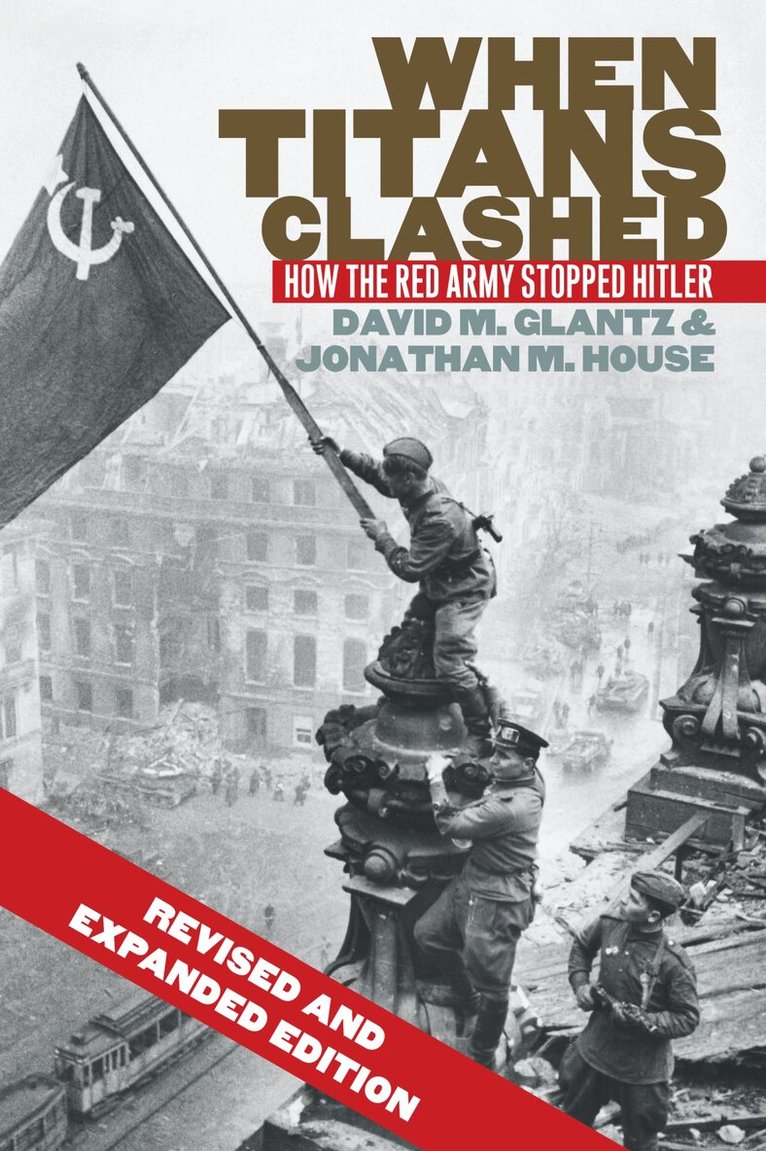
On first publication, this uncommonly concise and readable account of Soviet Russia’s clash with Nazi Germany utterly changed our understanding of World War II on Germany’s Eastern Front, immediately earning its place among top-shelf histories of the world war. Revised and updated to reflect recent Russian and Western scholarship on the subject, much of it the authors’ own work, this new edition maintains the 1995 original’s distinction as a crucial volume in the history of World War II and of the Soviet Union and the most informed and compelling perspective on one of the greatest military confrontations of all time.
In 1941, when Pearl Harbor shattered America’s peacetime pretensions, the German blitzkrieg had already blasted the Red Army back to Moscow. Yet, less than four years later, the Soviet hammer-and-sickle flew above the ruins of Berlin, stark symbol of a miraculous comeback that destroyed the Germany Army and put an end to Hitler’s imperial designs. In swift and stirring prose, When Titans Clashed provides the clearest, most complete account of this epic struggle, especially from the Soviet perspective. Drawing on the massive and unprecedented release of Soviet archival documents in recent decades, David Glantz, one of the world’s foremost authorities on the Soviet military, and noted military historian Jonathan House expand and elaborate our picture of the Soviet war effort—a picture sharply different from accounts that emphasize Hitler’s failed leadership over Soviet strategy and might.
Rafts of newly available official directives, orders, and reports reveal the true nature and extraordinary scale of Soviet military operations as they swept across the one thousand miles from Moscow to Berlin, featuring stubborn defenses and monumental offensives and counteroffensives and ultimately costing the two sides combined a staggering twenty million casualties. Placing the war within its wider context, the authors also make use of recent revelations to clarify further the political, economic, and social issues that influenced and reflected what happened on the battlefield. Their work gives us new insight into Stalin''s political motivation and Adolf Hitler’s role as warlord, as well as a better understanding of the human and economic costs of the war—for both the Soviet Union and Germany.
While incorporating a wealth of new information, When Titans Clashed remains remarkably compact, a tribute to the authors’ determination to make this critical chapter in world history as accessible as it is essential.
784 kr
Skickas inom 5-8 vardagar
784 kr
Skickas inom 5-8 vardagar
784 kr
Skickas inom 5-8 vardagar
365 kr
Skickas inom 10-15 vardagar
909 kr
Läs direkt efter köp
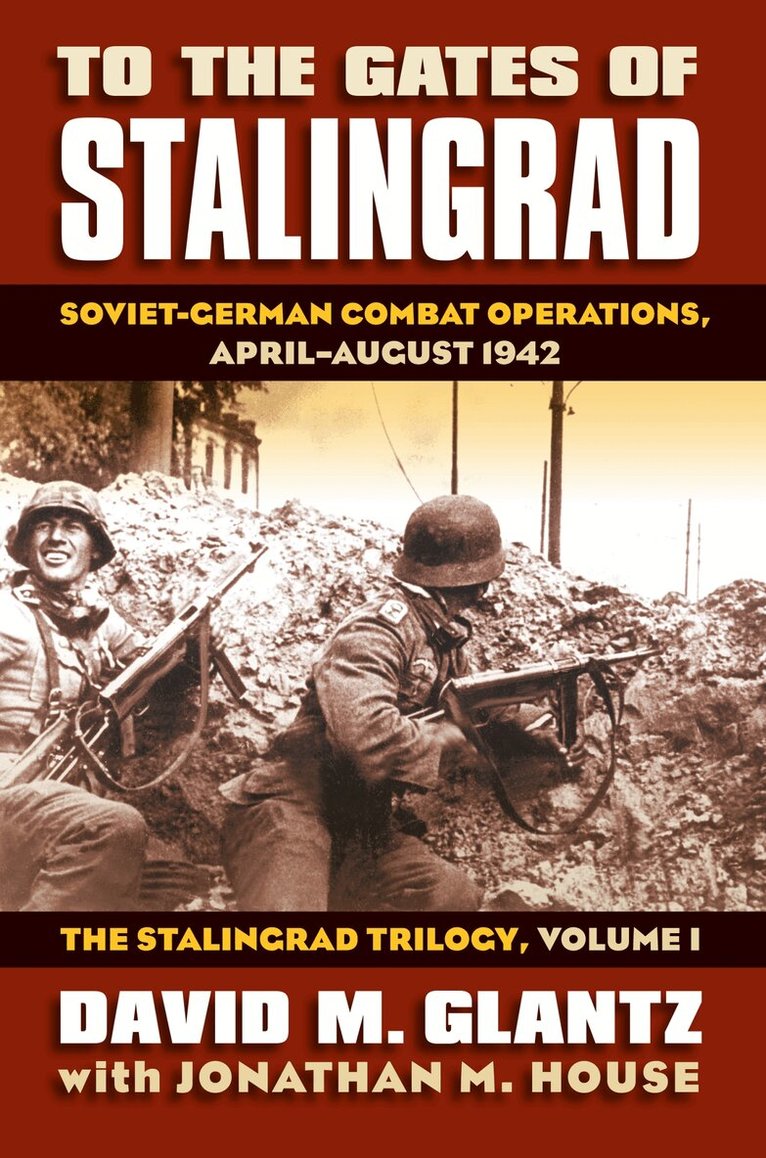
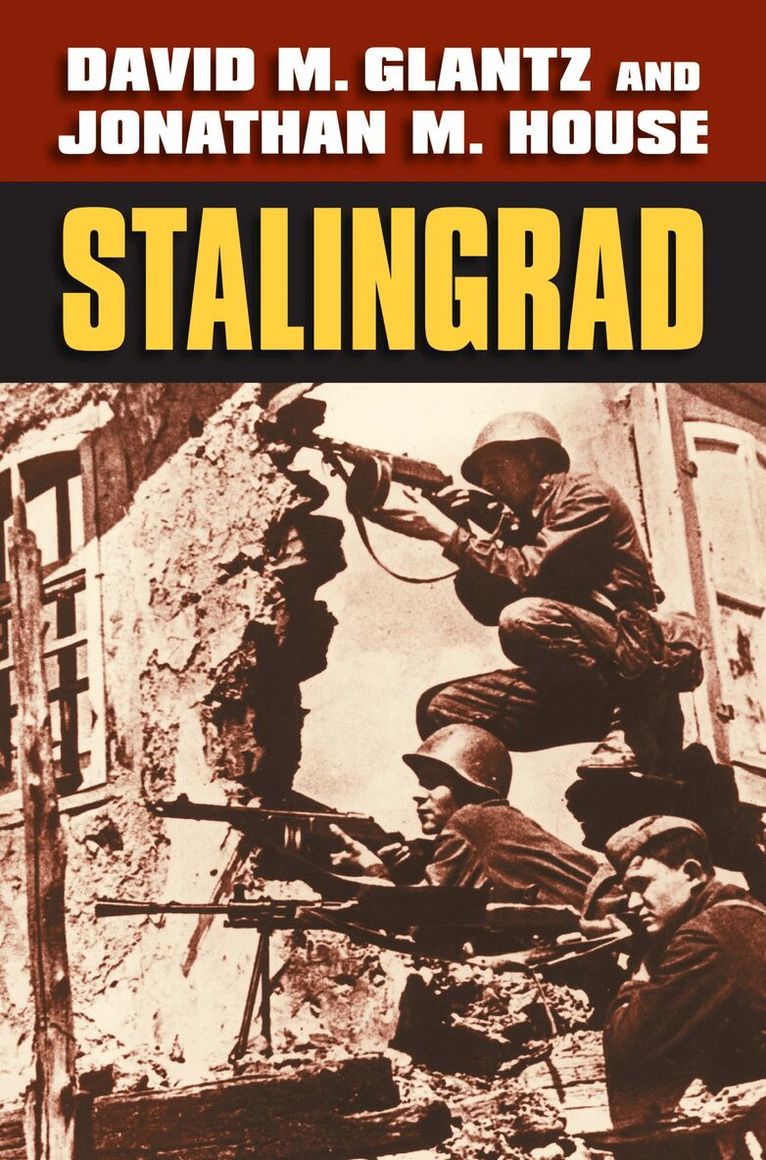
The confrontation between German and Soviet forces at Stalingrad was a titanic clash of armies on an unprecedented scale—a campaign that was both a turning point in World War II and a lasting symbol of that war’s power and devastation. Yet despite the attention lavished on this epic battle by historians, much about it has been greatly misunderstood or hidden from view—as David Glantz, the world’s foremost authority on the Red Army in World War II, now shows.
This first volume in Glantz’s masterly trilogy draws on previously unseen or neglected sources to provide the definitive account of the opening phase of this iconic Eastern Front campaign. Glantz has combed daily official records from both sides—including the Red Army General Staff, the People’s Commissariat of Internal Affairs, the German Sixth Army, and the Soviet 62nd Army—to produce a work of unparalleled detail and fresh interpretations. Jonathan House, an authority on twentieth-century warfare, adds further insight and context.
Hitler’s original objective was not Stalingrad but the Caucasus oilfields to the south of the city. So he divided his Army Group South into two parts—one to secure the city on his flank, one to capture the oilfields. Glantz reveals for the first time how Stalin, in response, demanded that the Red Army stand and fight rather than withdraw, leading to the numerous little-known combat engagements that seriously eroded the Wehrmacht’s strength before it even reached Stalingrad. He shows that, although advancing German forces essentially destroyed the armies of the Soviet Southwestern and Southern Fronts, the Soviets resisted the German advance much more vigorously than has been thought through constant counterattacks, ultimately halting the German offensive at the gates of Stalingrad.
This fresh, eye-opening account and the subsequent companion volumes—on the actual battle for the city itself and the successful Soviet counteroffensive that followed—will dramatically revise and expand our understanding of what remains a military campaign for the ages.
433 kr
Läs direkt efter köp
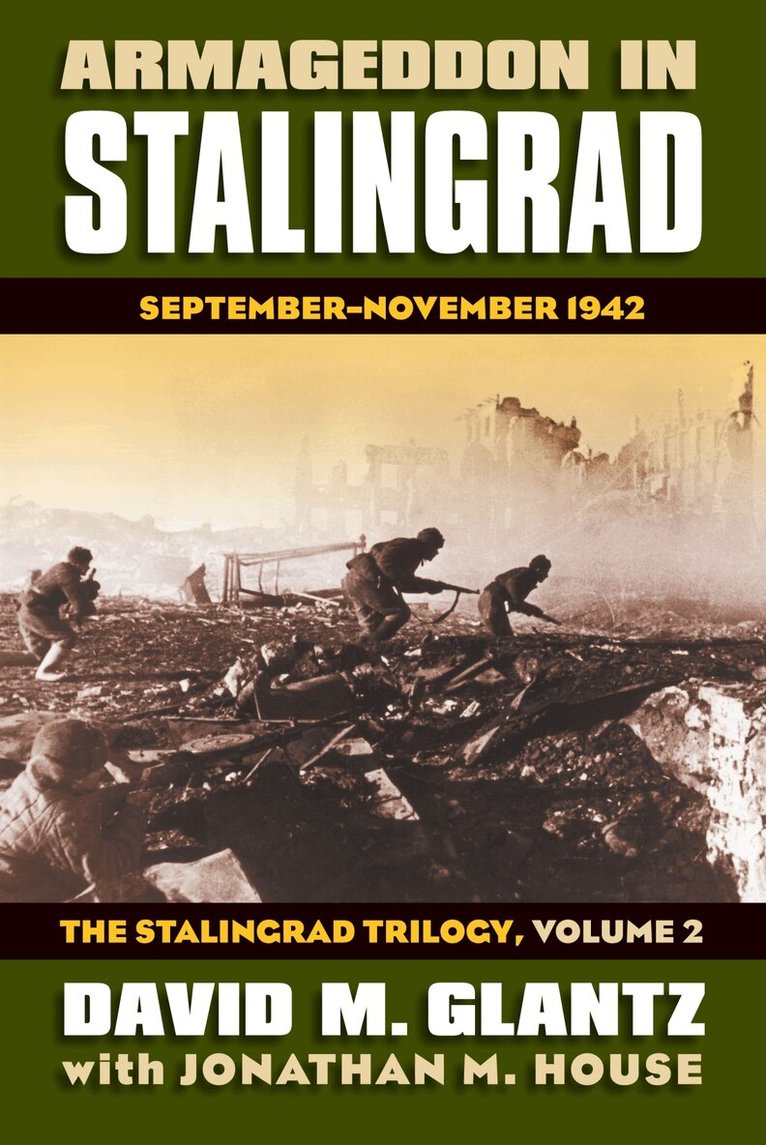
The German offensive on Stalingrad was originally intended to secure the Wehrmacht’s flanks, but it stalled dramatically in the face of Stalin''s order: “Not a Step Back!” The Soviets’ resulting tenacious defense of the city led to urban warfare for which the Germans were totally unprepared, depriving them of their accustomed maneuverability, overwhelming artillery fire, and air support—and setting the stage for debacle.
Armageddon in Stalingrad continues David Glantz and Jonathan House’s bold new look at this most iconic military campaign of the Eastern Front and Hitler’s first great strategic defeat. While the first volume in their trilogy described battles that took the German army to the gates of Stalingrad, this next one focuses on the inferno of combat that decimated the city itself.
Previous accounts of the battle are far less accurate, having relied on Soviet military memoirs plagued by error and cloaked in secrecy. Glantz and House have plumbed previously unexploited sources—including the archives of the People’s Commissariat of Internal Affairs (NKVD) and the records of the Soviet 62nd and German Sixth Armies—to provide unprecedented detail and fresh interpretations of this apocalyptic campaign. They allow the authors to reconstruct the fighting hour by hour, street by street, and even building by building and reveal how Soviet defenders established killing zones throughout the city and repeatedly ambushed German spearheads.
The authors set these accounts of action within the contexts of decisions made by Hitler and Stalin, their high commands, and generals on the ground and of the larger war on the Eastern Front. They show the Germans weaker than has been supposed, losing what had become a war of attrition that forced them to employ fewer and greener troops to make up for earlier losses and to conduct war on an ever-lengthening logistics line.
Written with the narrative force of a great war novel, this new volume supersedes all previous accounts and forms the centerpiece of the Stalingrad Trilogy, with the upcoming final volume focusing on the Red Army’s counteroffensive.
877 kr
Läs direkt efter köp
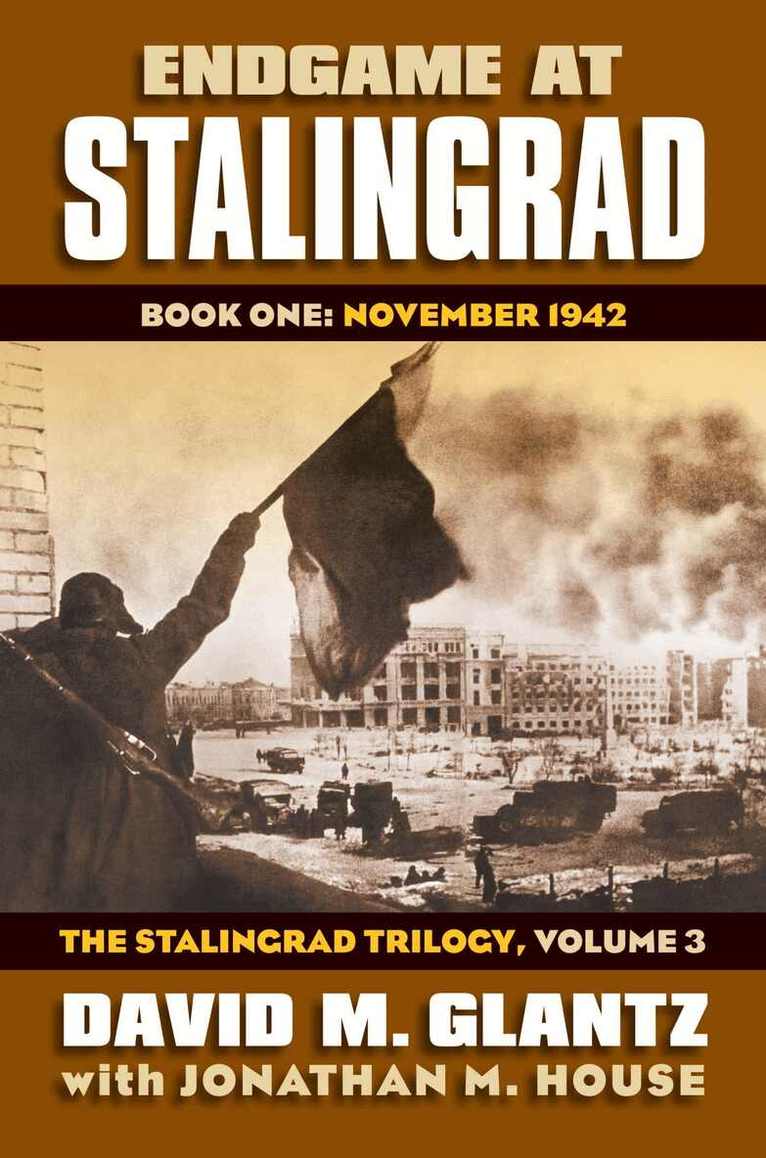
The campaign intended to secure the Wehrmacht’s flanks had proven one front too many for the German Army. And now the offensive at Stalingrad, the epic clash that marked Germany’s failure on the Eastern Front, was entering its grim final phase. In Book One of the third volume of his acclaimed Stalingrad Trilogy, David Glantz offers the definitive account—the “ground truth” to counter a half-century’s worth of myth and misinformation—of the beginning of the end of one of the most infamous battles of the Second World War, and one of the most costly in lives and treasure in the annals of history.
When Volume Two left off, Germany’s vaunted Sixth Army, already deflected from its original goal—the Caucasus oil fields—had been drawn into a desperate war of attrition within the ravaged city of Stalingrad. In Volume Three, Book One, we see the ultimate consequences of the Germans’ overreach and the gathering force of the Red Army’s massive manpower and increasingly sophisticated command. After failing repeatedly to find and exploit the weaknesses in Axis defenses, Stalin and the Stavka (High Command) finally seized their chance in mid-November of 1942 by launching a bold and devastating counteroffensive, Operation Uranus.
Glantz draws a detailed and vivid account of how, in Operation Uranus, the Red Army’s three fronts defeated and largely destroyed two Romanian armies and encircled the German Sixth Army and half of the German Fourth Panzer Army in the Stalingrad pocket—turning the Germans’ world on its head. Like its predecessor volumes, this one makes extensive use of sources previously out of reach or presumed lost, such as reports from the Sixth Army’s combat journal and newly released Soviet and Russian records. These materials (many cited at length or printed in their entirety in a companion volume) lend themselves to a strikingly new interpretation of the campaign’s planning and execution on both sides—a version of events that once and for all gets at the ground truth of this historic confrontation.
909 kr
Läs direkt efter köp
In Book Two of the third volume of his magisterial Stalingrad Trilogy, David Glantz continues and concludes his definitive history of one of the most infamous battles of World War Two, the Stalingrad campaign that signaled Germany’s failure on the Eastern Front and marked a turning point in the war. Book Two finds Germany’s most famous army—General Friedrich Paulus''s Sixth—in dire straits, trapped in the Stalingrad kessel, or pocket, by a Red Army that has seized the initiative in what the Soviets now term the Great Patriotic War. The Red Army''s counteroffensive, Operation Uranus, is well underway, having largely destroyed the bulk of two Romanian armies and encircled the German Sixth and half of the German Fourth Panzer Army.
Drawing on materials previously unavailable or believed lost, Glantz gives a closely observed account of the final ten weeks of Germany’s ill-fated Stalingrad campaign. In short order, the Red Army parried and then defeated two German attempts to rescue the Sixth Army, crushed the Italian Eighth and Hungarian Second Armies, severely damaged the German Fourth Panzer and Second Armies, and finally destroyed the German Sixth Army in the ruins of Stalingrad. With well over half-a-million soldiers torn from its order of battle, Hitler’s Axis could only watch in horror as its status abruptly changed from victor to vanquished. This book completes a vivid and detailed picture of the Axis defeat that would prove decisive as a catastrophe from which Germany and its Wehrmacht could never recover.
As in the preceding volumes, Glantz extensively mines newly available materials to provide a clearer and more accurate picture of what actually happened at Stalingrad at this crucial moment in World War II—a "ground truth" that gets beyond the myths and misinformation surrounding this historic confrontation. And this concluding chapter, relating events even more steeped in myth than those that came before, is especially bracing as it takes on controversial questions about why Operation Uranus succeeded and the German relief attempts failed, whether the Sixth Army could have escaped encirclement or been rescued, and who, finally was most responsible for its ultimate defeat. The answers Glantz provides, embedded in a fully-realized account of the endgame at Stalingrad, make this book the last word on one of history’s epic clashes.
433 kr
Läs direkt efter köp
Stone & Stone World War II Books Editor’s Choice
Continuing his magisterial account of the Eastern Front campaigns, the writer cited by The Atlantic as “indisputably the West’s foremost expert on the subject” focuses here on the Red Army’s operations from the fall of 1943 through the April 1944. David M. Glantz chronicles the Soviet Army''s efforts to further exploit their post-Kursk gains and accelerate a counteroffensive that would eventually take them all the way to Berlin.
The Red Army’s Operation Bagration that liberated Belorussia in June 1944 sits like a colossus in the annals of World War II history. What is little noted in the history books, however, is that the Bagration offensive was not the Soviets’ first attempt. Battle for Belorussia tells the story of how, eight months earlier, and acting under the direction of Stalin and his Stavka, three Red Army fronts conducted multiple simultaneous and successive operations along a nearly 400-mile front in an effort to liberate Belorussia and capture Minsk, its capital city. The campaign, with over 700,000 casualties, was a Red Army failure.
Glantz describes in detail the series of offensives, with their markedly different and ultimately disappointing results, that, contrary to later accounts, effectively shifted Stalin’s focus to the Ukraine as a more manageable theater of military operations. Restoring the first Belorussian offensive to its place in history, this work also reveals for the first time what the later, successful Bagration operation owed to its forgotten precursor.
433 kr
Läs direkt efter köp
In Endgame at Stalingrad, the final volume of his acclaimed Stalingrad Trilogy, David Glantz completes his definitive account of one of World War II’s most infamous confrontations, the campaign that marked Germany’s failure on the Eastern Front and proved to be a turning point in the war. In documenting the last days of the Stalingrad campaign, in particular the Red Army’s counteroffensive known at Operation Uranus, Glantz takes on a plethora of myths and controversial questions surrounding these events, in particular, questions about why Operation Uranus succeeded and the German relief attempts failed, whether the Sixth Army could have escaped encirclement or been rescued, and who, finally was most responsible for its ultimate defeat.
In addition to a wide variety of traditional sources, this volume makes use of two major categories of documentary materials hitherto unavailable to researchers. The first consists of extensive records from the combat journal of the German Sixth Army, which had been largely missing since the war’s end and were only recently rediscovered and published. The second is a vast amount of newly released Soviet and Russian archival material including excerpts from the Red Army General Staff’s daily operational summaries; a wide variety of Stavka (High Command), People’s Commissariat of Defense (NKO), and Red Army General Staff orders and directives; and the daily records of the Soviet 62nd Army and its subordinate divisions and brigades for most of the time fighting was underway in Stalingrad proper.
Because of the persistent controversy and mythology characterizing this period, many of these documents are included verbatim in English translation in this companion volume, providing concrete evidence in support of the conclusions put forward in Volume Three. As such, the Companion contributes substantially to this final volume’s unprecedented detail and fresh perspectives, interpretations, and evaluations of the later stages of the Stalingrad campaign.
394 kr
Skickas inom 10-15 vardagar
2 511 kr
Skickas inom 10-15 vardagar