David M. Gordon – författare
Visar alla böcker från författaren David M. Gordon. Handla med fri frakt och snabb leverans.
13 produkter
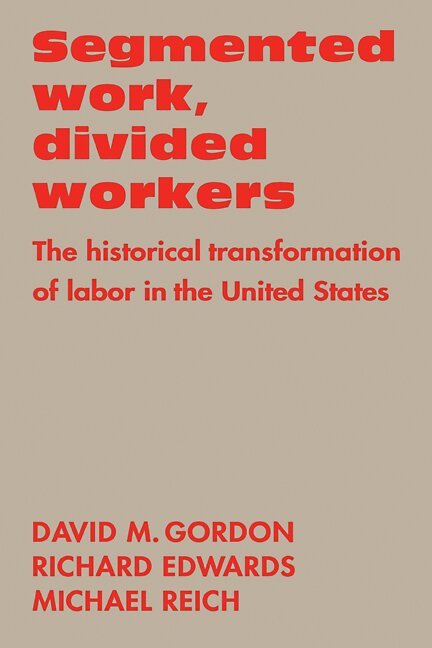
Segmented Work, Divided Workers
The historical transformation of labor in the United States
Av David M. Gordon, Richard Edwards m. fl.
Häftad, 1982
569 kr
Lägg i varukorg
Segmented Work, Divided Workers presents a restatement and expansion of the theory of labor segmentation by three of its founding scholars. The authors argue that divisions with the US working class are rooted in a segmentation of jobs since World War II. They explain the origins of job …
Indigenous Knowledge and the Environment in Africa and North America
Av David M. Gordon, Shepard Krech III
Inbunden, 2012
938 kr
Lägg i varukorg
Indigenous knowledge has become a catchphrase in global struggles for environmental justice. Yet indigenous knowledges are often viewed, incorrectly, as pure and primordial cultural artifacts. This collection draws from African and North American cases to argue that the forms of knowledge …
Invisible Agents
Spirits in a Central African History
Häftad, 2012
388 kr
Lägg i varukorg
Invisible Agents shows how personal and deeply felt spiritual beliefs can inspire social movements and influence historical change. Conventional historiography concentrates on the secular, materialist, or moral sources of political agency. Instead, David M. Gordon argues, when people perceive …
Indigenous Knowledge and the Environment in Africa and North America
Av David M. Gordon, Shepard Krech III
Häftad, 2013
414 kr
Lägg i varukorg
Indigenous knowledge has become a catchphrase in global struggles for environmental justice. Yet indigenous knowledges are often viewed, incorrectly, as pure and primordial cultural artifacts. This collection draws from African and North American cases to argue that the forms of knowledge …
Indigenous Knowledge and the Environment in Africa and North America
Av David M. Gordon, Shepard Krech III
E-bok, 2012
660 kr
Lägg i varukorg
Indigenous knowledge has become a catchphrase in global struggles for environmental justice. Yet indigenous knowledges are often viewed, incorrectly, as pure and primordial cultural artifacts. This collection draws from African and North American cases to argue that the forms of knowledge …
Invisible Agents
Spirits in a Central African History
E-bok, 2012
606 kr
Lägg i varukorg
Invisible Agents shows how personal and deeply felt spiritual beliefs can inspire social movements and influence historical change. Conventional historiography concentrates on the secular, materialist, or moral sources of political agency. Instead, David M. Gordon argues, when people perceive …
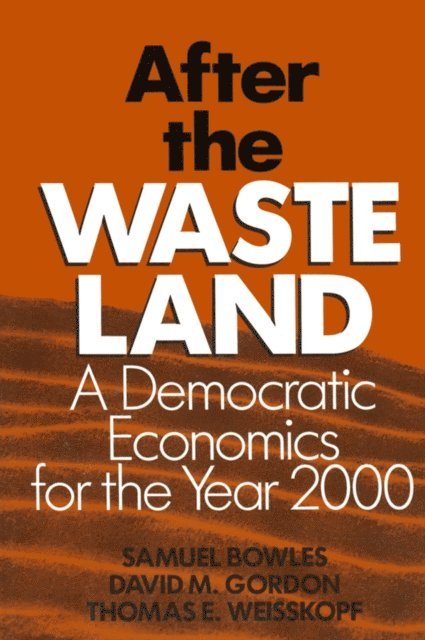
After the Waste Land
Democratic Economics for the Year 2000
Av Samuel Bowles, David M. Gordon m. fl.
Inbunden, 1990
2585 kr
Lägg i varukorg
This critique of Reaganomics attempts to provide alternatives to both the supply experiments of the 1980s and neoliberal strategies of austerity. It presents arguments for economic democracy with a worker-oriented blueprint for improving productivity, growth, employment and economic justice.
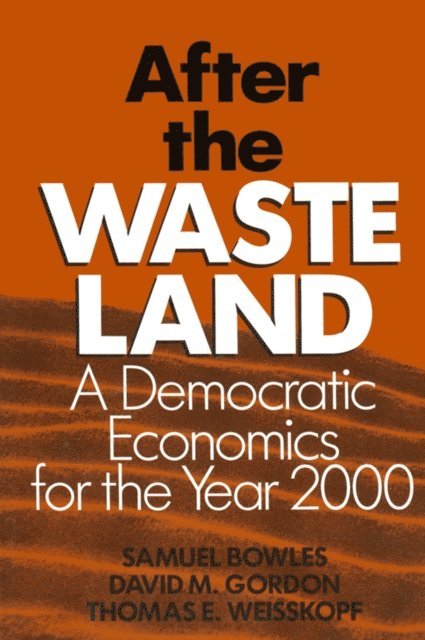
After the Waste Land
Democratic Economics for the Year 2000
Av Samuel Bowles, David M. Gordon m. fl.
Häftad, 1990
772 kr
Lägg i varukorg
This critique of Reaganomics attempts to provide alternatives to both the supply experiments of the 1980s and neoliberal strategies of austerity. It presents arguments for economic democracy with a worker-oriented blueprint for improving productivity, growth, employment and economic justice.
After the Waste Land
Democratic Economics for the Year 2000
Av Thomas E. Weisskopf, David M. Gordon m. fl.
E-bok, 2015
864 kr
Lägg i varukorg
This critique of Reaganomics attempts to provide alternatives to both the supply experiments of the 1980s and neoliberal strategies of austerity. It presents arguments for economic democracy with a worker-oriented blueprint for improving productivity, growth, employment and economic justice.
After the Waste Land
Democratic Economics for the Year 2000
Av Thomas E. Weisskopf, David M. Gordon m. fl.
E-bok, 2015
883 kr
Lägg i varukorg
This critique of Reaganomics attempts to provide alternatives to both the supply experiments of the 1980s and neoliberal strategies of austerity. It presents arguments for economic democracy with a worker-oriented blueprint for improving productivity, growth, employment and economic justice.
Fat and Mean
The Corporate Squeeze of Working Americans and the
E-bok, 1996
226 kr
Lägg i varukorg
Since the early 1980s, economic experts have recommended "downsizing" as the best way for U.S. corporations to remain competitive. Reducing unnecessary staff would lower costs, increase profits, and transform these companies into lean, mean production machines. As many American businesses pursued …
Economics and Social Justice
Essays on Power, Labor and Institutional Change
Av David M. Gordon, Samuel Bowles m. fl.
Inbunden, 1998
3106 kr
Lägg i varukorg
David Gordon was a pioneer in the burgeoning field of institutional growth economics, introducing the concept of a 'social structure of accumulation', and richly illustrating its usefulness with both econometric and historical studies. Gordon also helped to develop the theory of segmented labor …