David M. Taylor – författare
314 kr
Skickas inom 5-8 vardagar
506 kr
Skickas
844 kr
Skickas inom 5-8 vardagar
675 kr
Skickas
326 kr
Skickas inom 5-8 vardagar
684 kr
Skickas inom 5-8 vardagar
733 kr
Läs direkt efter köp
Learn to improve your assessment, investigation, and management of physical health conditions in people with severe mental illness
The Maudsley Practice Guidelines for Physical Health Conditions in Psychiatry offers psychiatric and general practitioners an evidence-based and practical guide for the appropriate assessment, investigation, and management of common physical health conditions seen in people with severe mental illness. Written by a renowned team of respected experts in medicine, surgery, pharmacy, dietetics, physiotherapy, and psychiatry, the book bridges the gap between psychiatric and physical health services for the severely mentally ill.
The Maudsley Practice Guidelines for Physical Health Conditions in Psychiatry also provides practitioners with expert guidance on making effective referrals to other medical and surgical subspecialties, telling readers what information subspecialties would expect to receive. Its use will improve the quality of clinical care received by mentally ill patients and, by promoting a holistic approach to treatment that considers both body and mind, will enhance the therapeutic relationship between patient and practitioner.
The Maudsley Practice Guidelines for Physical Health Conditions in Psychiatry covers the following:
Guidance on assessment and management of well over a hundred different medical and surgical presentations commonly seen in people with serious mental illness Management of physical health emergencies in a psychiatric setting Evidence-based approaches to management of physical side effects of psychiatric medications Advice on approaches to promote a healthy lifestyle in people with serious mental illness, such as smoking cessation and changes to diet and physical activityPerfect for both psychiatrists and general practitioners who wish to improve the quality of care they provide to people with serious mental illness, The Maudsley Practice Guidelines for Physical Health Conditions in Psychiatry will be of use to anyone setting out to navigate the divide between the treatment of psychiatric and physical health conditions.
733 kr
Läs direkt efter köp
Learn to improve your assessment, investigation, and management of physical health conditions in people with severe mental illness
The Maudsley Practice Guidelines for Physical Health Conditions in Psychiatry offers psychiatric and general practitioners an evidence-based and practical guide for the appropriate assessment, investigation, and management of common physical health conditions seen in people with severe mental illness. Written by a renowned team of respected experts in medicine, surgery, pharmacy, dietetics, physiotherapy, and psychiatry, the book bridges the gap between psychiatric and physical health services for the severely mentally ill.
The Maudsley Practice Guidelines for Physical Health Conditions in Psychiatry also provides practitioners with expert guidance on making effective referrals to other medical and surgical subspecialties, telling readers what information subspecialties would expect to receive. Its use will improve the quality of clinical care received by mentally ill patients and, by promoting a holistic approach to treatment that considers both body and mind, will enhance the therapeutic relationship between patient and practitioner.
The Maudsley Practice Guidelines for Physical Health Conditions in Psychiatry covers the following:
Guidance on assessment and management of well over a hundred different medical and surgical presentations commonly seen in people with serious mental illness Management of physical health emergencies in a psychiatric setting Evidence-based approaches to management of physical side effects of psychiatric medications Advice on approaches to promote a healthy lifestyle in people with serious mental illness, such as smoking cessation and changes to diet and physical activityPerfect for both psychiatrists and general practitioners who wish to improve the quality of care they provide to people with serious mental illness, The Maudsley Practice Guidelines for Physical Health Conditions in Psychiatry will be of use to anyone setting out to navigate the divide between the treatment of psychiatric and physical health conditions.
358 kr
Läs direkt efter köp
A guide to treating psychosis that provides information on drug options and side-effects in order to allow for weighing treatment options knowledgably
The Maudsley Guidelines on Advanced Prescribing in Psychosis offers a resource that puts the focus on the need to treat the individual needs of a patient. The authors – noted experts on the topic – offer an alternative to the one-size-fits-all treatment of psychosis and shows how to build psychiatrist and patient relationships that will lead to effective individual treatment plans.
The book provides up-to-date data and information about commonly used anti-psychotic drugs and drugs used in bipolar disorder. The text weighs both the upsides and downsides of each pharmaceutical presented, and helps prescribers and patients weigh the costs and benefits of various options to reach an appropriate treatment plan. The authors highlight the treatment at a population level and the systems in which individual treatments take places. This important resource:
Facilitates the tailoring of an appropriate treatment plan for clients manifesting signs of psychosis Offers a comparative strategy that helps gauge the suitability of one treatment plan over another Provides at-hand data and information about commonly used anti-psychotic drugs Includes an understanding of the origins and side-effects of each drug presentedThe Maudsley Guidelines on Advanced Prescribing in Psychosis offers psychiatrists and other mental health practitioners an essential guide for treating psychosis on an individualized level.
358 kr
Läs direkt efter köp
A guide to treating psychosis that provides information on drug options and side-effects in order to allow for weighing treatment options knowledgably
The Maudsley Guidelines on Advanced Prescribing in Psychosis offers a resource that puts the focus on the need to treat the individual needs of a patient. The authors – noted experts on the topic – offer an alternative to the one-size-fits-all treatment of psychosis and shows how to build psychiatrist and patient relationships that will lead to effective individual treatment plans.
The book provides up-to-date data and information about commonly used anti-psychotic drugs and drugs used in bipolar disorder. The text weighs both the upsides and downsides of each pharmaceutical presented, and helps prescribers and patients weigh the costs and benefits of various options to reach an appropriate treatment plan. The authors highlight the treatment at a population level and the systems in which individual treatments take places. This important resource:
Facilitates the tailoring of an appropriate treatment plan for clients manifesting signs of psychosis Offers a comparative strategy that helps gauge the suitability of one treatment plan over another Provides at-hand data and information about commonly used anti-psychotic drugs Includes an understanding of the origins and side-effects of each drug presentedThe Maudsley Guidelines on Advanced Prescribing in Psychosis offers psychiatrists and other mental health practitioners an essential guide for treating psychosis on an individualized level.
1 026 kr
Läs direkt efter köp
The Maudsley Prescribing Guidelines in Psychiatry
The new edition of the world-renowned reference guide on the use of medications for patients presenting with mental health problems
The Maudsley Prescribing Guidelines in Psychiatry is the essential evidence-based handbook on the safe and effective prescribing of psychotropic agents. Covering both common and complex prescribing situations encountered in day-to-day clinical practice, this comprehensive resource provides expert guidance on drug choice, minimum and maximum doses, adverse effects, switching medications, prescribing for special patient groups, and more. Each clear and concise chapter includes an up-to-date reference list providing easy access to the evidence on which the guidance is based.
The fourteenth edition has been fully updated to incorporate the latest available research, the most recent psychotropic drug introductions, and all psychotropic drugs currently used in the UK, USA, Canada, Australia, New Zealand, and Japan. Several new sections cover topics such as deprescribing of major psychiatric drugs, prescribing psychotropics at the end of life, the treatment of agitated delirium, the genetics of clozapine prescribing, the use of weekly penfluridol, and the treatment of psychotropic withdrawal. Featuring contributions by an experienced team of psychiatrists and specialist pharmacists, the new edition of The Maudsley Prescribing Guidelines in Psychiatry:
Provides succinct coverage of drug treatment of psychiatric conditions and formulating prescribing policy in mental health Covers a wide range of psychiatric conditions including schizophrenia, bipolar disorder, depression and anxiety, borderline personality, eating disorders, and many others Provides advice on prescribing for children and adolescents, older people, pregnant women, and other special patient groups Offers new sections on genetic prescribing, long-acting injectable formulations, ketamine administration and uses, and dopamine super-sensitivity Includes referenced information on off-label prescribing, potential interactions with other substances such as alcohol, tobacco, and caffeine, and treating patients with comorbid physical conditionsWhether in the doctor''s office, in the clinic, or on the ward, The Maudsley Prescribing Guidelines in Psychiatry, Fourteenth Edition is a must-have for psychiatrists, pharmacists, neuropharmacologists, clinical psychologists, nurses, and other healthcare professionals working in mental health, as well as trainees and students in medicine, pharmacy, and nursing.
1 026 kr
Läs direkt efter köp
The Maudsley Prescribing Guidelines in Psychiatry
The new edition of the world-renowned reference guide on the use of medications for patients presenting with mental health problems
The Maudsley Prescribing Guidelines in Psychiatry is the essential evidence-based handbook on the safe and effective prescribing of psychotropic agents. Covering both common and complex prescribing situations encountered in day-to-day clinical practice, this comprehensive resource provides expert guidance on drug choice, minimum and maximum doses, adverse effects, switching medications, prescribing for special patient groups, and more. Each clear and concise chapter includes an up-to-date reference list providing easy access to the evidence on which the guidance is based.
The fourteenth edition has been fully updated to incorporate the latest available research, the most recent psychotropic drug introductions, and all psychotropic drugs currently used in the UK, USA, Canada, Australia, New Zealand, and Japan. Several new sections cover topics such as deprescribing of major psychiatric drugs, prescribing psychotropics at the end of life, the treatment of agitated delirium, the genetics of clozapine prescribing, the use of weekly penfluridol, and the treatment of psychotropic withdrawal. Featuring contributions by an experienced team of psychiatrists and specialist pharmacists, the new edition of The Maudsley Prescribing Guidelines in Psychiatry:
Provides succinct coverage of drug treatment of psychiatric conditions and formulating prescribing policy in mental health Covers a wide range of psychiatric conditions including schizophrenia, bipolar disorder, depression and anxiety, borderline personality, eating disorders, and many others Provides advice on prescribing for children and adolescents, older people, pregnant women, and other special patient groups Offers new sections on genetic prescribing, long-acting injectable formulations, ketamine administration and uses, and dopamine super-sensitivity Includes referenced information on off-label prescribing, potential interactions with other substances such as alcohol, tobacco, and caffeine, and treating patients with comorbid physical conditionsWhether in the doctor''s office, in the clinic, or on the ward, The Maudsley Prescribing Guidelines in Psychiatry, Fourteenth Edition is a must-have for psychiatrists, pharmacists, neuropharmacologists, clinical psychologists, nurses, and other healthcare professionals working in mental health, as well as trainees and students in medicine, pharmacy, and nursing.
847 kr
Läs direkt efter köp
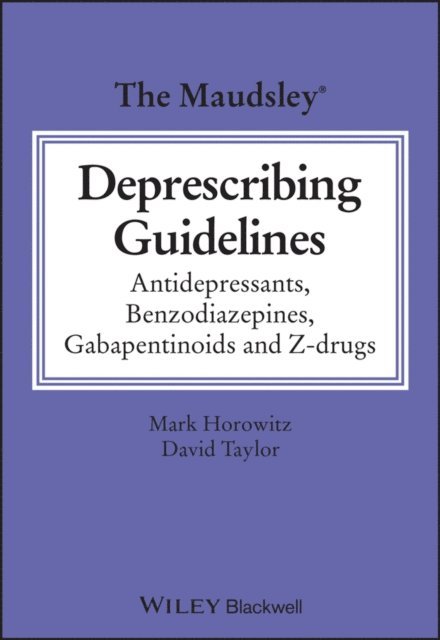
Comprehensive resource describing guidelines for safely reducing or stopping (deprescribing) antidepressants, benzodiazepines, gabapentinoids and z-drugs for patients, including step-by-step guidance for all commonly used medications, covering common pitfalls, troubleshooting, supportive strategies, and more.
Most formal guidance on psychiatric medication relates to starting or switching medications with minimal guidance on deprescribing medication. In 2023, the World Health Organisation and the United Nations called for patients, as a human right, to be informed of their right to discontinue treatment and to receive support to do so.
The Maudsley Deprescribing Guidelines fills a significant gap in guidance for clinicians by providing comprehensive and authoritative information on this important aspect of treatment.
This evidence-based handbook provides an overview of principles to be used in deprescribing. This is derived from fundamental scientific principles and the latest research on this topic, combined with emerging insights from clinical practice (including from patient experts).
Building on the recognised brand of The Maudsley Prescribing Guidelines, and the prominence of the authors’ work, including in The Lancet Psychiatry on tapering antidepressants (the most read article across all Lancet titles when it was released). The Maudsley Deprescribing Guidelines covers topics such as:
Why and when to deprescribe antidepressants, benzodiazepines, gabapentinoids and z-drugs Barriers and enablers to deprescribing including physical dependence, social circumstances, and knowledge about the discontinuation process Distinguishing withdrawal symptoms, such as poor mood, anxiety, insomnia, and a variety of physical symptoms from symptoms of the underlying disorder that medication was intended to treat The difference between physical dependence and addiction/substance use disorder Explanation of why and how to implement hyperbolic tapering in clinical practice Specific guidance on formulations of medication and techniques for making gradual reductions, including using liquid forms of medication, and other approaches Step-by-step guidance for safely stopping all commonly used antidepressants, benzodiazepines, gabapentinoids and z-drugs, including fast, moderate and slow tapering regimens or schedules for each drug, and guidance on how to tailor these to an individual Troubleshooting issues which can arise on stopping these medications, including akathisia, withdrawal symptoms, acute or protracted, and relapse.Written for anyone interested in safe deprescribing of psychiatric medications including psychiatrists, GPs, pharmacists, nurses, medical trainees, and interested members of the public. The Maudsley Deprescribing Guidelines is an essential resource on the subject that provides practical guidance on how to improve patient outcomes in this field of medicine.
847 kr
Läs direkt efter köp
Comprehensive resource describing guidelines for safely reducing or stopping (deprescribing) antidepressants, benzodiazepines, gabapentinoids and z-drugs for patients, including step-by-step guidance for all commonly used medications, covering common pitfalls, troubleshooting, supportive strategies, and more.
Most formal guidance on psychiatric medication relates to starting or switching medications with minimal guidance on deprescribing medication. In 2023, the World Health Organisation and the United Nations called for patients, as a human right, to be informed of their right to discontinue treatment and to receive support to do so.
The Maudsley Deprescribing Guidelines fills a significant gap in guidance for clinicians by providing comprehensive and authoritative information on this important aspect of treatment.
This evidence-based handbook provides an overview of principles to be used in deprescribing. This is derived from fundamental scientific principles and the latest research on this topic, combined with emerging insights from clinical practice (including from patient experts).
Building on the recognised brand of The Maudsley Prescribing Guidelines, and the prominence of the authors’ work, including in The Lancet Psychiatry on tapering antidepressants (the most read article across all Lancet titles when it was released). The Maudsley Deprescribing Guidelines covers topics such as:
Why and when to deprescribe antidepressants, benzodiazepines, gabapentinoids and z-drugs Barriers and enablers to deprescribing including physical dependence, social circumstances, and knowledge about the discontinuation process Distinguishing withdrawal symptoms, such as poor mood, anxiety, insomnia, and a variety of physical symptoms from symptoms of the underlying disorder that medication was intended to treat The difference between physical dependence and addiction/substance use disorder Explanation of why and how to implement hyperbolic tapering in clinical practice Specific guidance on formulations of medication and techniques for making gradual reductions, including using liquid forms of medication, and other approaches Step-by-step guidance for safely stopping all commonly used antidepressants, benzodiazepines, gabapentinoids and z-drugs, including fast, moderate and slow tapering regimens or schedules for each drug, and guidance on how to tailor these to an individual Troubleshooting issues which can arise on stopping these medications, including akathisia, withdrawal symptoms, acute or protracted, and relapse.Written for anyone interested in safe deprescribing of psychiatric medications including psychiatrists, GPs, pharmacists, nurses, medical trainees, and interested members of the public. The Maudsley Deprescribing Guidelines is an essential resource on the subject that provides practical guidance on how to improve patient outcomes in this field of medicine.
565 kr
Läs direkt efter köp
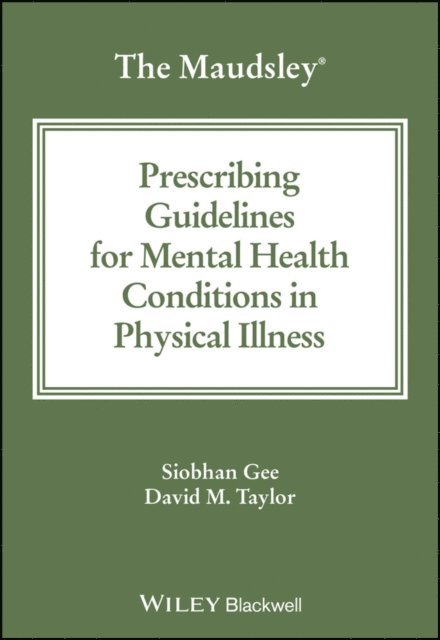
Meet the challenges of mental health prescribing in the physically unwell with this essential guide
Treating mental health conditions in physically unwell patients presents unique challenges for clinicians and other practitioners. The efficacy and safety of psychotropic medications is established in physically healthy patients. In physically unwell people, psychotropics can have different outcomes and give rise to serious adverse effects that can complicate or worsen physical health conditions. Many clinicians face difficult decisions about prescribing for mental health conditions in such cases, and reliable information for them is scarce.
The Maudsley® Prescribing Guidelines for Mental Health Conditions in Physical Illness meets this urgent need with a comprehensive guide to the safe and effective pharmacological management of mental illness in physically unwell patients. Covering a wide range of physical health conditions and comorbidities, the book makes evidence-based recommendations on pharmacological interventions. It’s an essential resource for any clinical practitioner looking to balance the physical and mental wellbeing of people with concurrent physical and mental health conditions.
The Maudsley® Prescribing Guidelines for Mental Health Conditions in Physical Illness readers will also find:
Prescribing recommendations for mental health conditions including depression, anxiety, psychosis and bipolar affective disorderDetailed discussion of the consequences for mental health prescribing in physical health conditions such as cardiac disease, diabetes, chronic obstructive pulmonary disease, and many moreTreatment of complex and frequently encountered clinical scenarios such as restarting psychotropics after overdose and steroid-induced psychiatric conditionsThe Maudsley® Prescribing Guidelines for Mental Health Conditions in Physical Illness is an essential reference for all prescribers, clinical pharmacists and nurses who work with patients with comorbid mental and physical illnesses.
545 kr
Läs direkt efter köp
Meet the challenges of mental health prescribing in the physically unwell with this essential guide
Treating mental health conditions in physically unwell patients presents unique challenges for clinicians and other practitioners. The efficacy and safety of psychotropic medications is established in physically healthy patients. In physically unwell people, psychotropics can have different outcomes and give rise to serious adverse effects that can complicate or worsen physical health conditions. Many clinicians face difficult decisions about prescribing for mental health conditions in such cases, and reliable information for them is scarce.
The Maudsley® Prescribing Guidelines for Mental Health Conditions in Physical Illness meets this urgent need with a comprehensive guide to the safe and effective pharmacological management of mental illness in physically unwell patients. Covering a wide range of physical health conditions and comorbidities, the book makes evidence-based recommendations on pharmacological interventions. It’s an essential resource for any clinical practitioner looking to balance the physical and mental wellbeing of people with concurrent physical and mental health conditions.
The Maudsley® Prescribing Guidelines for Mental Health Conditions in Physical Illness readers will also find:
Prescribing recommendations for mental health conditions including depression, anxiety, psychosis and bipolar affective disorderDetailed discussion of the consequences for mental health prescribing in physical health conditions such as cardiac disease, diabetes, chronic obstructive pulmonary disease, and many moreTreatment of complex and frequently encountered clinical scenarios such as restarting psychotropics after overdose and steroid-induced psychiatric conditionsThe Maudsley® Prescribing Guidelines for Mental Health Conditions in Physical Illness is an essential reference for all prescribers, clinical pharmacists and nurses who work with patients with comorbid mental and physical illnesses.
962 kr
Läs direkt efter köp
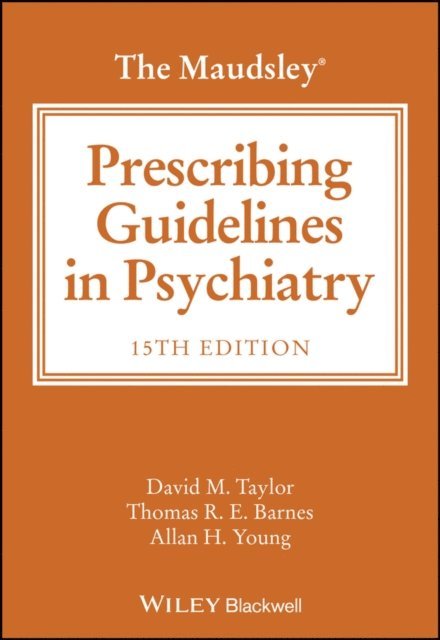
The most up-to-date edition of the gold-standard handbook on the safe and effective prescribing of psychotropic agents
Prescribing medications that treat mental illness is a challenging but essential component of clinical practice. Successful treatment outcomes require careful drug choice and dosage, and other considerations can also have an important impact on patient experiences and long-term care.
In the newly revised fifteenth edition of The Maudsley Prescribing Guidelines in Psychiatry, you will find up-to-date and authoritative guidance on prescribing psychotropic medications to patients. It is an indispensable evidence-based handbook that will continue to serve a new generation of clinicians and trainees.
The book includes analyses of all psychotropic drugs currently used in the United States, the United Kingdom, Canada, Australia, New Zealand, and Japan. It also contains detailed discussions of common and uncommon adverse effects, the ramifications of switching medications, special patient groups, and other clinically relevant subjects. A fully updated reference list closes out each section, as well.
The Maudsley Prescribing Guidelines in Psychiatry is perfect for trainees seeking essential and accurate information on the rational, safe, and effective use of medications for patients with mental illness. Practising clinicians will also benefit from the included guidance on complex issues that might arise less frequently.
506 kr
Kommande
449 kr
Kommande
277 kr
Läs direkt efter köp
This book discusses, in relatively simple language, the importance of even minute amounts of certain trace elements for the protection of human health and how insufficiency or excess may produce serious diseases. It also examines the use of metal chelators in the treatment of such diseases.