David M. Young - Böcker
Visar alla böcker från författaren David M. Young. Handla med fri frakt och snabb leverans.
10 produkter
10 produkter
Silent Language of Psychotherapy
Social Reinforcement of Unconscious Processes
Inbunden, Engelska, 1998
2 166 kr
Skickas inom 7-10 vardagar
Therapeutic changes occur in many places, and among animals as well as humans. A theory that attempts to explain therapeutic changes should be based on principles that apply not only to those changes occurring during the hour, but also to those observed in the educational process, in interpersonal relations, and in the social milieu, as well as with animals. It would be desirable to discover principles broad enough to provide a deeper understanding of therapeutic change in this wide variety of situations.Experienced therapists appear to be similar in what they are doing, although they may disagree as to why they do it. In spite of the arguments about theoretical formulations, it can be observed that during an hour with a patient many psychotherapists may not follow their own theories too well. There probably is some relevance in a comparison of psychotherapy with a concept formation test: the subject gives the correct answers but is unable to state why he did so or what principles he followed in making his choices. The therapist, too, may help a patient but he is often uncertain as to "why" and "how." It is very likely that the effective principles in therapeutic work rest on processes that are more general than the specific principles advanced by different schools.This volume combines the elements of psychodynamic and cognitive behavioral therapy in a theoretical system that focuses on the importance of patient-therapist interaction, especially in terms of the exchange of subtle or covert communication cues. In this significantly updated and expanded edition of their classic text, Beier and Young analyze recent developments in new areas of practice facing today's therapist: managed care and the clinical impact of the control of healthcare delivery; and biological intervention and other issues related to psychotropic medication.
654 kr
Skickas inom 10-15 vardagar
Therapeutic changes occur in many places, and among animals as well as humans. A theory that attempts to explain therapeutic changes should be based on principles that apply not only to those changes occurring during the hour, but also to those observed in the educational process, in interpersonal relations, and in the social milieu, as well as with animals. It would be desirable to discover principles broad enough to provide a deeper understanding of therapeutic change in this wide variety of situations.Experienced therapists appear to be similar in what they are doing, although they may disagree as to why they do it. In spite of the arguments about theoretical formulations, it can be observed that during an hour with a patient many psychotherapists may not follow their own theories too well. There probably is some relevance in a comparison of psychotherapy with a concept formation test: the subject gives the correct answers but is unable to state why he did so or what principles he followed in making his choices. The therapist, too, may help a patient but he is often uncertain as to "why" and "how." It is very likely that the effective principles in therapeutic work rest on processes that are more general than the specific principles advanced by different schools.This volume combines the elements of psychodynamic and cognitive behavioral therapy in a theoretical system that focuses on the importance of patient-therapist interaction, especially in terms of the exchange of subtle or covert communication cues. In this significantly updated and expanded edition of their classic text, Beier and Young analyze recent developments in new areas of practice facing today's therapist: managed care and the clinical impact of the control of healthcare delivery; and biological intervention and other issues related to psychotropic medication.
292 kr
Skickas inom 3-6 vardagar
500 kr
Tillfälligt slut
393 kr
Skickas inom 10-15 vardagar
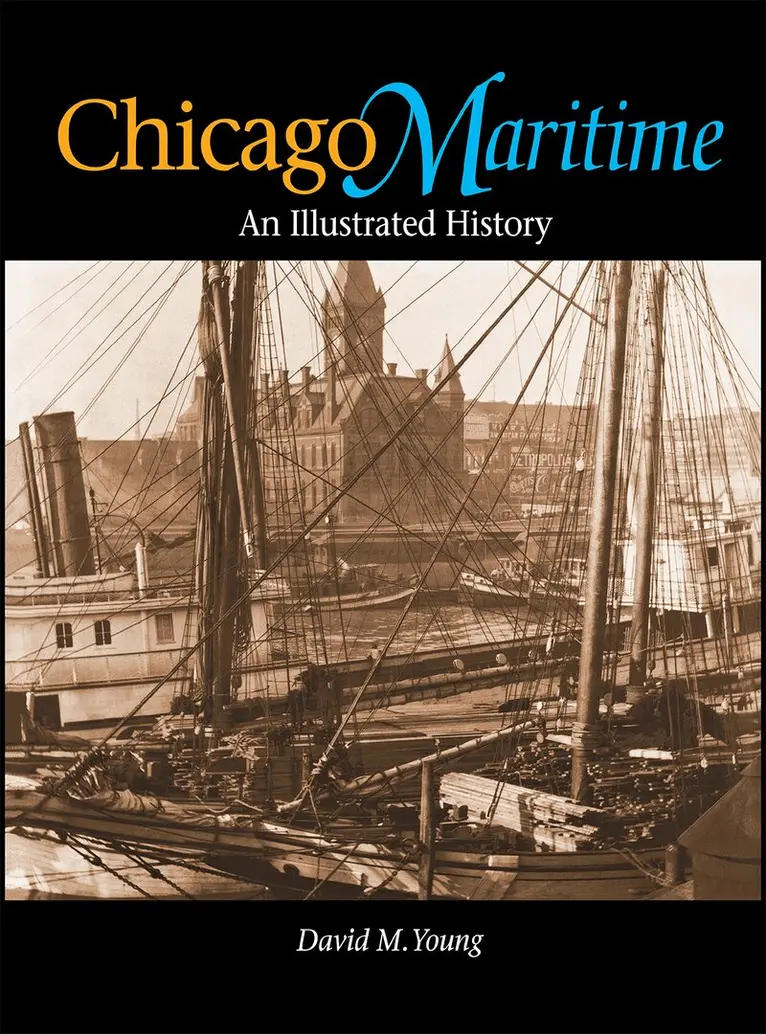
This lavishly illustrated history of Chicago as freight handler to the nation chronicles the vital role of waterborne trade and transportation in building a metropolis on the swampland that the Illiniwek once called Checagou. Louis Jolliet, the first European explorer to the area, recognized that a waterway between the Great Lakes and the Mississippi River could link the Atlantic and the Gulf of Mexico, making Checagou the fulcrum of east-west and north-south transportation for the continent. Upon completion of the I&M Canal in 1848, Chicago quickly became one of the busiest ports in the world, attracting thousands of schooners, barks, sloops, and paddle-wheel steamships. More than 100 illustrations and maps-along with tales of majestic sailing ships, piracy, terrible storms, and tragic shipwrecks-portray the eventful history of Chicago's waterways. Young describes the reversal of the Chicago River, which helped to clean the city and flood it with new life. Chicago flourished as a port of entry to the West and transportation hub, despite the disastrous Great Fire of 1871 that destroyed much of the city, including the docks and ships moored along the Chicago River. Marine disasters took their toll, too, as when the Eastland capsized in 1915, drowning nearly 900 passengers. Through narratives by two famous travelers of Chicago's waterways, Charles Dickens and Abraham Lincoln, Young reveals the hardships and small comforts of lake and river travel in its heyday. He also tells of Chicago's marine traditions, such as the eagerly anticipated arrival of ships bearing Christmas trees that drew holiday crowds to the docks each year. Today, giant car ferries and enormous ore carriers larger than battleships ply the lakes alongside luxury yachts, while the rivers that feed Chicago-and allow Chicago to feed the world-are still lively with traffic. Chicago's geographic advantages, which allowed it to eclipse competitors in the age of sail and steam, assure that it will remain a vital center for American transportation and commerce in the twenty-first century.
393 kr
Skickas inom 10-15 vardagar
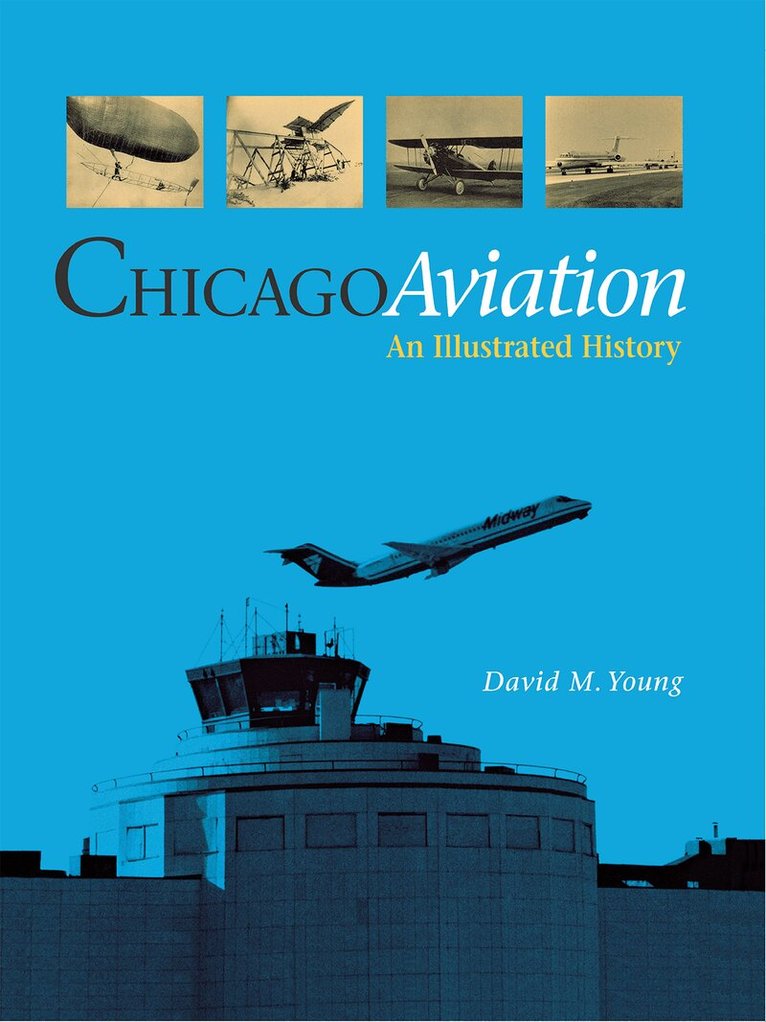
From the dawn of flight, Chicago has played a vital role in the development of aviation. Favored by geography and a superb network of railroads, the Windy City rapidly became the nation's crossroad. Young's richly illustrated history portrays the inventors, entrepreneurs, and aviators who conquered the skies and made Chicago the nation's premier hub for air travel and transport. Aviation's colorful figures come to life as Young recounts tales of the pilots, patrons, and passengers who sparked public interest in the early days of flight. Beginning with Chicago's first aviation event-a balloon ascension on July 4, 1855-Young traces the local personalities and technologies that helped make the dream of flight a reality. He offers the most complete account to date of pioneer Chicago aviator Octave Chanute, whose series of daring glider experiments led to international attention and a friendship with the Wright brothers, who sought his advice before their landmark flight at Kitty Hawk. The Windy City's golden age of aviation began in 1910, when a group of wealthy flying enthusiasts formed the Aero Club of Illinois. Fascinated audiences flocked to see the club's spectacular aviation shows and to visit Cicero Field, the place where many of America's first aviators learned to fly. Prominent public figures of the day included Harold McCormick, the millionaire patron of early aviation; Charles "Pop" Dickinson, who gained fame as the nation's oldest pilot; and Katherine Stinson, who at Cicero Field became the first woman to perform the loop-the-loop maneuver. Dozens of devastating air crashes over the years fueled America's early fear of flying. Chicago witnessed its share of air tragedies, from the Wingfoot blimp disaster of 1919 that caused the city to consider a ban on flying over its borders to the 1979 crash of a DC-10 jumbo jet at O'Hare that helped doom the career of that airplane. As Young investigates these crashes-as well as the mysterious legend of the "Great Lakes Triangle"-he sheds light on the evolution of airline safety. Aviation progress in a major city inevitably involves the continuous, often contentious, campaign for bigger and better airports. Young analyzes Midway's birth, death, and rebirth as well as the city's decision in the late 1960s to build a new runway at O'Hare, which caused a political furor over noise in the suburbs. At the end of the twentieth century, statewide controversy erupted again over the decision to reconfigure O'Hare, renewing the debate over airport expansion. Engagingly written and strikingly illustrated, Chicago Aviation is the only comprehensive history of the city's crucial contributions to the first century of powered flight.
503 kr
Skickas inom 10-15 vardagar
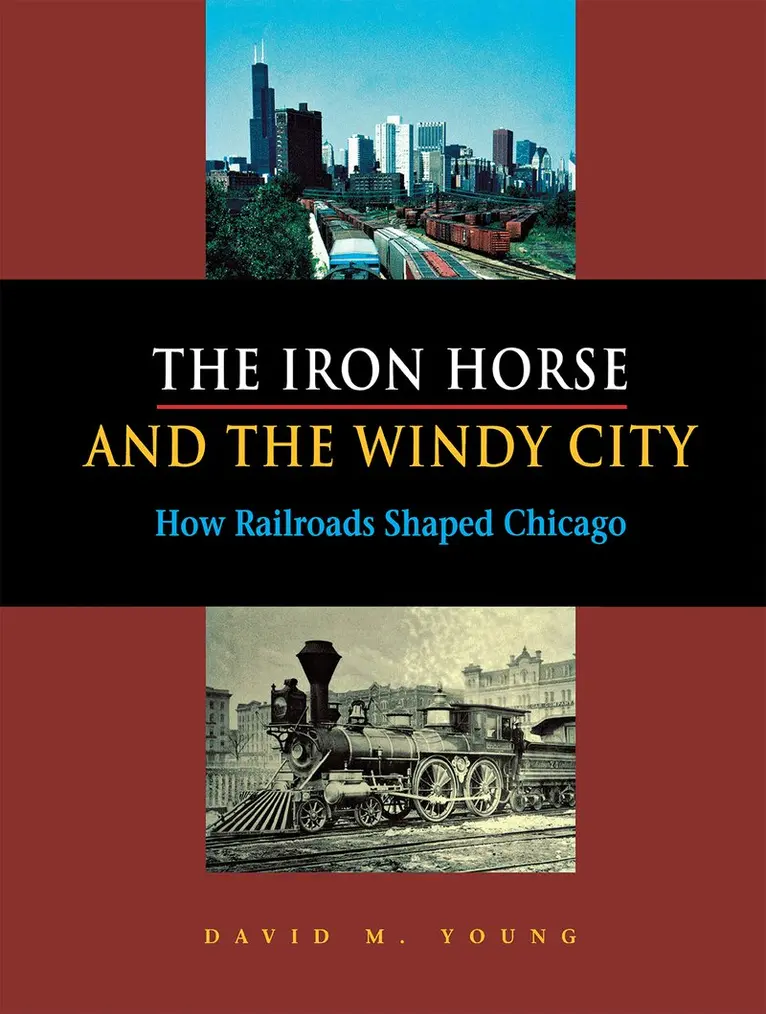
With the coming of railroads, upstart Chicago quickly became the Midwest's center for commerce and trade, overtaking its older rival, St. Louis. The first tracks to link the East coast with the West ran through Chicago, and within a few decades the city grew to be the hub of an immense transportation network that stretched across the nation. Noted transportation writer David M. Young vividly tells how railroads created and shaped Chicago, from the earliest times to the present. He shows how the expansion of rail lines promoted the growth of the suburbs, and how Chicago's burgeoning manufacturing hub became home to such corporate giants as Cyrus McCormick's harvester operation and catalogue houses Montgomery Ward; Spiegel; and Sears, Roebuck and Company. For the most part, the railroad companies that schemed to bypass Chicago failed. As the hub of a vast transportation network, Chicago experienced many tragic accidents at rail crossings. One of the first books to deal with the history of accidents and issues of safety, The Iron Horse and the Windy City reveals how Chicago eventually forced railroad companies to eliminate dangerous crossings by installing barriers or by raising tracks above street level. Railroad magnates, entrepreneurs, and ordinary people come to life in this first comprehensive account of the impact of railroads on Chicago. Transportation historians and general readers interested in Chicago will find it both essential and engaging.
172 kr
Skickas inom 5-8 vardagar
897 kr
Skickas inom 5-8 vardagar
279 kr
Skickas inom 3-6 vardagar