David Rodin - Böcker
Visar alla böcker från författaren David Rodin. Handla med fri frakt och snabb leverans.
9 produkter
9 produkter
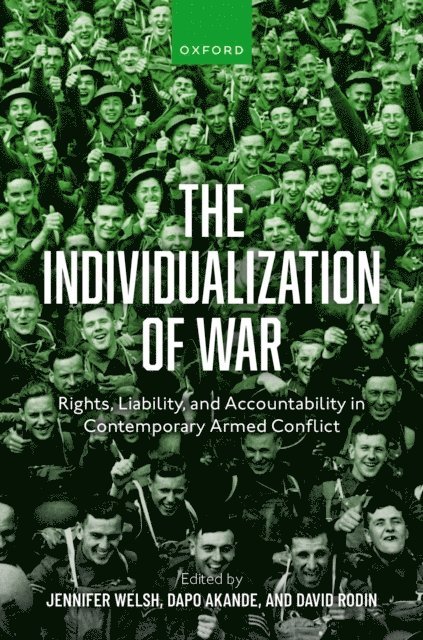
The Individualization of War
Rights, Liability, and Accountability in Contemporary Armed Conflict
Inbunden, Engelska, 2023
1 295 kr
Skickas inom 5-8 vardagar
The rights and responsibilities of the individual are at the centre of today's armed conflicts in a way that they have never been before. This process of 'individualization', which challenges the primacy of the sovereign state, is driven by normative developments related to human rights that have elevated human-centric conceptions of security and created a new class of international crimes, as well as by technological and strategic developments that can both empower individuals as military actors and enable either the targeting or protection of particular individuals.The Individualization of War examines the status of individuals in contemporary armed conflict in three main capacities: as subject to violence but deserving of protection; as liable to harm because of their responsibility for attacks on others; and as agents who can be held accountable for the perpetration of crimes. This book presents a novel conceptualization of the phenomenon of individualization, including how it is both practiced and contested. It then convenes a set of leading thinkers from the fields of moral philosophy, international law, and international relations to further our understanding of not only how individualization is manifest in armed conflict - in theory and in practice - but also how it generates tensions and challenges for today's scholars and practitioners. The collective research on which the book is based integrates the currently segregated scholarship on individualization in different academic disciplines, thereby illuminating the important links between law, morality, and politics that constitute the day-to-day reality for national militaries, international organizations, and humanitarian actors
1 757 kr
Skickas inom 5-8 vardagar
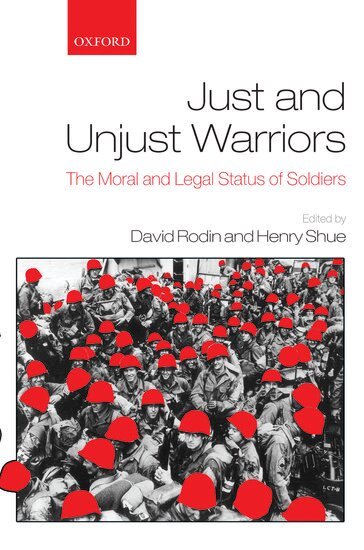
Can a soldier be held responsible for fighting in a war that is illegal or unjust? This is the question at the heart of a new debate that has the potential to profoundly change our understanding of the moral and legal status of warriors, wars, and indeed of moral agency itself. The debate pits a widely shared and legally entrenched principle of war - that combatants have equal rights and equal responsibilities irrespective of whether they are fighting in a war that just or unjust - against a set of striking new arguments. These arguments challenge the idea that there is a separation between the rules governing the justice of going to war (the jus ad bellum) and the rules governing what combatants can do in war (the jus in bello). If ad bellum and in bello rules are connected in the way these new arguments suggest, then many aspects of just war theory and laws of war would have to be rethought and perhaps reformed.This book contains eleven original and closely argued essays by leading figures in the ethics and laws of war and provides an authoritative treatment of this important new debate. The essays both challenge and defend many deeply held convictions: about the liability of soldiers for crimes of aggression, about the nature and justifiability of terrorism, about the relationship between law and morality, the relationship between soldiers and states, and the relationship between the ethics of war and the ethics of ordinary life.This book is a project of the Oxford Leverhulme Programme on the Changing Character of War.
1 247 kr
Skickas inom 3-6 vardagar
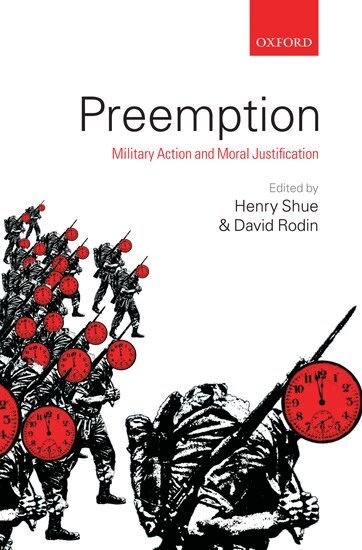
The dramatic declaration by U.S. President George W. Bush that, in light of the attacks on 9/11, the United States would henceforth be engaging in "preemption" against such enemies as terrorists armed with weapons of mass destruction forced a wide-open debate about justifiable uses of military force. Opponents saw the declaration as a direct challenge to the consensus, which has formed since the ratification of the Charter of the United Nations, that armed force may be used only in defense. Supporters responded that in an age of terrorism defense could only mean "preemption." This volume of all-new chapters provides the historical, legal, political, and philosophical perspective necessary to intelligent participation in the on-going debate, which is likely to last long beyond the war in Iraq. Thorough defenses and critiques of the Bush doctrine are provided by the most authoritative writers on the subject from both sides of the Atlantic.Is a nation ever justified in attacking before it has been attacked? If so, under precisely what conditions? Does the possibility of terrorists with weapons of mass destruction force us to change our traditional views about what counts as defense? This book provides the most comprehensive assessment to date of the justifiability of preemptive or preventive military action. Its engaging debate, accompanied by an analytic Introduction, focuses probing criticism against the most persuasive proponents of preemptive attack or preventive war, who then respond to these challenges and modify or extend their justifications. Authors of recent pivotal analyses, including historian Marc Trachtenberg, international relations professor Neta Crawford, law professor David Luban, and political philosopher Allen Buchanan, are confronted by other authoritative writers on the nature and justification of war more broadly, including historian Hew Strachan, international normative theorist Henry Shue, and philosophers David Rodin, Walter Sinnott-Armstrong, and Suzanne Uniacke. The resulting lively and many-sided exchanges shed historical, legal, political, and philosophical light on a key policy question of our time. Going beyond the simple dichotomies of popular discussion the authors reflect on the nature of all warfare, the arguments for and against it, and the possibilities for the moral to constrain the military and the political in the face of grave threat.This book is a project of the Oxford Leverhulme Programme on the Changing Character of War.
1 304 kr
Skickas inom 5-8 vardagar
When is it right to go to war? The most persuasive answer to this question has always been 'in self-defense'. In a penetrating new analysis, bringing together moral philosophy, political science, and law, David Rodin shows what's wrong with this answer. He proposes a comprehensive new theory of the right of self-defense which resolves many of the perplexing questions that have dogged both jurists and moral philosophers. By applying the theory of self-defense to international relations, Rodin produces a far-reaching critique of the canonical Just War theory. The simple analogy between self-defense and national defense - between the individual and the state - needs to be fundamentally rethought, and with it many of the basic elements of international law and the ethics of international relations.
668 kr
Skickas inom 5-8 vardagar
When is it right to go to war? The most persuasive answer to this question has always been 'in self-defense'. In a penetrating new analysis, bringing together moral philosophy, political science, and law, David Rodin shows what's wrong with this answer. He proposes a comprehensive new theory of the right of self-defense which resolves many of the perplexing questions that have dogged both jurists and moral philosophers. By applying the theory of self-defense to international relations, Rodin produces a far-reaching critique of the canonical Just War theory. The simple analogy between self-defense and national defense - between the individual and the state - needs to be fundamentally rethought, and with it many of the basic elements of international law and the ethics of international relations.
703 kr
Skickas inom 5-8 vardagar
The dramatic declaration by U.S. President George W. Bush that, in light of the attacks on 9/11, the United States would henceforth be engaging in "preemption" against such enemies as terrorists armed with weapons of mass destruction forced a wide-open debate about justifiable uses of military force. Opponents saw the declaration as a direct challenge to the consensus, which has formed since the ratification of the Charter of the United Nations, that armed force may be used only in defense. Supporters responded that in an age of terrorism defense could only mean "preemption." This volume of all-new chapters provides the historical, legal, political, and philosophical perspective necessary to intelligent participation in the on-going debate, which is likely to last long beyond the war in Iraq. Thorough defenses and critiques of the Bush doctrine are provided by the most authoritative writers on the subject from both sides of the Atlantic. Is a nation ever justified in attacking before it has been attacked? If so, under precisely what conditions? Does the possibility of terrorists with weapons of mass destruction force us to change our traditional views about what counts as defense? This book provides the most comprehensive assessment to date of the justifiability of preemptive or preventive military action. Its engaging debate, accompanied by an analytic Introduction, focuses probing criticism against the most persuasive proponents of preemptive attack or preventive war, who then respond to these challenges and modify or extend their justifications. Authors of recent pivotal analyses, including historian Marc Trachtenberg, international relations professor Neta Crawford, law professor David Luban, and political philosopher Allen Buchanan, are confronted by other authoritative writers on the nature and justification of war more broadly, including historian Hew Strachan, international normative theorist Henry Shue, and philosophers David Rodin, Walter Sinnott-Armstrong, and Suzanne Uniacke. The resulting lively and many-sided exchanges shed historical, legal, political, and philosophical light on a key policy question of our time. Going beyond the simple dichotomies of popular discussion the authors reflect on the nature of all warfare, the arguments for and against it, and the possibilities for the moral to constrain the military and the political in the face of grave threat. This book is a project of the Oxford Leverhulme Programme on the Changing Character of War.
668 kr
Skickas inom 5-8 vardagar
Can a soldier be held responsible for fighting in a war that is illegal or unjust? This is the question at the heart of a new debate that has the potential to profoundly change our understanding of the moral and legal status of warriors, wars, and indeed of moral agency itself. The debate pits a widely shared and legally entrenched principle of war-that combatants have equal rights and equal responsibilities irrespective of whether they are fi ghting in a war that is just or unjust-against a set of striking new arguments. These arguments challenge the idea that there is a separation between the rules governing the justice of going to war (the jus ad bellum) and the rules governing what combatants can do in war (the jus in bello). If ad bellum and in bello rules are connected in the way these new arguments suggest, then many aspects of just war theory and laws of war would have to be rethought and perhaps reformed. This book contains eleven original and closely argued essays by leading figures in the ethics and laws of war and provides an authoritative treatment of this important new debate. The essays both challenge and defend many deeply held convictions: about the liability of soldiers for crimes of aggression, about the nature and justifi ability of terrorism, about the relationship between law and morality, the relationship between soldiers and states, and the relationship between the ethics of war and the ethics of ordinary life.This book is a project of the Oxford Leverhulme Programme on the Changing Character of War.
901 kr
Skickas inom 10-15 vardagar
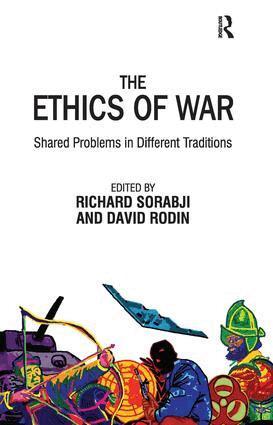
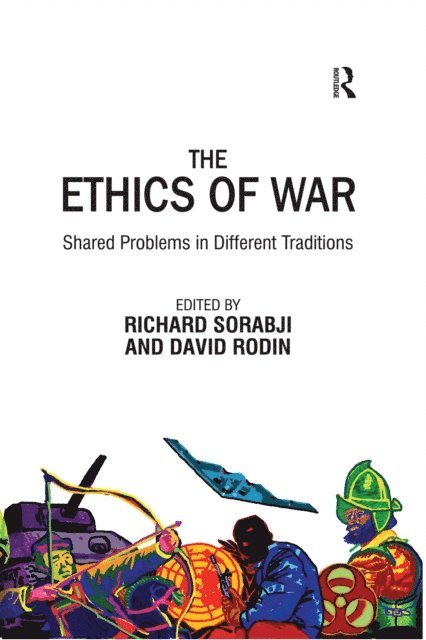
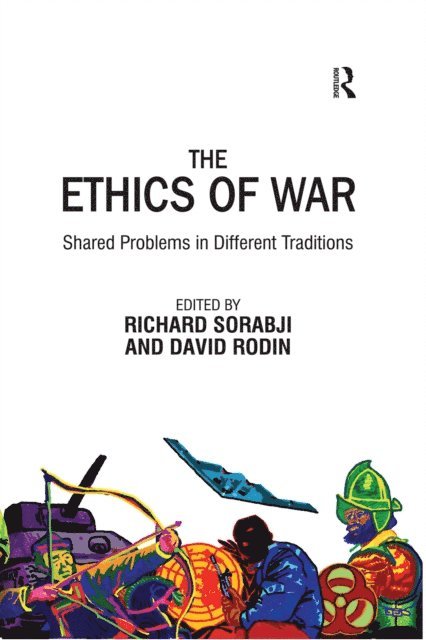
9/11 and the subsequent invasions of Afghanistan and Iraq have left many people baffled and concerned. This interdisciplinary study of the ethics of war provides an excellent orientation not only to present, but also to future conflicts. It looks both back at historical traditions of ethical thought and forward to contemporary and emerging issues. The Ethics of War traces how different cultures involved in present conflicts have addressed similar problems over the centuries. Distinguished authors reflect how the Graeco-Roman world, Byzantium, the Christian just war tradition, Islam, Judaism, Hinduism and the Geneva Conventions have addressed recurrent ethical problems of war. Cutting-edge essays by prominent modern theorists address vital contemporary issues including asymmetric war, preventive war, human rights and humanitarian intervention. Distinguished academics, ethical leaders, and public policy figures have collaborated in this innovative and accessible guide to ethical issues in war.
296 kr
Skickas inom 5-8 vardagar
This collection by leading scholars represents state of the art writings on the ethics of war. Many of the most important and contested controversies in modern war receive comprehensive discussion: the practice of torture, terrorism, assassination and targeted killing, the bombing of civilians in war, humanitarian intervention, and the invasion of Iraq Analytical introduction provides a guide to recent developments in the ethics of war An excellent overview for general readers interested in the current debate and controversies over the ethics of war