David S. Brose – författare
Visar alla böcker från författaren David S. Brose. Handla med fri frakt och snabb leverans.
6 produkter
Societies in Eclipse
Archaeology of the Eastern Woodlands Indians, A.D. 1400-1700
Av C. Wesley Cowan, Jr. Robert C. Mainfort m. fl.
E-bok, 2005
682 kr
Lägg i varukorg
Combines recent research with insights from anthropology, historiography, and oral tradition to examine the cultural landscape preceding and immediately following the arrival of Europeans After establishing the distribution of prehistoric and historic populations from the northeastern Appalachian …
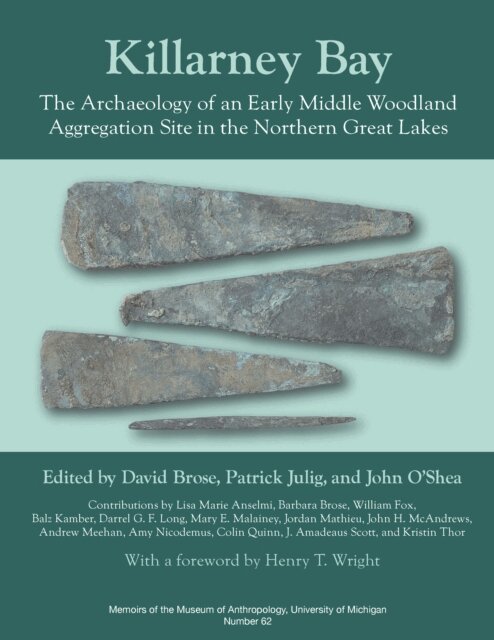
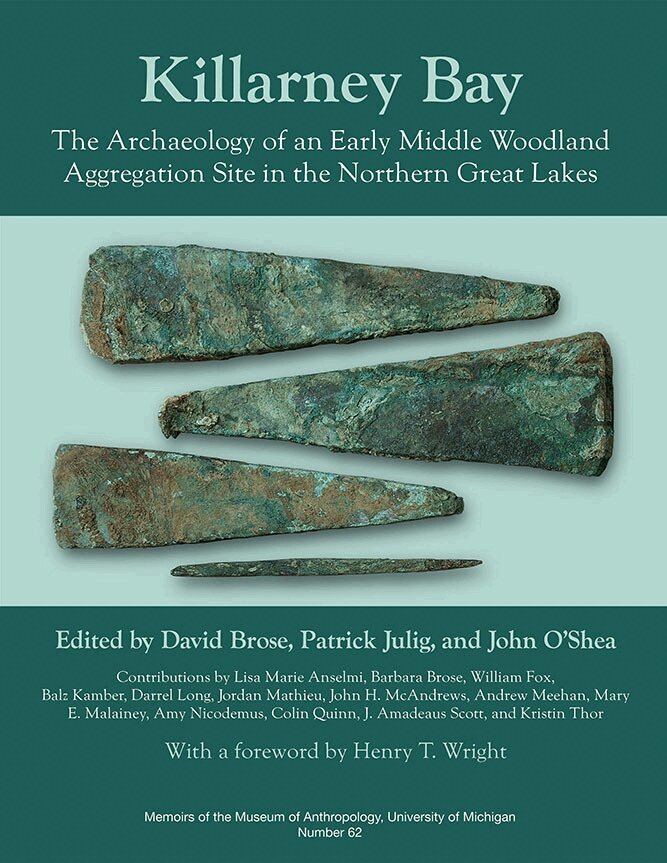
Killarney Bay
The Archaeology of an Early Middle Woodland Aggregation Site in the Northern Great Lakes
Av John M. O'Shea, Patrick Julig m. fl.
E-bok, 2021
878 kr
Lägg i varukorg
The archaeological site at Killarney Bay, on the northeast side of Georgian Bay in Ontario, Canada, has attracted and mystified archaeologists for decades. The quantities of copper artifacts, exotic cherts, and long-distance trade goods all highlight the importance of the site during its time of …
Archaeology of Summer Island
Changing Settlement Systems in Northern Lake Michigan
Häftad, 1970
208 kr
Lägg i varukorg
This work interprets some aspects of the prehistory of the basin of northern Lake Michigan based on the excavation and analysis of the Summer Island site. Brose describes the excavation and the geomorphology of the site, and reports on the site’s features and artifacts, including ceramics, lithics, …
Archaeology of Summer Island
Changing Settlement Systems in Northern Lake Michigan
E-bok, 2020
287 kr
Lägg i varukorg
This work interprets some aspects of the prehistory of the basin of northern Lake Michigan based on the excavation and analysis of the Summer Island site. Brose describes the excavation and the geomorphology of the site, and reports on the site’s features and artifacts, including ceramics, lithics, …
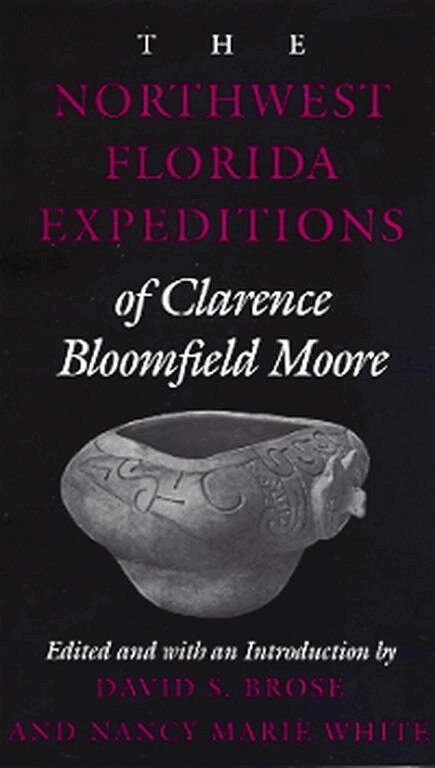
Northwest Florida Expeditions of Clarence Bloomfield Moore
Av Nancy Marie White, David S. Brose m. fl.
Häftad, 1999
750 kr
Tillfälligt slut
This compilation of Moore's archaeological reports on northwest Florida and southern Alabama and Georgia. His expeditions from 1901 to 1918 shed light on 2000 years of indigenous peoples. The editors' introduction contextualizes the investigations in the science and natural history of his day.
Killarney Bay
The Archaeology of an Early Middle Woodland Aggregation Site in the Northern Great Lakes
Av David S. Brose, Patrick Julig m. fl.
Häftad, 2021
580 kr
Tillfälligt slut
The archaeological site at Killarney Bay, on the northeast side of Georgian Bay in Ontario, Canada, has attracted and mystified archaeologists for decades. The quantities of copper artifacts, exotic cherts, and long-distance trade goods all highlight the importance of the site during its time of …