David S. Siroky – författare
Visar alla böcker från författaren David S. Siroky. Handla med fri frakt och snabb leverans.
6 produkter
Defection Denied
A Study of Civilian Support for Insurgency in Irregular War
Av David S. Siroky, Valery Dzutsati m. fl.
Häftad, 2022
308 kr
Lägg i varukorg
How can researchers obtain reliable responses on sensitive issues in dangerous settings? This Element elucidates ways for researchers to use unobtrusive experimental methods to elicit answers to risky, taboo, and threatening questions in dangerous social environments. The methods discussed in this …
Defection Denied
A Study of Civilian Support for Insurgency in Irregular War
Av Lenka Bustikova, Valery Dzutsati m. fl.
E-bok, 2022
284 kr
Lägg i varukorg
How can researchers obtain reliable responses on sensitive issues in dangerous settings? This Element elucidates ways for researchers to use unobtrusive experimental methods to elicit answers to risky, taboo, and threatening questions in dangerous social environments. The methods discussed in this …
Defection Denied
A Study of Civilian Support for Insurgency in Irregular War
Av Lenka Bustikova, Valery Dzutsati m. fl.
E-bok, 2022
294 kr
Lägg i varukorg
How can researchers obtain reliable responses on sensitive issues in dangerous settings? This Element elucidates ways for researchers to use unobtrusive experimental methods to elicit answers to risky, taboo, and threatening questions in dangerous social environments. The methods discussed in this …
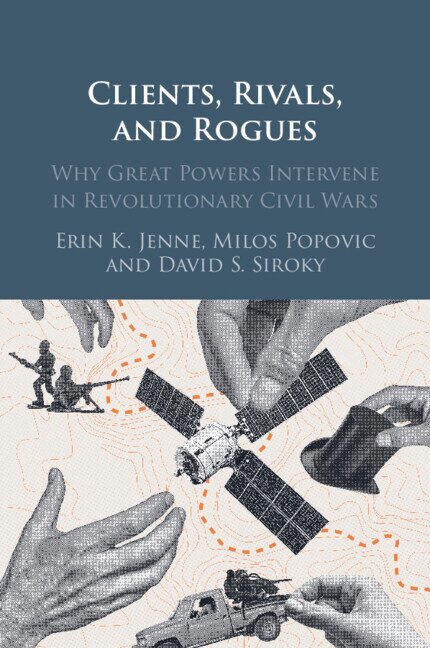
Clients, Rivals, and Rogues
Why Great Powers Intervene in Revolutionary Civil Wars
Av David S. Siroky, Milos Popovic m. fl.
E-bok, 2026
522 kr
Lägg i varukorg
Clients, Rivals, and Rogues
Why Great Powers Intervene in Revolutionary Civil Wars
Av Erin K. Jenne, Milos Popovic m. fl.
Häftad, 2026
496 kr
Lägg i varukorg
Why do great powers intervene militarily in revolutionary civil wars? This pivotal question in international relations is answered though a new theory of security hierarchies that emphasizes the role of clients, rivals and rogues in world politics. Employing a mixed-methods approach, integrating …
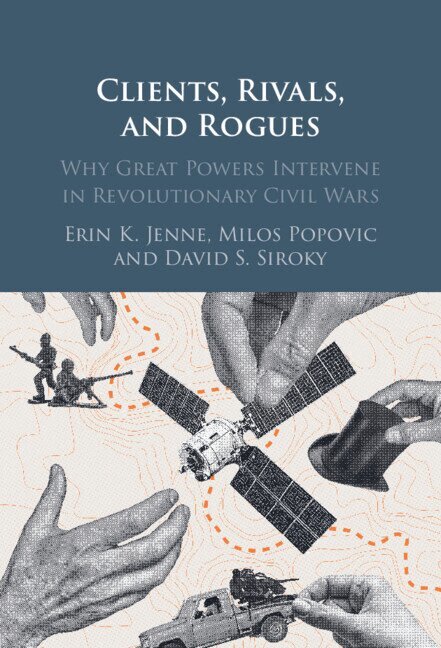
Clients, Rivals, and Rogues
Why Great Powers Intervene in Revolutionary Civil Wars
Av Erin K. Jenne, Milos Popovic m. fl.
Inbunden, 2026
1563 kr
Lägg i varukorg
Why do great powers intervene militarily in revolutionary civil wars? This pivotal question in international relations is answered though a new theory of security hierarchies that emphasizes the role of clients, rivals and rogues in world politics. Employing a mixed-methods approach, integrating …