David Stradling - Böcker
Visar alla böcker från författaren David Stradling. Handla med fri frakt och snabb leverans.
8 produkter
8 produkter
298 kr
Skickas inom 7-10 vardagar
Conservation was the first nationwide political movement in American history to grapple with environmental problems like waste, pollution, resource exhaustion, and sustainability. At its height, the conservation movement was a critical aspect of the broader reforms undertaken in the Progressive Era (1890-1910), as the rapidly industrializing nation struggled to protect human health, natural beauty, and "national efficiency." This highly effective Progressive Era movement was distinct from earlier conservation efforts and later environmentalist reforms.Conservation in the Progressive Era places conservation in historical context, using the words of participants in and opponents to the movement. Together, the documents collected here reveal the various and sometimes conflicting uses of the term "conservation" and the contested nature of the reforms it described.This collection includes classic texts by such well-known figures as Theodore Roosevelt, Gifford Pinchot, and John Muir, as well as texts from lesser-known but equally important voices that are often overlooked in environmental studies: those of rural communities, women, and the working class. These lively selections provoke unexpected questions and ideas about many of the significant environmental issues facing us today.
497 kr
Skickas inom 3-6 vardagar
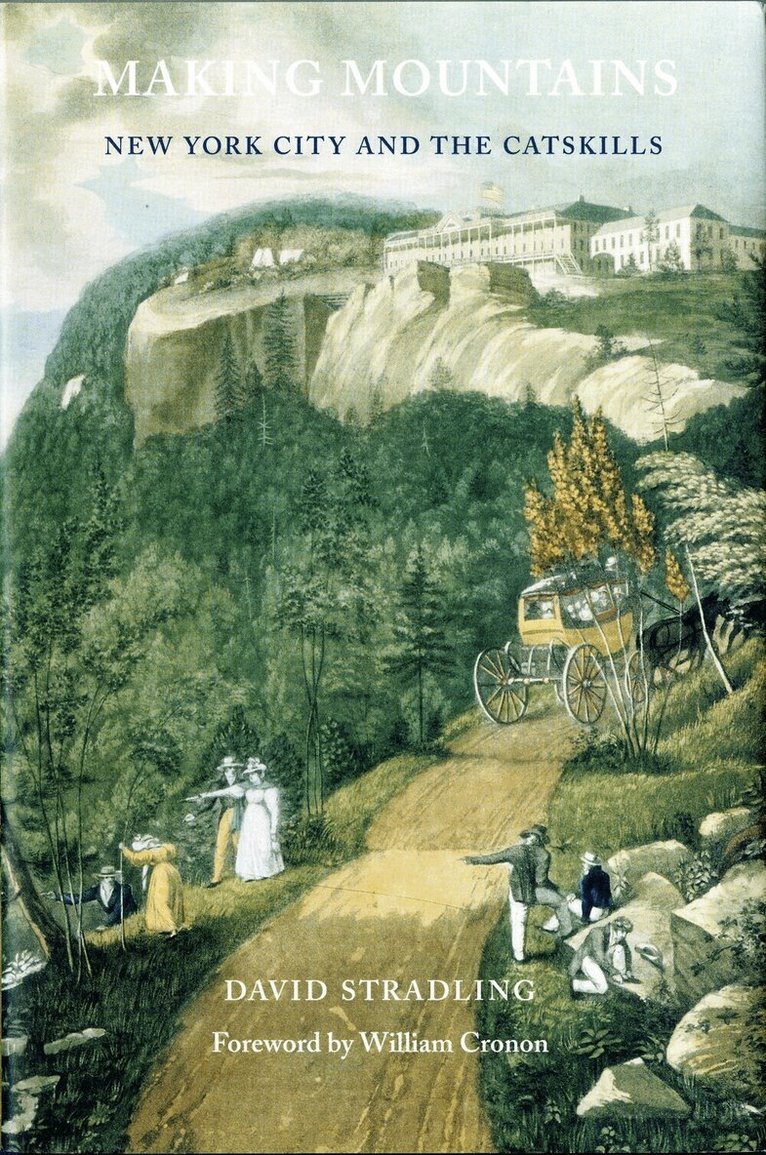
For over two hundred years, the Catskill Mountains have been repeatedly and dramatically transformed by New York City. In Making Mountains, David Stradling shows the transformation of the Catskills landscape as a collaborative process, one in which local and urban hands, capital, and ideas have come together to reshape the mountains and the communities therein. This collaboration has had environmental, economic, and cultural consequences.Early on, the Catskills were an important source of natural resources. Later, when New York City needed to expand its water supply, engineers helped direct the city toward the Catskills, claiming that the mountains offered the purest and most cost-effective waters. By the 1960s, New York had created the great reservoir and aqueduct system in the mountains that now supplies the city with 90 percent of its water.The Catskills also served as a critical space in which the nation's ideas about nature evolved. Stradling describes the great influence writers and artists had upon urban residents - especially the painters of the Hudson River School, whose ideal landscapes created expectations about how rural America should appear. By the mid-1800s, urban residents had turned the Catskills into an important vacation ground, and by the late 1800s, the Catskills had become one of the premiere resort regions in the nation.In the mid-twentieth century, the older Catskill resort region was in steep decline, but the Jewish "Borscht Belt" in the southern Catskills was thriving. The automobile revitalized mountain tourism and residence, and increased the threat of suburbanization of the historic landscape. Throughout each of these significant incarnations, urban and rural residents worked in a rough collaboration, though not without conflict, to reshape the mountains and American ideas about rural landscapes and nature.
360 kr
Skickas inom 7-10 vardagar
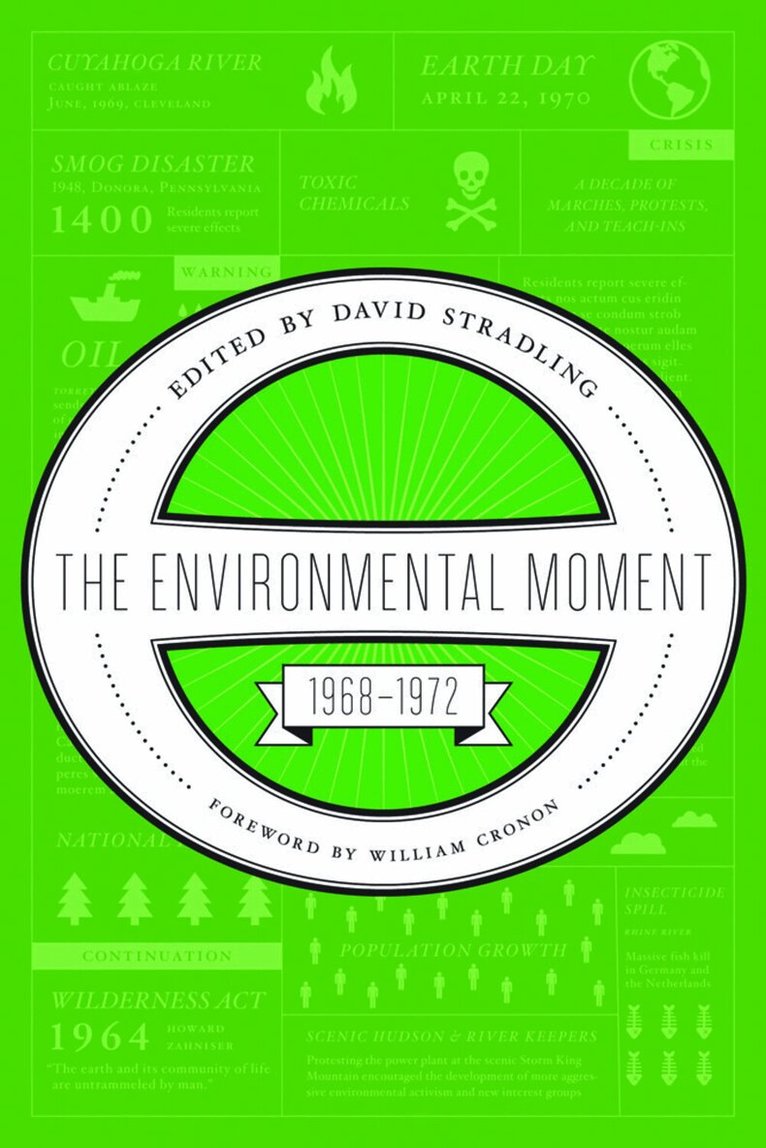
The Environmental Moment is a collection of documents that reveal the significance of the years 1968-1972 to the environmental movement in the United States. With material ranging from short pieces from the Whole Earth Catalog and articles from the Village Voice to lectures, posters, and government documents, the collection describes the period through the perspective of a diversity of participants, including activists, politicians, scientists, and average citizens. Included are the words of Rachel Carson, but also the National Review, Howard Zahniser on wilderness, Nathan Hare on the Black underclass. The chronological arrangement reveals the coincidence of a multitude of issues that rushed into public consciousness during a critical time in American history.
1 739 kr
Skickas inom 3-6 vardagar
Conservation was the first nationwide political movement in American history to grapple with environmental problems like waste, pollution, resource exhaustion, and sustainability. At its height, the conservation movement was a critical aspect of the broader reforms undertaken in the Progressive Era (1890-1910), as the rapidly industrializing nation struggled to protect human health, natural beauty, and "national efficiency." This highly effective Progressive Era movement was distinct from earlier conservation efforts and later environmentalist reforms.Conservation in the Progressive Era places conservation in historical context, using the words of participants in and opponents to the movement. Together, the documents collected here reveal the various and sometimes conflicting uses of the term "conservation" and the contested nature of the reforms it described.This collection includes classic texts by such well-known figures as Theodore Roosevelt, Gifford Pinchot, and John Muir, as well as texts from lesser-known but equally important voices that are often overlooked in environmental studies: those of rural communities, women, and the working class. These lively selections provoke unexpected questions and ideas about many of the significant environmental issues facing us today.
359 kr
Skickas inom 7-10 vardagar
From the arrival of Henry Hudson's Half Moon in the estuarial waters of what would come to be called New York Harbor to the 2006 agreement that laid out plans for General Electric to clean up the PCBs it pumped into the river named after Hudson, this work offers a sweeping environmental history of New York State. David Stradling shows how New York's varied landscape and abundant natural resources have played a fundamental role in shaping the state's culture and economy. Simultaneously, he underscores the extent to which New Yorkers have, through such projects as the excavation of the Erie Canal and the construction of highways and reservoir systems, changed the landscape of their state. Surveying all of New York State since first contact between Europeans and the region's indigenous inhabitants, Stradling finds within its borders an amazing array of environmental features, such as Niagara Falls; human intervention through agriculture, urbanization, and industrialization; and symbols, such as Storm King Mountain, that effectively define the New York identity. Stradling demonstrates that the history of the state can be charted by means of epochs that represent stages in the development and redefinition of our relationship to our natural surroundings and the built environment; New York State has gone through cycles of deforestation and reforestation, habitat destruction and restoration that track shifts in population distribution, public policy, and the economy. Understanding these patterns, their history, and their future prospects is essential to comprehending the Empire State in all its complexity.
332 kr
Skickas inom 7-10 vardagar
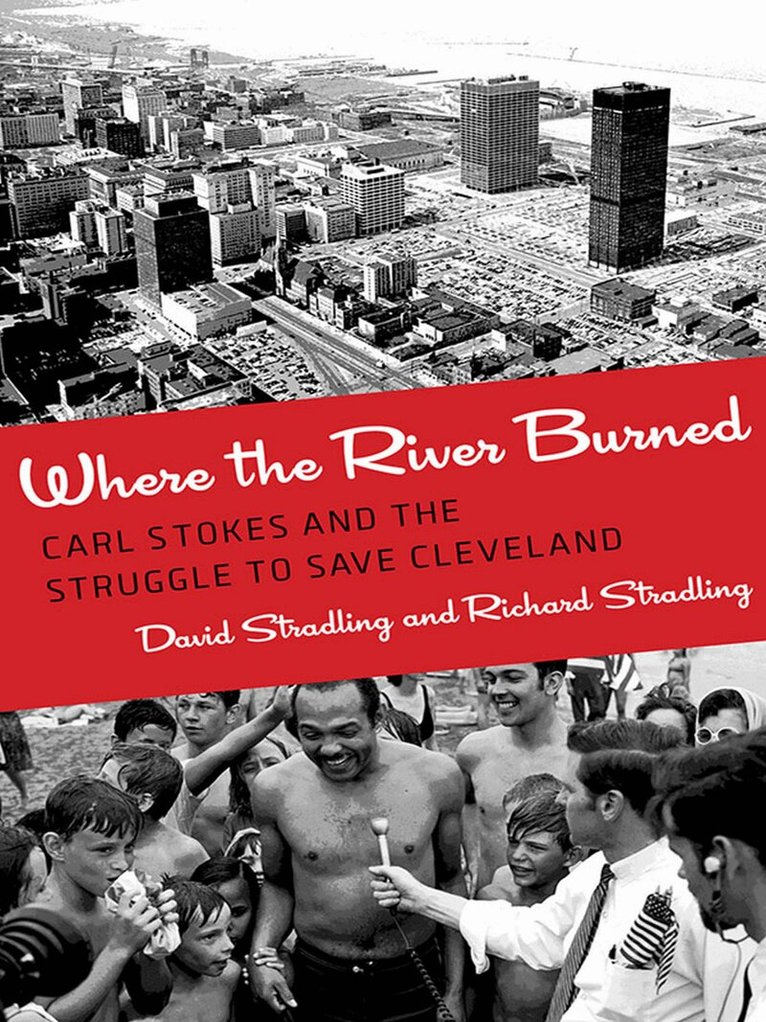
In the 1960s, Cleveland suffered through racial violence, spiking crime rates, and a shrinking tax base, as the city lost jobs and population. Rats infested an expanding and decaying ghetto, Lake Erie appeared to be dying, and dangerous air pollution hung over the city. Such was the urban crisis in the "Mistake on the Lake." When the Cuyahoga River caught fire in the summer of 1969, the city was at its nadir, polluted and impoverished, struggling to set a new course. The burning river became the emblem of all that was wrong with the urban environment in Cleveland and in all of industrial America.Carl Stokes, the first African American mayor of a major U.S. city, had come into office in Cleveland a year earlier with energy and ideas. He surrounded himself with a talented staff, and his administration set new policies to combat pollution, improve housing, provide recreational opportunities, and spark downtown development. In Where the River Burned, David Stradling and Richard Stradling describe Cleveland's nascent transition from polluted industrial city to viable service city during the Stokes administration.The story culminates with the first Earth Day in 1970, when broad citizen engagement marked a new commitment to the creation of a cleaner, more healthful and appealing city. Although concerned primarily with addressing poverty and inequality, Stokes understood that the transition from industrial city to service city required massive investments in the urban landscape. Stokes adopted ecological thinking that emphasized the connectedness of social and environmental problems and the need for regional solutions. He served two terms as mayor, but during his four years in office Cleveland's progress fell well short of his administration's goals. Although he was acutely aware of the persistent racial and political boundaries that held back his city, Stokes was in many ways ahead of his time in his vision for Cleveland and a more livable urban America.
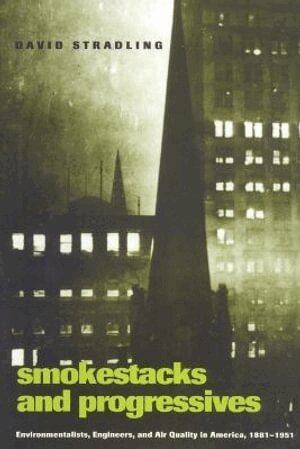
Smokestacks and Progressives
Environmentalists, Engineers, and Air Quality in America, 1881–1951
Häftad, Engelska, 2003
430 kr
Skickas inom 5-8 vardagar
In Smokestacks and Progressives, David Stradling explains the evolution of one of America's first environmental movements-the antismoke crusade of the early 1900s. The roots of modern environmentalism, Stradling explains, reach deep into the Victorian era, when early reformers connected beauty, health, and cleanliness with morality and demanded government assistance in maintaining all of them. Air quality became an important issue for middle-class residents in coal-dependent cities-how could a city without pure air, they asked, truly be clean, healthful, and moral? Eventually engineers came to the fore, displaced the reformers (many of them women) as leaders of the movement, and answered their own question-how to abate dirty air.
299 kr
Skickas inom 5-8 vardagar