• Fri frakt över 249 kr
  • •
  • Snabba leveranser
  • •
  • Billiga böcker
Kundservice

Du är på sajten för privatpersoner.

Företag, bibliotek eller offentlig verksamhet?

Du handlar på classic.bokus.com, där alla dina funktioner finns intakta.
Till classic.bokus.com
Bokus logotyp. Gå till startsidan.
  • Erbjudanden
  • Nyheter
  • Student
  • Topplistor
  • Barn & ungdom
  • Bokus Play
  • E-böcker
  • Pocketböcker
  • Spel & pussel

10% studentrabatt med kod TERM26

Sidfot

Mina sidor

    Hjälp

    • Kundservice
    • Vanliga frågor och svar
    • Frakt och leverans
    • Retur vid ångerrätt
    • Reklamera vara
    • Betalning
    • Köpvillkor
    • Allmänna villkor
    • Information om webbplatsens tillgänglighet

    Om Bokus

    • Om oss
    • Pressrum
    • För studenter
    • För företag
    • För bibliotek och offentlig verksamhet
    • För leverantörer
    • Hållbarhet

    Populärt

    • Aktuella erbjudanden
    • Presentkort
    • Studentlitteratur
    • Nya böcker
    • Topplistor
    • Signerade böcker
    • Engelska böcker

    Inspiration

    • Boktips
    • BookTok
    • Populära bokserier
    • Barnbokskaraktärer
    • Populära författare
    Logotyp för Bokus
    Följ oss på Facebook (extern länk)Följ oss på Instagram (extern länk)Följ oss på YouTube (extern länk)Följ oss på TikTok (extern länk)
    bokus @ CookiesAnpassa cookiesIntegritetspolicyKöpvillkor
    Till Citymail hemsida (extern länk)Till Budbee hemsida (extern länk)Till Postnord hemsida (extern länk)Till Schenker hemsida (extern länk)Till Early Bird hemsida (extern länk)Till Walleys hemsida (extern länk)
    1. Historia och arkeologi
    2. Historia
    3. Historia: särskilda händelser och ämnen
    4. Socialhistoria och kulturhistoria

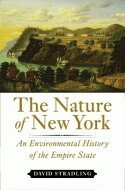
    Nature of New York

    An Environmental History of the Empire State

    AvDavid Stradling

    Inbunden, Engelska, 2010

    402 kr

    Beställningsvara. Skickas inom 5-8 vardagar. Fri frakt över 249 kr.

    Beskrivning

    From the arrival of Henry Hudson's Half Moon in the estuarial waters of what would come to be called New York Harbor to the 2006 agreement that laid out plans for General Electric to clean up the PCBs it pumped into the river named after Hudson, this work offers a sweeping environmental history of New York State. David Stradling shows how New York's varied landscape and abundant natural resources have played a fundamental role in shaping the state's culture and economy. Simultaneously, he underscores the extent to which New Yorkers have, through such projects as the excavation of the Erie Canal and the construction of highways and reservoir systems, changed the landscape of their state. Surveying all of New York State since first contact between Europeans and the region's indigenous inhabitants, Stradling finds within its borders an amazing array of environmental features, such as Niagara Falls; human intervention through agriculture, urbanization, and industrialization; and symbols, such as Storm King Mountain, that effectively define the New York identity. Stradling demonstrates that the history of the state can be charted by means of epochs that represent stages in the development and redefinition of our relationship to our natural surroundings and the built environment; New York State has gone through cycles of deforestation and reforestation, habitat destruction and restoration that track shifts in population distribution, public policy, and the economy. Understanding these patterns, their history, and their future prospects is essential to comprehending the Empire State in all its complexity.

    Produktinformation

    • Utgivningsdatum:2010-09-15
    • Mått:155 x 235 x 27 mm
    • Vikt:907 g
    • Format:Inbunden
    • Språk:Engelska
    • Antal sidor:296
    • Förlag:Cornell University Press
    • ISBN:9780801445101

    Utforska kategorier

    • Socialhistoria och kulturhistoria inom Historia och arkeologi
    • Miljövetenskap och miljöpolitik inom Naturvetenskap och teknik

    Mer om författaren

    David Stradling is Associate Professor of History at the University of Cincinnati. He is the author of Making Mountains: New York City and the Catskills and Smokestacks and Progressives: Environmentalists, Engineers, and Air Quality in America, and the editor of Conservation in the Progressive Era: Classic Texts.

    Recensioner i media

    A focused, accessible, and comprehensive environmental history. The bibliographic essay is particularly helpful and the text is well-complemented by 12 color plates and 30 figures and maps. The narrative flows as swiftly as any Catskills mountain stream.- Lawrence C. Swayne (Kaatskill Life) In what proved to be a brilliant paring of project and author, Cornell University Press invited David Stradling to write 'an accessible, comprehensive environmental history of New York State.' The resulting book stands as an exemplary stae-focused history. It is also a book brimming with insights into the complex relationship between technology and the environment... an outstanding work of environmental history.- Jeffrey K. Stine (Technology and Culture) Stradling examines virtually every major environmental issue in U.S. history from the point of view of how it played out in the state of New York. In some cases, the environmental actions of such New York men as the Roosevelts and Bob Marshall of The Wilderness Society influenced the whole country.... Stradling's scope runs from the effects of the Erie Canal in producing the market revolution to the pollution by chemical industries that caused the Love Canal crisis.... This accessible, gracefully written book meets its goal and will be especially useful for students of New York history.(Choice)

    Innehållsförteckning

    • Introduction: Nature Is on the Side of New York1. This Comes of Settling a Country: European Colonization and the Market's Arrival2. This Wilderness Becomes a Fertile Plain: Engineering the Empire State3. We Are Still in Eden: Romanticism, Tourism, and the Power of Culture4. Tainted and Unwholesome Atmospheres: Urban Environments, Government, and Reform5. A Sound Conservation Program: Theodore Roosevelt, Franklin Roosevelt, and the Power of Individuals6. Tracing Man's Progress in Making the Planet Uninhabitable: Environmental Interest Groups and Postwar Threats7. We Live in This Filth: The Urban Crisis, Environmental Justice, and Threats from BeyondEpilogue: Finding Places in HistoryNotesBibliographical EssayIndex