David Sweenor – författare
904 kr
Skickas inom 10-15 vardagar
797 kr
Läs direkt efter köp
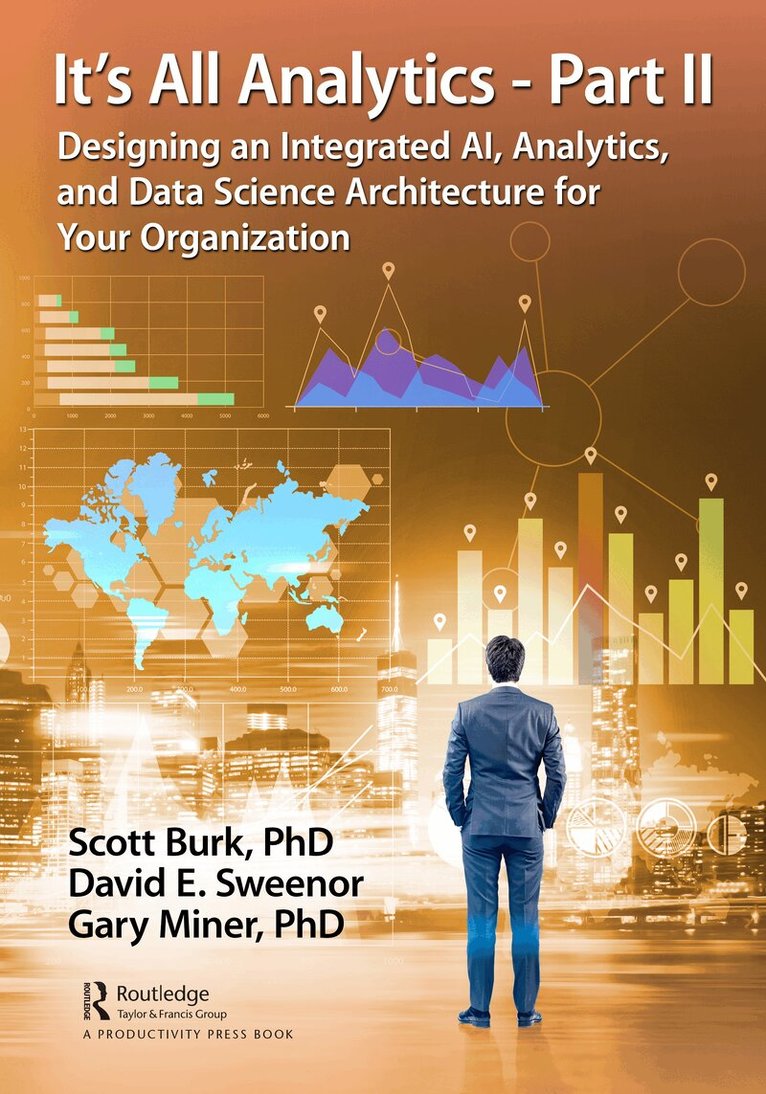
Up to 70% and even more of corporate Analytics Efforts fail!!! Even after these corporations have made very large investments, in time, talent, and money, in developing what they thought were good data and analytics programs. Why? Because the executives and decision makers and the entire analytics team have not considered the most important aspect of making these analytics efforts successful. In this Book II of "It’s All Analytics!" series, we describe two primary things: 1) What this "most important aspect" consists of, and 2) How to get this "most important aspect" at the center of the analytics effort and thus make your analytics program successful.
This Book II in the series is divided into three main parts:
Part I, Organizational Design for Success, discusses ……. The need for a complete company / organizational Alignment of the entire company and its analytics team for making its analytics successful. This means attention to the culture – the company culture culture!!! To be successful, the CEO’s and Decision Makers of a company / organization must be fully cognizant of the cultural focus on ‘establishing a center of excellence in analytics’. Simply, "culture – company culture" is the most important aspect of a successful analytics program. The focus must be on innovation, as this is needed by the analytics team to develop successful algorithms that will lead to greater company efficiency and increased profits.
Part II, Data Design for Success, discusses ….. Data is the cornerstone of success with analytics. You can have the best analytics algorithms and models available, but if you do not have good data, efforts will at best be mediocre if not a complete failure. This Part II also goes further into data with descriptions of things like Volatile Data Memory Storage and Non-Volatile Data Memory Storage, in addition to things like data structures and data formats, plus considering things like Cluster Computing, Data Swamps, Muddy Data, Data Marts, Enterprise Data Warehouse, Data Reservoirs, and Analytic Sandboxes, and additionally Data Virtualization, Curated Data, Purchased Data, Nascent & Future Data, Supplemental Data, Meaningful Data, GIS (Geographic Information Systems) & Geo Analytics Data, Graph Databases, and Time Series Databases. Part II also considers Data Governance including Data Integrity, Data Security, Data Consistency, Data Confidence, Data Leakage, Data Distribution, and Data Literacy.
Part III, Analytics Technology Design for Success, discusses …. Analytics Maturity and aspects of this maturity, like Exploratory Data Analysis, Data Preparation, Feature Engineering, Building Models, Model Evaluation, Model Selection, and Model Deployment. Part III also goes into the nuts and bolts of modern predictive analytics, discussing such terms as AI = Artificial Intelligence, Machine Learning, Deep Learning, and the more traditional aspects of analytics that feed into modern analytics like Statistics, Forecasting, Optimization, and Simulation. Part III also goes into how to Communicate and Act upon Analytics, which includes building a successful Analytics Culture within your company / organization.
All-in-all, if your company or organization needs to be successful using analytics, this book will give you the basics of what you need to know to make it happen.
797 kr
Läs direkt efter köp
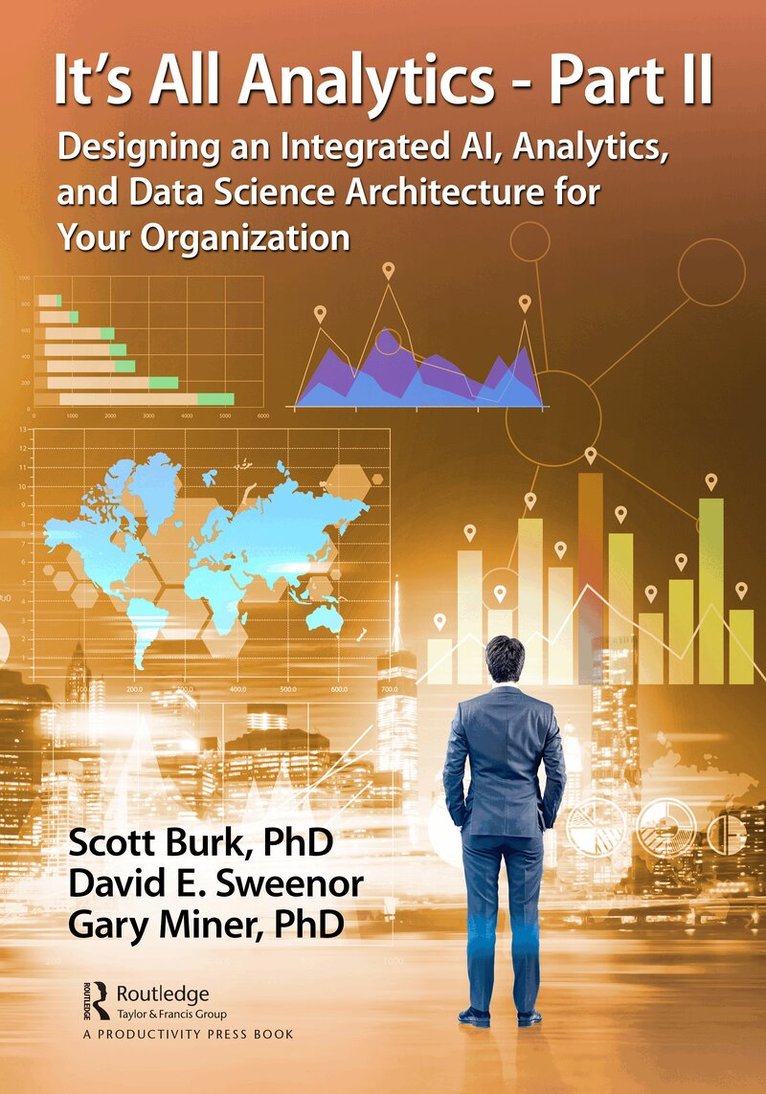
Up to 70% and even more of corporate Analytics Efforts fail!!! Even after these corporations have made very large investments, in time, talent, and money, in developing what they thought were good data and analytics programs. Why? Because the executives and decision makers and the entire analytics team have not considered the most important aspect of making these analytics efforts successful. In this Book II of "It’s All Analytics!" series, we describe two primary things: 1) What this "most important aspect" consists of, and 2) How to get this "most important aspect" at the center of the analytics effort and thus make your analytics program successful.
This Book II in the series is divided into three main parts:
Part I, Organizational Design for Success, discusses ……. The need for a complete company / organizational Alignment of the entire company and its analytics team for making its analytics successful. This means attention to the culture – the company culture culture!!! To be successful, the CEO’s and Decision Makers of a company / organization must be fully cognizant of the cultural focus on ‘establishing a center of excellence in analytics’. Simply, "culture – company culture" is the most important aspect of a successful analytics program. The focus must be on innovation, as this is needed by the analytics team to develop successful algorithms that will lead to greater company efficiency and increased profits.
Part II, Data Design for Success, discusses ….. Data is the cornerstone of success with analytics. You can have the best analytics algorithms and models available, but if you do not have good data, efforts will at best be mediocre if not a complete failure. This Part II also goes further into data with descriptions of things like Volatile Data Memory Storage and Non-Volatile Data Memory Storage, in addition to things like data structures and data formats, plus considering things like Cluster Computing, Data Swamps, Muddy Data, Data Marts, Enterprise Data Warehouse, Data Reservoirs, and Analytic Sandboxes, and additionally Data Virtualization, Curated Data, Purchased Data, Nascent & Future Data, Supplemental Data, Meaningful Data, GIS (Geographic Information Systems) & Geo Analytics Data, Graph Databases, and Time Series Databases. Part II also considers Data Governance including Data Integrity, Data Security, Data Consistency, Data Confidence, Data Leakage, Data Distribution, and Data Literacy.
Part III, Analytics Technology Design for Success, discusses …. Analytics Maturity and aspects of this maturity, like Exploratory Data Analysis, Data Preparation, Feature Engineering, Building Models, Model Evaluation, Model Selection, and Model Deployment. Part III also goes into the nuts and bolts of modern predictive analytics, discussing such terms as AI = Artificial Intelligence, Machine Learning, Deep Learning, and the more traditional aspects of analytics that feed into modern analytics like Statistics, Forecasting, Optimization, and Simulation. Part III also goes into how to Communicate and Act upon Analytics, which includes building a successful Analytics Culture within your company / organization.
All-in-all, if your company or organization needs to be successful using analytics, this book will give you the basics of what you need to know to make it happen.
673 kr
Skickas inom 10-15 vardagar
228 kr
Skickas inom 5-8 vardagar
750 kr
Läs direkt efter köp
There are untold resources on marketing and its different functions-brand marketing, content marketing, social media marketing, and more. However, throughout our combined fifty years in the field, we have failed to find a digestible book for business-to-business (B2B) marketing grounded in day-to-day realities that explains how various marketing functions fit together. This book provides practical explanations, advice, tips, and best practices on how B2B marketing actually works.
Modern B2B Marketing: A Practitioner''s Guide for Marketing Excellence is designed for anyone who leads, works, or engages with marketing. It''s for business leaders and chief marketing officers (CMOs) who want to learn how to sustain a high-performance marketing organization; for product managers and sales professionals who often work with marketing but don''t understand how it all fits together; and for marketers early in their careers who want to understand how B2B software marketing works outside of a classroom setting. This book is not about marketing technology or a rehash of the Pragmatic Marketing Framework. It is a practitioner''s guidebook for effective, modern B2B marketing.
Centered around a new model for modern marketing, Modern B2B Marketing is built around the customer. It provides an integrated framework and approach to marketing, including downloadable templates that will help you improve performance in portfolio and product marketing, content marketing, demand generation, marketing operations, customer advocacy, and more.
If you want to gain a competitive advantage in today''s fast-paced digital world, this TinyTechGuide™ is for you! Remember, it''s not the tech that''s tiny, just the book!™
489 kr
Läs direkt efter köp
In a world full of generative AI hoopla, it''s easy to get lost in the maze of options and marketing hype. Don''t get distracted by the vendor hype; instead, focus on building resilient, high-value platforms that will set you apart from the competition. The CIO''s Guide to Adopting Generative AI: Five Keys to Success fills a critical knowledge gap for CIOs and business leaders by succinctly offering five success factors that need to be met before an organization can successfully incorporate generative AI.
To unlock the transformative business value of generative AI, business leaders must: 1) identify enterprise use cases, 2) apply context to large language models (LLMs) using their organization''s data, 3) take special precautions to ensure data security and privacy, 4) implement an artificial intelligence (AI) governance framework, and 5) build manageable AI applications for business users. This report provides the keys to unlocking the true potential of generative AI.
Full of use cases and real-world applications, this report is designed for business leaders, tech professionals, and IT teams. We provide practical, jargon-free explanations of generative AI''s transformative power.
Gain a competitive edge in today''s marketplace with The CIO''s Guide to Adopting Generative AI: Five Keys to Success. Remember, it''s not the tech that''s tiny, it''s the book!™
161 kr
Skickas inom 5-8 vardagar