
Davinder L. Bhowmik - Böcker
Visar alla böcker från författaren Davinder L. Bhowmik. Handla med fri frakt och snabb leverans.
3 produkter
3 produkter
926 kr
Skickas inom 10-15 vardagar
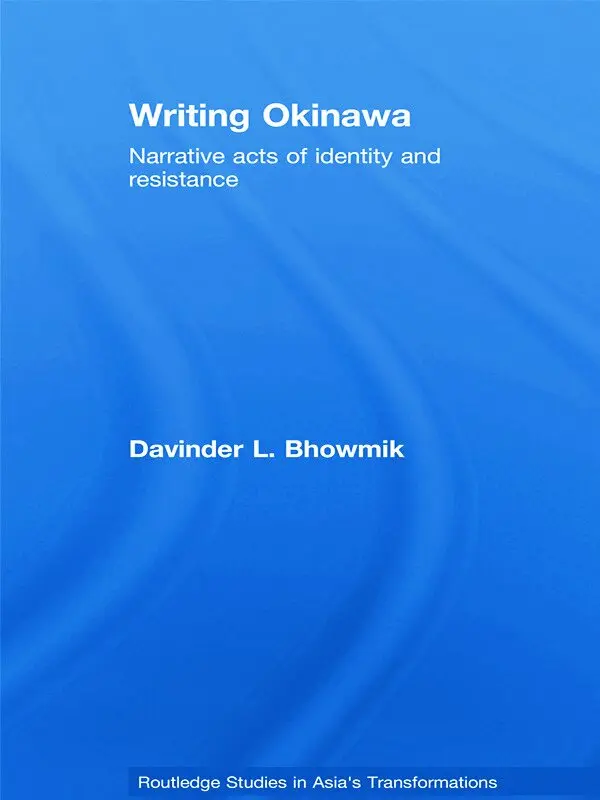
Writing Okinawa is the first comprehensive study in English of Okinawan fiction, from it’s emergence in the early twentieth-century through its most recent permutations. It provides readings of major authors and texts set against a carefully researched presentation of the region’s political and social history; at the same time, it thoughtfully engages with current critical perspective with perspectives on subaltern identity, colonialism, and post-colonialism, and the nature of "regional," "minority," and "minor" literatures. Is Okinawan fiction, replete with geographically specific themes such as language loss, identity, and war, a regional literature, distinct among Japanese letters for flourishes of local color that offer a reprieve for the urban-weary, or a minority literature that serves as a site for creative resistance and cultural renewal? This question drives the book’s argument, making it interpretative rather than merely descriptive. Not only does the book provide a critical introduction to the major works of Okinawan literature, it also argues that Okinawa’s writers consciously exploit, to good effect the overlap that exists between regional and minority literature. In so doing, they produce a rich body of work, a great deal of which challenges the notion of a unified nation that seamlessly rises from a single language and culture.
2 496 kr
Skickas inom 10-15 vardagar
Writing Okinawa is the first comprehensive study in English of Okinawan fiction, from it’s emergence in the early twentieth-century through its most recent permutations. It provides readings of major authors and texts set against a carefully researched presentation of the region’s political and social history; at the same time, it thoughtfully engages with current critical perspective with perspectives on subaltern identity, colonialism, and post-colonialism, and the nature of "regional," "minority," and "minor" literatures. Is Okinawan fiction, replete with geographically specific themes such as language loss, identity, and war, a regional literature, distinct among Japanese letters for flourishes of local color that offer a reprieve for the urban-weary, or a minority literature that serves as a site for creative resistance and cultural renewal? This question drives the book’s argument, making it interpretative rather than merely descriptive. Not only does the book provide a critical introduction to the major works of Okinawan literature, it also argues that Okinawa’s writers consciously exploit, to good effect the overlap that exists between regional and minority literature. In so doing, they produce a rich body of work, a great deal of which challenges the notion of a unified nation that seamlessly rises from a single language and culture.
324 kr
Skickas inom 7-10 vardagar
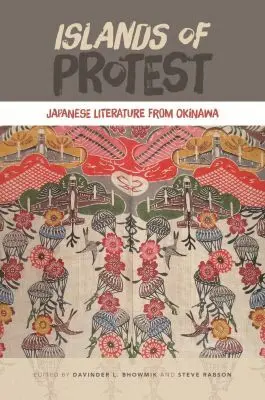
Literature is an important vehicle to further knowledge of other cultures, and English translations of Okinawan literary works have had a major impact on the field of Okinawan studies. Yet the riches of Okinawa's literature have yet to be adequately mined. Islands of Protest attempts to address this lacuna with this new selection of critically acclaimed modern and contemporary works in English.The anthology includes poetry, fiction, and drama, drawing on Okinawa's distinct culture and subtropical natural environment to convey the emotions and tensions present in everyday life. T?ma Hiroko's poem ""Backbone"" juxtaposes the natural environment of aquamarine beaches and subtropical flora and fauna with the built environment of America's military bases. Stories by two of Okinawa's most dynamic contemporary authors display wide breadth, from the preservation of island dances and burial practices in Sakiyama Tami's ""Island Confinement"" and ""Come Swaying, Come Swinging"" to the bold, disquieting themes of violence and comfort women in Medoruma Shun's ""Hope,"" ""Taiwan Woman,"" and ""Tree of Butterflies."" The crown jewel of the anthology, Chinen Seishin's play The Human Pavilion, is based on an infamous historical incident in which Okinawans were put on display during a 1903 industrial exhibition in Osaka. In his 1978 masterpiece, Chinen depicts the relentless pressure on Okinawans to become more Japanese.Given the controversial presence of U.S. military forces in Okinawa, this book is particularly timely. Disputes between the United States and Japanese governments over construction of a new marine airbase at Henoko have led to the resignation of Japan's prime minister, the election of an anti-base governor, and repeated protests. Islands of Protest offers a compelling entrée into a complex culture, one marked by wartime decimation, relentless discrimination, and fierce resistance, yet often overshadowed by the clichéd notion of a gentle Okinawa so ceaselessly depicted in Japan's mass media.