de Beer – författare
Visar alla böcker från författaren de Beer. Handla med fri frakt och snabb leverans.
6 produkter
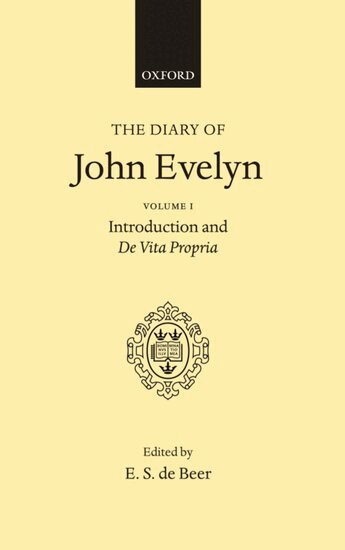
The Diary of John Evelyn: Volume 1: Introduction and De Vita Propria
Av John Evelyn, de Beer
Inbunden, 2000
3078 kr
Lägg i varukorg
A scholarly edition of volume one of the diary of John Evelyn. The edition presents an authoritative text, together with an introduction, commentary notes, and scholarly apparatus.
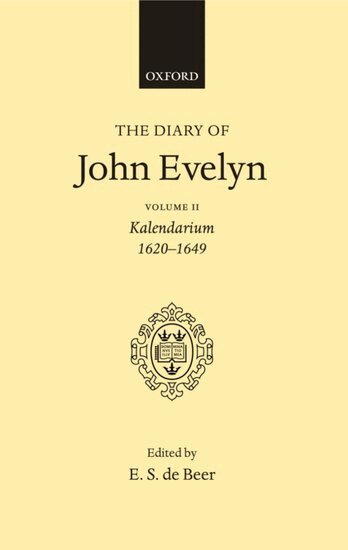
The Diary of John Evelyn: Volume 2: Kalendarium 1620-1649
Av John Evelyn, de Beer
Inbunden, 2000
2862 kr
Lägg i varukorg
A scholarly edition of volume two of the diary of John Evelyn. The edition presents an authoritative text, together with an introduction, commentary notes, and scholarly apparatus.
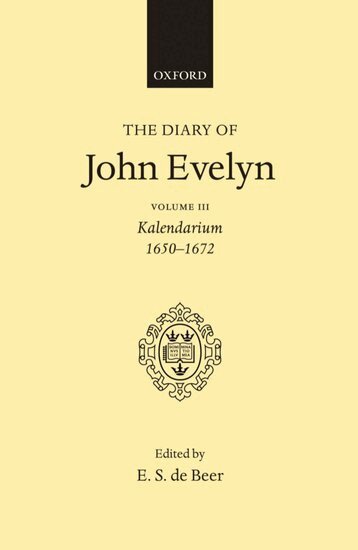
The Diary of John Evelyn: Volume 3: Kalendarium 1650-1672
Av John Evelyn, de Beer
Inbunden, 2000
2862 kr
Lägg i varukorg
A scholarly edition of volume three of the diary of John Evelyn. The edition presents an authoritative text, together with an introduction, commentary notes, and scholarly apparatus.
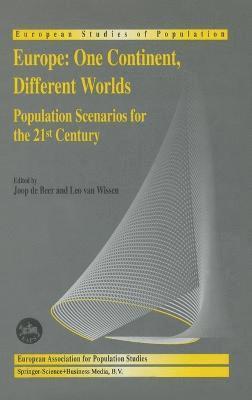
Europe - One Continent, Different Worlds
Population Scenarios for the 21st Century
Av de Beer, Joop de Beer m. fl.
Inbunden, 1999
879 kr
Lägg i varukorg
Future demographic developments in Europe will be caused by the specific economic, social and cultural context, and will, in turn, have a major influence on future economic and social conditions. To the extent that demographic trends differ across countries, separate countries may face different …
Europe: One Continent, Different Worlds
Population Scenarios for the 21st Century
Av De Beer
Häftad, 1999
552 kr
Lägg i varukorg
On the threshold of a new century the organisers of the European Population Conference 1999 (EPC99) in The Hague decided not only to highlight the population trends that Europe is facing today but also the changes in the 21 st century that are set to shape the future of Europe. They decided to …
Europe: One Continent, Different Worlds
Population Scenarios for the 21st Century
Av De Beer
E-bok, 2013
734 kr
Lägg i varukorg
On the threshold of a new century the organisers of the European Population Conference 1999 (EPC99) in The Hague decided not only to highlight the population trends that Europe is facing today but also the changes in the 21 st century that are set to shape the future of Europe. They decided to …