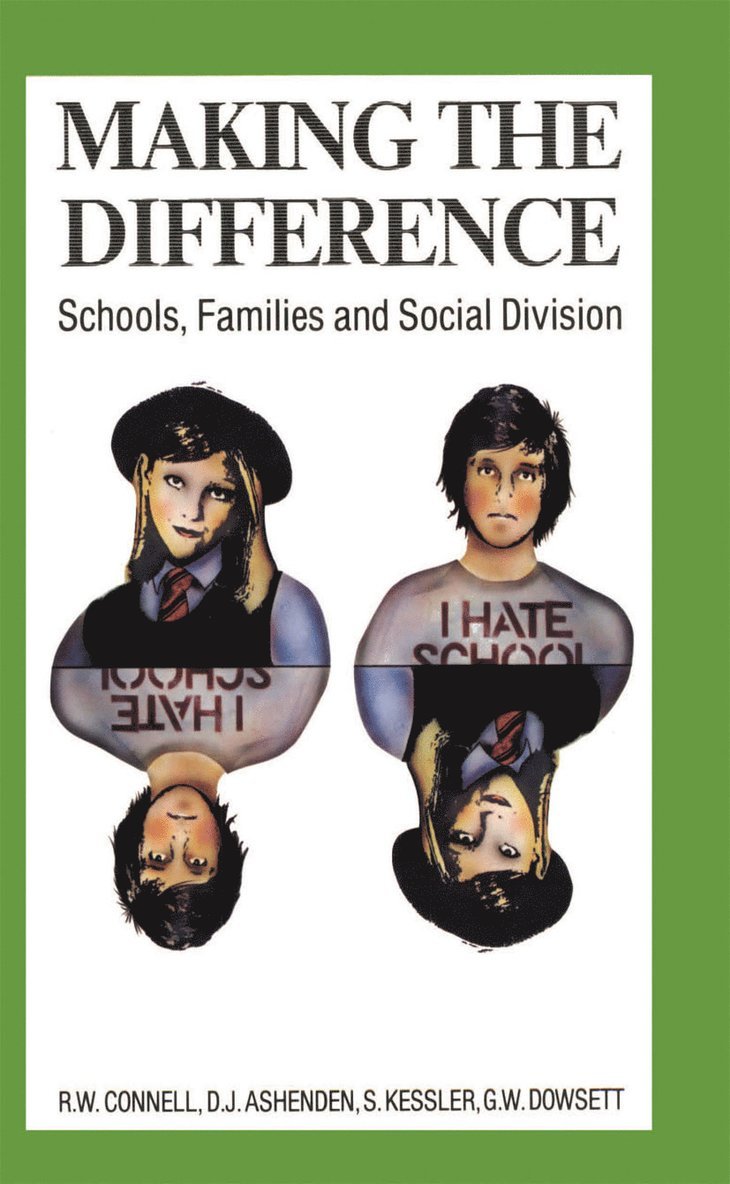
First published in 1982, Making the Difference has become a classic in the study of education and of Australian society. Hailed on publication as 'certainly the most interesting book written about Australian schools in a very long time [and] arguably the most important', it has since been recognised as one of the 10 most influential works of Australian sociology, 'not just a major argument, and a 'classic' point of reference, [but] an event, an intervention in ways of doing research and speaking to practice, a methodology, a textual style. it was designed to be read by a much wider audience than the standard sociological text, and it has succeeded'.Making the Difference draws on a detailed study of the schools and homes of the powerful and the wealthy, and of ordinary wage-earners. It allows children, parents and teachers to speak for themselves and from what they say it develops strikingly new ways of understanding 'educational inequality', of how the class and gender systems work, and of schools and their social roles. 'Equality of opportunity', co-education, and 'relevant and meaningful curriculum' are all questioned, sympathetically but incisively.Ranging across educational policy from system level to the everyday experience of kids and teachers, from the problems of schooling to the production of class and gender relations, this path-breaking combination of theory, research and politics remains engaging, thought-provoking, and relevant.
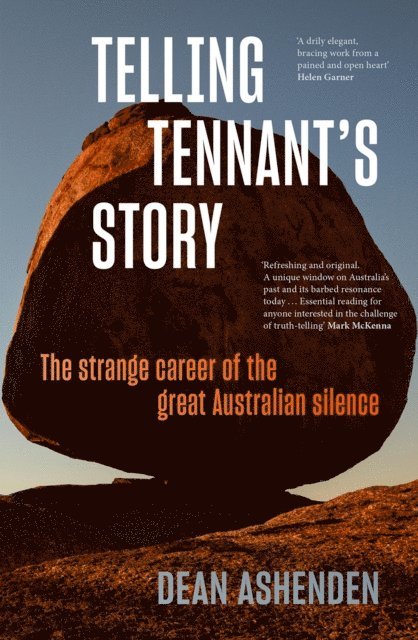
Winner of the 2022 Australian Political Book of the Year Award''A drily elegant, bracing work from a pained and open heart'' —Helen Garner''Refreshing and original. A unique window on Australia''s past and its barbed resonance today … Essential reading for anyone interested in the challenge of truth-telling.'' —Mark McKenna''A graceful, unostentatiously scholarly, wise (and highly readable) book on a subject of overwhelming and enduring significance for all Australians.'' —Robert ManneThe tale of a town, and a nationReturning after fifty years to the frontier town where he lived as a boy, Dean Ashenden finds Tennant Creek transformed, but its silence about the past still mostly intact.Provoked by a half-hidden account, Ashenden sets out to understand how the story of ''relations between two racial groups within a single field of life'' has been told and not told, in this town and across the nation.In a riveting combination of memoir, reportage and political and intellectual history, Ashenden traces the strange career of the great Australian silence – from its beginnings in the first encounters of black and white, through the work of the early anthropologists, the historians and the courts in landmark cases about land rights and the Stolen Generations, to still-continuing controversy.In a moving finale, Ashenden goes back to Tennant Creek once more to meet for the first time some of his Aboriginal contemporaries, and to ask how the truths of Australia''s story can best be told.