Debashis Mandal – författare
2 125 kr
Läs direkt efter köp
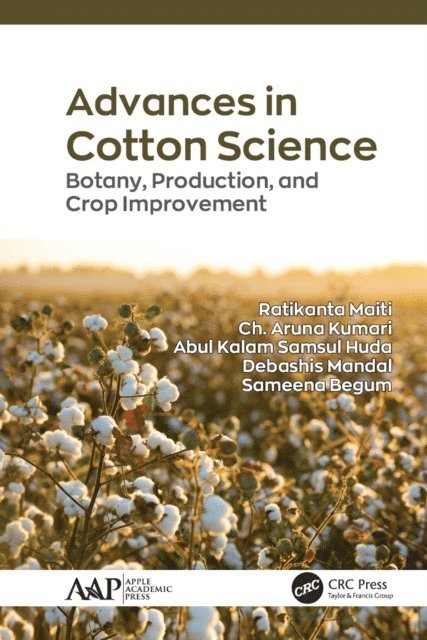
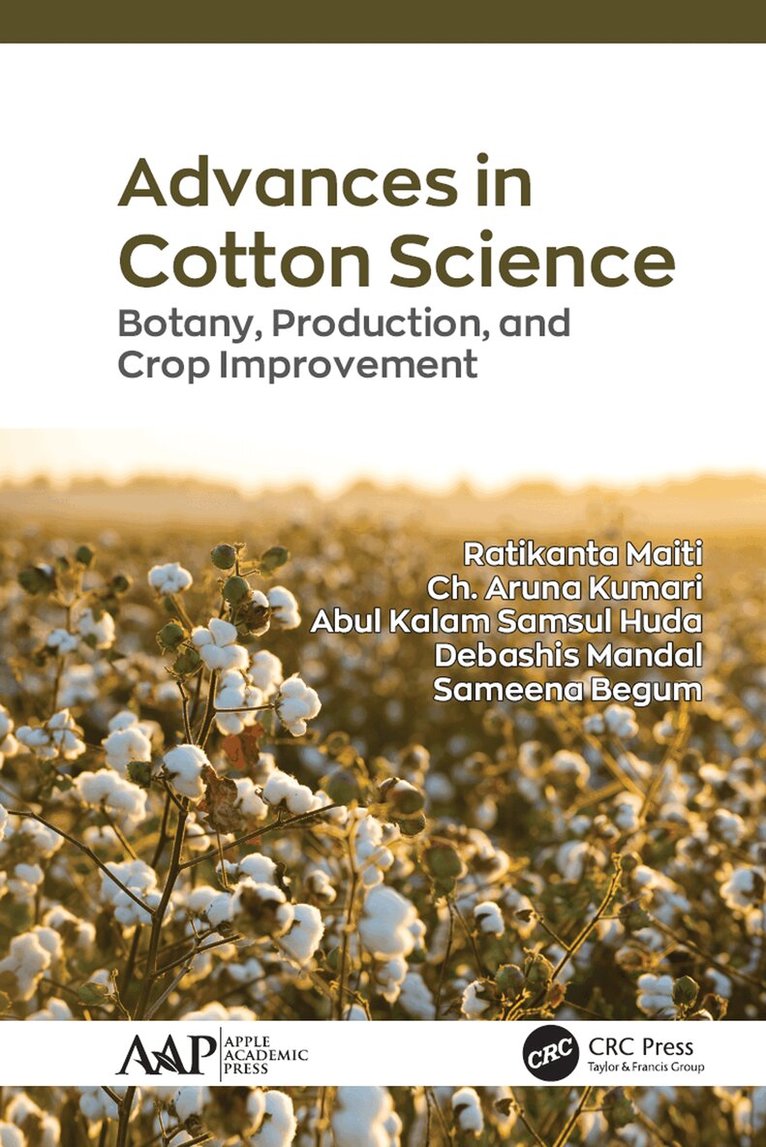
Cotton is one of the most important fiber and cash crops throughout the world, and it plays a dominant role in the industrial and agricultural economies of many countries. Here is a rich resource of information on the cultivation and production of cotton. This volume provides an overview of the origin and evolution of cotton and its physiological basis and characterization, and goes on to discuss methods of cultivation, biotic stresses, and harvesting and postharvest technology. The volume addresses new advances in research for best cultivation methods, effective utilization of resources, and operations for achieving higher yields, thus achieving higher productivity. The authors take an interdisciplinary approach, providing valuable information necessary to increase cotton productivity to meet the world’s growing demands.
2 385 kr
Läs direkt efter köp
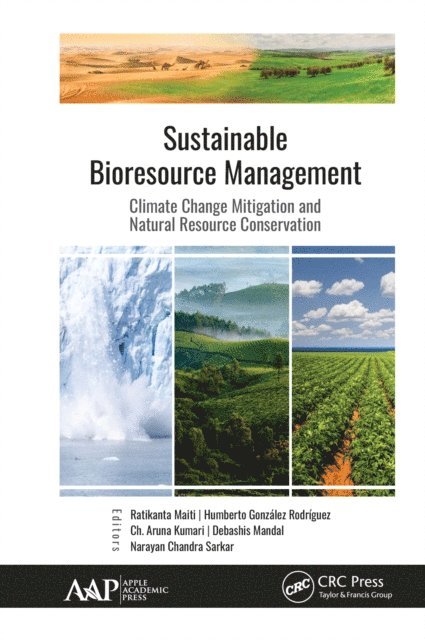
This new volume emphasizes the drastic quantitative and qualitative transformation of our surrounding environment and looks at bioresource management and the tools needed to manageenvironmental stresses. This unique compilation and interpretation of concrete scientific ventures undertaken by environmental specialists at the global level explores research dedicated to the management of natural resources by controlling biotic and abiotic factors that make the earth vulnerable to these stresses.
The chapter authors look at all types of bioresources on earth and their management at times of stress/crisis, focusing on the need for documentation, validation, and recovery of ethnic indigenous knowledge and practices that could have great impact in stress management. The book looks at topics in nature and changing climate management, adaptation, and mitigation, such as the effects of climate change on agriculture and horticulture, on timber harvesting, and on forest resources.
Also specifically discussed are crop resources management, seed crops, tree seedlings, soil management, and conservation practices. The volume also includes chapters on animal resources management.
2 125 kr
Läs direkt efter köp
Cotton is one of the most important fiber and cash crops throughout the world, and it plays a dominant role in the industrial and agricultural economies of many countries. Here is a rich resource of information on the cultivation and production of cotton. This volume provides an overview of the origin and evolution of cotton and its physiological basis and characterization, and goes on to discuss methods of cultivation, biotic stresses, and harvesting and postharvest technology. The volume addresses new advances in research for best cultivation methods, effective utilization of resources, and operations for achieving higher yields, thus achieving higher productivity. The authors take an interdisciplinary approach, providing valuable information necessary to increase cotton productivity to meet the world’s growing demands.
2 385 kr
Läs direkt efter köp
This new volume emphasizes the drastic quantitative and qualitative transformation of our surrounding environment and looks at bioresource management and the tools needed to manageenvironmental stresses. This unique compilation and interpretation of concrete scientific ventures undertaken by environmental specialists at the global level explores research dedicated to the management of natural resources by controlling biotic and abiotic factors that make the earth vulnerable to these stresses.
The chapter authors look at all types of bioresources on earth and their management at times of stress/crisis, focusing on the need for documentation, validation, and recovery of ethnic indigenous knowledge and practices that could have great impact in stress management. The book looks at topics in nature and changing climate management, adaptation, and mitigation, such as the effects of climate change on agriculture and horticulture, on timber harvesting, and on forest resources.
Also specifically discussed are crop resources management, seed crops, tree seedlings, soil management, and conservation practices. The volume also includes chapters on animal resources management.
2 385 kr
Läs direkt efter köp
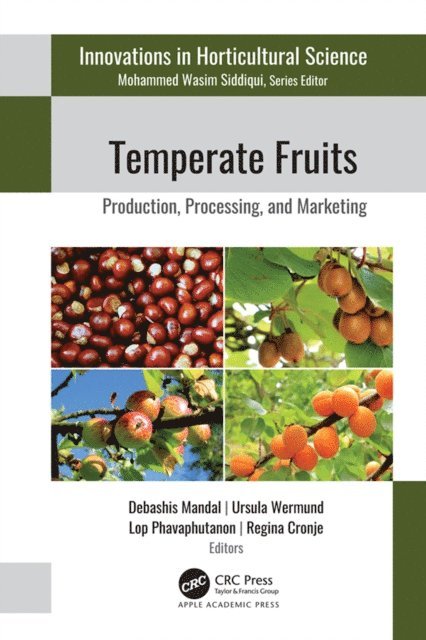
This volume, Temperate Fruits: Production, Processing, and Marketing, presents the latest pomological research on the production, postharvest handling, processing and storage, and information on marketing for a selection of temperate fruits. These include apple, pear, quince, peach, plum, sweet cherry, kiwifruit, strawberry, mulberry, and chestnut. With chapters from fruit experts from different countries of the world, the book provides the latest information on the effect of climate change on fruit production, organic fruit growing and advanced fruit breeding, the nutraceutical value and bioactive compounds in fruits and their role in human health, and new and advanced methods of fruit production. Topics include microirrigation, sustainable nutrient management, crop protection and plant health management, and farm mechanization.
2 385 kr
Läs direkt efter köp
This volume, Temperate Fruits: Production, Processing, and Marketing, presents the latest pomological research on the production, postharvest handling, processing and storage, and information on marketing for a selection of temperate fruits. These include apple, pear, quince, peach, plum, sweet cherry, kiwifruit, strawberry, mulberry, and chestnut. With chapters from fruit experts from different countries of the world, the book provides the latest information on the effect of climate change on fruit production, organic fruit growing and advanced fruit breeding, the nutraceutical value and bioactive compounds in fruits and their role in human health, and new and advanced methods of fruit production. Topics include microirrigation, sustainable nutrient management, crop protection and plant health management, and farm mechanization.
3 244 kr
Läs direkt efter köp
3 244 kr
Läs direkt efter köp
2 758 kr
Läs direkt efter köp
2 758 kr
Läs direkt efter köp
5 012 kr
Läs direkt efter köp
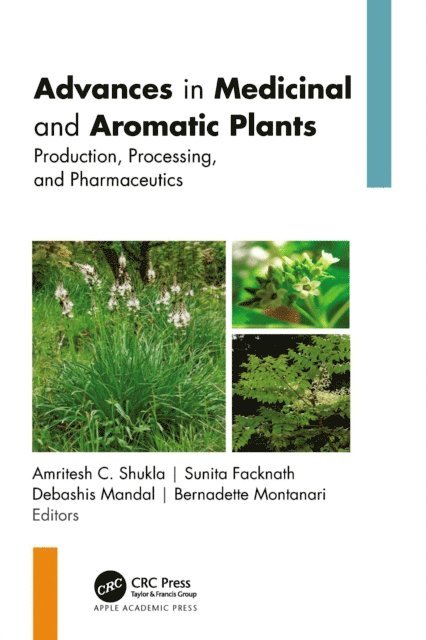
This new two-volume book categorically provides detailed information on highly demanded and medicinally important plants and their natural habits and habitats, taxonomy, cultivation practices, essential oils, active ingredients, biomolecules, modes of action, drug development, and value additions for marketing purpose.
Examples of such plants include Achillea spp. (yarrow), Acorus calamus (sweet flag), Ocimum spp. (basil), Dioscorea spp., Eucalyptus spp., Commiphora spp. (guggul), Kaempferia galanga (aromatic ginger), and Lavandula spp. (lavender). Many others are included in the volume as well.
With contributions from international experts, these two volumes present chapters that detail the history of these major medicinal and aromatic plants and also report on systematic botany, advanced production and propagation technologies, plant nutrition, moisture management, intercultivation, plant protection, postharvest technology, processing-value addition, and marketing trade. Further, the book presents promising low-cost and ecofriendly plant products and biomolecules, which are free from side-effects for use as pharmaceuticals and herbal drugs.
The most ancient form of medical therapies involving herbs has been neglected for a few decades back and has regained enormous popularity because of the effectiveness and fewer hazardous properties of many medicinal and aromatic plants. Nature has all sorts of protective medicinal compounds within its huge bioresources, which are still being identified for beneficial health purposes. Herbs containing aromatic properties because of their essential oils also have medicinal uses apart from being used as dependable sources of natural fragrance for cosmetics, perfumery, and food industries competing with synthetic aroma chemicals.
These volumes will be an excellent and comprehensive compendium for academicians and professionals working in plant resources. The compilation will also be valuable for students, researchers, medical practitioners, farmers, entrepreneurs, traders, industrialists, and NGOs who are involved in research and development and production and pharmaceutics of medicinally important plants.
2 782 kr
Skickas inom 10-15 vardagar
3 747 kr
Läs direkt efter köp
This timely two-volume compendium, Sustainable Horticulture, addresses the most important topics facing horticulture around the world today. The volumes cover a wide range of topical issues and trends in sustainable horticulture today: Volume 1: Diversity, Production, and Crop Improvements, and Volume 2: Food, Health, and Nutrition.
Global food demand is expected to be double by 2050, while at the same time the production environment and natural resources are continually shrinking and deteriorating due to many complex factors. Horticulture, a major sector of agriculture, is vital to enhancing crop production and productivity in parity with agricultural crops to meet the emerging food demand. Implementing sustainable models of crop production is really an enormous endeavor. Promising technologies and management options are needed to increase productivity to meet the growing food demand despite deteriorating production environments.
2 012 kr
Läs direkt efter köp
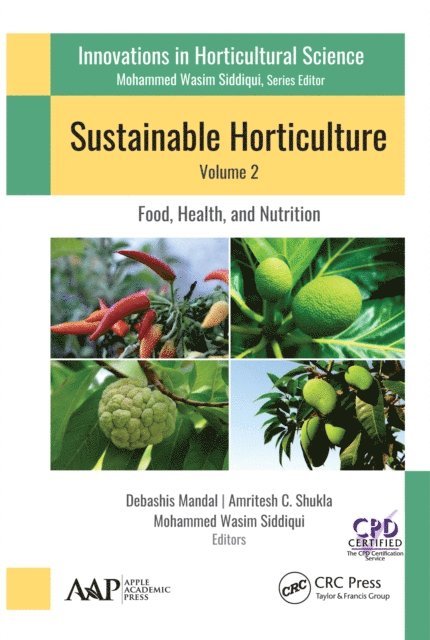
Sustainable Horticulture, Volume 2: Food, Health, and Nutrition addresses some of the most important topics facing horticulture around the world today. This volume, part of the two-volume compendium, focuses on research trends in sustainable horticulture that include postharvest management and processed food production from horticulture crops, crop protection and plant health management, and horticulture for human health and nutrition.
Global food demand is expected to be double by 2050, while at the same time the production environment and natural resources are continually shrinking and deteriorating due to many complex factors. Horticulture, a major sector of agriculture, is vital to enhancing crop production and productivity in parity with agricultural crops to meet the emerging food demand. Implementing sustainable models of crop production is really an enormous endeavor. Promising technologies and management options are needed to increase productivity to meet the growing food demand despite deteriorating production environments.
2 012 kr
Läs direkt efter köp
Sustainable Horticulture, Volume 2: Food, Health, and Nutrition addresses some of the most important topics facing horticulture around the world today. This volume, part of the two-volume compendium, focuses on research trends in sustainable horticulture that include postharvest management and processed food production from horticulture crops, crop protection and plant health management, and horticulture for human health and nutrition.
Global food demand is expected to be double by 2050, while at the same time the production environment and natural resources are continually shrinking and deteriorating due to many complex factors. Horticulture, a major sector of agriculture, is vital to enhancing crop production and productivity in parity with agricultural crops to meet the emerging food demand. Implementing sustainable models of crop production is really an enormous endeavor. Promising technologies and management options are needed to increase productivity to meet the growing food demand despite deteriorating production environments.
2 012 kr
Läs direkt efter köp
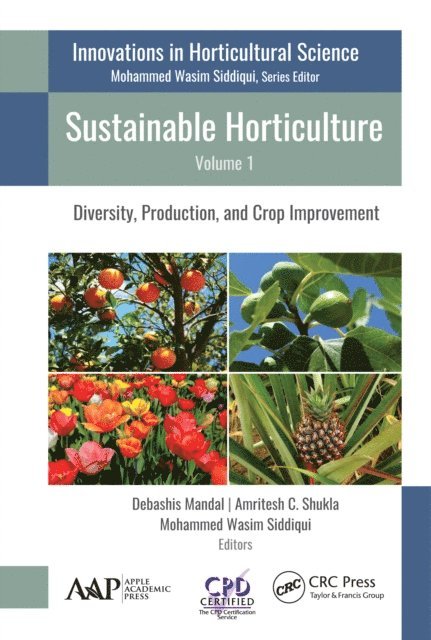
Sustainable Horticulture, Volume 1: Diversity, Production, and Crop Improvements is part of a two-volume compendium that addresses the most important topics facing horticulture around the world today.
Volume 1, on Diversity, Production, and Crop Improvement, outlines the contemporary trends in sustainable horticulture research, covering such topics as crop diversity, species variability and conservation strategies, production technology, tree architecture management, plant propagation and nutrition management, organic farming, and new dynamics in breeding and marketing of horticulture crops.
Sections include:
Genetic Resources & Biodiversity Conservation Production & Marketing of Horticulture Crops Crop Improvement & BiotechnologyTogether with Volume 2: Food, Health, and Nutrition, this two-volume compendium presents an abundance of new research on sustainable horticulture that will be valuable for a broad audience, including students of horticulture, faculty and instructors, scientists, agriculturists, government and nongovernment organizations, and other industry professionals.
2 012 kr
Läs direkt efter köp
Sustainable Horticulture, Volume 1: Diversity, Production, and Crop Improvements is part of a two-volume compendium that addresses the most important topics facing horticulture around the world today.
Volume 1, on Diversity, Production, and Crop Improvement, outlines the contemporary trends in sustainable horticulture research, covering such topics as crop diversity, species variability and conservation strategies, production technology, tree architecture management, plant propagation and nutrition management, organic farming, and new dynamics in breeding and marketing of horticulture crops.
Sections include:
Genetic Resources & Biodiversity Conservation Production & Marketing of Horticulture Crops Crop Improvement & BiotechnologyTogether with Volume 2: Food, Health, and Nutrition, this two-volume compendium presents an abundance of new research on sustainable horticulture that will be valuable for a broad audience, including students of horticulture, faculty and instructors, scientists, agriculturists, government and nongovernment organizations, and other industry professionals.
1 719 kr
Skickas inom 5-8 vardagar
1 728 kr
Skickas inom 10-15 vardagar
2 047 kr
Skickas inom 10-15 vardagar
1 825 kr
Skickas inom 10-15 vardagar
2 047 kr
Skickas inom 10-15 vardagar
1 159 kr
Skickas inom 10-15 vardagar
1 193 kr
Skickas inom 10-15 vardagar
1 159 kr
Skickas inom 10-15 vardagar
1 159 kr
Skickas inom 10-15 vardagar
1 159 kr
Skickas inom 10-15 vardagar
2 366 kr
Skickas inom 10-15 vardagar
5 064 kr
Skickas inom 10-15 vardagar
3 420 kr
Skickas inom 5-8 vardagar