Declan Smithies – författare
Visar alla böcker från författaren Declan Smithies. Handla med fri frakt och snabb leverans.
8 produkter
8 produkter
E-bok
Engelska, 2019338 kr
Läs direkt efter köp
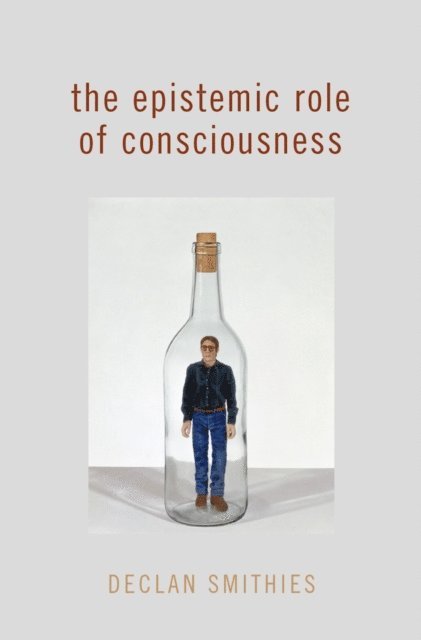
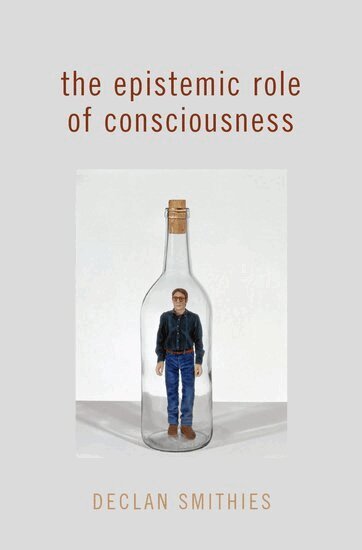
What is the role of consciousness in our mental lives? Declan Smithies argues here that consciousness is essential to explaining how we can acquire knowledge and justified belief about ourselves and the world around us. On this view, unconscious beings cannot form justified beliefs and so they cannot know anything at all. Consciousness is the ultimate basis of all knowledge and epistemic justification.Smithies builds a sustained argument for the epistemic role of phenomenal consciousness which draws on a range of considerations in epistemology and the philosophy of mind. His position combines two key claims. The first is phenomenal mentalism, which says that epistemic justification is determined by the phenomenally individuated facts about your mental states. The second is accessibilism, which says that epistemic justification is luminously accessible in the sense that you''re always in a position to know which beliefs you have epistemic justification to hold. Smithies integrates these two claims into a unified theory of epistemic justification, which he calls phenomenal accessibilism.The book is divided into two parts, which converge on this theory of epistemic justification from opposite directions. Part 1 argues from the bottom up by drawing on considerations in the philosophy of mind about the role of consciousness in mental representation, perception, cognition, and introspection. Part 2 argues from the top down by arguing from general principles in epistemology about the nature of epistemic justification. These mutually reinforcing arguments form the basis for a unified theory of the epistemic role of phenomenal consciousness, one that bridges the gap between epistemology and philosophy of mind.
Häftad, Engelska, 2023
395 kr
Skickas inom 3-6 vardagar
What is the role of consciousness in our mental lives? Declan Smithies argues here that consciousness is essential to explaining how we can acquire knowledge and justified belief about ourselves and the world around us. On this view, unconscious beings cannot form justified beliefs and so they cannot know anything at all. Consciousness is the ultimate basis of all knowledge and epistemic justification.Smithies builds a sustained argument for the epistemic role of phenomenal consciousness which draws on a range of considerations in epistemology and the philosophy of mind. His position combines two key claims. The first is phenomenal mentalism, which says that epistemic justification is determined by the phenomenally individuated facts about your mental states. The second is accessibilism, which says that epistemic justification is luminously accessible in the sense that you're always in a position to know which beliefs you have epistemic justification to hold. Smithies integrates these two claims into a unified theory of epistemic justification, which he calls phenomenal accessibilism.The book is divided into two parts, which converge on this theory of epistemic justification from opposite directions. Part 1 argues from the bottom up by drawing on considerations in the philosophy of mind about the role of consciousness in mental representation, perception, cognition, and introspection. Part 2 argues from the top down by arguing from general principles in epistemology about the nature of epistemic justification. These mutually reinforcing arguments form the basis for a unified theory of the epistemic role of phenomenal consciousness, one that bridges the gap between epistemology and philosophy of mind.
Inbunden, Engelska, 2026
907 kr
Kommande
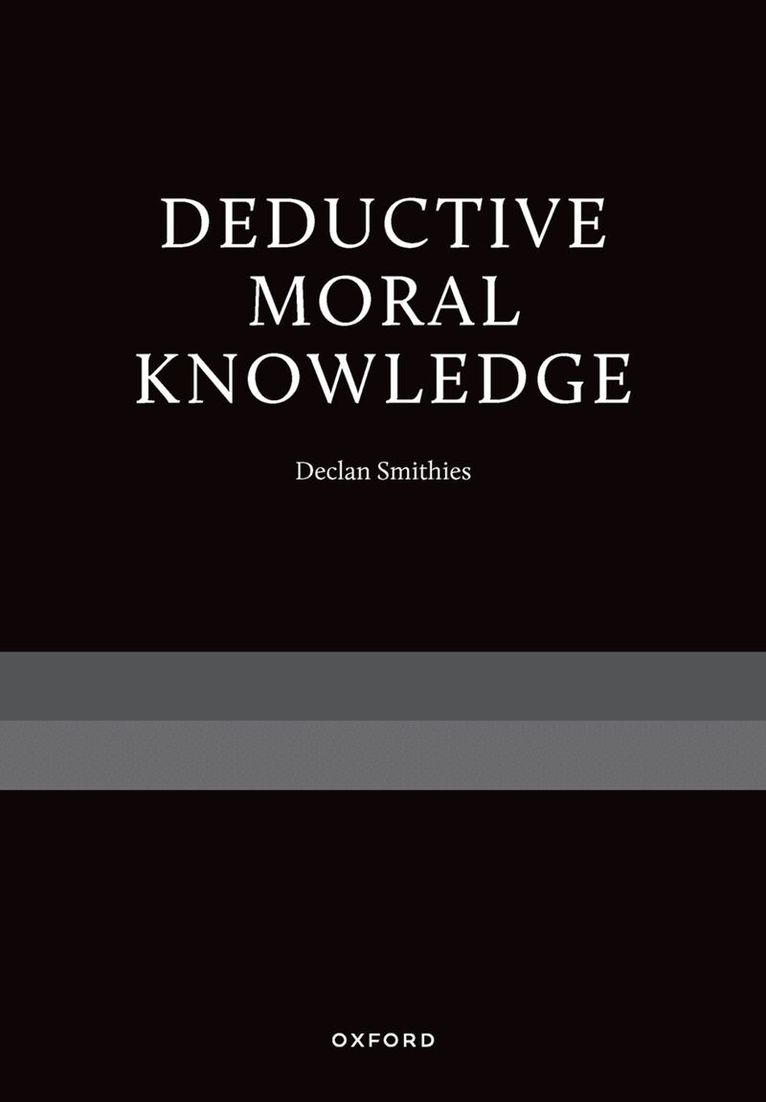
It is hard to deny that that we possess any moral knowledge, and yet it is even harder to explain where this moral knowledge comes from. We know, for instance, that the Holocaust was profoundly immoral, but how do we know this? Many philosophers explain moral knowledge in the same way as perceptual knowledge. On the perceptual model, we acquire moral knowledge without inference based on experiences that represent moral facts. In Deductive Moral Knowledge, Declan Smithies challenges that perceptual model and replaces it with a deductive model, according to which our most basic moral knowledge is based on deductive inference. Smithies argues against Hume's Law, which states that you can never deduce an “ought” from an 'is”. In its place, he defends “the anti-Humean thesis” that we can know moral facts by deducing them from the non-moral facts on which they depend. We can know the moral conclusion that the Holocaust was wrong, for example, by deducing it from the known non-moral premise that it was genocide.The anti-Humean thesis has wide-ranging implications for moral epistemology. It undermines regress arguments for moral skepticism without relying on special moral faculties such as moral perception, intuition or emotion. It supplies a new form of moral rationalism that explains how we can acquire a priori moral knowledge by deducing moral principles from non-moral assumptions in suppositional reasoning. It explains why no one can be justified in holding or acting upon morally repugnant beliefs, such as the belief that genocide is permissible. In addition, it resolves puzzles about the epistemology of moral disagreement, moral testimony, and moral uncertainty.Deductive Moral Knowledge uses recent innovations in general epistemology to illuminate contemporary debates in moral epistemology. In doing so, it advances our understanding of deductive knowledge and a priori knowledge in general, as well as moral knowledge.
Inbunden, Engelska, 2012
1 443 kr
Skickas inom 7-10 vardagar
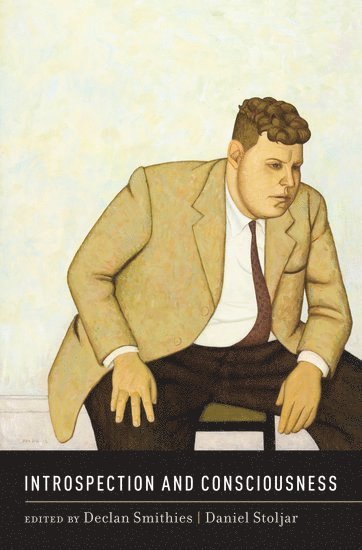
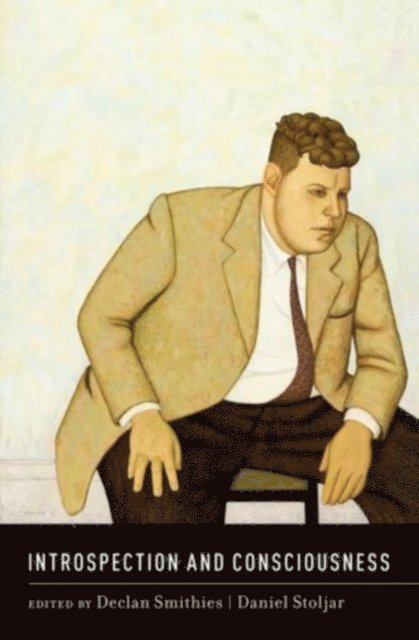
The topic of introspection stands at the interface between questions in epistemology about the nature of self-knowledge and questions in the philosophy of mind about the nature of consciousness. What is the nature of introspection such that it provides us with a distinctive way of knowing about our own conscious mental states? And what is the nature of consciousness such that we can know about our own conscious mental states by introspection? How should we understand the relationship between consciousness and introspective self-knowledge? Should we explain consciousness in terms of introspective self-knowledge or vice versa?Until recently, questions in epistemology and the philosophy of mind were pursued largely in isolation from one another. This volume aims to integrate these two lines of research by bringing together fourteen new essays and one reprinted essay on the relationship between introspection, self-knowledge, and consciousness.
Inbunden, Engelska, 2011
1 509 kr
Skickas inom 5-8 vardagar
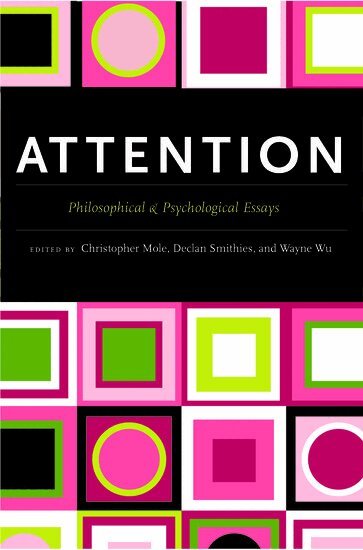
Attention has been studied in cognitive psychology for more than half a century, but until recently it was largely neglected in philosophy. Now, philosophers of mind increasingly recognize that attention has an important role to play in our theories of consciousness and of cognition. At the same time, several recent developments in psychology have led psychologists to foundational questions about the nature of attention and its implementation in the brain. As a result there has been a convergence of interest in fundamental questions about attention.This volume presents the latest thinking from the philosophers and psychologists who are working at the interface between these two disciplines. Its fourteen chapters contain detailed philosophical and scientific arguments about the nature and mechanisms of attention; the relationship between attention and consciousness; the role of attention in explaining reference, rational thought, and the control of action; the fundamental metaphysical status of attention, and the details of its implementation in the brain. These contributions combine ideas from phenomenology, neuroscience, cognitive psychology and philosophy of mind to further our understanding of this centrally important mental phenomenon, and to bring to light the foundational questions that any satisfactory theory of attention will need to address.
E-bok
PDF, Engelska, 20121 134 kr
Läs direkt efter köp
The topic of introspection stands at the interface between questions in epistemology about the nature of self-knowledge and questions in the philosophy of mind about the nature of consciousness. What is the nature of introspection such that it provides us with a distinctive way of knowing about our own conscious mental states? And what is the nature of consciousness such that we can know about our own conscious mental states by introspection? How should we understand the relationship between consciousness and introspective self-knowledge? Should we explain consciousness in terms of introspective self-knowledge or vice versa?Until recently, questions in epistemology and the philosophy of mind were pursued largely in isolation from one another. This volume aims to integrate these two lines of research by bringing together fourteen new essays and one reprinted essay on the relationship between introspection, self-knowledge, and consciousness.
Inbunden, Engelska, 2019
1 062 kr
Skickas inom 5-8 vardagar
What is the role of consciousness in our mental lives? Declan Smithies argues here that consciousness is essential to explaining how we can acquire knowledge and justified belief about ourselves and the world around us. On this view, unconscious beings cannot form justified beliefs and so they cannot know anything at all. Consciousness is the ultimate basis of all knowledge and epistemic justification.Smithies builds a sustained argument for the epistemic role of phenomenal consciousness which draws on a range of considerations in epistemology and the philosophy of mind. His position combines two key claims. The first is phenomenal mentalism, which says that epistemic justification is determined by the phenomenally individuated facts about your mental states. The second is accessibilism, which says that epistemic justification is luminously accessible in the sense that you're always in a position to know which beliefs you have epistemic justification to hold. Smithies integrates these two claims into a unified theory of epistemic justification, which he calls phenomenal accessibilism.The book is divided into two parts, which converge on this theory of epistemic justification from opposite directions. Part 1 argues from the bottom up by drawing on considerations in the philosophy of mind about the role of consciousness in mental representation, perception, cognition, and introspection. Part 2 argues from the top down by arguing from general principles in epistemology about the nature of epistemic justification. These mutually reinforcing arguments form the basis for a unified theory of the epistemic role of phenomenal consciousness, one that bridges the gap between epistemology and philosophy of mind.
E-bok
PDF, Engelska, 2019338 kr
Läs direkt efter köp
What is the role of consciousness in our mental lives? Declan Smithies argues here that consciousness is essential to explaining how we can acquire knowledge and justified belief about ourselves and the world around us. On this view, unconscious beings cannot form justified beliefs and so they cannot know anything at all. Consciousness is the ultimate basis of all knowledge and epistemic justification.Smithies builds a sustained argument for the epistemic role of phenomenal consciousness which draws on a range of considerations in epistemology and the philosophy of mind. His position combines two key claims. The first is phenomenal mentalism, which says that epistemic justification is determined by the phenomenally individuated facts about your mental states. The second is accessibilism, which says that epistemic justification is luminously accessible in the sense that you''re always in a position to know which beliefs you have epistemic justification to hold. Smithies integrates these two claims into a unified theory of epistemic justification, which he calls phenomenal accessibilism.The book is divided into two parts, which converge on this theory of epistemic justification from opposite directions. Part 1 argues from the bottom up by drawing on considerations in the philosophy of mind about the role of consciousness in mental representation, perception, cognition, and introspection. Part 2 argues from the top down by arguing from general principles in epistemology about the nature of epistemic justification. These mutually reinforcing arguments form the basis for a unified theory of the epistemic role of phenomenal consciousness, one that bridges the gap between epistemology and philosophy of mind.