Denis Lacorne – författare
Visar alla böcker från författaren Denis Lacorne. Handla med fri frakt och snabb leverans.
10 produkter
10 produkter
Del 38 - Religion, Culture, and Public Life
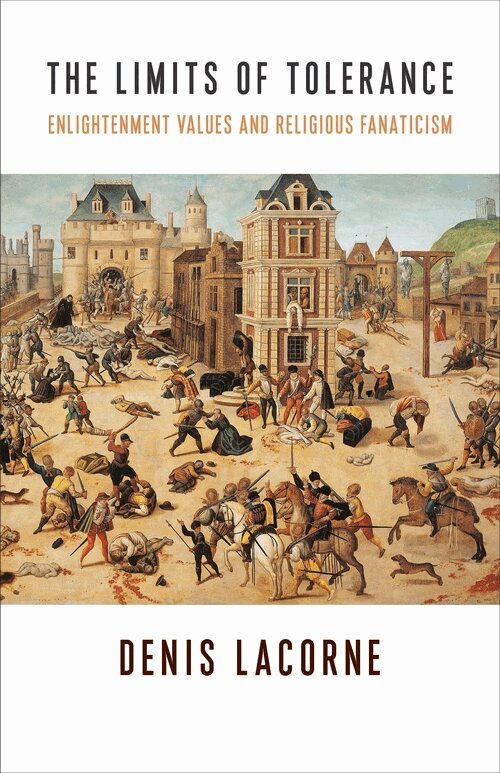
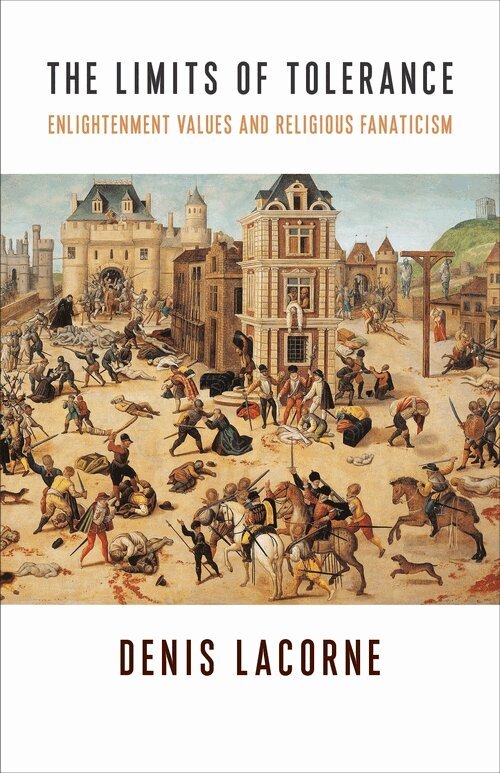
The Limits of Tolerance
Enlightenment Values and Religious Fanaticism
Häftad, Engelska, 2023
330 kr
Skickas inom 5-8 vardagar
The modern notion of tolerance—the welcoming of diversity as a force for the common good—emerged in the Enlightenment in the wake of centuries of religious wars. First elaborated by philosophers such as John Locke and Voltaire, religious tolerance gradually gained ground in Europe and North America. But with the resurgence of fanaticism and terrorism, religious tolerance is increasingly being challenged by frightened publics.In this book, Denis Lacorne traces the emergence of the modern notion of religious tolerance in order to rethink how we should respond to its contemporary tensions. In a wide-ranging argument that spans the Ottoman Empire, the Venetian republic, and recent controversies such as France’s burqa ban and the white-supremacist rally in Charlottesville, The Limits of Tolerance probes crucial questions: Should we impose limits on freedom of expression in the name of human dignity or decency? Should we accept religious symbols in the public square? Can we tolerate the intolerant? While acknowledging that tolerance can never be entirely without limits, Lacorne defends the Enlightenment concept against recent attempts to circumscribe it, arguing that without it a pluralistic society cannot survive. Awarded the Prix Montyon by the Académie Française, The Limits of Tolerance is a powerful reflection on twenty-first-century democracy’s most fundamental challenges.
Häftad, Engelska, 2007
565 kr
Skickas inom 10-15 vardagar
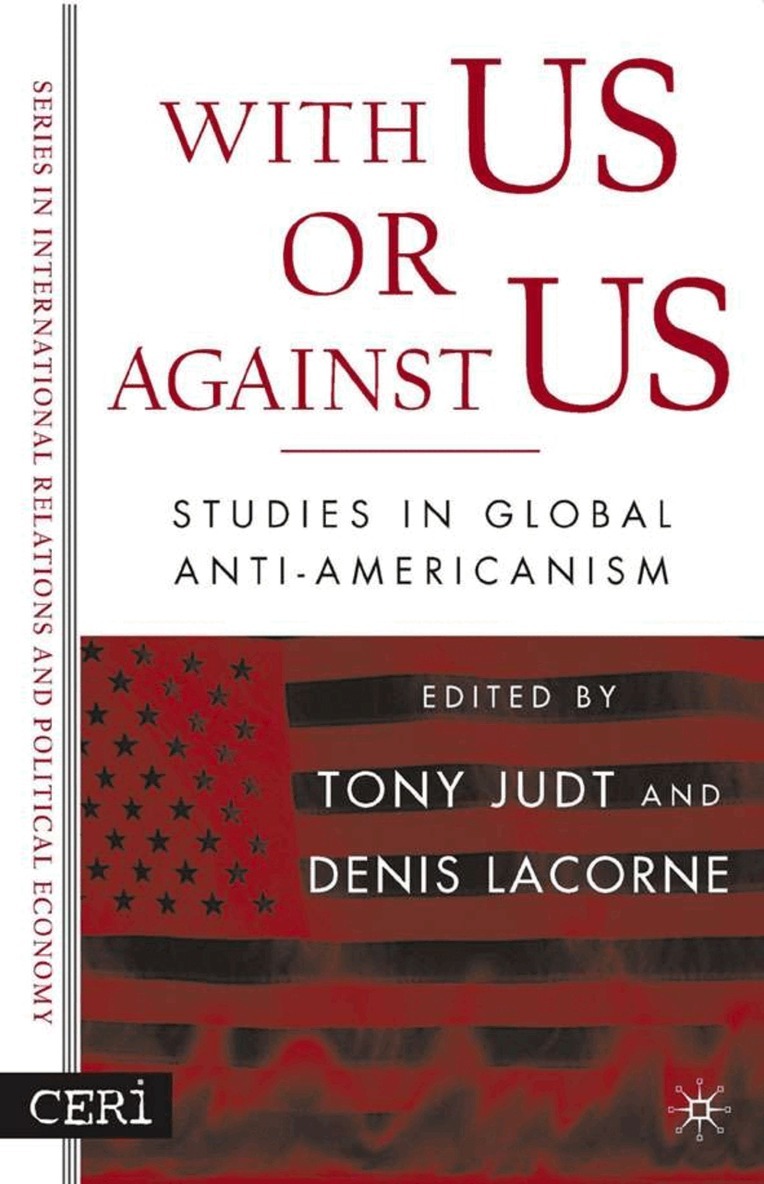
This collection of essays presents a nearly comprehensive understanding of Western and non-Western perceptions of the United States since the Second World War. The book does not seek to attack or defend the United States but rather looks to bring sustained attention to the sources of anti-Americanism, its present variety, and its likely trajectory.
Del 7 - Religion, Culture, and Public Life
Religion in America
A Political History
Inbunden, Engelska, 2011
1 090 kr
Skickas inom 5-8 vardagar
Denis Lacorne identifies two competing narratives defining the American identity. The first narrative, derived from the philosophy of the Enlightenment, is essentially secular. Associated with the Founding Fathers and reflected in the Declaration of Independence, the Constitution, and the Federalist Papers, this line of reasoning is predicated on separating religion from politics to preserve political freedom from an overpowering church. Prominent thinkers such as Voltaire, Thomas Paine, and Jean-Nicolas Demeunier, who viewed the American project as a radical attempt to create a new regime free from religion and the weight of ancient history, embraced this American effort to establish a genuine "wall of separation" between church and state. The second narrative is based on the premise that religion is a fundamental part of the American identity and emphasizes the importance of the original settlement of America by New England Puritans. This alternative vision was elaborated by Whig politicians and Romantic historians in the first half of the nineteenth century. It is still shared by modern political scientists such as Samuel Huntington.These thinkers insist America possesses a core, stable "Creed" mixing Protestant and republican values. Lacorne outlines the role of religion in the making of these narratives and examines, against this backdrop, how key historians, philosophers, novelists, and intellectuals situate religion in American politics.
Del 7 - Religion, Culture, and Public Life
Religion in America
A Political History
Häftad, Engelska, 2014
274 kr
Skickas inom 5-8 vardagar
Denis Lacorne identifies two competing narratives defining the American identity. The first narrative, derived from the philosophy of the Enlightenment, is essentially secular. Associated with the Founding Fathers and reflected in the Declaration of Independence, the Constitution, and the Federalist Papers, this line of reasoning is predicated on separating religion from politics to preserve political freedom from an overpowering church. Prominent thinkers such as Voltaire, Thomas Paine, and Jean-Nicolas Demeunier, who viewed the American project as a radical attempt to create a new regime free from religion and the weight of ancient history, embraced this American effort to establish a genuine "wall of separation" between church and state. The second narrative is based on the premise that religion is a fundamental part of the American identity and emphasizes the importance of the original settlement of America by New England Puritans. This alternative vision was elaborated by Whig politicians and Romantic historians in the first half of the nineteenth century. It is still shared by modern political scientists such as Samuel Huntington.These thinkers insist America possesses a core, stable "Creed" mixing Protestant and republican values. Lacorne outlines the role of religion in the making of these narratives and examines, against this backdrop, how key historians, philosophers, novelists, and intellectuals situate religion in American politics.
Del 38 - Religion, Culture, and Public Life
Limits of Tolerance
Enlightenment Values and Religious Fanaticism
Inbunden, Engelska, 2019
1 007 kr
Skickas inom 5-8 vardagar
The modern notion of tolerance—the welcoming of diversity as a force for the common good—emerged in the Enlightenment in the wake of centuries of religious wars. First elaborated by philosophers such as John Locke and Voltaire, religious tolerance gradually gained ground in Europe and North America. But with the resurgence of fanaticism and terrorism, religious tolerance is increasingly being challenged by frightened publics.In this book, Denis Lacorne traces the emergence of the modern notion of religious tolerance in order to rethink how we should respond to its contemporary tensions. In a wide-ranging argument that spans the Ottoman Empire, the Venetian republic, and recent controversies such as France’s burqa ban and the white-supremacist rally in Charlottesville, The Limits of Tolerance probes crucial questions: Should we impose limits on freedom of expression in the name of human dignity or decency? Should we accept religious symbols in the public square? Can we tolerate the intolerant? While acknowledging that tolerance can never be entirely without limits, Lacorne defends the Enlightenment concept against recent attempts to circumscribe it, arguing that without it a pluralistic society cannot survive. Awarded the Prix Montyon by the Académie Française, The Limits of Tolerance is a powerful reflection on twenty-first-century democracy’s most fundamental challenges.
Inbunden, Engelska, 2006
565 kr
Skickas inom 10-15 vardagar
This collection of essays presents a nearly comprehensive understanding of Western and non-Western perceptions of the United States since the Second World War. The book does not seek to attack or defend the United States but rather looks to bring sustained attention to the sources of anti-Americanism, its present variety, and its likely trajectory.
E-bok
Franska, 2007178 kr
Läs direkt efter köp
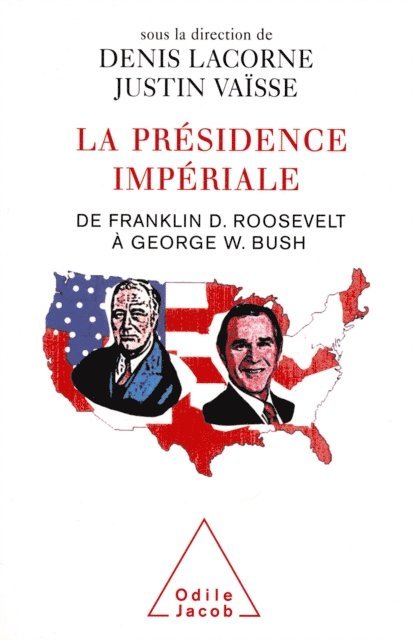
Après le 11 Septembre, la toute-puissance de George W. Bush sur le système politique américain s’est imposée. Mais, dès 2005, le législatif s’est rebiffé. La Cour suprême a réaffirmé l’indépendance du judiciaire. Bref, les freins et contrepoids étaient de retour. Cet épisode résume à lui seul l’histoire et les ambiguïtés de la « présidence impériale » américaine depuis la montée en puissance de Franklin D. Roosevelt. Denis Lacorne et Justin Vaïsse ont rassemblé autour d’eux les meilleurs spécialistes français et américains de cette question pour offrir, en français et en anglais, une plongée au cœur de la démocratie américaine. Ils remontent le temps pour faire comprendre les origines historiques de la présidence impériale. Surtout, ils font découvrir le débat qui fait rage, aux États-Unis, entre les partisans d’un exécutif fort et ceux d’une démocratie moins impériale… et moins impérialiste. Denis Lacorne, directeur de recherche au CERI, est politologue. Justin Vaïsse, Senior Fellow à la Brookings Institution (Washington), est historien. Il a notamment publié avec Pierre Melandri L’Empire du milieu. Contributions de : William Galston, Antoine Garapon, Andrew Kohut, Harvey Mansfield, Pierre Mélandri, Vincent Michelot, Jeremy Shapiro, Stephen Skowronek, Shanto Yiengar.
E-bok
Franska, 2014195 kr
Läs direkt efter köp
Le fait religieux s’impose de façon croissante dans la vie internationale. Souvent instrumentalisé au service des luttes politiques, il constitue un piège redoutable pour les États comme pour les communautés de croyants. Ce livre éclaire ce phénomène récent en analysant ses différentes facettes. Quelle est la spécificité des conflits religieux actuels par rapport aux anciennes guerres de religion ? Comment la diplomatie peut-elle et doit-elle les prendre en compte ? Existe-t-il des possibilités de médiation adaptées à ce type de conflit ? Le sujet est complexe car les enjeux religieux ne cessent d’évoluer : certaines expressions religieuses sont ouvertes et tolérantes, d’autres – souvent qualifiées d’« intégristes » ou de « fondamentalistes » – rejettent tout à la fois la modernité occidentale et les conceptions pluralistes de la démocratie. « Face à ces dérives, il me semble que nous devons, politiques et religieux, agir ensemble de manière responsable : aux personnalités religieuses de peser par leur autorité morale en faveur du dialogue, notamment par des prises de position communes, des médiations et du travail de terrain. Aux responsables politiques et diplomatiques de chercher sans relâche les formules politiques capables d’assurer une coexistence pacifique durable. » L. F. Avec les contributions de Laurent Fabius et Régis Debray Ce livre est issu d’un colloque commandité par Laurent Fabius, ministre des Affaires étrangères. Il rassemble les contributions de : Laurent Fabius, Régis Debray, Olivier Christin, Theodor Hanf, Olivier Roy, Maha Abdelrahman, Christophe Jaffrelot, Jonathan Laurence, Cécile Laborde, Philippe Portier, Amandine Barb, Peter Mandaville, Matthias Koenig, Louis-Léon Christians, Pierre Morel, Andrea Riccardi, Joseph Maïla, Christophe de Margerie et Pierre Vimont.
385 kr
Läs direkt efter köp
A une époque où l''anglais est en passe de devenir la langue véhiculaire des pays de l''Union, sans qu''il y ait jamais eu de politique linguistique européenne clairement formulée, il est important de s''interroger sur la signification même d''une langue dominante, sur les phénomènes complexes de naissance, de déclin, de renaissance linguistique, sur les conditions historiques et les facteurs socio-économiques qui favorisent tantôt des situations d''hégémonie linguistique, favorables au monolinguisme, tantôt des situations de pluralité linguistique, débouchant sur des formes stables de bilinguisme ou de multilinguisme. Voyage à l''ombre de Babel (France, Californie, Canada, Belgique, Suisse, Israël, Ukraine, Lituanie, Biélorussie et ancienne Yougoslavie..)
E-bok
PDF, Franska, 2018227 kr
Läs direkt efter köp
Le délit de blasphème n’existe plus dans la plupart des démocraties européennes. Mais les usages du blasphème, comme instrument de dénonciation des insultes faites à la religion, restent fréquents. Ils s’accompagnent souvent de violences extrêmes. Ces dernières visent aussi bien des essayistes, des artistes, des romanciers, des cinéastes que des caricaturistes. Les auteurs de ces violences sont des « fondamentalistes de l’identité » qui rejettent un monde hyper-sécularisé pour mieux défendre leurs adeptes contre de réelles ou d’imaginaires « blessures » infligées au nom de la liberté d’expression. Or, cette liberté n’est jamais totale, même dans les pays les plus attachés à la libre concurrence des idées. Elle est toujours encadrée par le législateur et la justice, et les communautés de croyants sont en général mieux protégées que les croyances proprement dites. Dans les sociétés pluralistes, le débat politique est indissociable de l’énonciation d’idées qui « heurtent, choquent ou inquiètent ». La seule contrainte est l’atteinte à l’ordre public, toujours difficile à définir.Les grandes affaires de blasphème sont traitées dans cet ouvrage pluridisciplinaire, qui réunit des historiens, des juristes et des sociologues du fait religieux : du procès du chevalier de La Barre aux caricatures de Mahomet de Charlie Hebdo ; de la fatwa de Khomeiny contre Salman Rushdie à la saga des Pussy Riot ; de la Dernière tentation du Christ de Martin Scorsese au Piss Christ de Serrano. « Se taire ou blasphémer ? », tel est l’enjeu central, en une époque de globalisation du religieux et de sécularisation du politique.