Justin Vaisse – författare
Visar alla böcker från författaren Justin Vaisse. Handla med fri frakt och snabb leverans.
11 produkter
11 produkter
Inbunden, Engelska, 2018
317 kr
As National Security Adviser to President Jimmy Carter, Zbigniew Brzezinski (1928–2017) guided U.S. foreign policy at a critical juncture of the Cold War. But his impact on America’s role in the world extends far beyond his years in the White House, and reverberates to this day. His geopolitical vision, scholarly writings, frequent media appearances, and policy advice to decades of presidents from Lyndon Johnson to Barack Obama made him America’s grand strategist, a mantle only Henry Kissinger could also claim.Both men emigrated from turbulent Europe in 1938 and got their Ph.D.s in the 1950s from Harvard, then the epitome of the Cold War university. With its rise to global responsibilities, the United States needed professionals. Ambitious academics like Brzezinski soon replaced the old establishment figures who had mired the country in Vietnam, and they transformed the way America conducted foreign policy.Justin Vaïsse offers the first biography of the successful immigrant who completed a remarkable journey from his native Poland to the White House, interacting with influential world leaders from Gloria Steinem to Deng Xiaoping to John Paul II. This complex intellectual portrait reveals a man who weighed in on all major foreign policy debates since the 1950s, from his hawkish stance on the USSR to his advocacy for the Middle East peace process and his support for a U.S.-China global partnership. Through its examination of Brzezinski’s statesmanship and comprehensive vision, Zbigniew Brzezinski raises important questions about the respective roles of ideas and identity in foreign policy.
Häftad, Engelska, 2011
274 kr
Skickas inom 5-8 vardagar
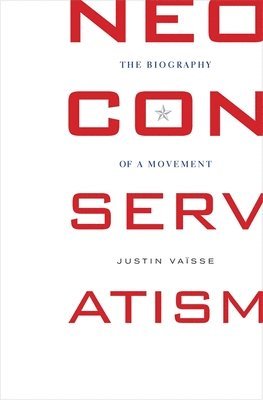
Neoconservatism has undergone a transformation that has made a clear identity almost impossible to capture. The Republican foreign policy operatives of the George W. Bush era seem far removed from the early liberal intellectuals who focused on domestic issues. Justin Vaïsse offers the first comprehensive history of neoconservatism, exploring the connections between a changing and multifaceted school of thought, a loose network of thinkers and activists, and American political life in turbulent times.In an insightful portrait of the neoconservatives and their impact on public life, Vaïsse frames the movement in three distinct ages: the New York intellectuals who reacted against the 1960s leftists; the “Scoop Jackson Democrats,” who tried to preserve a mix of hawkish anticommunism abroad and social progress at home but failed to recapture the soul of the Democratic Party; and the “Neocons” of the 1990s and 2000s, who are no longer either liberals or Democrats. He covers neglected figures of this history such as Pat Moynihan, Eugene Rostow, Lane Kirkland, and Bayard Rustin, and offers new historical insight into two largely overlooked organizations, the Coalition for a Democratic Majority and the Committee on the Present Danger. He illuminates core developments, including the split of liberalism in the 1960s, and the shifting relationship between partisan affiliation and foreign policy positions.Vaïsse gives neoconservatism its due as a complex movement and predicts it will remain an influential force in the American political landscape.
Häftad, Engelska, 2006
310 kr
Skickas inom 10-15 vardagar
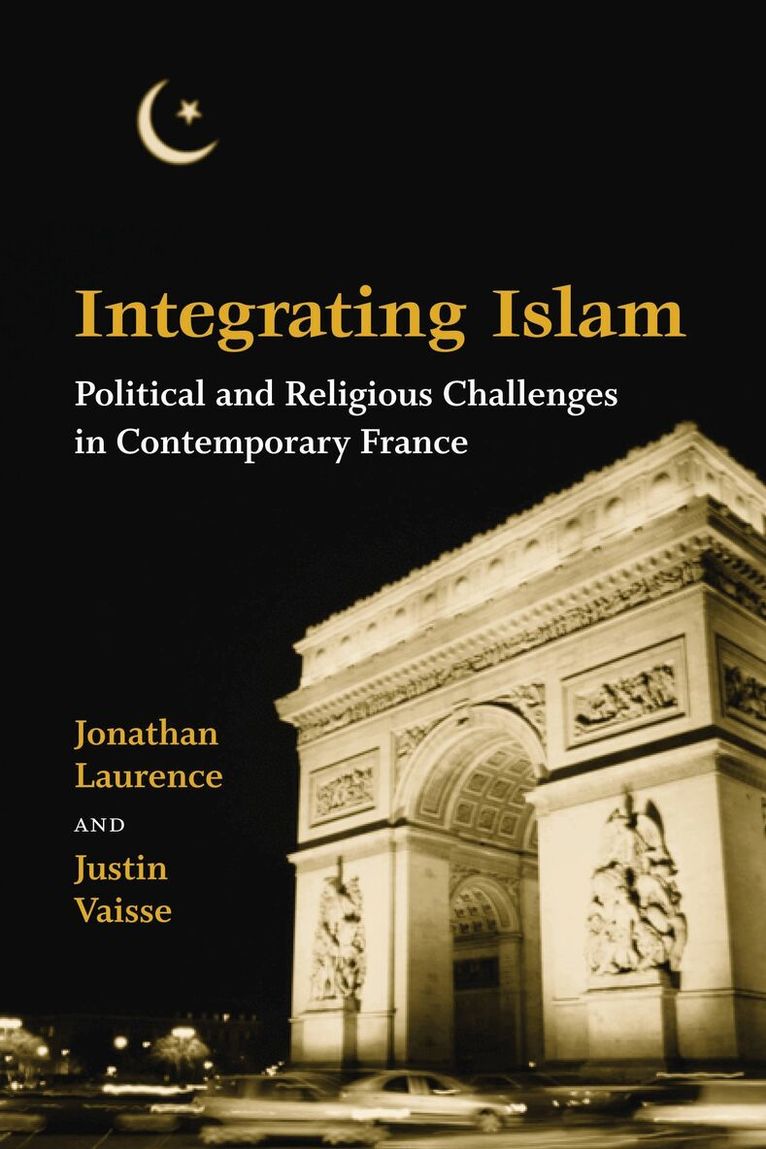
Nearly five million Muslims call France home, the vast majority from former French colonies in North Africa. While France has successfully integrated waves of immigrants in the past, this new influx poses a new variety of challengesmuch as it does in neighboring European countries. Alarmists view the growing role of Muslims in French society as a form of ""reverse colonization""; they believe Muslim political and religious networks seek to undermine European rule of law or that fundamentalists are creating a society entirely separate from the mainstream. Integrating Islam portrays the more complex reality of integration's successes and failures in French politics and society. From intermarriage rates to economic indicators, the authors paint a comprehensive portrait of Muslims in France. Using original research, they devote special attention to the policies developed by successive French governments to encourage integration and discourage extremism. Because of the size of its Muslim population and its universalistic definition of citizenship, France is an especially good test case for the encounter of Islam and the West. Despite serious and sometimes spectacular problems, the authors see a ""French Islam"" slowly replacing ""Islam in France""in other words, the emergence of a religion and a culture that feels at home in, and is largely at peace with, its host society. Integrating Islam provides readers with a comprehensive view of the state of Muslim integration into French society that cannot be found anywhere else. It is essential reading for students of French politics and those studying the interaction of Islam and the West, as well as the general public.
E-bok
PDF, Engelska, 2007321 kr
Läs direkt efter köp
Nearly five million Muslims call France home, the vast majority from former French colonies in North Africa. While France has successfully integrated waves of immigrants in the past, this new influx poses a new variety of challengesmuch as it does in neighboring European countries. Alarmists view the growing role of Muslims in French society as a form of ""reverse colonization""; they believe Muslim political and religious networks seek to undermine European rule of law or that fundamentalists are creating a society entirely separate from the mainstream. Integrating Islam portrays the more complex reality of integration's successes and failures in French politics and society. From intermarriage rates to economic indicators, the authors paint a comprehensive portrait of Muslims in France. Using original research, they devote special attention to the policies developed by successive French governments to encourage integration and discourage extremism. Because of the size of its Muslim population and its universalistic definition of citizenship, France is an especially good test case for the encounter of Islam and the West. Despite serious and sometimes spectacular problems, the authors see a ""French Islam"" slowly replacing ""Islam in France""in other words, the emergence of a religion and a culture that feels at home in, and is largely at peace with, its host society. Integrating Islam provides readers with a comprehensive view of the state of Muslim integration into French society that cannot be found anywhere else. It is essential reading for students of French politics and those studying the interaction of Islam and the West, as well as the general public.
Häftad, Franska, 2001
807 kr
Skickas inom 3-6 vardagar
Häftad, Franska, 2016
684 kr
Skickas inom 3-6 vardagar
E-bok
Franska, 2007178 kr
Läs direkt efter köp
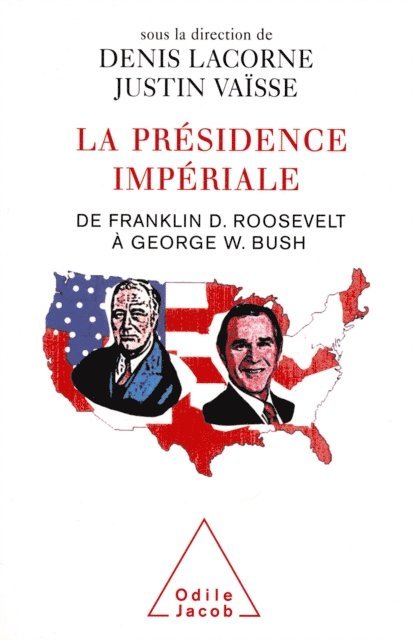
Après le 11 Septembre, la toute-puissance de George W. Bush sur le système politique américain s’est imposée. Mais, dès 2005, le législatif s’est rebiffé. La Cour suprême a réaffirmé l’indépendance du judiciaire. Bref, les freins et contrepoids étaient de retour. Cet épisode résume à lui seul l’histoire et les ambiguïtés de la « présidence impériale » américaine depuis la montée en puissance de Franklin D. Roosevelt. Denis Lacorne et Justin Vaïsse ont rassemblé autour d’eux les meilleurs spécialistes français et américains de cette question pour offrir, en français et en anglais, une plongée au cœur de la démocratie américaine. Ils remontent le temps pour faire comprendre les origines historiques de la présidence impériale. Surtout, ils font découvrir le débat qui fait rage, aux États-Unis, entre les partisans d’un exécutif fort et ceux d’une démocratie moins impériale… et moins impérialiste. Denis Lacorne, directeur de recherche au CERI, est politologue. Justin Vaïsse, Senior Fellow à la Brookings Institution (Washington), est historien. Il a notamment publié avec Pierre Melandri L’Empire du milieu. Contributions de : William Galston, Antoine Garapon, Andrew Kohut, Harvey Mansfield, Pierre Mélandri, Vincent Michelot, Jeremy Shapiro, Stephen Skowronek, Shanto Yiengar.
E-bok
Franska, 2015231 kr
Läs direkt efter köp
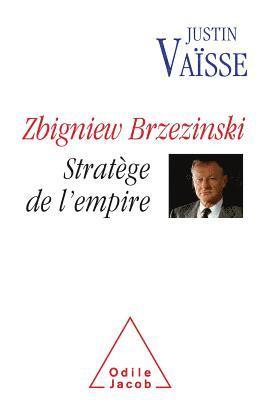
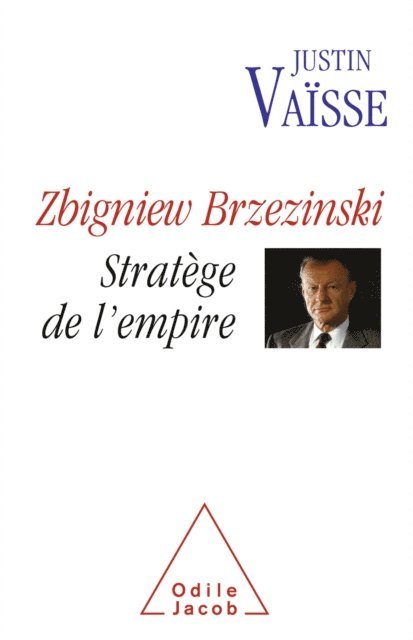
Comment un jeune immigré, polonais et catholique, devient-il le stratège de la plus grande puissance du monde ? Que nous révèle son parcours des évolutions de la géopolitique des États-Unis ? Arrivé en 1938 par paquebot à New York alors qu’il a tout juste 10 ans, admis à Harvard en 1950, Zbigniew Brzezinski s’est rapidement fait connaître comme l’un des experts les plus influents des relations internationales et l’un des meilleurs soviétologues de son temps. Avec Henry Kissinger, il incarne cette génération d’intellectuels issus de l’« université de guerre froide » qui s’est imposée en politique étrangère contre l’establishment et la vieille élite WASP. Sa carrière fulgurante le propulsera à la Maison Blanche comme conseiller à la Sécurité nationale du président Jimmy Carter, autre outsider de la politique. Dès lors, il ne cessera plus d’être consulté par les présidents américains jusqu’à Barack Obama, et son autorité dans le débat international se fera sentir sur tous les dossiers importants de notre temps, de la guerre d’Afghanistan à la chute du mur de Berlin, de l’intervention en Irak à la montée en puissance de la Chine. Un document exceptionnel sur la politique étrangère américaine et sur l’une de ses personnalités les plus marquantes. Justin Vaïsse a notamment publié Histoire du néoconservatisme aux États-Unis et La Politique étrangère de Barack Obama (2008-2012). Historien, il a enseigné à Sciences Po et à l’Université Johns Hopkins et a travaillé comme directeur de recherche à la Brookings Institution de Washington de 2007 à 2013. Il dirige actuellement le Centre d’analyse, de prévision et de stratégie du ministère des Affaires étrangères.
E-bok
Franska, 2014195 kr
Läs direkt efter köp
Le fait religieux s’impose de façon croissante dans la vie internationale. Souvent instrumentalisé au service des luttes politiques, il constitue un piège redoutable pour les États comme pour les communautés de croyants. Ce livre éclaire ce phénomène récent en analysant ses différentes facettes. Quelle est la spécificité des conflits religieux actuels par rapport aux anciennes guerres de religion ? Comment la diplomatie peut-elle et doit-elle les prendre en compte ? Existe-t-il des possibilités de médiation adaptées à ce type de conflit ? Le sujet est complexe car les enjeux religieux ne cessent d’évoluer : certaines expressions religieuses sont ouvertes et tolérantes, d’autres – souvent qualifiées d’« intégristes » ou de « fondamentalistes » – rejettent tout à la fois la modernité occidentale et les conceptions pluralistes de la démocratie. « Face à ces dérives, il me semble que nous devons, politiques et religieux, agir ensemble de manière responsable : aux personnalités religieuses de peser par leur autorité morale en faveur du dialogue, notamment par des prises de position communes, des médiations et du travail de terrain. Aux responsables politiques et diplomatiques de chercher sans relâche les formules politiques capables d’assurer une coexistence pacifique durable. » L. F. Avec les contributions de Laurent Fabius et Régis Debray Ce livre est issu d’un colloque commandité par Laurent Fabius, ministre des Affaires étrangères. Il rassemble les contributions de : Laurent Fabius, Régis Debray, Olivier Christin, Theodor Hanf, Olivier Roy, Maha Abdelrahman, Christophe Jaffrelot, Jonathan Laurence, Cécile Laborde, Philippe Portier, Amandine Barb, Peter Mandaville, Matthias Koenig, Louis-Léon Christians, Pierre Morel, Andrea Riccardi, Joseph Maïla, Christophe de Margerie et Pierre Vimont.
254 kr
Läs direkt efter köp
« Impossible de nier le rôle central que jouent les États-Unis, puissance authentiquement mondiale, cœur du système international. Ce pays a façonné le monde dans lequel nous vivons. Et il continuera de le faire des années encore. Donner une vision de ce que fut la politique étrangère américaine depuis la chute du mur de Berlin en essayant de ne négliger aucun épisode, aucun éclairage pouvant aider le lecteur à mieux juger : tel est le défi de cet ouvrage. On y verra notamment que l’Amérique n’est pas vraiment l’ “hyperpuissance” que l’on croit. Faiblesses, insuffisances de moyens, contradictions et incohérences ont été nombreuses. C’est cette réalité que nous avons tenté de restituer.» Pierre Melandri et Justin VaïssePierre Melandri est professeur à l’université Paris-III-Sorbonne nouvelle. Il est notamment l’auteur de Reagan : une biographie totale et de La Politique extérieure américaine de 1945 à nos jours. Agrégé d’histoire, Justin Vaïsse enseigne à l’Institut d’études politiques de Paris ; il est actuellement chercheur à la Brookings Institution, à Washington.
E-bok
Franska, 2008201 kr
Läs direkt efter köp
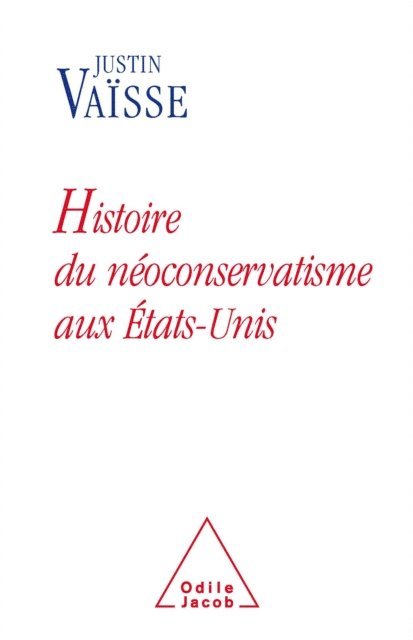
Le néoconservatisme explique-t-il à lui seul la guerre en Irak et doit-il s’y résumer ? Certainement pas. Voici l’ouvrage qu’il faut lire pour comprendre un pan essentiel de la vie politique américaine depuis des années. Après plus de sept ans de recherches en profondeur, Justin Vaïsse propose le premier exposé historique d’ensemble du néoconservatisme à expliquer clairement ses origines et sa diversité depuis les années 1960. Écrit par un expert du système politique américain, il apporte un éclairage essentiel sur la présidence de George W. Bush et fait comprendre par quel cheminement des intellectuels au départ plutôt hostiles à l’intervention de l’État en sont venus à prôner cette formidable opération de volontarisme étatique que fut la guerre d’Irak. Avec son échec, sont-ils appelés à disparaître ? Rien n’est moins sûr. Raison de plus pour les connaître mieux. Justin Vaïsse est directeur de recherche à la Brookings Institution de Washington. Agrégé et docteur en histoire, spécialiste de la vie politique américaine, il a enseigné à l’IEP de Paris et enseigne actuellement à l’Université Johns-Hopkins. Il a notamment publié L’Empire du milieu. Les États-Unis et le monde depuis la fin de la guerre froide (avec P. Melandri), Washington et le monde. Dilemmes d’une superpuissance (avec P. Hassner), et La Présidence impériale. De Franklin Roosevelt à George W. Bush (avec D. Lacorne).