Dennis F. Thompson – författare
Visar alla böcker från författaren Dennis F. Thompson. Handla med fri frakt och snabb leverans.
20 produkter
Redeeming American Political Thought
Av Judith N. Shklar, Stanley Hoffmann m. fl.
Häftad, 1998
281 kr
Lägg i varukorg
In these 13 essays, Judith Shklar explores two themes crucial to discussions of American democracy: first, what she terms the "fundamental social condition" of American life - the tension between expansive political equality and persistent social inequality; and second, "redeeming" American …
Just Elections
Creating a Fair Electoral Process in the United States
Inbunden, 2002
290 kr
Lägg i varukorg
The 2000 election showed that the mechanies of voting, such as ballot design, can make a critical difference in the accuracy and fairness of our elections. But as Dennis F. Thompson persuasively shows, more fundamental issues must be addressed to ensure that our electoral system is fair. Just …
Just Elections
Creating a Fair Electoral Process in the United States
Häftad, 2004
264 kr
Lägg i varukorg
The 2000 election showed that the mechanies of voting, such as ballot design, can make a critical difference in the accuracy and fairness of our elections. But as Dennis F. Thompson persuasively shows, more fundamental issues must be addressed to ensure that our electoral system is fair. Just …
The Democratic Citizen
Social Science and Democratic Theory in the Twentieth Century
Häftad, 2010
569 kr
Lägg i varukorg
This 1970 study examines the implications of empirical studies in the social sciences with reference to various strands of American and British democratic theory. In presenting his case Professor Thompson provides an extremely valuable critical synthesis of a very large body of theoretical and …
Restoring Responsibility
Ethics in Government, Business, and Healthcare
Häftad, 2004
601 kr
Lägg i varukorg
In this important collection of essays Dennis Thompson argues for a more robust conception of responsibility in public life than prevails in contemporary democracies. He suggests that we should stop thinking so much about public ethics in terms of individual vices (such as selfishness or sexual …
Restoring Responsibility
Ethics in Government, Business, and Healthcare
Inbunden, 2004
1384 kr
Lägg i varukorg
In this important collection of essays Dennis Thompson argues for a more robust conception of responsibility in public life than prevails in contemporary democracies. He suggests that we should stop thinking so much about public ethics in terms of individual vices (such as selfishness or sexual …
Democracy and Disagreement
Av Amy Gutmann, Dennis F. Thompson
Häftad, 1998
375 kr
Lägg i varukorg
The din and deadlock of public life in America—where insults are traded, slogans proclaimed, and self-serving deals made and unmade—reveal the deep disagreement that pervades our democracy. The disagreement is not only political but also moral, as citizens and their representatives increasingly …
Political Ethics and Public Office
Häftad, 1990
358 kr
Lägg i varukorg
Are public officials morally justified in threatening violence, engaging in deception, or forcing citizens to act for their own good? Can individual officials be held morally accountable for the wrongs that governments commit? Dennis Thompson addresses these questions by developing a conception of …
Truth v. Justice
The Morality of Truth Commissions
Av Robert I. Rotberg, Dennis F. Thompson
Häftad, 2000
530 kr
Lägg i varukorg
The truth commission is an increasingly common fixture of newly democratic states with repressive or strife-ridden pasts. From South Africa to Haiti, truth commissions are at work with varying degrees of support and success. To many, they are the best--or only--way to achieve a full accounting of …
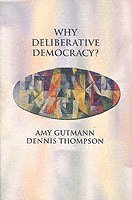
Why Deliberative Democracy?
Av Amy Gutmann, Dennis F. Thompson
Häftad, 2004
620 kr
Lägg i varukorg
The most widely debated conception of democracy in recent years is deliberative democracy--the idea that citizens or their representatives owe each other mutually acceptable reasons for the laws they enact. Two prominent voices in the ongoing discussion are Amy Gutmann and Dennis Thompson. In Why …
Spirit of Compromise
Why Governing Demands It and Campaigning Undermines It - Updated Edition
Av Amy Gutmann, Dennis F. Thompson
Häftad, 2014
238 kr
Lägg i varukorg
To govern in a democracy, political leaders have to compromise. When they do not, the result is political paralysis--dramatically demonstrated by the gridlock in Congress in recent years. In The Spirit of Compromise, eminent political thinkers Amy Gutmann and Dennis Thompson show why compromise is …
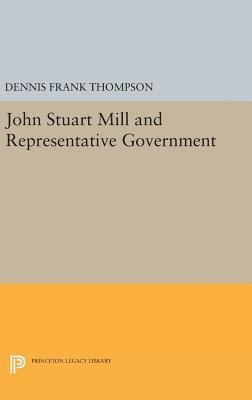
John Stuart Mill and Representative Government
Häftad, 2015
852 kr
Lägg i varukorg
Although Mill regarded Considerations on Representative Government as a mature statement of his theory of democracy, critics have tended to treat it less seriously than most of his other major works. Dennis Thompson argues that this neglect has led to inadequate interpretations of Mill's thought on …
John Stuart Mill and Representative Government
Inbunden, 2016
1035 kr
Lägg i varukorg
Although Mill regarded Considerations on Representative Government as a mature statement of his theory of democracy, critics have tended to treat it less seriously than most of his other major works. Dennis Thompson argues that this neglect has led to inadequate interpretations of Mill's thought on …
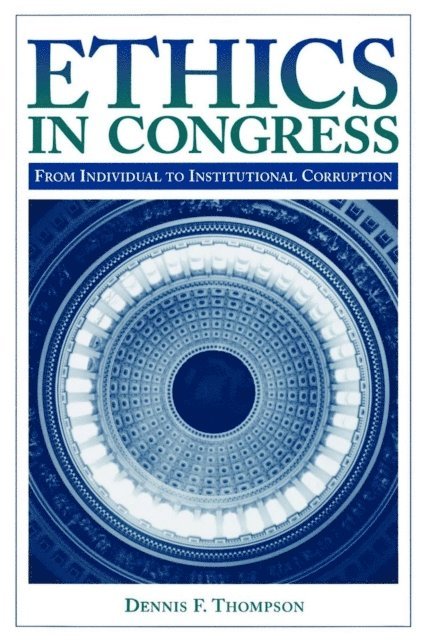
Ethics in Congress
From Individual to Institutional Corruption
E-bok, 2000
328 kr
Lägg i varukorg
More members of Congress have been investigated and sanctioned for ethical misconduct in the past decade and a half than in the entire previous history of the institution. But individual members are probably less corrupt than they once were. Stricter ethics codes and closer scrutiny by the press …
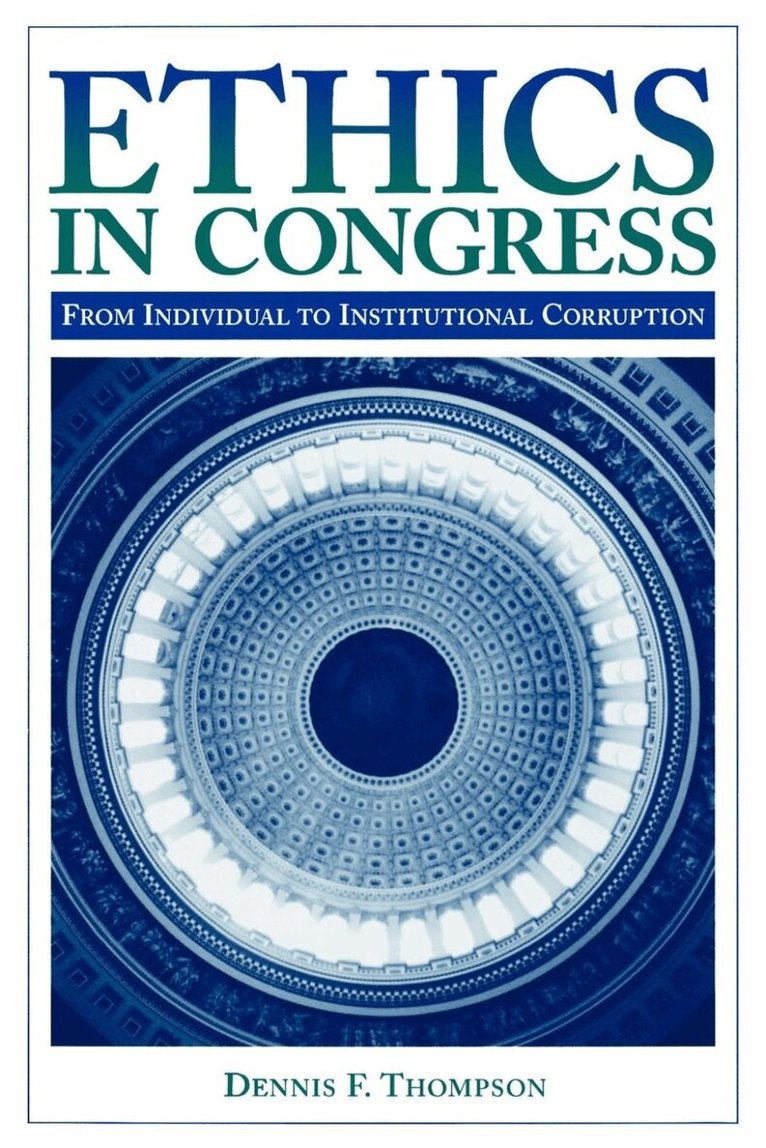
Ethics in Congress
From Individual to Institutional Corruption
Häftad, 1995
304 kr
Lägg i varukorg
More members of Congress have been investigated and sanctioned for ethical misconduct in the past decade and a half than in the entire previous history of the institution. But individual members are probably less corrupt than they once were. Stricter ethics codes and closer scrutiny by the press …
Why Deliberative Democracy?
Av Dennis F. Thompson, Amy Gutmann
E-bok, 2009
500 kr
Lägg i varukorg
The most widely debated conception of democracy in recent years is deliberative democracy--the idea that citizens or their representatives owe each other mutually acceptable reasons for the laws they enact. Two prominent voices in the ongoing discussion are Amy Gutmann and Dennis Thompson. In Why …
Truth v. Justice
The Morality of Truth Commissions
Av Dennis F. Thompson, Robert I. Rotberg
E-bok, 2010
713 kr
Lägg i varukorg
The truth commission is an increasingly common fixture of newly democratic states with repressive or strife-ridden pasts. From South Africa to Haiti, truth commissions are at work with varying degrees of support and success. To many, they are the best--or only--way to achieve a full accounting of …
Spirit of Compromise
Why Governing Demands It and Campaigning Undermines It - Updated Edition
Av Dennis F. Thompson, Amy Gutmann
E-bok, 2014
257 kr
Lägg i varukorg
Why compromise is essential for effective government and why it is missing in politics today To govern in a democracy, political leaders have to compromise. When they do not, the result is political paralysis—dramatically demonstrated by the gridlock in Congress in recent years. In The Spirit of …
John Stuart Mill and Representative Government
E-bok, 2015
628 kr
Lägg i varukorg
Although Mill regarded Considerations on Representative Government as a mature statement of his theory of democracy, critics have tended to treat it less seriously than most of his other major works. Dennis Thompson argues that this neglect has led to inadequate interpretations of Mill's thought on …
Spirit of Compromise
Why Governing Demands It and Campaigning Undermines It
Av Amy Gutmann, Dennis F. Thompson
Inbunden, 2012
221 kr
Tillfälligt slut
If politics is the art of the possible, then compromise is the artistry of democracy. Unless one partisan ideology holds sway over all branches of government, compromise is necessary to govern for the benefit of all citizens. A rejection of compromise biases politics in favor of the status quo, …