Dennis Wood – författare
Visar alla böcker från författaren Dennis Wood. Handla med fri frakt och snabb leverans.
9 produkter
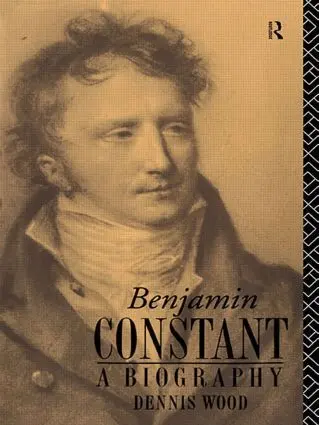
Benjamin Constant
A Biography
Av Dennis Wood
Inbunden, 1993
2670 kr
Lägg i varukorg
`For forty years I have defended the same principle: freedom in everything, in religion, in philosophy, in literature, in industry, in politics - and by freedom I mean the triumph of the individual.'Constant thus summarized his beliefs at the end of his life. A political theorist and a passionate …
Benjamin Constant
A Biography
Av Dennis Wood
Häftad, 2011
797 kr
Lägg i varukorg
`For forty years I have defended the same principle: freedom in everything, in religion, in philosophy, in literature, in industry, in politics - and by freedom I mean the triumph of the individual.'Constant thus summarized his beliefs at the end of his life. A political theorist and a passionate …
Constant: Adolphe
Häftad, 1987
486 kr
Lägg i varukorg
Dr Wood traces in detail the frequently paradoxical development of themes and situations introduced in the opening chapters and lays stress on the novel's intricate writing. He places the book in its historical, intellectual and biographical context and examines its reception by writers as various …
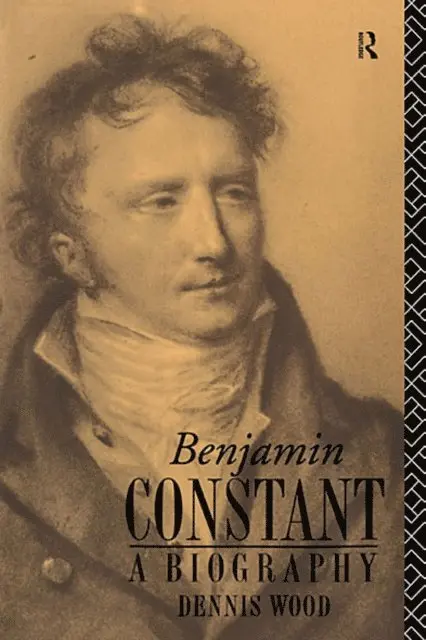
Benjamin Constant
A Biography
Av Dennis Wood
E-bok, 2002
1016 kr
Lägg i varukorg
`For forty years I have defended the same principle: freedom in everything, in religion, in philosophy, in literature, in industry, in politics - and by freedom I mean the triumph of the individual.'' Constant thus summarized his beliefs at the end of his life. A political theorist and a passionate …
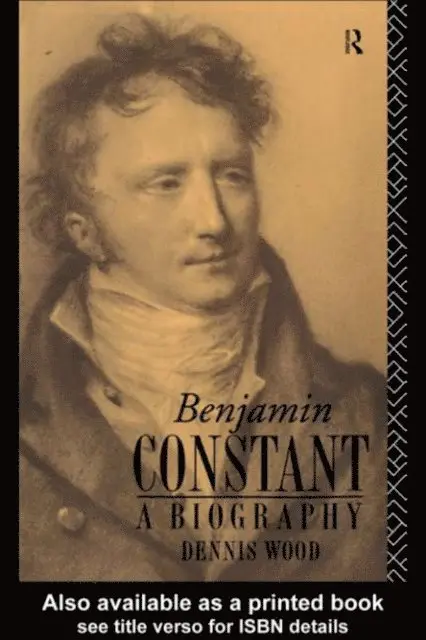
Benjamin Constant
A Biography
Av Dennis Wood
E-bok, 2002
994 kr
Lägg i varukorg
`For forty years I have defended the same principle: freedom in everything, in religion, in philosophy, in literature, in industry, in politics - and by freedom I mean the triumph of the individual.'' Constant thus summarized his beliefs at the end of his life. A political theorist and a passionate …
Correspondance générale 1813-1815
Av Benjamin Constant, Cecil P Courtney m. fl.
Inbunden, 2013
4325 kr
Lägg i varukorg
Correspondance 1774–1792
E-bok, 2017
2647 kr
Lägg i varukorg
Le premier volume de la Correspondance générale de Benjamin Constant couvre la période qui va de 1774 à 1792 et contient les lettres que l''enfant adresse, dès son plus jeune âge, aux membres de sa famille, celles de l''étudiant que son père a envoyé suivre des études aux universités d''Erlangen et …
Correspondance 1803–1805
Av Adrianne Tooke, Dennis Wood m. fl.
E-bok, 2017
2798 kr
Lägg i varukorg
L''éviction de Benjamin Constant du Tribunat, en 1802, lui a fait perdre l''espoir d''une carrière politique. Il va chercher la réussite dans ses travaux sur les religions et des activités littéraires. Il pense à un mariage avec Amélie Fabry et revoit Anna Lindsay, mais l''exil qui frappe Germaine …
Correspondance 1800–1802
Av Adrianne Tooke, Dennis Wood m. fl.
E-bok, 2017
3311 kr
Lägg i varukorg
This fourth volume of the Correspondance générale contains 368 letters written during the period of the Consulat when, as a member of the Tribunat until January 1802, Constant acquired a reputation as a brilliant orator and outspoken opponent of Bonaparte. It was also a period when he produced a …