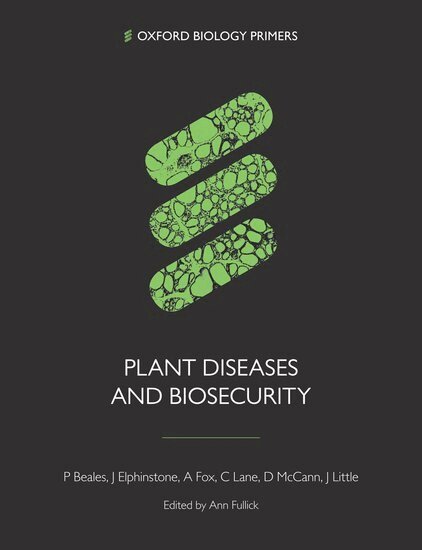
Written primarily for 16-19 year old students, this primer aims to extend students' knowledge and inspire them to take their school-level learning further. It explores topics that are familiar from the curriculum and also introduces new ideas, giving students a first taste of the study of biology beyond school-level and demonstrating how concepts frequently encountered at school are relevant to and applied in current research. This is the ideal text to support students who are considering making the transition from studying biology at school to university. For many years, much of the human population has lived in ignorance of plant disease - yet the presence or absence of disease in a crop, or a forest, can mean the difference between economic success or disaster, and - even in the 21st century - the difference between life and death for millions of people. This primer raises the profile of plant infectious diseases, highlighting the scale of the problem, the risks to biosecurity, and the advances in science which are impacting on surveillance, diagnosis and prevention of disease.This text opens with an overview of the importance of plant disease in human history, before reviewing the structure and function of the main types of pathogens involved in plant infectious diseases (bacteria, viruses, fungi and fungi-like pathogens), focusing on unusual and interesting examples. It then explores how plant diseases can be accurately diagnosed, explaining a variety of ways in which specific pathogens can be identified including the most recent developments in molecular analysis as well as cultural and serological techniques. The primer then moves on to consider disease surveillance, which still relies heavily on traditional techniques based on human observation. It also considers emerging techniques involving epidemiological models, remote monitoring, the monitoring of air and water, satellite tracking and genetic modification of crops. Disease management - ways in which plant diseases can be controlled and their spread halted - is then discussed. This area encompasses techniques spanning chemical control of insect, fungal and bacterial pests to genetic modification of crops to introduce disease resistance. The final section of the primer explores plant biosecurity and how it can be maintained - an ever-more important issue given the continued globalisation of trade - and the impact of global warming on where both plants and plant pathogens can grow and thrive.
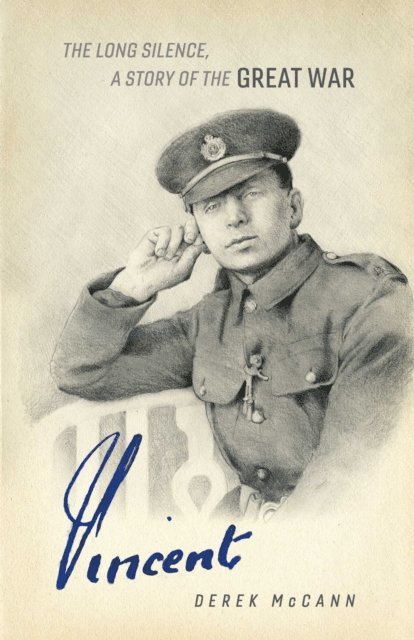
New synopsis for BookbabyThe Author's father, Vincent McCann, lived a more interesting life than his children could ever have imagined, the details of which he never spoke about, and took to his grave. Hence the title "e;Vincent; The Long Silence"e;. However, all these details which had been kept secret, were finally uncovered when digitized records on the internet revealed his father's war time history, when he served with the 75th Field Company Royal Engineers, in the trenches of Flanders and the Somme during World War 1. The motivation behind writing the book, began with a visit by the author to Ypres in Belgium, a town that played a pivotal role in the war along the Western Front. A ceremony at the Menin Gate, which takes place every day honoring these brave soldiers, who, unlike Vincent , never returned home, generated the idea he should write about his father's contribution in this epic struggle between empires. The reader will be led from Vincent's past as a child in the gentle Irish countryside, through his young life working in the Belfast shipyards during the building of the S.S. Titanic, to his wartime experiences with the British Army in WW1. The reader will run a gamut of emotions from humor to pathos, describing the characters in his company's struggle to survive in what was a living hell. It embodies the courage and determination of the players, and of Vincent himself, as their lives are forever altered in this brutal conflict.
Written primarily for 16-19 year old students, this primer aims to extend students' knowledge and inspire them to take their school-level learning further. It explores topics that are familiar from the curriculum and also introduces new ideas, giving students a first taste of the study of biology beyond school-level and demonstrating how concepts frequently encountered at school are relevant to and applied in current research. This is the ideal text to support students who are considering making the transition from studying biology at school to university. For many years, much of the human population has lived in ignorance of plant disease - yet the presence or absence of disease in a crop, or a forest, can mean the difference between economic success or disaster, and - even in the 21st century - the difference between life and death for millions of people. This primer raises the profile of plant infectious diseases, highlighting the scale of the problem, the risks to biosecurity, and the advances in science which are impacting on surveillance, diagnosis and prevention of disease.This text opens with an overview of the importance of plant disease in human history, before reviewing the structure and function of the main types of pathogens involved in plant infectious diseases (bacteria, viruses, fungi and fungi-like pathogens), focusing on unusual and interesting examples. It then explores how plant diseases can be accurately diagnosed, explaining a variety of ways in which specific pathogens can be identified including the most recent developments in molecular analysis as well as cultural and serological techniques. The primer then moves on to consider disease surveillance, which still relies heavily on traditional techniques based on human observation. It also considers emerging techniques involving epidemiological models, remote monitoring, the monitoring of air and water, satellite tracking and genetic modification of crops. Disease management - ways in which plant diseases can be controlled and their spread halted - is then discussed. This area encompasses techniques spanning chemical control of insect, fungal and bacterial pests to genetic modification of crops to introduce disease resistance. The final section of the primer explores plant biosecurity and how it can be maintained - an ever-more important issue given the continued globalisation of trade - and the impact of global warming on where both plants and plant pathogens can grow and thrive.
New synopsis for BookbabyThe Author's father, Vincent McCann, lived a more interesting life than his children could ever have imagined, the details of which he never spoke about, and took to his grave. Hence the title "e;Vincent; The Long Silence"e;. However, all these details which had been kept secret, were finally uncovered when digitized records on the internet revealed his father's war time history, when he served with the 75th Field Company Royal Engineers, in the trenches of Flanders and the Somme during World War 1. The motivation behind writing the book, began with a visit by the author to Ypres in Belgium, a town that played a pivotal role in the war along the Western Front. A ceremony at the Menin Gate, which takes place every day honoring these brave soldiers, who, unlike Vincent , never returned home, generated the idea he should write about his father's contribution in this epic struggle between empires. The reader will be led from Vincent's past as a child in the gentle Irish countryside, through his young life working in the Belfast shipyards during the building of the S.S. Titanic, to his wartime experiences with the British Army in WW1. The reader will run a gamut of emotions from humor to pathos, describing the characters in his company's struggle to survive in what was a living hell. It embodies the courage and determination of the players, and of Vincent himself, as their lives are forever altered in this brutal conflict.