Derek R. Peterson - Böcker
Visar alla böcker från författaren Derek R. Peterson. Handla med fri frakt och snabb leverans.
9 produkter
9 produkter
301 kr
Skickas inom 7-10 vardagar
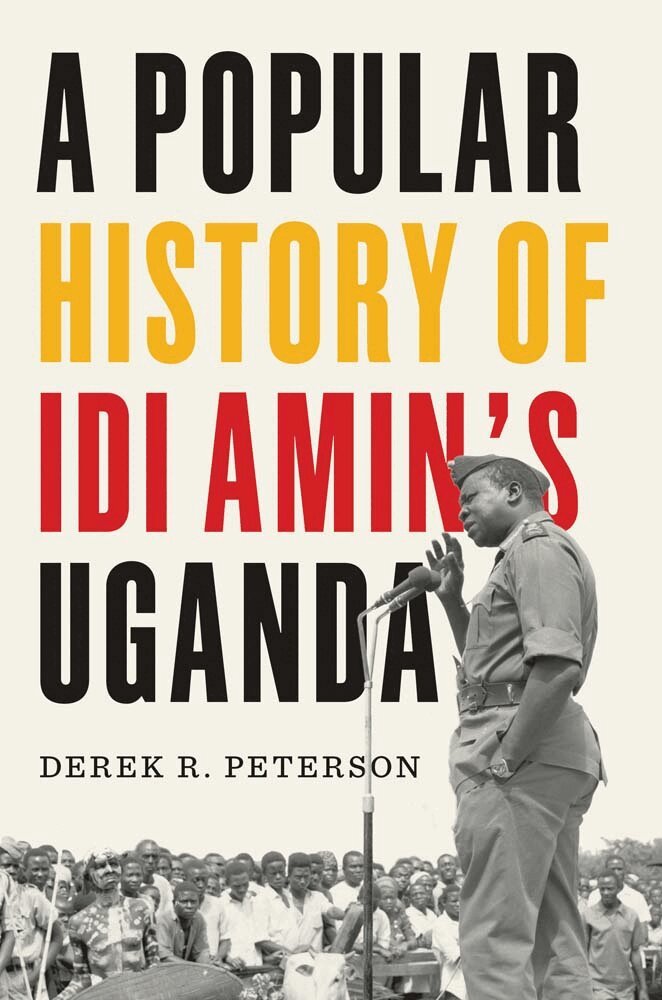
How Africa’s most notorious tyrant made his oppressive regime seem both necessary and patriotic “Peterson, an expert archivist, has created, from heaps of file folders, magnetic tapes, and other materials recovered from abandoned storage rooms around the country, what is probably the largest organized repository of government documents anywhere in Africa. . . . The details of what they found, and especially what they didn’t find, are fascinating.”—Helen Epstein, New York Review of Books Idi Amin ruled Uganda between 1971 and 1979, inflicting tremendous violence on the people of the country. How did Amin’s regime survive for eight calamitous years? Drawing on recently uncovered archival material, Derek Peterson reconstructs the political logic of the era, focusing on the ordinary people—civil servants, curators and artists, businesspeople, patriots—who invested their energy and resources in making the government work. Peterson reveals how Amin (1928–2003) led ordinary people to see themselves as front-line soldiers in a global war against imperialism and colonial oppression. They worked tirelessly to ensure that government institutions kept functioning, even as resources dried up and political violence became pervasive. In this case study of how principled, talented, and patriotic people sacrificed themselves in service to a dictator, Peterson provides lessons for our own time.
990 kr
Skickas inom 10-15 vardagar
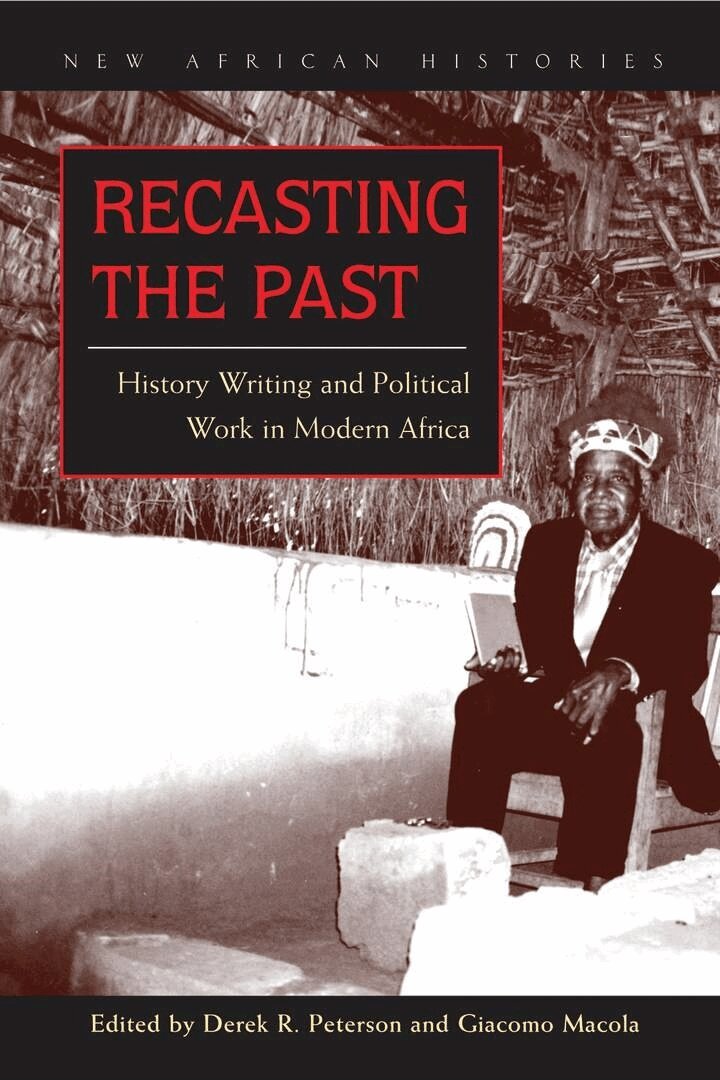
The study of intellectual history in Africa is in its infancy. We know very little about what Africa's thinkers made of their times. Recasting the Past brings one field of intellectual endeavor into view. The book takes its place alongside a small but growing literature that highlights how, in autobiographies, historical writing, fiction, and other literary genres, African writers intervened creatively in their political world.The past has already been worked over by the African interpreters that the present volume brings into view. African brokers—pastors, journalists, kingmakers, religious dissidents, politicians, entrepreneurs all—have been doing research, conducting interviews, reading archives, and presenting their results to critical audiences. Their scholarly work makes it impossible to think of African history as an inert entity awaiting the attention of professional historians. Professionals take their place in a broader field of interpretation, where Africans are already reifying, editing, and representing the past.The essays collected in Recasting the Past study the warp and weft of Africa's homespun historical work. Contributors trace the strands of discourse from which historical entrepreneurs drew, highlighting the sources of inspiration and reference that enlivened their work. By illuminating the conventions of the past, Africa's history writers set their contemporary constituents on a path toward a particular future. History writing was a means by which entrepreneurs conjured up constituencies, claimed legitimate authority, and mobilized people around a cause. By illuminating the spheres of debate in which Africa's own scholars participated, Recasting the Past repositions the practice of modern history.
413 kr
Skickas
The study of intellectual history in Africa is in its infancy. We know very little about what Africa's thinkers made of their times. Recasting the Past brings one field of intellectual endeavor into view. The book takes its place alongside a small but growing literature that highlights how, in autobiographies, historical writing, fiction, and other literary genres, African writers intervened creatively in their political world.The past has already been worked over by the African interpreters that the present volume brings into view. African brokers—pastors, journalists, kingmakers, religious dissidents, politicians, entrepreneurs all—have been doing research, conducting interviews, reading archives, and presenting their results to critical audiences. Their scholarly work makes it impossible to think of African history as an inert entity awaiting the attention of professional historians. Professionals take their place in a broader field of interpretation, where Africans are already reifying, editing, and representing the past.The essays collected in Recasting the Past study the warp and weft of Africa's homespun historical work. Contributors trace the strands of discourse from which historical entrepreneurs drew, highlighting the sources of inspiration and reference that enlivened their work. By illuminating the conventions of the past, Africa's history writers set their contemporary constituents on a path toward a particular future. History writing was a means by which entrepreneurs conjured up constituencies, claimed legitimate authority, and mobilized people around a cause. By illuminating the spheres of debate in which Africa's own scholars participated, Recasting the Past repositions the practice of modern history.
886 kr
Skickas inom 10-15 vardagar
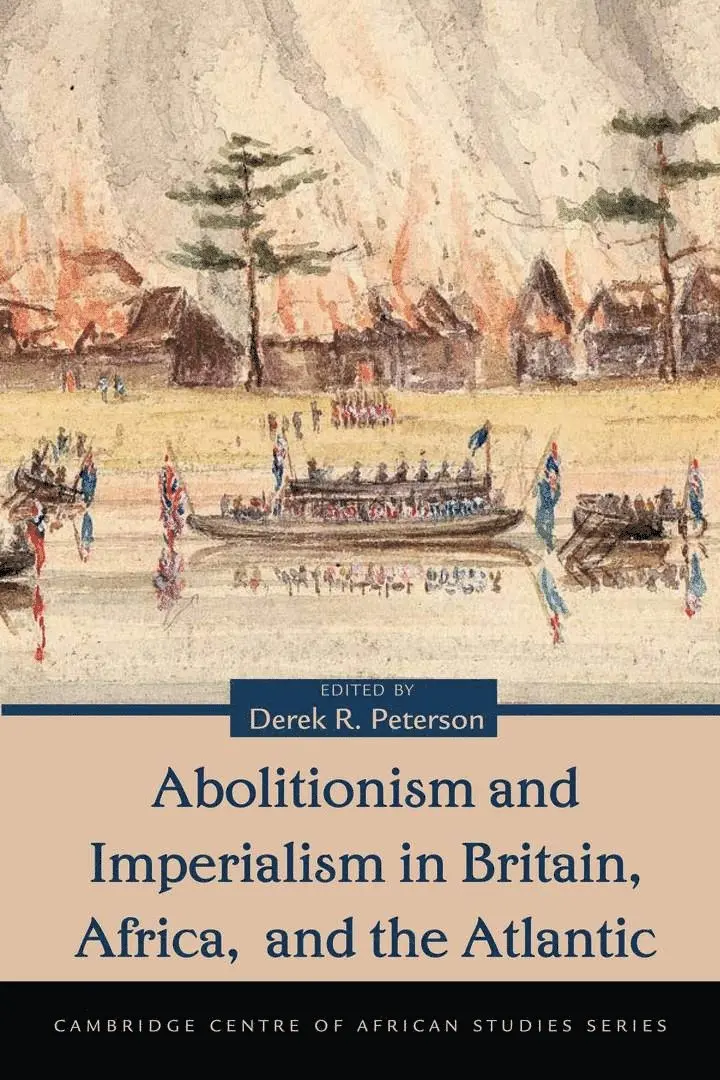
The abolition of the slave trade is normally understood to be the singular achievement of eighteenth-century British liberalism. Abolitionism and Imperialism in Britain, Africa, and the Atlantic expands both the temporal and the geographic framework in which the history of abolitionism is conceived. Abolitionism was a theater in which a variety of actors—slaves, African rulers, Caribbean planters, working-class radicals, British evangelicals, African political entrepreneurs—played a part. The Atlantic was an echo chamber, in which abolitionist symbols, ideas, and evidence were generated from a variety of vantage points. These essays highlight the range of political and moral projects in which the advocates of abolitionism were engaged, and in so doing it joins together geographies that are normally studied in isolation.Where empires are often understood to involve the government of one people over another, Abolitionism and Imperialism shows that British values were formed, debated, and remade in the space of empire. Africans were not simply objects of British liberals' benevolence. They played an active role in shaping, and extending, the values that Britain now regards as part of its national character. This book is therefore a contribution to the larger scholarship about the nature of modern empires.Contributors: Christopher Leslie Brown, Seymour Drescher, Jonathon Glassman, Boyd Hilton, Robin Law, Phillip D. Morgan, Derek R. Peterson, John K. Thornton
373 kr
Skickas inom 7-10 vardagar
The abolition of the slave trade is normally understood to be the singular achievement of eighteenth-century British liberalism. Abolitionism and Imperialism in Britain, Africa, and the Atlantic expands both the temporal and the geographic framework in which the history of abolitionism is conceived. Abolitionism was a theater in which a variety of actors—slaves, African rulers, Caribbean planters, working-class radicals, British evangelicals, African political entrepreneurs—played a part. The Atlantic was an echo chamber, in which abolitionist symbols, ideas, and evidence were generated from a variety of vantage points. These essays highlight the range of political and moral projects in which the advocates of abolitionism were engaged, and in so doing it joins together geographies that are normally studied in isolation.Where empires are often understood to involve the government of one people over another, Abolitionism and Imperialism shows that British values were formed, debated, and remade in the space of empire. Africans were not simply objects of British liberals' benevolence. They played an active role in shaping, and extending, the values that Britain now regards as part of its national character. This book is therefore a contribution to the larger scholarship about the nature of modern empires.Contributors: Christopher Leslie Brown, Seymour Drescher, Jonathon Glassman, Boyd Hilton, Robin Law, Phillip D. Morgan, Derek R. Peterson, John K. Thornton
Del 122 - African Studies
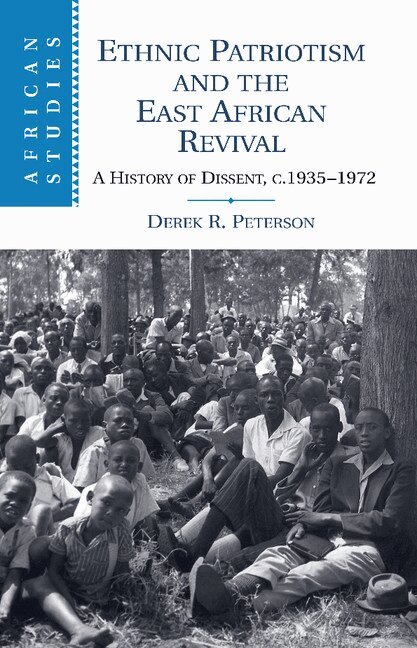
Ethnic Patriotism and the East African Revival
A History of Dissent, c.1935-1972
Inbunden, Engelska, 2012
1 034 kr
Skickas inom 7-10 vardagar
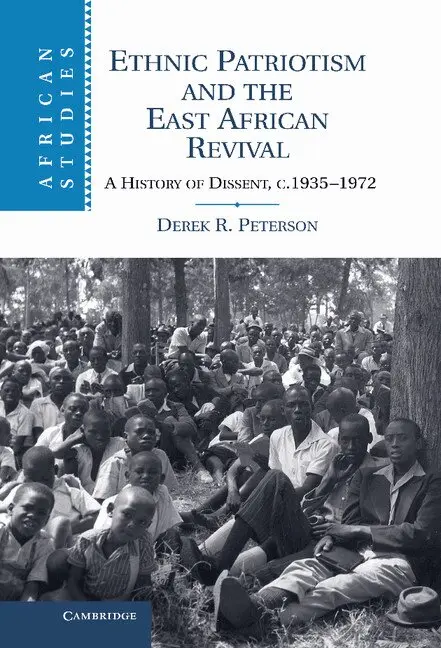
Ethnic Patriotism and the East African Revival shows how, in the era of African political independence, cosmopolitan Christian converts struggled with East Africa's patriots over the definition of culture and community. The book traces the history of the East African Revival, an evangelical movement that spread through much of eastern and central Africa. Its converts offered a subversive reading of culture, disavowing their compatriots and disregarding their obligations to kin. They earned the ire of East Africa's patriots, who worked to root people in place as inheritors of ancestral wisdom. This book casts religious conversion in a new light: not as an inward reorientation of belief, but as a political action that opened up novel paths of self-narration and unsettled the inventions of tradition.
Del 48 - The International African Library
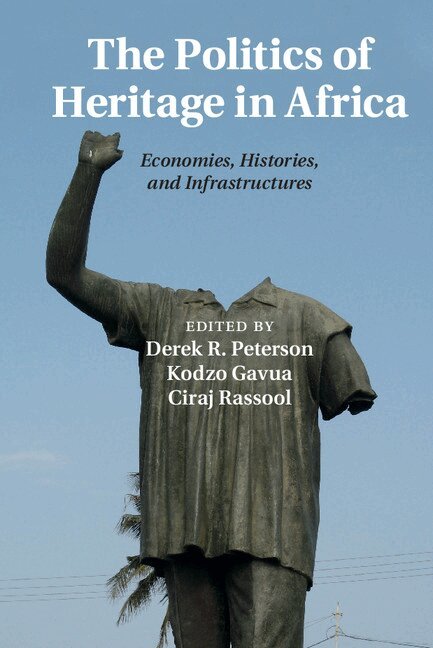
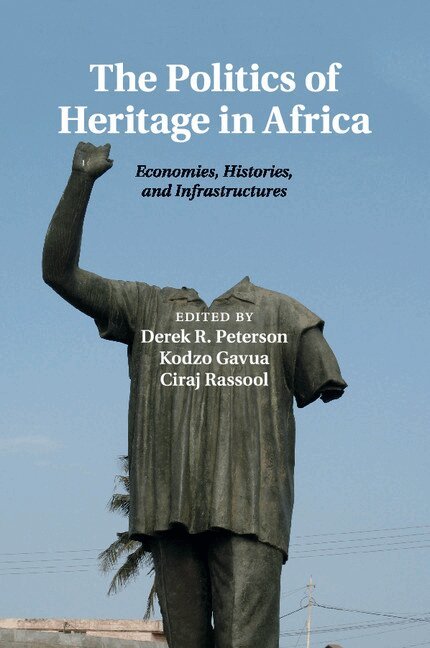
The Politics of Heritage in Africa
Economies, Histories, and Infrastructures
Inbunden, Engelska, 2015
1 282 kr
Skickas inom 7-10 vardagar
Heritage work has had a uniquely wide currency in Africa's politics. Secure within the pages of books, encoded in legal statutes, encased in glass display cases and enacted in the panoply of court ritual, the artefacts produced by the heritage domain have become a resource for government administration, a library for traditionalists and a marketable source of value for cultural entrepreneurs. The Politics of Heritage in Africa draws together disparate fields of study - history, archaeology, linguistics, the performing arts and cinema - to show how the lifeways of the past were made into capital, a store of authentic knowledge that political and cultural entrepreneurs could draw from. This book shows African heritage to be a mode of political organisation, a means by which the relics of the past are shored up, reconstructed and revalued as commodities, as tradition, as morality or as patrimony.
Del 48 - The International African Library
The Politics of Heritage in Africa
Economies, Histories, and Infrastructures
Häftad, Engelska, 2017
468 kr
Skickas inom 7-10 vardagar
Heritage work has had a uniquely wide currency in Africa's politics. Secure within the pages of books, encoded in legal statutes, encased in glass display cases and enacted in the panoply of court ritual, the artefacts produced by the heritage domain have become a resource for government administration, a library for traditionalists and a marketable source of value for cultural entrepreneurs. The Politics of Heritage in Africa draws together disparate fields of study - history, archaeology, linguistics, the performing arts and cinema - to show how the lifeways of the past were made into capital, a store of authentic knowledge that political and cultural entrepreneurs could draw from. This book shows African heritage to be a mode of political organisation, a means by which the relics of the past are shored up, reconstructed and revalued as commodities, as tradition, as morality or as patrimony.
Ethnic Patriotism and the East African Revival
A History of Dissent, c.1935-1972
Häftad, Engelska, 2014
507 kr
Skickas inom 7-10 vardagar
Ethnic Patriotism and the East African Revival shows how, in the era of African political independence, cosmopolitan Christian converts struggled with East Africa's patriots over the definition of culture and community. The book traces the history of the East African Revival, an evangelical movement that spread through much of eastern and central Africa. Its converts offered a subversive reading of culture, disavowing their compatriots and disregarding their obligations to kin. They earned the ire of East Africa's patriots, who worked to root people in place as inheritors of ancestral wisdom. This book casts religious conversion in a new light: not as an inward reorientation of belief, but as a political action that opened up novel paths of self-narration and unsettled the inventions of tradition.