Desiré J. M. Anastasia - Böcker
Visar alla böcker från författaren Desiré J. M. Anastasia. Handla med fri frakt och snabb leverans.
3 produkter
3 produkter
531 kr
Skickas inom 10-15 vardagar
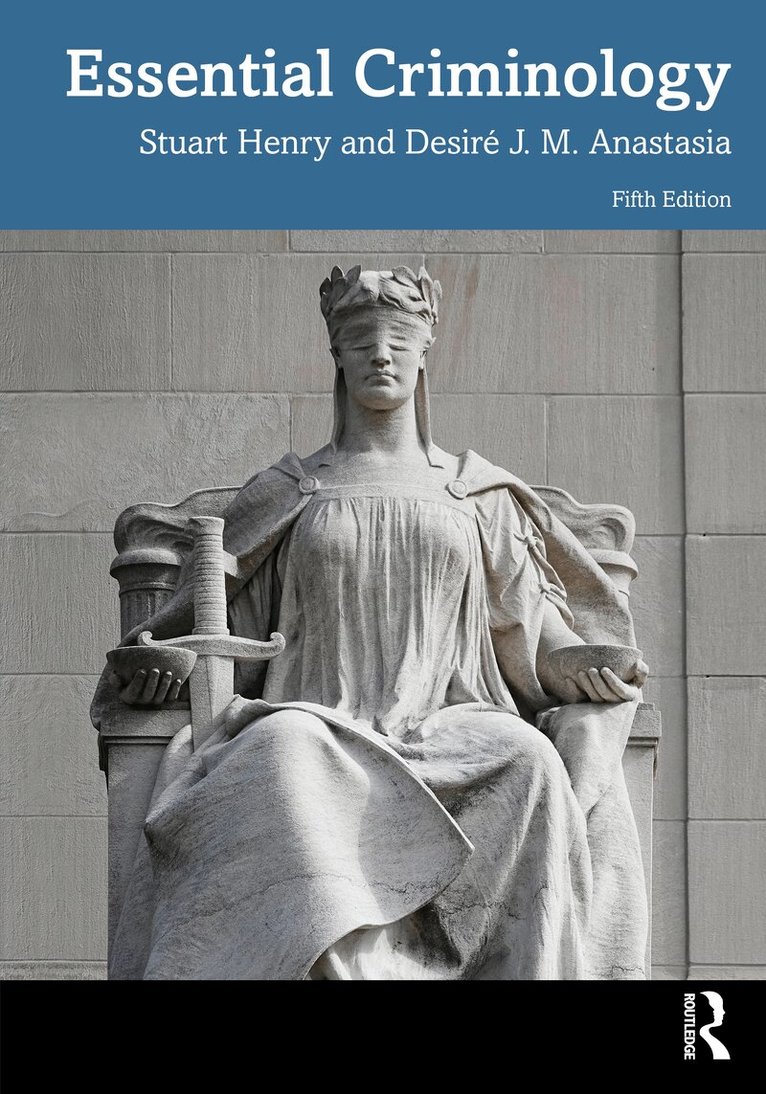
This significantly expanded edition of Essential Criminology covers the broadest range of criminological theories—the essential criminological theories—from longstanding ones such as classical theory and strain theory to recently introduced ones such as ultra-realism and green cultural criminology. Whether all are “essential” depends on one’s theoretical stance. The value of this text is its carefully designed comparative analysis, which helps readers consider their relative contribution to the field. Originally designed as an alternative to lengthy and expensive introductory texts, Essential Criminology provides a concise, yet comprehensive overview of the field. The book offers a clear, structured, student-friendly, critical analytical examination of the nature of crime, theories of crime causation, and their criminal justice policy implications. Causal theories covered range from micro-level classical and rational choice to biological psychological, social learning, social control, and interactionist perspectives, to macro-level social ecology, anomie/strain, conflict, Marxist, feminist, and postmodernist theories. Over its 26-year history the book has added new theoretical perspectives as these have gained prominence. New to this edition are chapters on critical and ultra-realism, and critical green criminology and discussions of zemiology, critical race theory, and quantum holographic criminology. The authors have also expanded some theoretical frameworks that had previously been underdeveloped such as opportunity theory, subcultural theory, and social constructionism.Essential Criminology contextualizes criminology in the globally interdependent 21st century, addressing the crimes of terrorism, global pandemics, and climate change. With its cutting-edge updates, illustrative real-world examples, and student-friendly study tools, including analytically comparable summary charts exposing each theory's ontological assumptions, this text was designed primarily for undergraduate criminology courses, but has also been adopted by community colleges and graduate programs in criminology, sociology, and political science.
1 944 kr
Skickas inom 10-15 vardagar
This significantly expanded edition of Essential Criminology covers the broadest range of criminological theories—the essential criminological theories—from longstanding ones such as classical theory and strain theory to recently introduced ones such as ultra-realism and green cultural criminology. Whether all are “essential” depends on one’s theoretical stance. The value of this text is its carefully designed comparative analysis, which helps readers consider their relative contribution to the field. Originally designed as an alternative to lengthy and expensive introductory texts, Essential Criminology provides a concise, yet comprehensive overview of the field. The book offers a clear, structured, student-friendly, critical analytical examination of the nature of crime, theories of crime causation, and their criminal justice policy implications. Causal theories covered range from micro-level classical and rational choice to biological psychological, social learning, social control, and interactionist perspectives, to macro-level social ecology, anomie/strain, conflict, Marxist, feminist, and postmodernist theories. Over its 26-year history the book has added new theoretical perspectives as these have gained prominence. New to this edition are chapters on critical and ultra-realism, and critical green criminology and discussions of zemiology, critical race theory, and quantum holographic criminology. The authors have also expanded some theoretical frameworks that had previously been underdeveloped such as opportunity theory, subcultural theory, and social constructionism.Essential Criminology contextualizes criminology in the globally interdependent 21st century, addressing the crimes of terrorism, global pandemics, and climate change. With its cutting-edge updates, illustrative real-world examples, and student-friendly study tools, including analytically comparable summary charts exposing each theory's ontological assumptions, this text was designed primarily for undergraduate criminology courses, but has also been adopted by community colleges and graduate programs in criminology, sociology, and political science.
1 876 kr
Skickas inom 10-15 vardagar
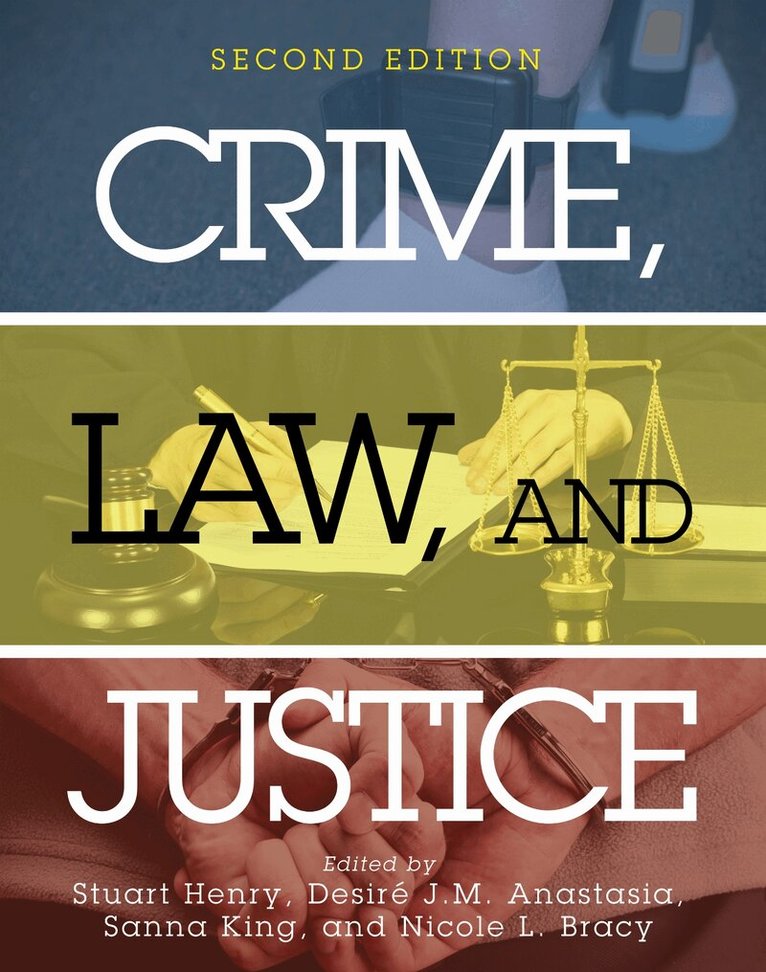
Crime, Law, and Justice provides students with a comprehensive introduction to the field of criminal justice and the criminal justice system. Based on both criminological research and theoretical analysis, the anthology addresses crime in society, victimization, criminological theories, policing and law enforcement, and more.Students read articles on the politics of criminological research, historical and contemporary perspectives on policing, and criminal prosecution. Specific chapters address the due process of law, plea bargaining, juvenile justice, and the current scale of imprisonment in the United States. The second edition features new readings on probation, parole, and community corrections; plea bargaining; criminal profiling; bail; and the politics of victimization.Crime, Law, and Justice asks critical questions about the criminal justice system, encouraging students to consider why it functions as it does and if there are ways to improve it. The text is suitable for introductory courses in criminology and criminal justice. It is also a valuable tool for classes in sociology, police administration, and criminal or constitutional law.