Desmond McNeill – författare
708 kr
Läs direkt efter köp
733 kr
Läs direkt efter köp
1 197 kr
Skickas inom 7-10 vardagar
1 412 kr
Skickas inom 10-15 vardagar
499 kr
Skickas inom 10-15 vardagar
2 184 kr
Skickas inom 10-15 vardagar
934 kr
Skickas inom 10-15 vardagar
2 395 kr
Skickas inom 10-15 vardagar
723 kr
Skickas inom 10-15 vardagar
723 kr
Skickas inom 10-15 vardagar
2 184 kr
Skickas inom 10-15 vardagar
346 kr
Skickas inom 5-8 vardagar
589 kr
Läs direkt efter köp
Originally published in 1981, this book analyses how development aid works in practice. It presents a critique of the practice of foreign aid, analyses the aid process, who controls it and investigates the exercise of leverage by donors. It examines the interests of the different parties involved, identifies problems and suggests alternatives which may allow the aid process to operate more effectively in the interest of those who need it.
589 kr
Läs direkt efter köp
Originally published in 1981, this book analyses how development aid works in practice. It presents a critique of the practice of foreign aid, analyses the aid process, who controls it and investigates the exercise of leverage by donors. It examines the interests of the different parties involved, identifies problems and suggests alternatives which may allow the aid process to operate more effectively in the interest of those who need it.
858 kr
Läs direkt efter köp
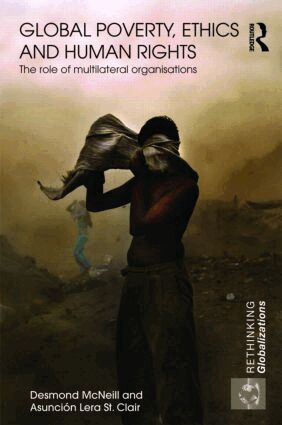
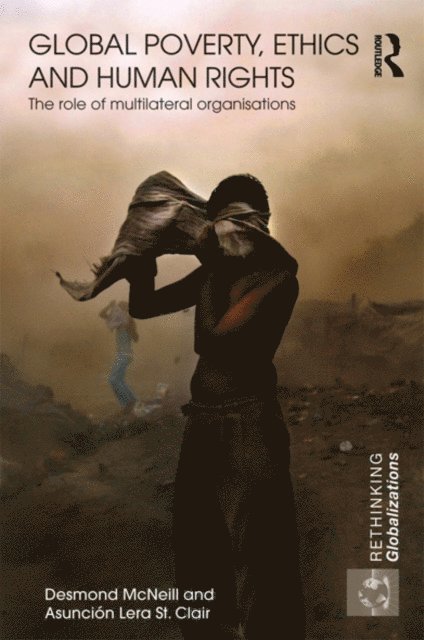
Severe poverty is one of the greatest moral challenges of our times. But what place, if any, do ethical thinking and questions of global justice have in the policies and practice of international organizations? This books examines this question in depth, based on an analysis of the two major multilateral development organizations - the World Bank and the UNDP - and two specific initiatives where poverty and ethics or human rights have been explicitly in focus: in the Inter-American Development Bank and UNESCO.
The current development aid framework may be seen as seeking to make globalization work for the poor; and multilateral organizations such as these are powerful global actors, whether by virtue of their financial resources, or in their role as global norm-setting bodies and as sources of hegemonic knowledge about poverty. Drawing on their backgrounds in political economy, ethics and sociology of knowledge, as well as their inside knowledge of some of the case studies, the authors show how, despite the rhetoric, issues of ethics and human rights have – for very varying reasons and in differing ways – been effectively prevented from impinging on actual practice.
Global Poverty, Ethics and Human Rights will be of interest to researchers and advanced students, as well as practitioners and activists, in the fields of international relations, development studies, and international political economy. It will also be of relevance for political philosophy, human rights, development ethics and applied ethics more generally.
858 kr
Läs direkt efter köp
Severe poverty is one of the greatest moral challenges of our times. But what place, if any, do ethical thinking and questions of global justice have in the policies and practice of international organizations? This books examines this question in depth, based on an analysis of the two major multilateral development organizations - the World Bank and the UNDP - and two specific initiatives where poverty and ethics or human rights have been explicitly in focus: in the Inter-American Development Bank and UNESCO.
The current development aid framework may be seen as seeking to make globalization work for the poor; and multilateral organizations such as these are powerful global actors, whether by virtue of their financial resources, or in their role as global norm-setting bodies and as sources of hegemonic knowledge about poverty. Drawing on their backgrounds in political economy, ethics and sociology of knowledge, as well as their inside knowledge of some of the case studies, the authors show how, despite the rhetoric, issues of ethics and human rights have – for very varying reasons and in differing ways – been effectively prevented from impinging on actual practice.
Global Poverty, Ethics and Human Rights will be of interest to researchers and advanced students, as well as practitioners and activists, in the fields of international relations, development studies, and international political economy. It will also be of relevance for political philosophy, human rights, development ethics and applied ethics more generally.
858 kr
Läs direkt efter köp
Development Issues in Global Governance presents the first serious academic study of multilateral organizations’ current partnerships with the private sector.
This new volume describes empirically, and analyzes theoretically, the impact of such partnerships on the practices, legitimacy and authority of the parties involved. With detailed case studies of key international bodies, including the World Health Organization (WHO), the International Labour Organization (ILO), the World Bank, and the UN''s Education, Science and Communication Organization (UNESCO), the reader is given a clear understanding of present debates in this critical area of world affairs.
This invaluable book:
includes fresh case studies that deal with five different industries: pharmaceuticals, software, water supply, tobacco and chocolate provides an overview of the scope of the phenomenon of partnerships in the multilateral system, and classification of different types is based on detailed qualitative research, including extensive interviews in the multilateral organizations places the findings in a rigorous theoretical framework, relating them to current trends in international politics and international political economy examines the challenges contained in the Millennium Development Goals: the provision of drugs to HIV/AIDS patients and vaccination for all children; the bridging of the digital divide; combating child labour; and the provision of clean water to the poor.
The authors conclude that we are witnessing the emergence of a new institutional form, best characterized as ‘market multilateralism’. They argue that although transnational corporations have become heavily involved with multilateral organizations, these partnerships are crafted to deal with specific instances of market failure, while the guiding principles of the global economy remain unchallenged.
This book will be of great interest to all students of development studies, international relations, political science and business management.
858 kr
Läs direkt efter köp
Development Issues in Global Governance presents the first serious academic study of multilateral organizations’ current partnerships with the private sector.
This new volume describes empirically, and analyzes theoretically, the impact of such partnerships on the practices, legitimacy and authority of the parties involved. With detailed case studies of key international bodies, including the World Health Organization (WHO), the International Labour Organization (ILO), the World Bank, and the UN''s Education, Science and Communication Organization (UNESCO), the reader is given a clear understanding of present debates in this critical area of world affairs.
This invaluable book:
includes fresh case studies that deal with five different industries: pharmaceuticals, software, water supply, tobacco and chocolate provides an overview of the scope of the phenomenon of partnerships in the multilateral system, and classification of different types is based on detailed qualitative research, including extensive interviews in the multilateral organizations places the findings in a rigorous theoretical framework, relating them to current trends in international politics and international political economy examines the challenges contained in the Millennium Development Goals: the provision of drugs to HIV/AIDS patients and vaccination for all children; the bridging of the digital divide; combating child labour; and the provision of clean water to the poor.
The authors conclude that we are witnessing the emergence of a new institutional form, best characterized as ‘market multilateralism’. They argue that although transnational corporations have become heavily involved with multilateral organizations, these partnerships are crafted to deal with specific instances of market failure, while the guiding principles of the global economy remain unchallenged.
This book will be of great interest to all students of development studies, international relations, political science and business management.
1 110 kr
Läs direkt efter köp
This unique book explores a very broad range of ideas and institutions and provides thorough and detailed case studies in the context of broader theoretical analysis.
Key topics such as poverty, global governance, sustainable development and the environment are closely examined, with detailed case studies of the World Bank, the WTO, the IMF, Asian Development Bank, UN Development Programme and the OECD''s Development Assistance Committee.
The impact multilateral institutions such as the World Bank and IMF have on development is hotly debated, but few doubt their power and influence. This book examines the concepts that have powerfully influenced development policy and, more broadly, looks at the role of ideas in international development institutions and how they have affected current development discourse. The authors analyze why some ideas are taken up by these institutions, how the ideas travel within the systems and how they are translated into policy, modified, distorted or resisted.
1 110 kr
Läs direkt efter köp
This unique book explores a very broad range of ideas and institutions and provides thorough and detailed case studies in the context of broader theoretical analysis.
Key topics such as poverty, global governance, sustainable development and the environment are closely examined, with detailed case studies of the World Bank, the WTO, the IMF, Asian Development Bank, UN Development Programme and the OECD''s Development Assistance Committee.
The impact multilateral institutions such as the World Bank and IMF have on development is hotly debated, but few doubt their power and influence. This book examines the concepts that have powerfully influenced development policy and, more broadly, looks at the role of ideas in international development institutions and how they have affected current development discourse. The authors analyze why some ideas are taken up by these institutions, how the ideas travel within the systems and how they are translated into policy, modified, distorted or resisted.
459 kr
Läs direkt efter köp
The success of land use policies has in the past often been hampered by the fact that we simply do not know enough about their impact on sustainable development across developing countries. This book contributes to bridging this knowledge gap while facilitating the successful design and implementation of land use policies. The challenge of land use changes in response to changes in the policy environment - macro policy, agricultural and forest policy, environmental policy - is explored with a focus on the South. Detailed case studies encompassing seven countries across Africa, Asia and Latin America are presented via a common framework of analysis. In each case, sustainable development concerns are identified from environmental, economic and social perspectives. The interrelated causes of these problems are analyzed by identifying key drivers and relevant land use policies, and the potential impact of prioritized land use policies are then discussed.
This important book will prove invaluable to academics, researchers, postgraduate students and policy makers concerned with land-use planning, sustainable development and environmental studies.
Contributors: A.M. Arbi, I. Bezlepkina, M. Bonin, F. Brouwer, M. Bursztyn, L. Chen, Y. Cisse, E. Coudel, S.A. Dalimunthe, N. Debortoli, N.I.S. Dewi, S. Feng, L.N. Gachimbi, P. Gicheru, H. Jeder, S. Kashyap, H. Konig, D. Lindoso, X. Ma, D. McNeill, S.N. Makokha, I. Nesheim, N. Novira, N. Ounalli, S. Patil, S. Purushothaman, F. Qu, T.S. Rahayu, P. Reidsma, S. Rodrigues-Filho, J. Schuler, M. Sghaier, X. Shi, J.-P. Tonneau, R. Verburg, J. Von Braun, J.W. Wamuongo, A.P. Wicaksono
2 132 kr
Skickas inom 5-8 vardagar
1 187 kr
Skickas inom 10-15 vardagar
1 575 kr
Läs direkt efter köp
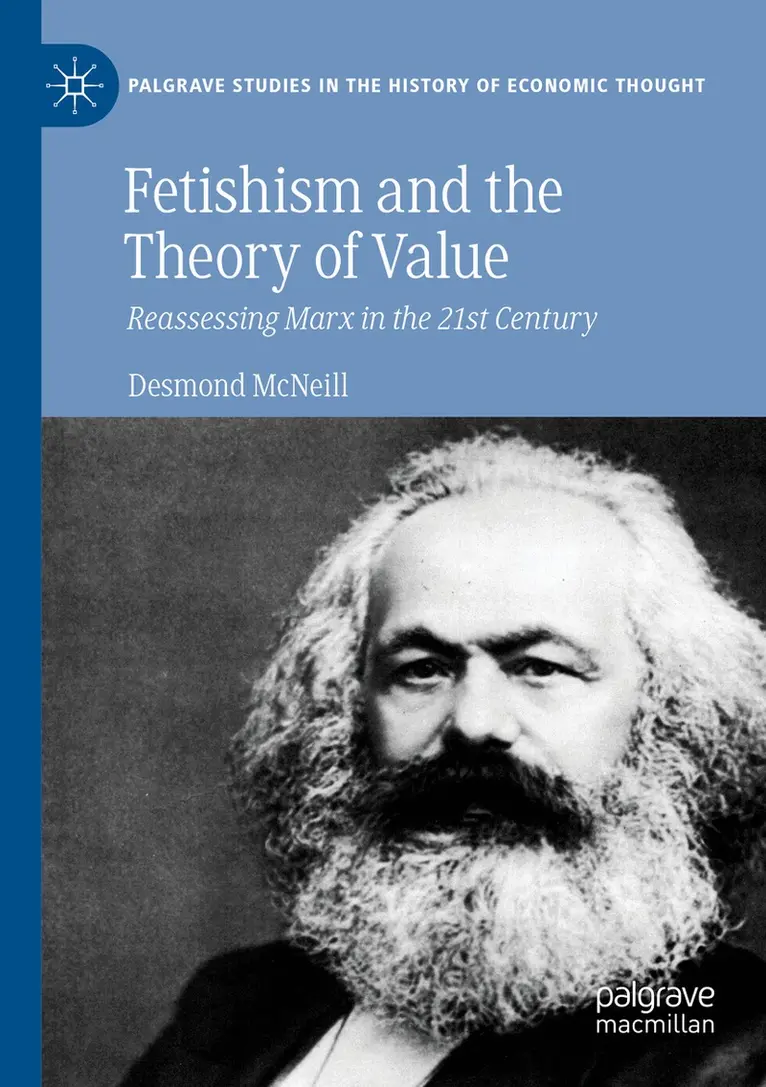
This book demonstrates the continuing relevance of Marx’s critique of the capitalist system, in which value is simply equated with market price. It includes chapters specifically on the environment and financialisation, and presents Marx’s qualitative theory of value and the associated concept of fetishism in a clear and comprehensive manner. Section I demonstrates how fetishism developed in Marx’s writing from a journalistic metaphor to an analytical device central to his critique. In Section II, commodity fetishism is distinguished from other forms: of money, capital and interest-bearing capital. There follows an analysis of Marx’s complex attempt to distinguish his argument from that of Ricardo, and Samuel Bailey. The section ends with a discussion of the ontological status of value: as a social rather than a natural phenomenon. Section III considers the merits of understanding value by analogy with language, and critically assesses the merits of structural Marxism. Section IV challenges Marx’s emphasis solely on production, and considers also exchange and consumption as social relations. Section V critically assesses recent Marx-inspired literature relating to the two key crises of our time, finance and the environment, and identifies strong similarities between the key analytical questions that have been debated in each case.
1 187 kr
Skickas inom 10-15 vardagar