Devinder Singh – författare
Visar alla böcker från författaren Devinder Singh. Handla med fri frakt och snabb leverans.
6 produkter
6 produkter
Inbunden, Engelska, 2026
3 060 kr
Skickas inom 10-15 vardagar
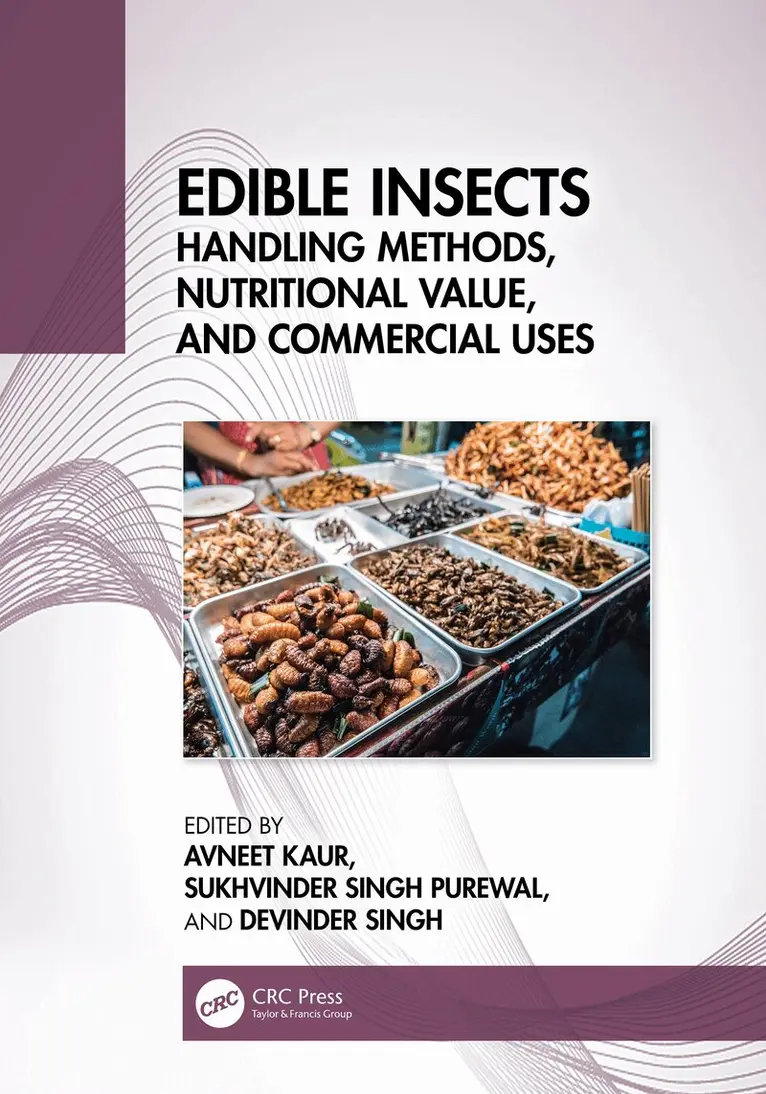
Exploring recent advances in the use of insects as a viable, sustainable, and nutritious food source, this book emphasizes effective handling techniques, the nutritional profile of different insects, and their potential commercial applications in the food sector. It covers insect farming, harvesting, and processing technologies, providing guidance on how to ensure safe food production, enhance taste, and maintain nutritional quality. The book also provides relevant information related to the bioavailability of nutrients in insects and assesses their potential to replace conventional protein sources like meat. It also discusses the commercial potential of a variety of insect-based food products. The combination of technical information and commercial assessments of edible insects makes this book suitable for industry professionals seeking to survey the market opportunities for edible insects as food and animal feed and in health supplements.
E-bok
PDF, Engelska, 20263 341 kr
Läs direkt efter köp
Exploring recent advances in the use of insects as a viable, sustainable, and nutritious food source, this book emphasizes effective handling techniques, the nutritional profile of different insects, and their potential commercial applications in the food sector. It covers insect farming, harvesting, and processing technologies, providing guidance on how to ensure safe food production, enhance taste, and maintain nutritional quality. The book also provides relevant information related to the bioavailability of nutrients in insects and assesses their potential to replace conventional protein sources like meat. It also discusses the commercial potential of a variety of insect-based food products. The combination of technical information and commercial assessments of edible insects makes this book suitable for industry professionals seeking to survey the market opportunities for edible insects as food and animal feed and in health supplements.
E-bok
Engelska, 20263 463 kr
Läs direkt efter köp
Exploring recent advances in the use of insects as a viable, sustainable, and nutritious food source, this book emphasizes effective handling techniques, the nutritional profile of different insects, and their potential commercial applications in the food sector. It covers insect farming, harvesting, and processing technologies, providing guidance on how to ensure safe food production, enhance taste, and maintain nutritional quality. The book also provides relevant information related to the bioavailability of nutrients in insects and assesses their potential to replace conventional protein sources like meat. It also discusses the commercial potential of a variety of insect-based food products. The combination of technical information and commercial assessments of edible insects makes this book suitable for industry professionals seeking to survey the market opportunities for edible insects as food and animal feed and in health supplements.
Inbunden, Engelska, 2020
1 662 kr
Skickas inom 5-8 vardagar
E-bok
PDF, Engelska, 2015469 kr
Läs direkt efter köp
Bachelor Thesis from the year 2013 in the subject Biology - Miscellaneous, grade: M.Sc., , course: Biotechnology, language: English, abstract: Research and analysis of nanoparticles (NPs) synthesis and their biological activities has been expanded significantly in the recent years. The agents used for nanoparticles (NPs) synthesis are of organic (mainly carbon) and inorganic (metal ions like silver and gold) origin (Singh et al., 2010). Among these, silver (Ag) is the most preferred NPs synthesis agent due to its reported use in medical field as best topical bactericides from ancient times (Lavanya et al., 2013). The stable silver nanoparticles had been synthesized by using soluble starch as both the reducing and stabilizing agents (Shrivastava et al., 2012). So the concern of scientific community shifted towards ecofriendly, natural and cheaper method of NPs synthesis by using microorganisms and plant extracts (Mohanpuria et al., 2008). The use of plant materials for silver nanoparticles (AgNPs) is most popular due to its potential biological activities, easy availability and faster rate of synthesis there by cutting the cost of NP's synthesis (Huang et al., 2007 and Salam et al., 2012). The nanoparticles had been clinically used for infection, vaccines and renal diseases (Malhotra et al., 2010). The plant extract of petals of herbal species like Punica granatum, Datura metel (Chandran et al., 2011) and stem extracts of Svensonia hyderobadensis (Linga et al., 2011) had been effectively used for AgNPs synthesis and investigated for their antimicrobial activities. Nanoparticles could be synthesized by various approaches like photochemical reactions in reverse micelles (Taleb et al., 1997), thermal decomposition (Esumi et al., 1990), sonochemical (Zhu et al., 2000) and microwave assisted process (Santosh et al., 2002 and Prasher et al., 2009). Nanocrystalline silver particles have found tremendous applications in the field of high sensitivity biomolecular detection and diagnostics (Schultz et al., 2000), antimicrobials and therapeutics (Rai and Yadav., 2009 and Elechiguerra et al., 2005) and micro-electronics (Gittins et al., 2000). Acacia auriculiformis A. Cunn. is an exotic species that can survive in degraded lands in Thai savanna (Badejo et al., 1998). Besides its high adaptability in degraded savanna areas, A. auriculiformis is known for its nitrogen fixation property (Sprent and Parsons, 2000) enriching macrofaunal composition (Mboukou-Kimbatsa et al., 1998), low allelopathic effects (Bernhard-Reversat et al., 1999) and ability to pump nutrients from the subsoil (Kang et al., 1993).
Häftad, Engelska, 2015
804 kr
Skickas inom 3-6 vardagar