Diana McGlinchey – författare
Visar alla böcker från författaren . Handla med fri frakt och snabb leverans.
3 produkter
3 produkter
Inbunden, Engelska, 2026
1 647 kr
Kommande
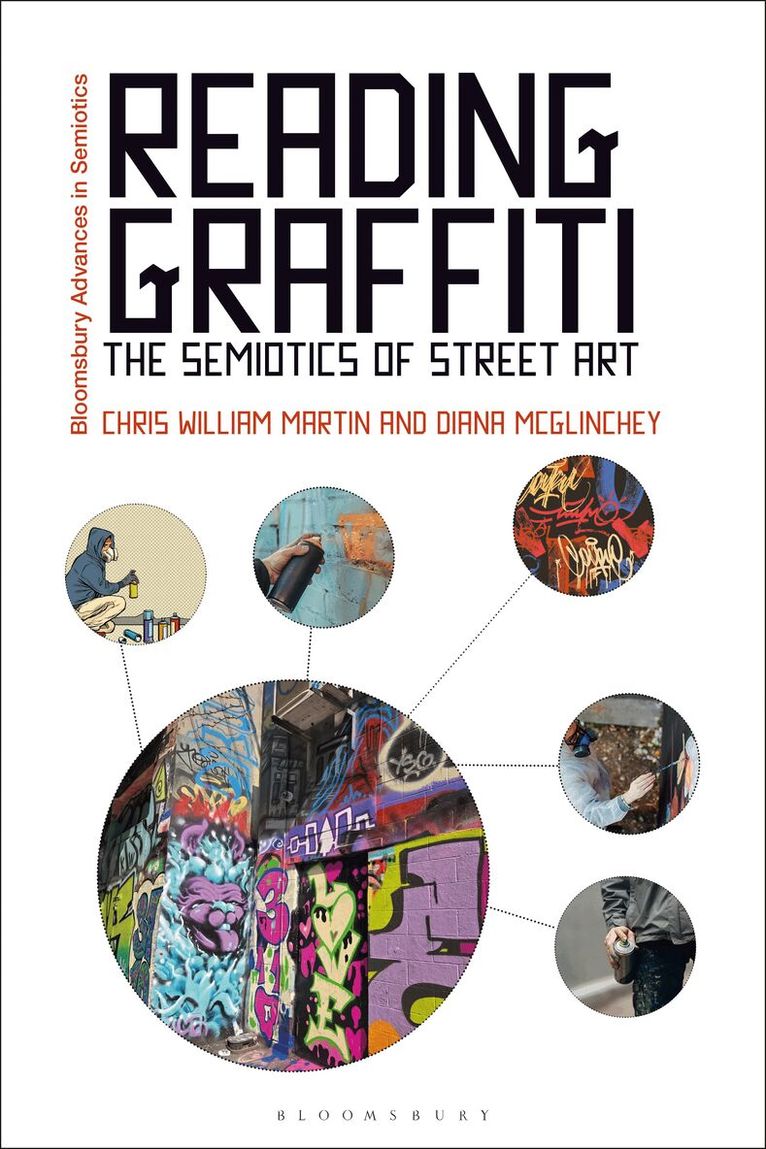
This book examines the language of the varied types of graffiti and street art while uncovering the contemporary uses and purpose behind our need to tag out our existence through letters and images on buildings and city blocks. Graffiti is as much about our need for art as expression—providing voice for the voiceless—as it is our need for beauty, social criticism, or civil disruption in our environments. This book takes an approach to understanding the ways in which graffiti and street art has changed the way we look at our environments, our social institutions, and ourselves.The book is informed by an immersive literature review, research at the Museum of Graffiti in Miami, Florida, research, and conversations with local street artists practicing in genres like stickers/slaps, lettering, murals, miniatures/installations, culture jamming and ad busting. It is also informed by fieldnotes of street art tours around the world to explore the semiotic landscape of locales and the impact on the local street art cultures. Through the polysemy of the word “graffiti” we see cultural history and modern-day actors, graffiti becomes a thing and a practice. It is human and it is historical.
E-bok
PDF, Engelska, 20261 499 kr
Läs direkt efter köp
Tracing the roots of urban graffiti including tags, bombs, street art, murals, and latrinalia through modern history, this book explores the contemporary uses of graffiti. It argues for a more nuanced appreciation for the importance of these marks in disrupting the urban landscape, providing voice for social and political criticism, and beautifying the cityscape. The author shows how graffiti has changed the way we look at our environments, our social institutions, and ourselves.From taggers to Banksy, graffiti has risen from the streets to the art gallery to the auction house, but we are still ill-equipped to understand the ways in which graffiti art can speak to us and what it is saying. This book examines the language of the varied types of graffiti while uncovering the contemporary uses and purpose behind our need to tag out our existence through shapes and lines on buildings and city blocks. Focusing on graffiti in the second half of the twentieth century to present day uses, it explores the cultural histories of the word, its meanings, and its distinctions.The book is informed by research at the Museum of Graffiti, Florida, USA, research and conversations with local law enforcement, and ethnographic experiences with a working graffiti artist in Montreal, Canada. Providing historical examples, such as the marks of freedom and disobey on the Berlin Wall, and marking social critiques on the West Bank Barrier wall, to Banksy one of the contemporary art world's most (in)famous contributors, the author traces the rise of graffiti to its current status and pushes the limits beyond our current understanding.
E-bok
Engelska, 20261 499 kr
Läs direkt efter köp
Tracing the roots of urban graffiti including tags, bombs, street art, murals, and latrinalia through modern history, this book explores the contemporary uses of graffiti. It argues for a more nuanced appreciation for the importance of these marks in disrupting the urban landscape, providing voice for social and political criticism, and beautifying the cityscape. The author shows how graffiti has changed the way we look at our environments, our social institutions, and ourselves.From taggers to Banksy, graffiti has risen from the streets to the art gallery to the auction house, but we are still ill-equipped to understand the ways in which graffiti art can speak to us and what it is saying. This book examines the language of the varied types of graffiti while uncovering the contemporary uses and purpose behind our need to tag out our existence through shapes and lines on buildings and city blocks. Focusing on graffiti in the second half of the twentieth century to present day uses, it explores the cultural histories of the word, its meanings, and its distinctions.The book is informed by research at the Museum of Graffiti, Florida, USA, research and conversations with local law enforcement, and ethnographic experiences with a working graffiti artist in Montreal, Canada. Providing historical examples, such as the marks of freedom and disobey on the Berlin Wall, and marking social critiques on the West Bank Barrier wall, to Banksy one of the contemporary art world's most (in)famous contributors, the author traces the rise of graffiti to its current status and pushes the limits beyond our current understanding.