Diego A. von Vacano – författare
Visar alla böcker från författaren Diego A. von Vacano. Handla med fri frakt och snabb leverans.
5 produkter
5 produkter
Inbunden, Engelska, 2018
1 011 kr
Skickas inom 5-8 vardagar
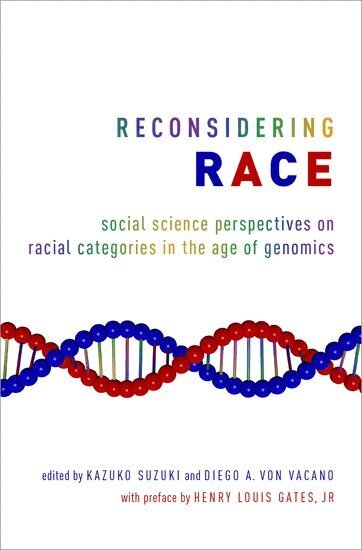
Race is one of the most elusive phenomena of social life. While we generally know it when we see it, it's not an easy concept to define. Social science literature has argued that race is a Western, socio-political concept that emerged with the birth of modern imperialism, whether in the sixteenth century (the Age of Discovery) or the eighteenth century (the Age of Enlightenment). The editors of this book point out that there is a disjuncture between the way race is conceptualized in the social science and medical literature: some of the modern sciences employ racial and ethnic categories, but they do so to analyze, diagnose, and treat particular conditions such as organ transplants for mixed-race children, heart disease, cancer, osteoporosis, skin disorders, obesity, and gastrointestinal diseases. As such, race has a physical, as opposed to a purely social, dimension. In order to more fully understand what we mean by "race", social scientists need to engage genetics, medicine, and health. To be sure, the long shadow of eugenics and the Nazi use of scientific racism have cast a pall over the effort to understand this complicated relationship between social science and race. But while the contributors of this volume reject pseudoscience and hierarchical ways of looking at race, they make the claim that it is time to reassess the Western-based, "social construction" paradigm. The chapters in this book consider three fundamental tensions in thinking about race: one between theories that see race as fixed or malleable; a second between the idea that race is a universal but modern Western concept and the idea that it has a deeper and more complicated cultural history; and a third between socio-political and biological/bio-medical concepts of race. Arguing that race is not merely socially constructed, the contributors, including Henry Louis Gates, Jr., Ann Morning, Jennifer Hochschild, Rogers Brubaker, Michael Keevak, Carolyn Rouse, and Sandra Soo-Jin Lee, offer a provocative collection of views on the way that social scientists must reconsider the idea of race in the age of genomics.
E-bok
PDF, Engelska, 20181 014 kr
Läs direkt efter köp
Race is one of the most elusive phenomena of social life. While we generally know it when we see it, it''s not an easy concept to define. Social science literature has argued that race is a Western concept that emerged with the birth of modern imperialism, whether in the sixteenth century (the Age of Discovery) or the eighteenth century (the Age of Enlightenment). This book points out that there is a disjuncture between the way race is conceptualized in the social sciences and in recent natural science literature. In the view of some proponents of natural-scientific perspectives, race has a biological- and not just a purely social - dimension. The book argues that, to more fully understand what we mean by race, social scientists need to engage these new perspectives coming from genomics, medicine, and health policy.To be sure, the long, dark shadow of eugenics and the Nazi use of scientific racism cast a pall over the effort to understand the complicated relationship between social science and medical science understandings of race. While this book rejects pseudoscientific and hierarchical ways of looking at race and affirms that it is rooted in social grounds, it makes the claim that it is time to move beyond merely repeating the "race is a social construct" mantra.The chapters in this book consider three fundamental tensions in thinking about race: one between theories that see race as fixed and those that see it as malleable; a second between Western (especially US-based) and non-Western perspectives that decenter the US experience; and a third between sociopolitical and biomedical concepts of race. The book will help shed light on multiple contemporary concerns, such as the place of race in identity formation, ethno- political conflict, immigration policy, social justice, biomedical ethics, and the carceral state.
E-bok
Engelska, 20181 014 kr
Läs direkt efter köp
Race is one of the most elusive phenomena of social life. While we generally know it when we see it, it''s not an easy concept to define. Social science literature has argued that race is a Western concept that emerged with the birth of modern imperialism, whether in the sixteenth century (the Age of Discovery) or the eighteenth century (the Age of Enlightenment). This book points out that there is a disjuncture between the way race is conceptualized in the social sciences and in recent natural science literature. In the view of some proponents of natural-scientific perspectives, race has a biological- and not just a purely social - dimension. The book argues that, to more fully understand what we mean by race, social scientists need to engage these new perspectives coming from genomics, medicine, and health policy.To be sure, the long, dark shadow of eugenics and the Nazi use of scientific racism cast a pall over the effort to understand the complicated relationship between social science and medical science understandings of race. While this book rejects pseudoscientific and hierarchical ways of looking at race and affirms that it is rooted in social grounds, it makes the claim that it is time to move beyond merely repeating the "race is a social construct" mantra.The chapters in this book consider three fundamental tensions in thinking about race: one between theories that see race as fixed and those that see it as malleable; a second between Western (especially US-based) and non-Western perspectives that decenter the US experience; and a third between sociopolitical and biomedical concepts of race. The book will help shed light on multiple contemporary concerns, such as the place of race in identity formation, ethno- political conflict, immigration policy, social justice, biomedical ethics, and the carceral state.
Häftad, Engelska, 2014
381 kr
Skickas inom 5-8 vardagar
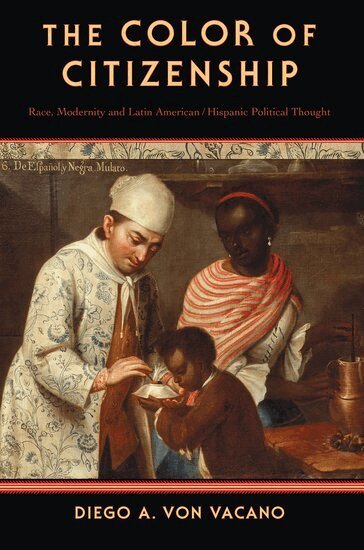
The role of race in politics, citizenship, and the state is one of the most perplexing puzzles of modernity. While political thought has been slow to take up this puzzle, Diego von Vacano suggests that the tradition of Latin American and Hispanic political thought, which has long considered the place of mixed-race peoples throughout the Americas, is uniquely well-positioned to provide useful ways of thinking about the connections between race and citizenship. As he argues, debates in the United States about multiracial identity, the possibility of a post-racial world in the aftermath of Barack Obama, and demographic changes owed to the age of mass migration will inevitably have to confront the intellectual tradition related to racial admixture that comes to us from Latin America.Von Vacano compares the way that race is conceived across the writings of four thinkers, and across four different eras: the Spanish friar Bartolomé de Las Casas writing in the context of empire; Simón Bolivar writing during the early republican period; Venezuelan sociologist Laureano Vallenilla Lanz on the role of race in nationalism; and Mexican philosopher José Vasconcelos writing on the aesthetic approach to racial identity during the cosmopolitan, post-national period. From this comparative and historical survey, von Vacano develops a concept of race as synthetic, fluid and dynamic -- a concept that will have methodological, historical, and normative value for understanding race in other diverse societies.
E-bok
PDF, Engelska, 2012493 kr
Läs direkt efter köp
The role of race in politics, citizenship, and the state is one of the most perplexing puzzles of modernity. While political thought has been slow to take up this puzzle, Diego von Vacano suggests that the tradition of Latin American and Hispanic political thought, which has long considered the place of mixed-race peoples throughout the Americas, is uniquely well-positioned to provide useful ways of thinking about the connections between race and citizenship. As he argues, debates in the United States about multiracial identity, the possibility of a post-racial world in the aftermath of Barack Obama, and demographic changes owed to the age of mass migration will inevitably have to confront the intellectual tradition related to racial admixture that comes to us from Latin America.Von Vacano compares the way that race is conceived across the writings of four thinkers, and across four different eras: the Spanish friar Bartolom? de Las Casas writing in the context of empire; Sim?n Bolivar writing during the early republican period; Venezuelan sociologist Laureano Vallenilla Lanz on the role of race in nationalism; and Mexican philosopher Jos? Vasconcelos writing on the aesthetic approach to racial identity during the cosmopolitan, post-national period. From this comparative and historical survey, von Vacano develops a concept of race as synthetic, fluid and dynamic -- a concept that will have methodological, historical, and normative value for understanding race in other diverse societies.