
Diego Cordovez – författare
Visar alla böcker från författaren Diego Cordovez. Handla med fri frakt och snabb leverans.
2 produkter
2 produkter
Inbunden, Engelska, 1995
513 kr
Skickas inom 5-8 vardagar
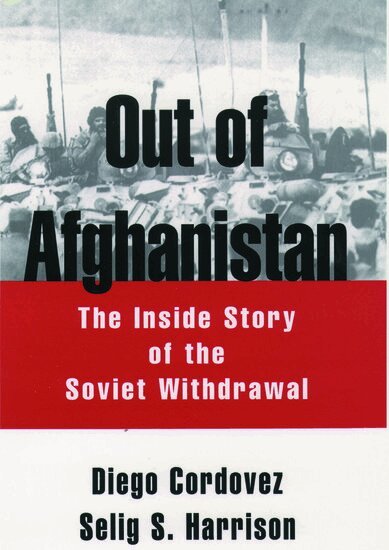
The Soviet withdrawal from Afganistan has been largely attributed to the bravery of the Afghan resistance reinforced by American weaponry and support. This book shows how it was infact years of persistent United Nations initiatives that proved crucial to the conclusion of the Geneva accords, and that the ideological hard line of the Reagan administration prolonged the conflict.Diego Cordovez, the United Nations mediator for the Afghanistan conflict, and prominent foreign policy analyst Selig Harrison have written the definitive account of the negotiations that helped end the Soviet occupation of Afghanistan, the last great clash of the cold war.
E-bok
PDF, Engelska, 1995549 kr
Läs direkt efter köp
When the Soviet Union pulled its forces out of Afghanistan, the American media had a simple explanation: Soviet troops had been hounded out of the mountains by U.S.-armed guerrillas--the skies cleared of Soviet aircraft by Stinger missiles--until the Kremlin was forced to cry uncle. But Diego Cordovez and Selig S. Harrison shatter this image. Out of Afghanistan shows that the Red Army was securely entrenched when the Soviet Union agreed to withdraw: American weaponry and Afghan bravery raised the costs for Moscow, but it was six years of skillful diplomacy that gave the Russians a way out. Cordovez and Harrison provide the definitive account of the Soviet blunders that led up to the invasion and the bitter struggles over the withdrawal that raged in the Soviet and Afghan Communist parties and the Reagan Administration. The authors are particularly well-suited to their task: Cordovez was the United Nations mediator who negotiated the Soviet pullout, and Harrison is a leading South Asia expert with four decades of experience in covering Afghanistan. Their story of the U.N. negotiations is interwoven with a gripping chronicle of the war years, complete with palace shootouts in Kabul, turf warfare between rival Soviet intelligence agencies, and the CIA role in building up Islamic fundamentalist guerrilla leaders at the expense of Afghan moderates. Cordovez opens up his diaries to take us behind the scenes in his negotiations, and Harrison draws on interviews with Mikhail Gorbachev, former Secretary of State George Shultz, and other key actors. The result is a book full of surprises. For example, the authors demonstrate that the Soviets intervened not out of a desire to drive to the Indian Ocean, but out of a fear of a U.S.-supported Afghan Tito. Rebuffs by hardline "bleeders" in the Reagan Administration undermined efforts by Yuri Andropov to secure a settlement before his death in 1983. Even more startling, Gorbachev resumed the search for a negotiated withdrawal more than a year before the first American-supplied Stinger missiles were deployed in the war. The Soviet intervention in Afghanistan was one of the pivotal events of recent history. Out of Afghanistan destroys many of the myths surrounding the Afghan war and will have a profound impact on the emerging debate over how and why the Cold War ended.