Selig S. Harrison - Böcker
Visar alla böcker från författaren Selig S. Harrison. Handla med fri frakt och snabb leverans.
6 produkter
6 produkter
1 576 kr
Skickas inom 5-8 vardagar
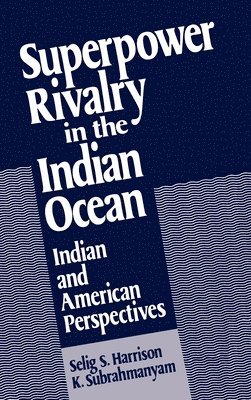
This work focuses on one of the most potentially explosive theatres of superpower rivalry: the vast, politically turbulent region embracing the Indian Ocean, the Persian Gulf, forty-two littoral states, and one third of the world's population. Indian and American authors examine the principal factors which have led to the escalation of superpower tension in this region. The effects of India's growing military power are also considered.
520 kr
Skickas inom 5-8 vardagar
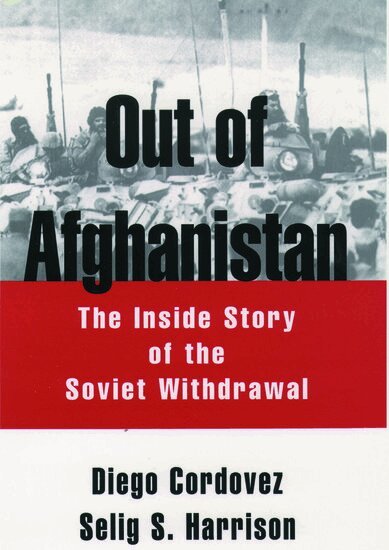
The Soviet withdrawal from Afganistan has been largely attributed to the bravery of the Afghan resistance reinforced by American weaponry and support. This book shows how it was infact years of persistent United Nations initiatives that proved crucial to the conclusion of the Geneva accords, and that the ideological hard line of the Reagan administration prolonged the conflict.Diego Cordovez, the United Nations mediator for the Afghanistan conflict, and prominent foreign policy analyst Selig Harrison have written the definitive account of the negotiations that helped end the Soviet occupation of Afghanistan, the last great clash of the cold war.
344 kr
Skickas inom 7-10 vardagar
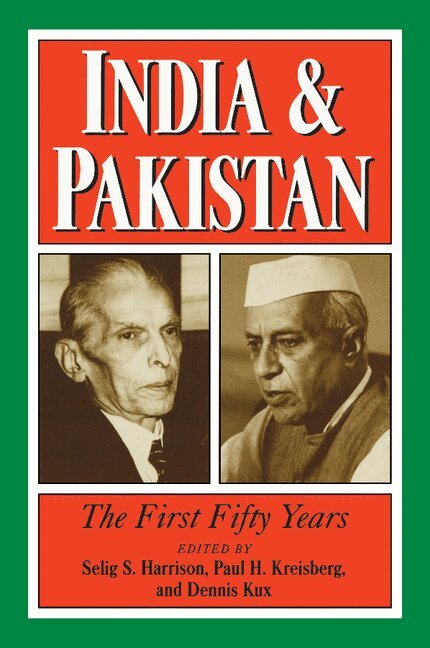
One fifth of the world's people live in India and Pakistan. Looking back on their first fifty years of independence, leading specialists on South Asia assess their progress and problems, their foreign and defense policies and their relations with the United States. The three coeditors, who compare the achievements of India and Pakistan in a perceptive introductory overview, combine journalistic, diplomatic and academic experience. Selig S. Harrison, author of India: The Most Dangerous Decades, served as South Asia Bureau Chief of the Washington Post. Paul H. Kreisberg is a former Deputy Chairman of the State Department's Policy Planning Council. Dennis Kux, author of India and the United States: Estranged Democracies, is a former Director of the India Desk in the State Department. Harrison and Kreisberg are Senior Scholars of the Woodrow Wilson International Center for Scholars, and Kux is a former Woodrow Wilson Center Fellow.
482 kr
Skickas inom 7-10 vardagar
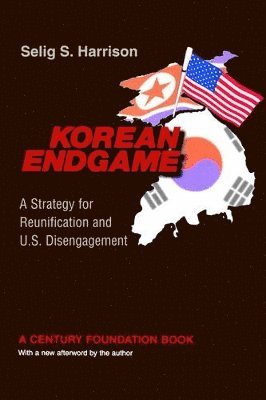
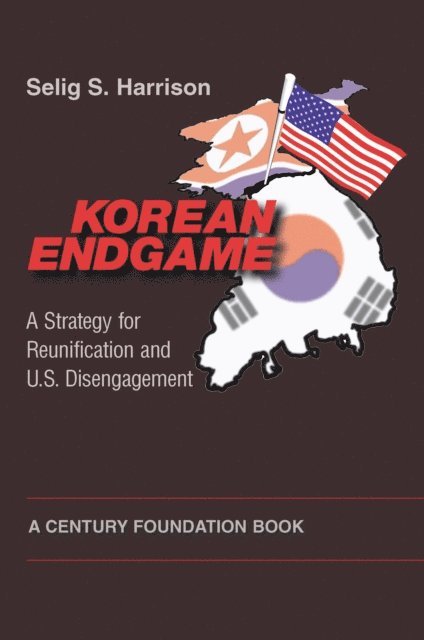
Nearly half a century after the fighting stopped, the 1953 Armistice has yet to be replaced with a peace treaty formally ending the Korean War. While Russia and China withdrew the last of their forces in 1958, the United States maintains 37,000 troops in South Korea and is pledged to defend it with nuclear weapons. In Korean Endgame, Selig Harrison mounts the first authoritative challenge to this long-standing U.S. policy. Harrison shows why North Korea is not--as many policymakers expect--about to collapse. And he explains why existing U.S. policies hamper North-South reconciliation and reunification. Assessing North Korean capabilities and the motivations that have led to its forward deployments, he spells out the arms control concessions by North Korea, South Korea, and the United States necessary to ease the dangers of confrontation, centering on reciprocal U.S. force redeployments and U.S. withdrawals in return for North Korean pullbacks from the thirty-eighth parallel. Similarly, he proposes specific trade-offs to forestall the North's development of nuclear weapons and missile delivery systems, calling for the withdrawal of the U.S. nuclear umbrella in conjunction with agreements to denuclearize Korea embracing China, Russia, and Japan.The long-term goal of U.S. policy, he argues, should be the full disengagement of U.S. combat forces from Korea as part of regional agreements insulating the peninsula from all foreign conventional and nuclear forces. A veteran journalist with decades of extensive firsthand knowledge of North Korea and long-standing contacts with leaders in Washington, Seoul, and Pyongyang, Harrison is perfectly placed to make these arguments. Throughout, he supports his analysis with revealing accounts of conversations with North Korean, South Korean, and U.S. leaders over thirty-five years. Combining probing scholarship with a seasoned reporter's on-the-ground experience and insights, he has given us the definitive book on U.S. policy in Korea--past, present, and future.

914 kr
Skickas inom 3-6 vardagar
Mr. Harrison warns that unless a new democratic lender arises when Nehru steps down, India will face Balkanization or authoritarian control based on army force. His disturbing book "is a study of enduring value, fully annotated and indexed and blessed by two of the finest maps in any recent work of scholarship." Originally published in 1960. The Princeton Legacy Library uses the latest print-on-demand technology to again make available previously out-of-print books from the distinguished backlist of Princeton University Press. These editions preserve the original texts of these important books while presenting them in durable paperback and hardcover editions. The goal of the Princeton Legacy Library is to vastly increase access to the rich scholarly heritage found in the thousands of books published by Princeton University Press since its founding in 1905.
2 567 kr
Skickas inom 3-6 vardagar
Mr. Harrison warns that unless a new democratic lender arises when Nehru steps down, India will face Balkanization or authoritarian control based on army force. His disturbing book "is a study of enduring value, fully annotated and indexed and blessed by two of the finest maps in any recent work of scholarship." Originally published in 1960. The Princeton Legacy Library uses the latest print-on-demand technology to again make available previously out-of-print books from the distinguished backlist of Princeton University Press. These editions preserve the original texts of these important books while presenting them in durable paperback and hardcover editions. The goal of the Princeton Legacy Library is to vastly increase access to the rich scholarly heritage found in the thousands of books published by Princeton University Press since its founding in 1905.