Dieter Fensel – författare
Visar alla böcker från författaren Dieter Fensel. Handla med fri frakt och snabb leverans.
20 produkter
20 produkter
Inbunden, Engelska, 2002
1 363 kr
Skickas inom 5-8 vardagar
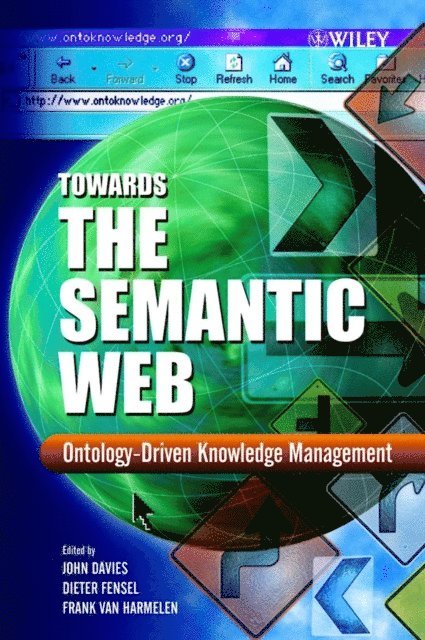
With the current changes driven by the expansion of the World Wide Web, this book uses a different approach from other books on the market: it applies ontologies to electronically available information to improve the quality of knowledge management in large and distributed organizations. Ontologies are formal theories supporting knowledge sharing and reuse. They can be used to explicitly represent semantics of semi-structured information. These enable sophisticated automatic support for acquiring, maintaining and accessing information. Methodology and tools are developed for intelligent access to large volumes of semi-structured and textual information sources in intra- and extra-, and internet-based environments to employ the full power of ontologies in supporting knowledge management from the information client perspective and the information provider.The aim of the book is to support efficient and effective knowledge management and focuses on weakly-structured online information sources. It is aimed primarily at researchers in the area of knowledge management and information retrieval and will also be a useful reference for students in computer science at the postgraduate level and for business managers who are aiming to increase the corporations' information infrastructure. The Semantic Web is a very important initiative affecting the future of the WWW that is currently generating huge interest. The book covers several highly significant contributions to the semantic web research effort, including a new language for defining ontologies, several novel software tools and a coherent methodology for the application of the tools for business advantage. It also provides 3 case studies which give examples of the real benefits to be derived from the adoption of semantic-web based ontologies in "real world" situations. As such, the book is an excellent mixture of theory, tools and applications in an important area of WWW research.* Provides guidelines for introducing knowledge management concepts and tools into enterprises, to help knowledge providers present their knowledge efficiently and effectively.* Introduces an intelligent search tool that supports users in accessing information and a tool environment for maintenance, conversion and acquisition of information sources.* Discusses three large case studies which will help to develop the technology according to the actual needs of large and or virtual organisations and will provide a testbed for evaluating tools and methods.The book is aimed at people with at least a good understanding of existing WWW technology and some level of technical understanding of the underpinning technologies (XML/RDF). It will be of interest to graduate students, academic and industrial researchers in the field, and the many industrial personnel who are tracking WWW technology developments in order to understand the business implications. It could also be used to support undergraduate courses in the area but is not itself an introductory text.
Inbunden, Engelska, 1995
1 653 kr
Skickas inom 10-15 vardagar
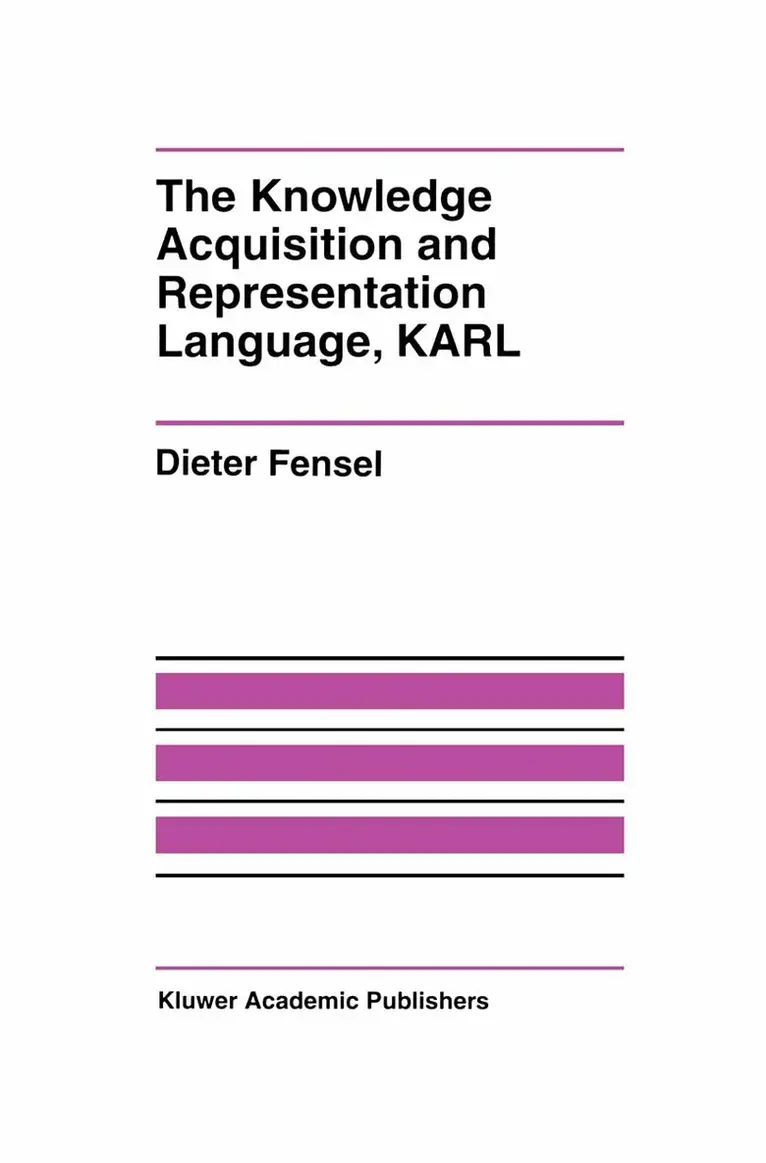
This text covers Knowledge Acquisition and Representation Language (KARL), an operational specification language for knowledge-based systems and second-generation expert systems. It provides language primitives to represent knowledge according to the layers of a KADS-oriented model of expertise. The main features of KARL are: it provides epistemologically adequate modelling primitives that allow knowledge specifications at the knowledge level. Therefore, KARL allows a smooth transition from informal to formal specifications. KARL is a formal knowledge specification language. That is, it has a declarative semantics. It is an operational knowledge specification language that allows prototyping, i.e. knowledge evaluation by testing.
Häftad, Engelska, 2012
1 653 kr
Skickas inom 10-15 vardagar
Within the framework of so-called second generation expert systems [62] knowledge modeling is one of the most important aspects. On the one hand, knowledge acquisition is no longer seen as a knowledge transfer process, rather it is now considered as model construction process which is typically a cyclic and error prone process. On the other hand, the distinction between knowledge and symbol level descriptions [166] resulted in various proposals for conceptual knowledge models describing knowledge in an implementation independent way. One of the most prominent examples of such a conceptual model is the KADS model of expertise which is characterized by its clear distinction of different know ledge types and by the usage of specific modeling primitives to describe these different knowledge types [185]. The semi formal KADS expertise model entails all the advantages and disadvantages which have been identified for semi-formal system models e.g. in the software engineering community.
Häftad, Engelska, 2020
700 kr
Skickas inom 10-15 vardagar
This book describes methods and tools that empower information providers to build and maintain knowledge graphs, including those for manual, semi-automatic, and automatic construction; implementation; and validation and verification of semantic annotations and their integration into knowledge graphs. It also presents lifecycle-based approaches for semi-automatic and automatic curation of these graphs, such as approaches for assessment, error correction, and enrichment of knowledge graphs with other static and dynamic resources.Chapter 1 defines knowledge graphs, focusing on the impact of various approaches rather than mathematical precision. Chapter 2 details how knowledge graphs are built, implemented, maintained, and deployed. Chapter 3 then introduces relevant application layers that can be built on top of such knowledge graphs, and explains how inference can be used to define views on such graphs, making it a useful resource for open and service-oriented dialog systems. Chapter 4 discusses applications of knowledge graph technologies for e-tourism and use cases for other verticals. Lastly, Chapter 5 provides a summary and sketches directions for future work. The additional appendix introduces an abstract syntax and semantics for domain specifications that are used to adapt schema.org to specific domains and tasks.To illustrate the practical use of the approaches presented, the book discusses several pilots with a focus on conversational interfaces, describing how to exploit knowledge graphs for e-marketing and e-commerce. It is intended for advanced professionals and researchers requiring a brief introduction to knowledge graphs and their implementation.
Häftad, Engelska, 2024
826 kr
Skickas inom 5-8 vardagar
The book focuses on the phases of knowledge generation, knowledge hosting, knowledge assessment, knowledge cleaning, knowledge enrichment, and knowledge deployment to cover a complete life cycle for this process.
Inbunden, Engelska, 2003
556 kr
Skickas inom 10-15 vardagar
Ontologies have been developed and investigated for some time in artificial intelligence to facilitate knowledge sharing and reuse. More recently, the notion of ontologies has attracted attention from fields such as databases, intelligent information integration, cooperative information systems, information retrieval, electronic commerce, enterprise application integration, and knowledge management. This broadened interest in ontologies is based on the feature that they provide a machine-processable semantics of information sources that can be communicated among agents as well as between software artifacts and humans. This feature makes ontologies the backbone technology of the next web generation, i.e., the Semantic Web. Ontologies are currently applied in areas such as knowledge management in large company-wide networks and call centers, and in B2C, B2G, and B2B electronic commerce. In a nutshell, ontologies enable effective and efficient access to heterogeneous and distributed information sources. Given the increasing amount of information available online, this kind of support is becoming more important day by day.The author systematically introduces the notion of ontologies to the non-expert reader and demonstrates in detail how to apply this conceptual framework for improved intranet retrieval of corporate information and knowledge and for enhanced Internet-based electronic commerce.He also describes ontology languages (XML, RDF, and OWL) and ontology tools, and the application of ontologies.In addition to structural improvements, the second edition covers recent developments relating to the Semantic Web, and emerging web-based standard languages.___________
Inbunden, Engelska, 2006
556 kr
Skickas inom 10-15 vardagar
Service-oriented computing has become one of the predominant factors in current IT research and development. Web services seem to be the middleware solution of the future for highly interoperable distributed software solutions. In parallel, research on the Semantic Web provides the results required to exploit distributed machine-processable data. To combine these two research lines into industrial-strength applications, a number of research projects have been set up by organizations like W3C and the EU. Dieter Fensel and his coauthors deliver a profound introduction into one of the most promising approaches – the Web Service Modeling Ontology (WSMO). After a brief presentation of the underlying basic technologies and standards of the World Wide Web, the Semantic Web, and Web Services, they detail all the elements of WSMO from basic concepts to possible applications in e-commerce, e-government and e-banking, and they also describe its relation to other approaches like OWL-S or WSDL-S.While many of the related technologies and standards are still under development, this book already offers both a broad conceptual introduction and lots of pointers to future application scenarios for researchers in academia and industry as well as for developers of distributed Web applications.
Häftad, Engelska, 2000
556 kr
Skickas inom 10-15 vardagar
This book provides a theory, a formal language, and a practical methodology for the specification, use, and reuse of problem-solving methods. The framework developed by the author characterizes knowledge-based systems as a particular type of software architecture where the applications are developed by integrating generic task specifications, problem solving methods, and domain models: this approach turns knowledge engineering into a software engineering discipline. All in all, this work, as an applicable theory of knowledge engineering, consolidates research work done during several decades. The present popularity of Internet-based services will provide unprecedented opportunities for deploying and sharing knowledge-based services and anybody wanting to participate in this area can learn from this book what knowledge engineering is about.
Inbunden, Engelska, 2008
556 kr
Skickas inom 10-15 vardagar
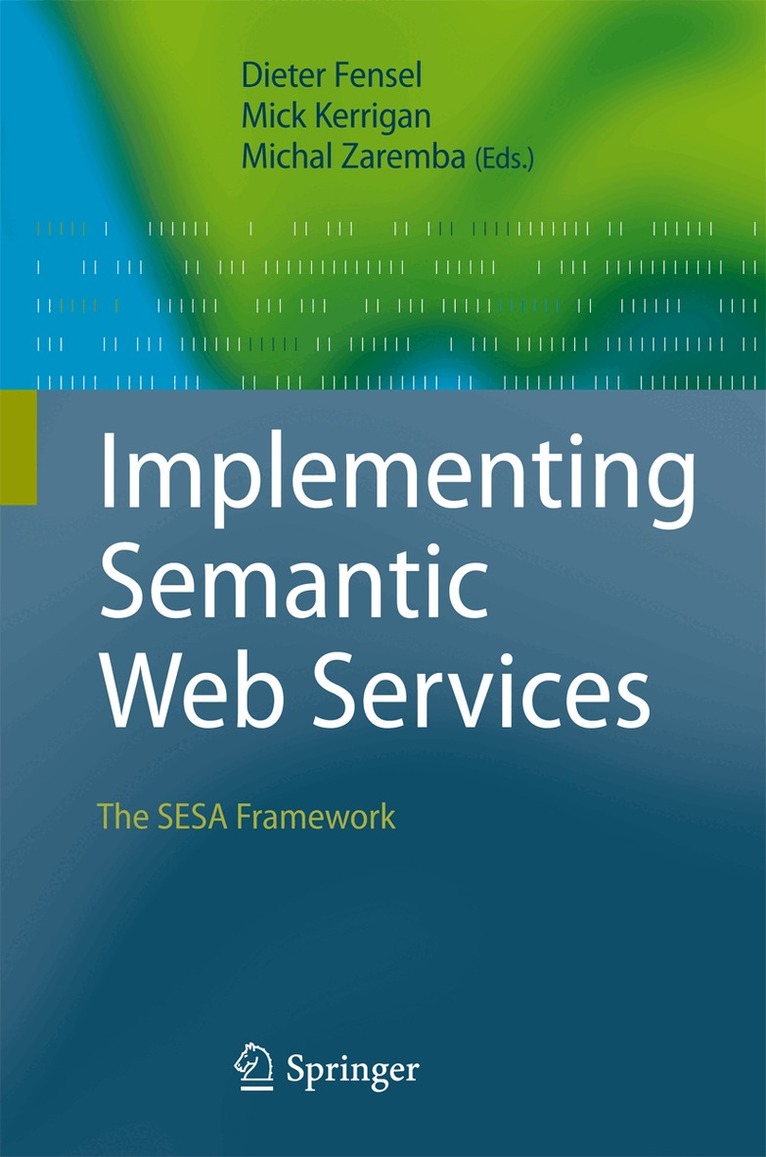
Service-oriented computing has become one of the predominant factors in IT research and development efforts over the last few years. In spite of several standardization efforts that advanced from research labs into industrial-strength technologies and tools, there is still much human effort required in the process of finding and executing Web services.Here, Dieter Fensel and his team lay the foundation for understanding the Semantic Web Services infrastructure, aimed at eliminating human intervention and thus allowing for seamless integration of information systems. They focus on the currently most advanced SWS infrastructure, namely SESA and related work such as the Web Services Execution Environment (WSMX) activities and the Semantic Execution Environment (OASIS SEE TC) standardization effort. Their book is divided into four parts: Part I provides an introduction to the field and its history, covering basic Web technologies and the state of research and standardization in the Semantic Web field. Part II presents the SESA architecture. The authors detail its building blocks and show how they are consolidated into a coherent software architecture that can be used as a blueprint for implementation. Part III gives more insight into middleware services, describing the necessary conceptual functionality that is imposed on the architecture through the basic principles. Each such functionality is realized using a number of so-called middleware services. Finally, Part IV shows how the SESA architecture can be applied to real-world scenarios, and provides an overview of compatible and related systems.The book targets professionals as well as academic and industrial researchers working on various aspects of semantic integration of distributed information systems. They will learn how to apply the Semantic Web Services infrastructure to automate and semi-automate tasks, by using existing integration technologies. In addition, the book is also suitable for advanced graduate students enrolled in courses covering knowledge management, the Semantic Web, or integration of information systems, as it will educate them about basic technologies for Semantic Web Services and general issues related to integration of information systems.
Inbunden, Engelska, 2011
5 495 kr
Skickas inom 10-15 vardagar
After years of mostly theoretical research, Semantic Web Technologies are now reaching out into application areas like bioinformatics, eCommerce, eGovernment, or Social Webs. Applications like genomic ontologies, semantic web services, automated catalogue alignment, ontology matching, or blogs and social networks are constantly increasing, often driven or at least backed up by companies like Google, Amazon, YouTube, Facebook, LinkedIn and others. The need to leverage the potential of combining information in a meaningful way in order to be able to benefit from the Web will create further demand for and interest in Semantic Web research. This movement, based on the growing maturity of related research results, necessitates a reliable reference source from which beginners to the field can draw a first basic knowledge of the main underlying technologies as well as state-of-the-art application areas. This handbook, put together by three leading authorities in the field, and supported by an advisory board of highly reputed researchers, fulfils exactly this need. It is the first dedicated reference work in this field, collecting contributions about both the technical foundations of the Semantic Web as well as their main usage in other scientific fields like life sciences, engineering, business, or education.
Häftad, Engelska, 2010
556 kr
Skickas inom 10-15 vardagar
Ontologies have been developed and investigated for some time in artificial intelligence to facilitate knowledge sharing and reuse. More recently, the notion of ontologies has attracted attention from fields such as databases, intelligent information integration, cooperative information systems, information retrieval, electronic commerce, enterprise application integration, and knowledge management. This broadened interest in ontologies is based on the feature that they provide a machine-processable semantics of information sources that can be communicated among agents as well as between software artifacts and humans. This feature makes ontologies the backbone technology of the next web generation, i.e., the Semantic Web. Ontologies are currently applied in areas such as knowledge management in large company-wide networks and call centers, and in B2C, B2G, and B2B electronic commerce. In a nutshell, ontologies enable effective and efficient access to heterogeneous and distributed information sources. Given the increasing amount of information available online, this kind of support is becoming more important day by day.The author systematically introduces the notion of ontologies to the non-expert reader and demonstrates in detail how to apply this conceptual framework for improved intranet retrieval of corporate information and knowledge and for enhanced Internet-based electronic commerce. He also describes ontology languages (XML, RDF, and OWL) and ontology tools, and the application of ontologies.In addition to structural improvements, the second edition covers recent developments relating to the Semantic Web, and emerging web-based standard languages.___________
Häftad, Engelska, 2010
556 kr
Skickas inom 10-15 vardagar
Service-oriented computing has become one of the predominant factors in current IT research and development. Web services seem to be the middleware solution of the future for highly interoperable distributed software solutions. In parallel, research on the Semantic Web provides the results required to exploit distributed machine-processable data. To combine these two research lines into industrial-strength applications, a number of research projects have been set up by organizations like W3C and the EU. Dieter Fensel and his coauthors deliver a profound introduction into one of the most promising approaches – the Web Service Modeling Ontology (WSMO). After a brief presentation of the underlying basic technologies and standards of the World Wide Web, the Semantic Web, and Web Services, they detail all the elements of WSMO from basic concepts to possible applications in e-commerce, e-government and e-banking, and they also describe its relation to other approaches like OWL-S or WSDL-S.While many of the related technologies and standards are still under development, this book already offers both a broad conceptual introduction and lots of pointers to future application scenarios for researchers in academia and industry as well as for developers of distributed Web applications.
Häftad, Engelska, 2010
556 kr
Skickas inom 10-15 vardagar
Service-oriented computing has become one of the predominant factors in IT research and development efforts over the last few years. In spite of several standardization efforts that advanced from research labs into industrial-strength technologies and tools, there is still much human effort required in the process of finding and executing Web services.Here, Dieter Fensel and his team lay the foundation for understanding the Semantic Web Services infrastructure, aimed at eliminating human intervention and thus allowing for seamless integration of information systems. They focus on the currently most advanced SWS infrastructure, namely SESA and related work such as the Web Services Execution Environment (WSMX) activities and the Semantic Execution Environment (OASIS SEE TC) standardization effort. Their book is divided into four parts: Part I provides an introduction to the field and its history, covering basic Web technologies and the state of research and standardization in the Semantic Web field. Part II presents the SESA architecture. The authors detail its building blocks and show how they are consolidated into a coherent software architecture that can be used as a blueprint for implementation. Part III gives more insight into middleware services, describing the necessary conceptual functionality that is imposed on the architecture through the basic principles. Each such functionality is realized using a number of so-called middleware services. Finally, Part IV shows how the SESA architecture can be applied to real-world scenarios, and provides an overview of compatible and related systems.The book targets professionals as well as academic and industrial researchers working on various aspects of semantic integration of distributed information systems. They will learn how to apply the Semantic Web Services infrastructure to automate and semi-automate tasks, by using existing integration technologies. In addition, the book is also suitable for advanced graduate students enrolled in courses covering knowledge management, the Semantic Web, or integration of information systems, as it will educate them about basic technologies for Semantic Web Services and general issues related to integration of information systems.
Inbunden, Engelska, 2011
556 kr
Skickas inom 10-15 vardagar
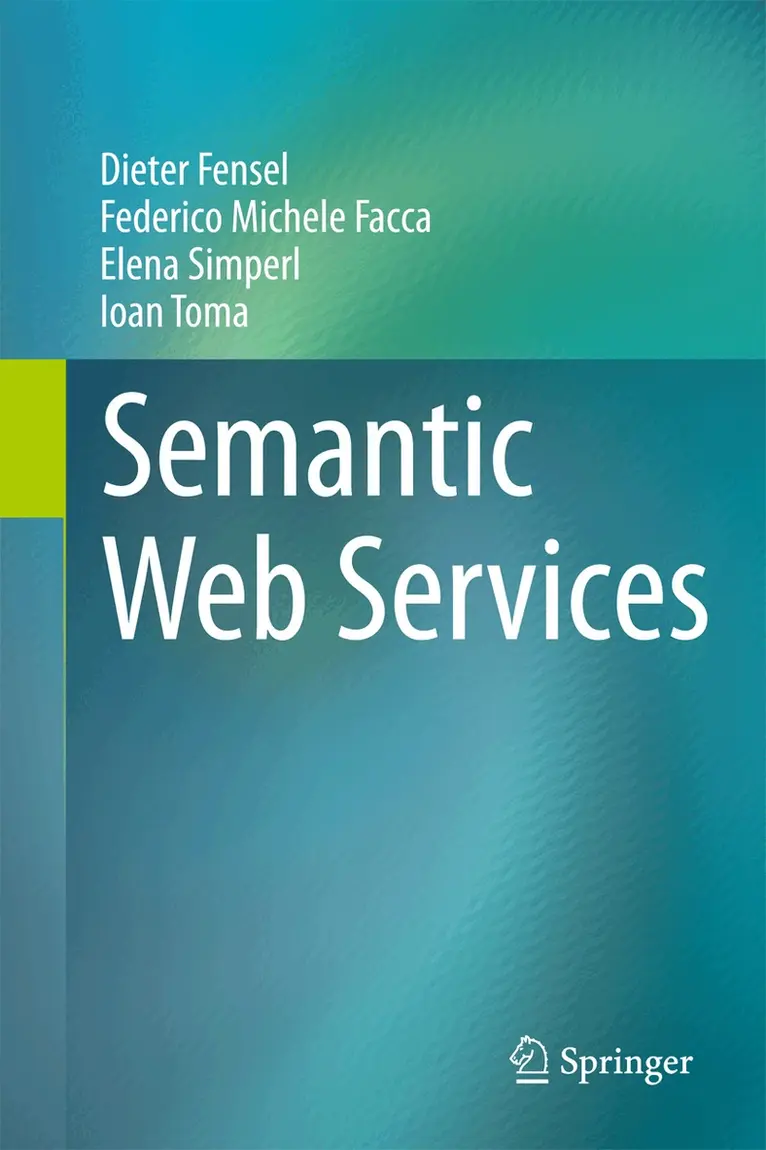
A paradigm shift is taking place in computer science: one generation ago, we learned to abstract from hardware to software, now we are abstracting from software to serviceware implemented through service-oriented computing. Yet ensuring interoperability in open, heterogeneous, and dynamically changing environments, such as the Internet, remains a major challenge for actual machine-to-machine integration. Usually significant problems in aligning data, processes, and protocols appear as soon as a specific piece of functionality is used within a different application context. The Semantic Web Services (SWS) approach is about describing services with metadata on the basis of domain ontologies as a means to enable their automatic location, execution, combination, and use. Fensel and his coauthors provide a comprehensive overview of SWS in line with actual industrial practice. They introduce the main sociotechnological components that ground the SWS vision (like Web Science, Service Science, and service-oriented architectures) and several approaches that realize it, e.g. the Web Service Modeling Framework, OWL-S, and RESTful services. The real-world relevance is emphasized through a series of case studies from large-scale R&D projects and a business-oriented proposition from the SWS technology provider Seekda.Each chapter of the book is structured according to a predefined template, covering both theoretical and practical aspects, and including walk-through examples and hands-on exercises. Additional learning material is available on the book website www.swsbook.org. With its additional features, the book is ideally suited as the basis for courses or self-study in this field, and it may also serve as a reference for researchers looking for a state-of-the-art overview of formalisms, methods, tools, and applications related to SWS.
Inbunden, Engelska, 2011
1 653 kr
Skickas inom 10-15 vardagar
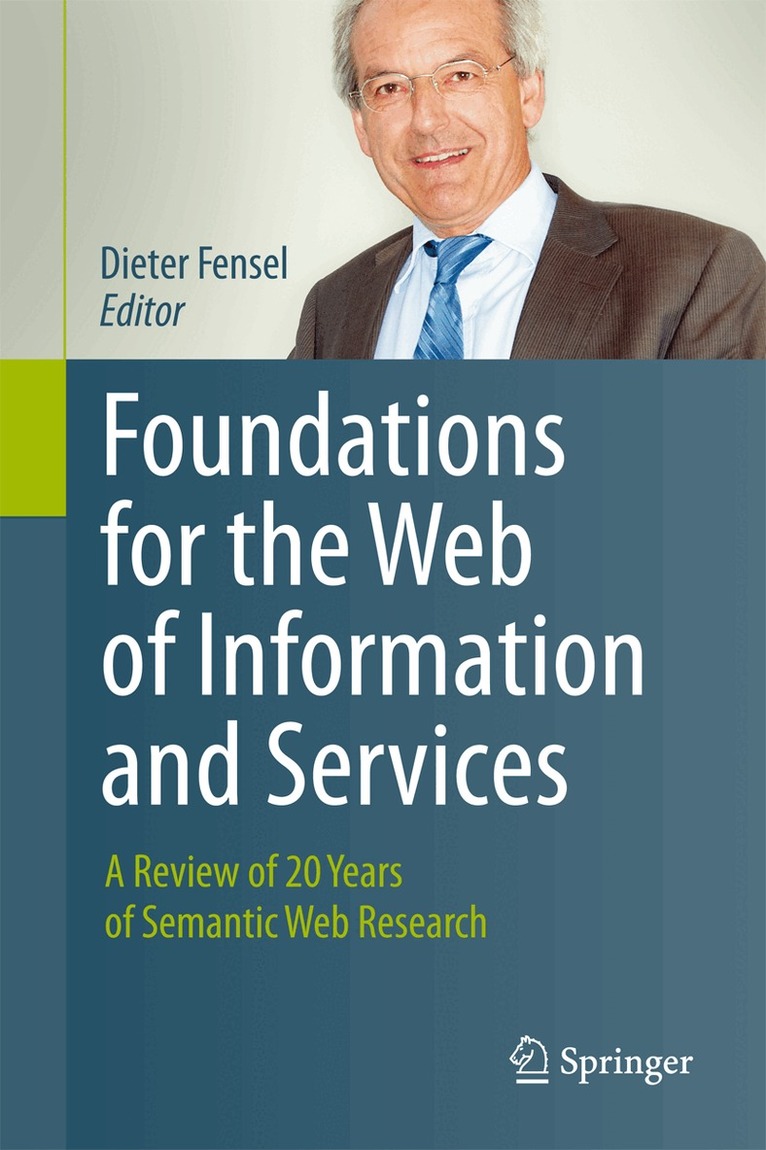
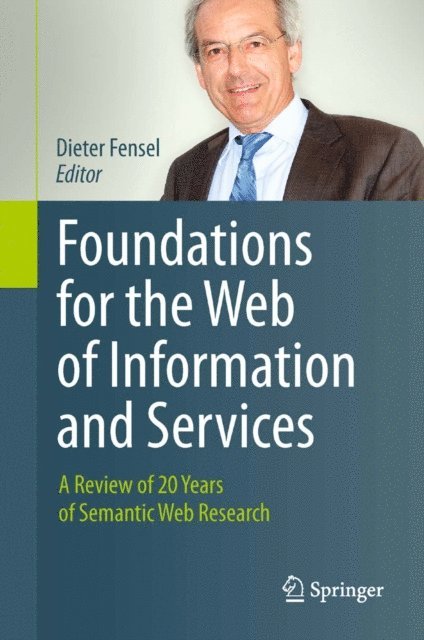
In the mid 1990s, Tim Berners-Lee had the idea of developing the World Wide Web into a „Semantic Web“, a web of information that could be interpreted by machines in order to allow the automatic exploitation of data, which until then had to be done by humans manually.One of the first people to research topics related to the Semantic Web was Professor Rudi Studer. From the beginning, Rudi drove projects like ONTOBROKER and On-to-Knowledge, which later resulted in W3C standards such as RDF and OWL. By the late 1990s, Rudi had established a research group at the University of Karlsruhe, which later became the nucleus and breeding ground for Semantic Web research, and many of today’s well-known research groups were either founded by his disciples or benefited from close cooperation with this think tank.In this book, published in celebration of Rudi’s 60th birthday, many of his colleagues look back on the main research results achieved during the last 20 years. Under the editorship of Dieter Fensel, once one of Rudi’s early PhD students, an impressive list of contributors and contributions has been collected, covering areas like Knowledge Management, Ontology Engineering, Service Management, and Semantic Search.Overall, this book provides an excellent overview of the state of the art in Semantic Web research, by combining historical roots with the latest results, which may finally make the dream of a “Web of knowledge, software and services” come true.
Häftad, Engelska, 2012
556 kr
Skickas inom 10-15 vardagar
This volume constitutes the thoroughly refereed proceedings of 11 international workshops held as part of the 8th Extended Semantic Web Conference, ESWC 2011, in Heraklion, Crete, Greece, in May 2010. The 22 revised full papers presented were carefully reviewed and selected from a total of 75 submissions to the workshops during two rounds of reviewing and improvement. The papers are organized in topical sections on the following workshops: 1st International Workshop on eLearning Approaches for the Linked Data Age, 1st Workshop on High-Performance Computing for the Semantic Web, 3rd International Workshop on Inductive Reasoning and Machine Learning for the Semantic Web, 1st Workshop on Making Sense of Microposts, 1st Workshop on Ontology and Semantic Web for Manufacturing, 1st Workshop on Question Answering over Linked Data, 4th International Workshop on REsource Discovery, 6th International Workshop on Semantic Business Process Management, 1st Workshop on Semantic Publication, 1st Workshop on Semantics in Governance and Policy Modelling, and 1st International Workshop on User Profile Data on the Social Semantic Web.
Häftad, Engelska, 2014
556 kr
Skickas inom 10-15 vardagar
A paradigm shift is taking place in computer science: one generation ago, we learned to abstract from hardware to software, now we are abstracting from software to serviceware implemented through service-oriented computing. Yet ensuring interoperability in open, heterogeneous, and dynamically changing environments, such as the Internet, remains a major challenge for actual machine-to-machine integration. Usually significant problems in aligning data, processes, and protocols appear as soon as a specific piece of functionality is used within a different application context. The Semantic Web Services (SWS) approach is about describing services with metadata on the basis of domain ontologies as a means to enable their automatic location, execution, combination, and use. Fensel and his coauthors provide a comprehensive overview of SWS in line with actual industrial practice. They introduce the main sociotechnological components that ground the SWS vision (like Web Science, Service Science, and service-oriented architectures) and several approaches that realize it, e.g. the Web Service Modeling Framework, OWL-S, and RESTful services. The real-world relevance is emphasized through a series of case studies from large-scale R&D projects and a business-oriented proposition from the SWS technology provider Seekda.Each chapter of the book is structured according to a predefined template, covering both theoretical and practical aspects, and including walk-through examples and hands-on exercises. Additional learning material is available on the book website www.swsbook.org. With its additional features, the book is ideally suited as the basis for courses or self-study in this field, and it may also serve as a reference for researchers looking for a state-of-the-art overview of formalisms, methods, tools, and applications related to SWS.
Häftad, Engelska, 2014
1 653 kr
Skickas inom 10-15 vardagar
In the mid 1990s, Tim Berners-Lee had the idea of developing the World Wide Web into a „Semantic Web“, a web of information that could be interpreted by machines in order to allow the automatic exploitation of data, which until then had to be done by humans manually.One of the first people to research topics related to the Semantic Web was Professor Rudi Studer. From the beginning, Rudi drove projects like ONTOBROKER and On-to-Knowledge, which later resulted in W3C standards such as RDF and OWL. By the late 1990s, Rudi had established a research group at the University of Karlsruhe, which later became the nucleus and breeding ground for Semantic Web research, and many of today’s well-known research groups were either founded by his disciples or benefited from close cooperation with this think tank.In this book, published in celebration of Rudi’s 60th birthday, many of his colleagues look back on the main research results achieved during the last 20 years. Under the editorship of Dieter Fensel, once one of Rudi’s early PhD students, an impressive list of contributors and contributions has been collected, covering areas like Knowledge Management, Ontology Engineering, Service Management, and Semantic Search.Overall, this book provides an excellent overview of the state of the art in Semantic Web research, by combining historical roots with the latest results, which may finally make the dream of a “Web of knowledge, software and services” come true.
Häftad, Engelska, 2005
72 kr
Tillfälligt slut
Inbunden, Engelska, 2005
1 321 kr
Tillfälligt slut
Disparate information, spread over various sources, in various formats, and with inconsistent semantics is a major obstacle for enterprises to use this information at its full potential. Information Grids should allow for the effective access, extraction and linking of dispersed information. Currently Europe’s coporations spend over 10 Billion € to deal with these problems. This book will demonstrate the applicability of grid technologies to industry. To this end, it gives a detailed insight on how ontology technology can be used to manage dispersed information assets more efficiently. The book is based on experiences from the COG (Corporate Ontology Grid) project, carried out jointly by three leading industrial players and the Digital Enterprise Research Institute Austria. Through comparisons of this project with alternative technologies and projects, it provides hands-on experience and best practice examples to act as a reference guide for their development.Information Integration with Ontologies: Ontology based Information Integration in an Industrial Setting is ideal for technical experts and computer researchers in the IT-area looking to achieve integration of heterogeneous information and apply ontology technologies and techniques in practice. It will also be of great benefit to technical decision makers seeking information about ontology technologies and the scientific audience, interested in achievements towards the application of ontologies in an industrial setting.