Dieter Vogt – författare
1 527 kr
Läs direkt efter köp
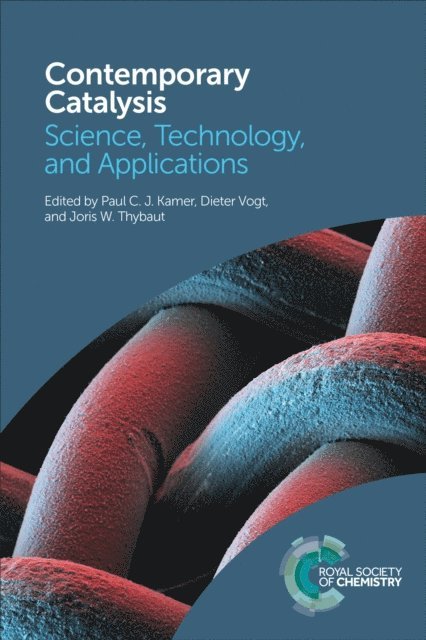
Encompassing an integrated approach to the various aspects of catalysis, covering heterogeneous, homogeneous, organo-, bio-, and computational catalysis, as well as reaction and reactor engineering on an advanced level, this textbook is ideal for graduate students with diverse backgrounds, including catalysis, engineering, and organic synthesis. The basic principles of the various fields of catalysis are introduced in a concise way, preparing the reader for the more advanced chapters. Organometallic chemistry, surface science, biochemistry, nanoscience, transport phenomena and kinetics, reactor and reaction engineering are presented, spanning from the underlying science to industrial applications. Several important case studies on industrial applications are given. It includes catalyst preparation and characterisation and explores recent developments in the understanding of catalytic mechanisms, exploring advanced techniques such as operando spectroscopy.
1 728 kr
Skickas inom 5-8 vardagar
1 140 kr
Skickas inom 3-6 vardagar
1 218 kr
Skickas
1 074 kr
Läs direkt efter köp
1 074 kr
Läs direkt efter köp
1 619 kr
Läs direkt efter köp
One-stop reference on homogeneous catalysis, from general concepts through detailed examples and industrial applications
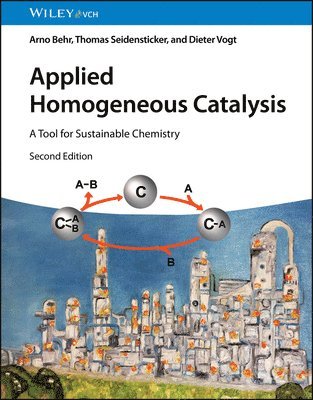
Accessible and richly illustrated, Applied Homogeneous Catalysis provides a concise overview of the broad field of homogeneous transition metal catalysis and its applications in the chemical industry. This newly revised and updated second edition puts special emphasis on green chemistry, sustainable resources, and processes.
The book is divided into five parts. Part I presents the basics of transition metal catalysis. Part II focuses on process engineering aspects. Part III provides details of the most important catalytic reactions. Part IV describes catalytic conversions closely related to classical homogeneous transition metal catalysis, such as nano-, electro-, photo- and organocatalysis. Part V covers new feedstocks and other topics, concluding with an outlook on future challenges of homogeneous catalysis.
The book contains numerous mechanistic details, technical information, and illustrative examples. The chapters are enlivened by various excursions that relate the content to everyday life or introduce important personalities. Didactically, the book is completed with learning objectives and take-home messages for each chapter, as well as more than 400 questions and answers for self-testing.
Written by a team of internationally renowned experts in the field, with a wealth of experience in industry and teaching, Applied Homogeneous Catalysis includes information on:
Economic importance of industrial homogeneously-catalyzed reactions and basics of organometallic chemistry, including types of bonds, elemental steps, and mechanisms Common approaches for separating the homogeneous catalyst from the products after the reaction and using combinatorial chemistry and high throughput screening to achieve optimal results Activating “inactive” molecules such as carbon dioxide and nitrogen, and harnessing homogeneous catalysis for feedstock diversification by recycling polymers or using renewables.Providing expansive coverage of the subject, Applied Homogeneous Catalysis is an essential guide for researchers and professionals in the pharmaceutical, polymer, and fine and bulk chemicals industries working on catalysis or entering the field, as well as for Master’s and PhD students in organic chemistry, chemical engineering, and related fields.
1 619 kr
Läs direkt efter köp
One-stop reference on homogeneous catalysis, from general concepts through detailed examples and industrial applications
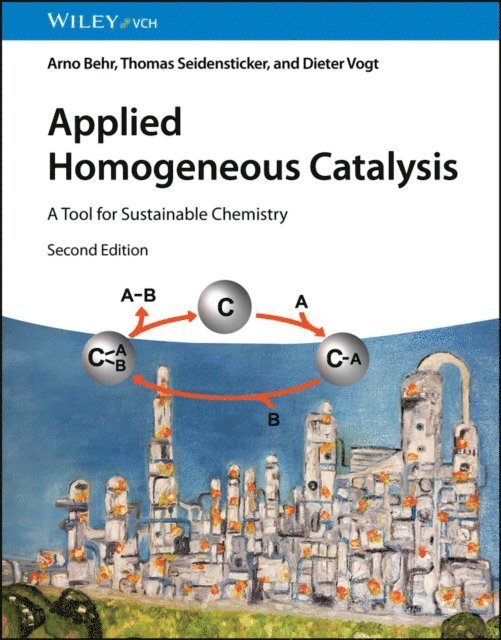
Accessible and richly illustrated, Applied Homogeneous Catalysis provides a concise overview of the broad field of homogeneous transition metal catalysis and its applications in the chemical industry. This newly revised and updated second edition puts special emphasis on green chemistry, sustainable resources, and processes.
The book is divided into five parts. Part I presents the basics of transition metal catalysis. Part II focuses on process engineering aspects. Part III provides details of the most important catalytic reactions. Part IV describes catalytic conversions closely related to classical homogeneous transition metal catalysis, such as nano-, electro-, photo- and organocatalysis. Part V covers new feedstocks and other topics, concluding with an outlook on future challenges of homogeneous catalysis.
The book contains numerous mechanistic details, technical information, and illustrative examples. The chapters are enlivened by various excursions that relate the content to everyday life or introduce important personalities. Didactically, the book is completed with learning objectives and take-home messages for each chapter, as well as more than 400 questions and answers for self-testing.
Written by a team of internationally renowned experts in the field, with a wealth of experience in industry and teaching, Applied Homogeneous Catalysis includes information on:
Economic importance of industrial homogeneously-catalyzed reactions and basics of organometallic chemistry, including types of bonds, elemental steps, and mechanisms Common approaches for separating the homogeneous catalyst from the products after the reaction and using combinatorial chemistry and high throughput screening to achieve optimal results Activating “inactive” molecules such as carbon dioxide and nitrogen, and harnessing homogeneous catalysis for feedstock diversification by recycling polymers or using renewables.Providing expansive coverage of the subject, Applied Homogeneous Catalysis is an essential guide for researchers and professionals in the pharmaceutical, polymer, and fine and bulk chemicals industries working on catalysis or entering the field, as well as for Master’s and PhD students in organic chemistry, chemical engineering, and related fields.
48 kr
Läs direkt efter köp