Dieter Wohlleben – författare
Visar alla böcker från författaren Dieter Wohlleben. Handla med fri frakt och snabb leverans.
4 produkter
4 produkter
Inbunden, Engelska, 1992
873 kr
Skickas inom 10-15 vardagar
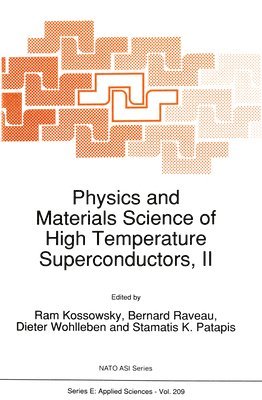
"Physics and Materials Science of High Temperature Superconductors II" represents the results of a fruitful dialogue between physicists and materials scientists which took place under the auspices of a NATO Advanced Study Institute in Porto Carras, Greece, between 18 and 31 August 1991. It builds on and carries forward the success of NATO ASI 181 published in 1990. The theoretical side of the discussions reveal the basic premise of the phenomenological and Ginzburg-Landau theories of superconductivity, the implications of short coherence length, long penetration depth, the melting of flux lattices, and other matters, while the materials science includes discussions of microstructures, local inhomogeneities, deviations from ideal chemistry, the effects of systematic errors in materials preparation, the definition of imperfections, and the utilization of common materials analysis techniques.The reader is made aware of the potential significance of Angstrom scale structural and chemical details, and the need to consider basic theoretical concepts when designing procedures to process viable, solid conductors, specifically the effects of oxygen stoichiometry and deviations from it, as well as the microstructural demands on pinning in the light of very short coherence lengths.
Häftad, Engelska, 2013
548 kr
Skickas inom 10-15 vardagar
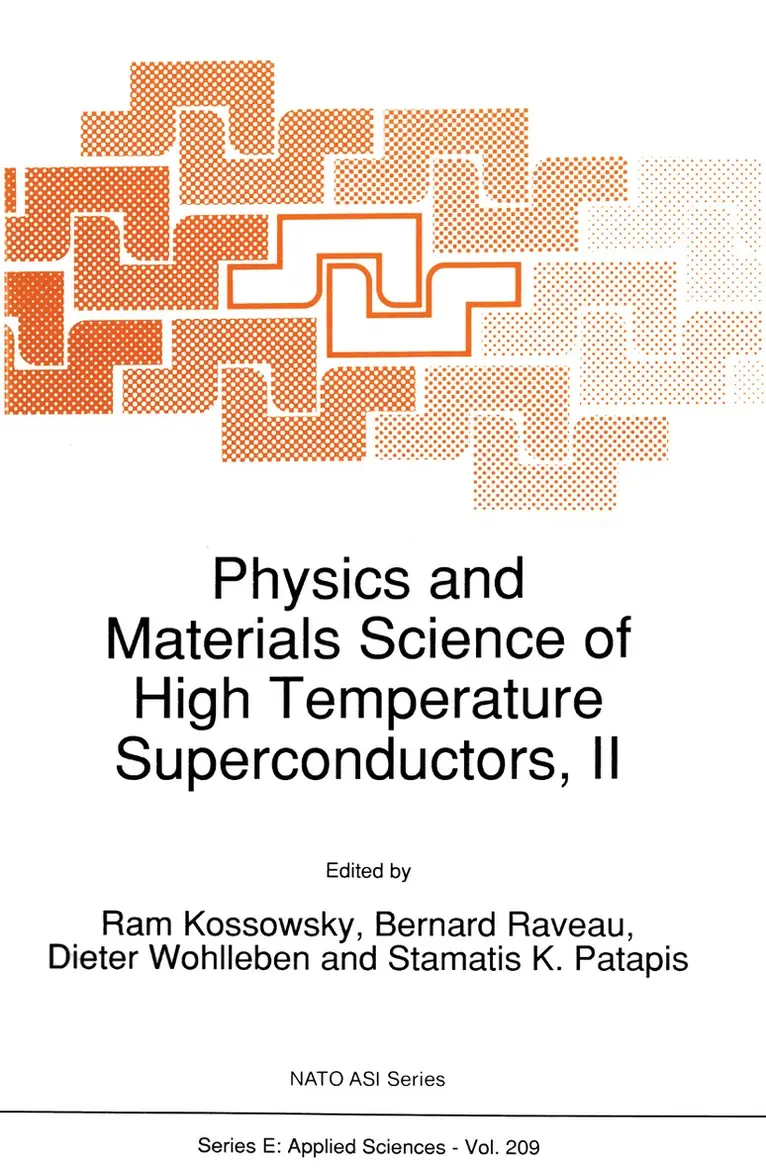
Physics and Materials Science of High Temperature Superconductors, II represents the results of a fruitful dialogue between physicists and materials scientists which took place under the auspices of a NATO Advanced Study Institute in Porto Carras, Greece, between 18 and 31 August, 1991. It builds on and carries forward the success of NATO ASI 181 published in 1990. The theoretical side of the discussions reveal the basic premise of the phenomenological and Ginzburg-Landau theories of superconductivity, the implications of short coherence length, long penetration depth, the melting of flux lattices, and other matters, while the materials science includes discussions of microstructures, local inhomogeneities, deviations from ideal chemistry, the effects of systematic errors in materials preparation, the definition of imperfections, and the utilization of common materials analysis techniques. The reader will be made aware of the potential significance of Angstrom scale structural and chemical details, and the need to consider basic theoretical concepts when designing procedures to process viable, solid conductors, specifically the effects of oxygen stoichiometry and deviations from it, as well as the microstructural demands on pinning in the light of very short coherence lengths.
Häftad, Engelska, 2012
548 kr
Skickas inom 10-15 vardagar
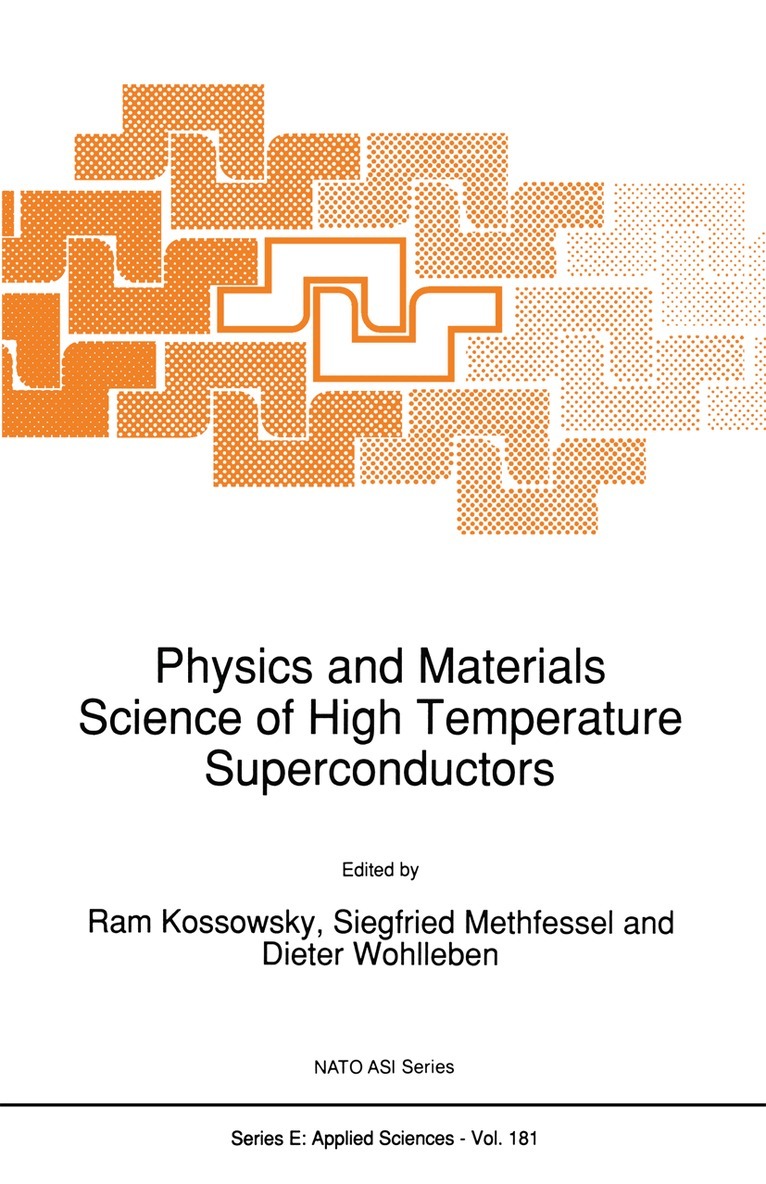
Since the discovery of high temperature superconductivity, a tidal wave of res earch into the newly found phenomena took off in several directions. The theor ists began to examine BSC and its implications. Mostly everyone was syn thesizing materials.The experimentalists were studying relations among electri cal and magnetic properties while the pure materials scientists began to exam ine the microstructures, and the relations of processing to one or two measurab le parameters. The engineering and systems community were preparing real conductors and designing the needed components. Each of the communities was holding between two and three annual meetings to discuss most recent re sults. As work progressed, and promised applications did not materialize, it became apparent to us that the physics and materials science communities needed to establish solid communication lines. This NATO Advanced Study Institute was thus conceived and organized. This was a two week summer school, which 15 internationally acclaimed physicists and material scientists were invited to par ticipate in the capacity of Lecturers. Eighty students, from 12 different countries, also attended.
E-bok
PDF, Engelska, 2012687 kr
Läs direkt efter köp
Physics and Materials Science of High Temperature Superconductors, II represents the results of a fruitful dialogue between physicists and materials scientists which took place under the auspices of a NATO Advanced Study Institute in Porto Carras, Greece, between 18 and 31 August, 1991. It builds on and carries forward the success of NATO ASI 181 published in 1990. The theoretical side of the discussions reveal the basic premise of the phenomenological and Ginzburg-Landau theories of superconductivity, the implications of short coherence length, long penetration depth, the melting of flux lattices, and other matters, while the materials science includes discussions of microstructures, local inhomogeneities, deviations from ideal chemistry, the effects of systematic errors in materials preparation, the definition of imperfections, and the utilization of common materials analysis techniques. The reader will be made aware of the potential significance of Angstrom scale structural and chemical details, and the need to consider basic theoretical concepts when designing procedures to process viable, solid conductors, specifically the effects of oxygen stoichiometry and deviations from it, as well as the microstructural demands on pinning in the light of very short coherence lengths.