Dinah Mulock Craik - Böcker
Visar alla böcker från författaren Dinah Mulock Craik. Handla med fri frakt och snabb leverans.
3 produkter
3 produkter
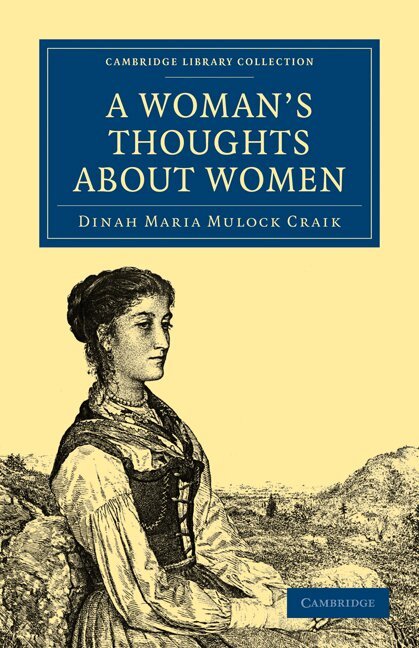
Christina Rossetti: 'Maude' and Dinah Mulock Craik: 'on Sisterhoods' and 'A Woman's Thoughts About Women'
Inbunden, Engelska, 1993
1 620 kr
Skickas inom 5-8 vardagar
Showalter's thoughtful, detailed introductory essay is a comprehensive analysis between Rosetti's novella and Craik's essays...the biographical portrait of Christina Rossetti's conflicts makes her a vivid example of the psychological and social barriers to the development of the female poets...her description of Dinah Mulock Craik stressed this woman's common-sense approach to ameliorating the position of the working-class woman in society...useful to students of feminist theory and of Victorian literature. --Academic Library Book Review Cristina Rossetti was nineteen years old when she wrote Maude: Prose and Verse in 1850. Clearly autobiographical, the novel examines the heroine's endeavor to resist the notion that modesty, virtue and domesticity constitute the sole duties of womanhood. For the precocious young poet, the work was only one of several projects of her teens. Growing up in London as the youngest child in a gifted and unusual family of artists and writers, Rossetti had early developed a poetic vocation.But by the time she wrote Maude, the lively, passionate, and adventurous little girl who had hated needlework, delighted in fiercely competitive games of chess, and explored the country with her brothers became a painfully constrained, sickly, and over-scrupulous teenager. Maude makes clear that at least some of Rossetti's affliction came from anxieties about poetic achievement, her wishes both to be admired for her genius and to renounce it as unfeminine. Often overshadowed by her brother Dante Gabriel Rossetti, Christina struggled to express her own independent authorial voice, and to resist a life bound by the constraints and demands of the traditional female role. Other late Victorian attitudes towards Anglican women's communities are brought out in On Sisterhoods by Dinah Mulock Craik which appeared in Longman's magazine in 1883. Craik herself worked on the literary border between feminine gentility and feminist rebellion. In 1850, when Christina Rossetti was writing Maude within the confines of her family, Dinah Mulock was supporting herself and her two younger brothers by her pen. On Sisterhoods confronts head-on 'the woman question.'Asserting that women's role is to find beauty in their lives through altruism and good works--to be more or less 'good women'--Craik provides a radical solution to the 'woman question' by advocating the encouragement of Anglican sisterhoods, effectively women's co-operatives. For her, the strongest argument for such a sisterhood is the alternative life it offers to single women, with no outlets for their maternal emotions. The third text presented here, Craik's A Woman's Thoughts About Women, was a widely circulated manual of advice on female self-sufficiency for unmarried women, based on her own experience in a family left destitute by an eccentric father when she was nineteen. It addressed a pressing contemporary problem: the large number of urban single women who were well educated and qualified but for whom traditional employment offered no place. Craik understood that independence would come hard to middle-class women, yet she was optimistic about the ways women might re-educate themselves, abandoning false pride and learning to manage small businesses or conduct trades.Throughout her career, Craik masked her private feminist views with disdain for women's rights and criticism of women's public activism. Unmarried and self-supporting until the age of forty, she wrote about the problems of single and working women in over fifty popular novels, children's stories and collections of essays.
468 kr
Skickas inom 7-10 vardagar
Dinah Craik (1826-1887) was a prolific writer of fiction, poetry and essays. She was best known for her novels, which appropriated well-worked narratives of individuals triumphing over adversity through hard work and moral integrity against a backdrop of industrialisation and the ascent of the middle classes. The most successful, John Halifax, Gentleman, tells the tale of a boy who works his way out of poverty. Craik herself was familiar with hardship: her father Thomas Mulock, a nonconformist minister, had spent periods confined to a lunatic asylum, and abandoned his children after his wife's death in 1854. In this work (originally published serially in Chambers's Journal of Popular Literature, Science and Arts), Craik provided support and advice for single women like herself. She was highly critical of learned helplessness and advocated independence and cross-class sympathy, believing women should 'lead active, intelligent, industrious lives: lives complete in themselves'.
381 kr
Tillfälligt slut