Dominik Berrens – författare
Visar alla böcker från författaren Dominik Berrens. Handla med fri frakt och snabb leverans.
6 produkter
6 produkter
Inbunden, Engelska, 2026
1 486 kr
Skickas inom 7-10 vardagar
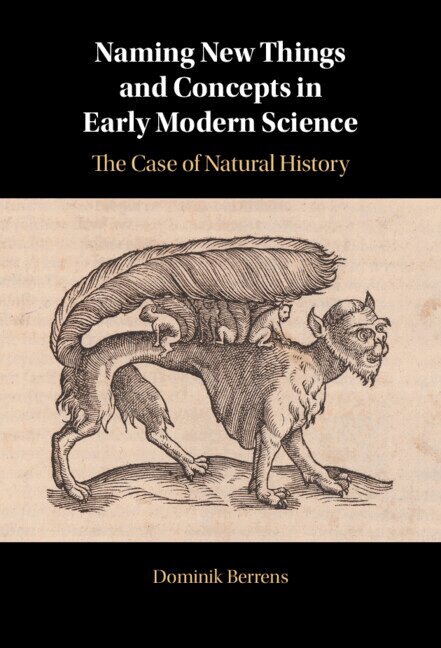
Naming new discoveries is central to science, and for centuries, Latin dominated this process. The resulting terminology still shapes modern science, yet the influences behind its creation have remained largely unexplored. This is the first comprehensive exploration of how modern scientific terminology took shape during the early modern period. Far from being the product of individual scientists or institutions, the development of this terminology emerged over several centuries, involving a remarkably diverse range of contributors. In particular, the process was often influenced by factors unrelated to science itself - such as the appeal of certain linguistic forms or even sheer coincidence - revealing the unexpected and sometimes arbitrary forces behind the creation of technical terms.
E-bok
Engelska, 20261 741 kr
Läs direkt efter köp
Häftad, Tyska, 2018
496 kr
Skickas
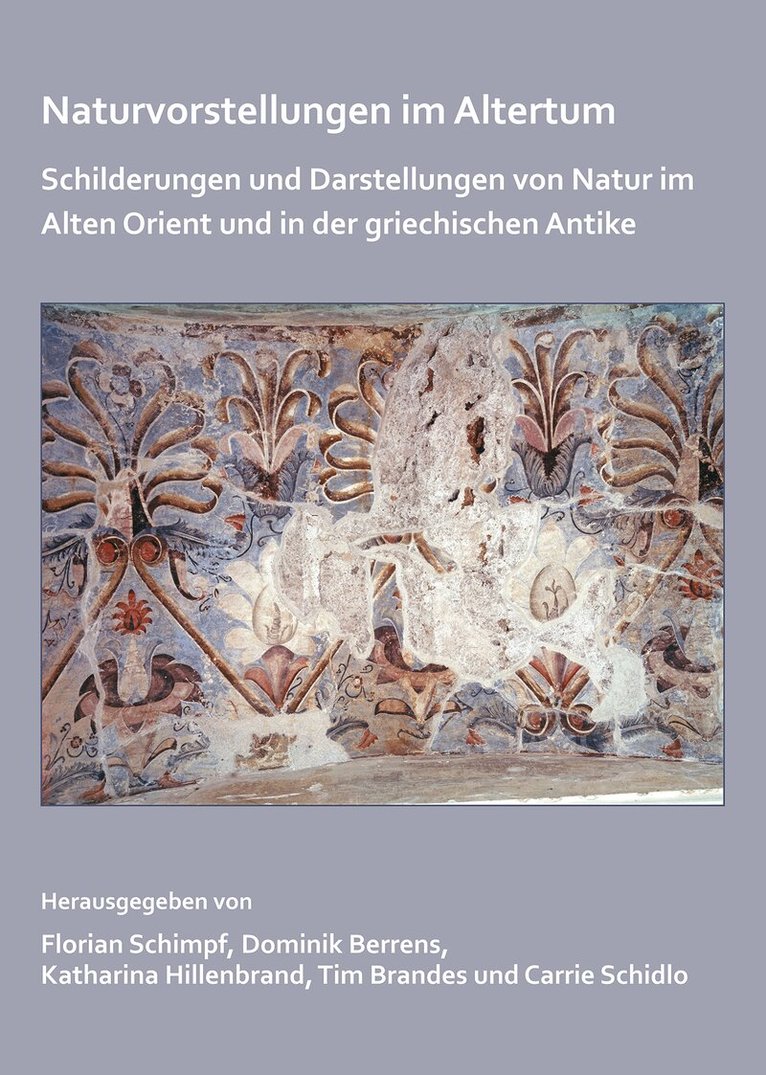
This volume looks at the concepts of nature in texts as well as in archaeological remains of the Ancient Near Eastern and Greek cultures from the Archaic to the Hellenistic period. Contributions from the fields of archaeology and philology are juxtaposed for each time period in chronological order.
E-bok
PDF, Tyska, 2018229 kr
Läs direkt efter köp
Everyone who investigates pre-modern concepts of nature cannot avoid a critical reflection on the ancient understandings of it. Here, “nature” is understood in the sense of a seemingly untouched space, largely independent of human culture. While this concept of “nature” is prevalent in modern times, the reconstruction of ancient ideas is difficult in that concepts of nature, if at all present, emphasize other aspects. For example, the Greek term φύσις in pre-Hellenistic times defines the nature of a thing rather than an untouched environment. A word for “nature” in this sense has not been handed down to us in the remaining texts of the Ancient Near East and Classical Antiquity. Nevertheless, such concepts can certainly be reconstructed from descriptions of nature to be found in literature and the representations of natural elements in art. The present volume aims at identifying these concepts of nature in texts as well as in archaeological remains of the Ancient Near Eastern and the Greek culture from the Archaic to the Hellenistic period. Contributions from the fields of archaeology and philology are juxtaposed for each time period in chronological order. This arrangement provides a good overview of the concepts of nature prevailing throughout different period and cultures. | Der Begriff „Natur“ wird in modernen, mitteleuropäischen Gesellschaften meist im Sinne eines vermeintlich unberührten Raumes verstanden, der weitgehend unbeeinflusst von menschlicher Kultur ist. Für vormoderne Kulturen lassen sich solche Vorstellungen bzw. Konzepte sehr viel schwieriger nachweisen, da beispielsweise ein Wort für „Natur“ mit der eben genannten Bedeutung in den erhaltenen Texten des Alten Orients und der griechischen Antike so nicht überliefert zu sein scheint. Gleichwohl werden durchaus Naturelemente in der antiken Literatur, der Flächenkunst sowie in antiken Monumenten beschrieben bzw. abgebildet sowie als integrative Bestandteile genutzt und funktionalisiert. Daraus lassen sich Konzepte von „Natur“ herausarbeiten und rekonstruieren. Der vorliegende Band möchte solche „Naturkonzepte“ in Texten, Artefakten und Denkmälern des Alten Orients und des griechischen Kulturraumes von der Archaik bis in den Hellenismus identifizieren und einen Überblick über die jeweils in einem bestimmten Zeit- und Kulturraum vorherrschenden Vorstellungen sowie deren diachrone Entwicklung geben.
E-bok
PDF, Tyska, 20181 212 kr
Läs direkt efter köp
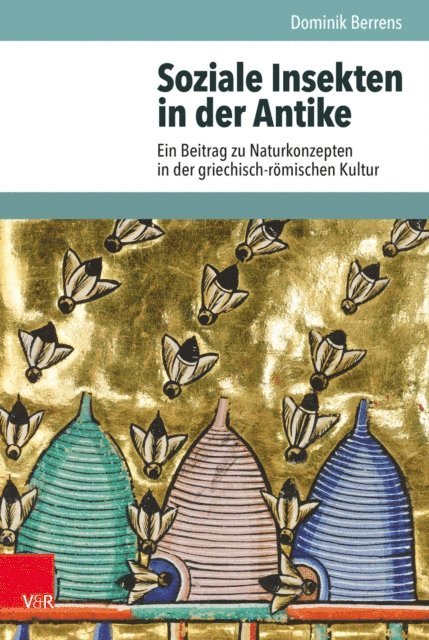
Darstellungen von Bienen, Wespen und Ameisen finden sich in zahlreichen griechischen und lateinischen Texten. Konstitutiv für diese kleine Gruppe von Tieren ist das Hinarbeiten auf ein gemeinsames Werk sowie das enge gemeinschaftliche Zusammenleben. Als Grundlage der Untersuchung dienen nicht nur agronomische und naturkundliche Fachtexte, sondern auch Gleichnisse, Metaphern und Bilder in Dichtung oder philosophischer Prosa. Die Insekten werden vor allem bezüglich ihrer sozialen Lebensweise in enger Verbindung zum Menschen gesehen, sodass ihre Darstellungen häufig stark von Anthropomorphismen geprägt sind.
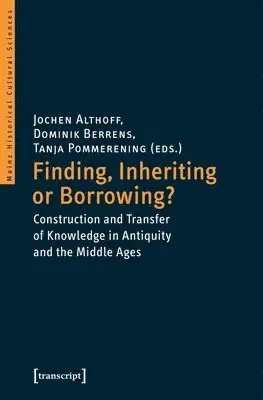
Häftad, Engelska, 2021
828 kr
Skickas inom 11-20 vardagar
Since the dawn of humanity, people have developed concepts about themselves and the natural world in which they live. This volume aims at investigating the construction and transfer of such concepts between and within various ancient and medieval cultures. The single contributions try to answer questions concerning the sources of knowledge, the strategies of transfer and legitimation as well as the conceptual changes over time and space. After a comprehensive introduction, the volume is divided into three parts: The contributions of the first section treat various theoretical and methodological aspects. Two additional thematic sections deal with a special field of knowledge, i.e. concepts of the moon and of the end of the world in fire.