Dominik Zaum - Böcker
Visar alla böcker från författaren Dominik Zaum. Handla med fri frakt och snabb leverans.
8 produkter
8 produkter
The Sovereignty Paradox
The Norms and Politics of International Statebuilding
Inbunden, Engelska, 2007
1 585 kr
Skickas inom 5-8 vardagar
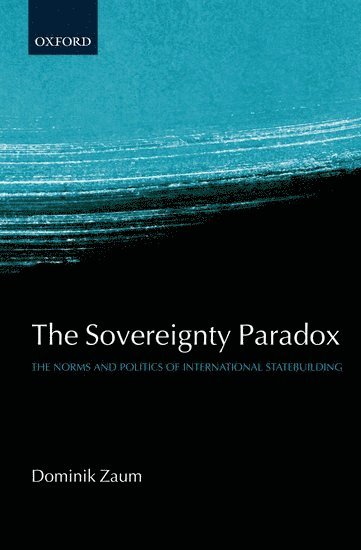
The post-cold war years have witnessed an unprecedented involvement by the United Nations in the domestic affairs of states, to end conflicts and rebuild political and administrative institutions. International administrations established by the UN or Western states have exercised extensive executive, legislative, and judicial authority over post-conflict territories to facilitate institution building and provide for interim governance.This book is a study of the normative framework underlying the international community's statebuilding efforts. Through detailed case studies of policymaking by the international administrations in Bosnia and Herzegovina, Kosovo, and East Timor, based on extensive interviews and work in the administrations, the book examines the nature of this normative framework, and highlights how norms shape the institutional choices of statebuilders, the relationship between international and local actors, and the exit strategies of international administrations. The book argues that a particular conception of sovereignty as responsibility has influenced the efforts of international administrations, and shows that their statebuilding activities are informed by the idea that post-conflict territories need to meet certain normative tests before they are considered legitimate internationally. The restructuring of political and administrative practices to help post-conflict territories to meet these tests creates a sovereignty paradox: international administrations compromise one element of sovereignty - the right to self-government - in order to implement domestic reforms to legitimise the authority of local political institutions, and thus strengthen their sovereignty.In the light of the governance and development record of the three international administrations, the book assesses the promises and the pathologies of statebuilding, and develops recommendations to improve their performance.
2 092 kr
Skickas inom 3-6 vardagar
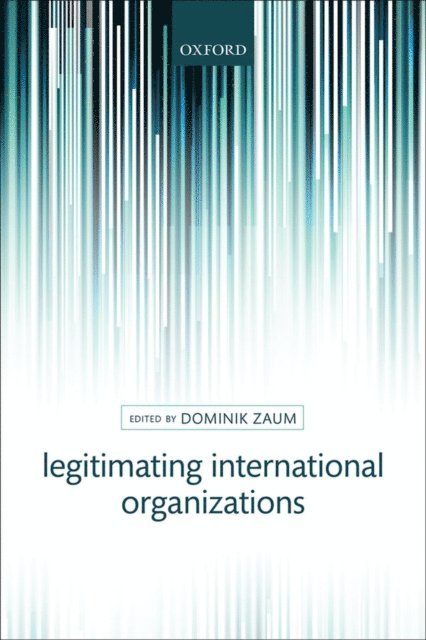
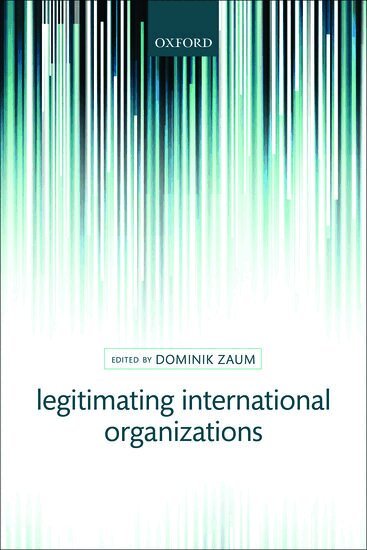
The legitimacy of international and regional organizations and their actions is frequently asserted and challenged by states and commentators alike. Their authorisations or conduct of military interventions, their structures of decision-making, and their involvement into what states deem to be domestic matters have all raised questions of legitimacy. As international organizations lack the coercive powers of states, legitimacy is also considered central to their ability to attain compliance with their decisions. Despite the prominence of legitimacy talk around international organizations, little attention has been paid to the practices and processes through which such organizations and their member states justify the authority these organizations exercise - how they legitimise themselves both vis-à-vis their own members and external audiences. This book addresses this gap by comparing and evaluating the legitimation practices of a range of international and regional organizations. It examines the practices through which such organizations justify and communicate their legitimacy claims, and how these practices differ between organizations. In exploring the specific legitimation practices of international organizations, this book analyses the extent to which such practices are shaped by the structure of the different organizations, by the distinct normative environments within which they operate, and by the character of the audiences of their legitimacy claims. It also considers the implications of this analysis for global and regional governance.
414 kr
Skickas inom 10-15 vardagar
In contrast to the common perception that the United Nations is, or should become, a system of collective security, this paper advances the proposition that the UN Security Council embodies a necessarily selective approach. Analysis of its record since 1945 suggests that the Council cannot address all security threats effectively. The reasons for this include not only the veto power of the five permanent members, but also the selectivity of all UN member states: their unwillingness to provide forces for peacekeeping or other purposes except on a case-by-case basis, and their reluctance to involve the Council in certain conflicts to which they are parties, or which they perceive as distant, complex and resistant to outside involvement. The Council’s selectivity is generally seen as a problem, even a threat to its legitimacy. Yet selectivity, which is rooted in prudence and in the UN Charter itself, has some virtues. Acknowledging the necessary limitations within which the Security Council operates, this paper evaluates the Council’s achievements in tackling the problem of war since 1945. In doing so, it sheds light on the division of labour among the Council, regional security bodies and states, and offers a pioneering contribution to public and governmental understanding of the UN’s past, present and future roles.
753 kr
Skickas inom 10-15 vardagar
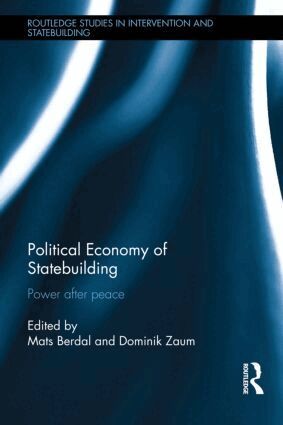
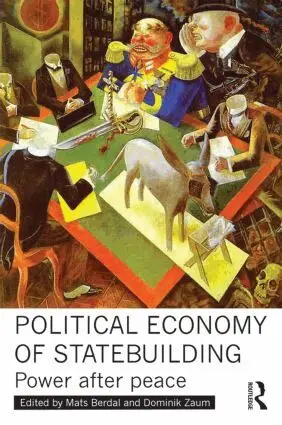
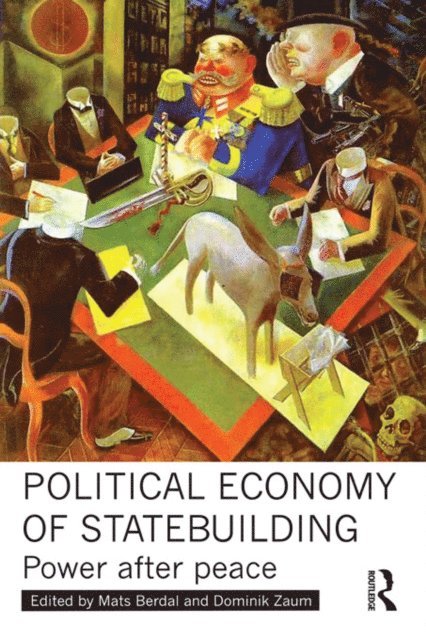
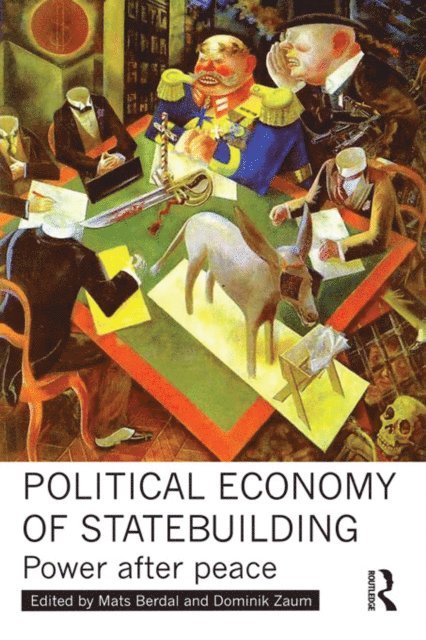
This volume examines and evaluates the impact of international statebuilding interventions on the political economy of post-conflict countries over the past 20 years. While statebuilding today is typically discussed in the context of ‘peacebuilding’ and ‘stabilisation’ operations, the current phase of interest in external interventions to (re)build and strengthen governmental institutions can be traced back to the ‘good governance’ policies of the International Financial Institutions (IFIs) in the early 1990s. These sought political changes and improvements in the quality of governance in countries that were subject to, or were seeking support under, IFI-designed structural adjustment programmes.The focus of this book is specifically on state-building efforts in conflict-affected countries: countries that are emerging, or have recently emerged, from periods of war and violent conflict. The interventions covered in the present volume fall into three broad and overlapping categories: International administrations and transformative occupations (East Timor, Iraq, and Kosovo); Complex peace operations (Afghanistan, Burundi, Haiti, and Sudan); Governance and state-building programmes conducted in the context of economic assistance (Georgia and Macedonia).This book will be of much interest to students of statebuilding, humanitarian intervention, post-conflict reconstruction, political economy, international organisations and IR/Security Studies in general.
2 155 kr
Skickas inom 10-15 vardagar
This volume examines and evaluates the impact of international statebuilding interventions on the political economy of conflict-affected countries over the past 20 years. It focuses on countries that are emerging, or have recently emerged, from periods of war and protracted conflict. The interventions covered fall into three broad categories: international administrations and transformative occupations (East Timor, Iraq, and Kosovo); complex peace operations (Afghanistan, Burundi, Haiti, and Sudan); governance and statebuilding programmes conducted in the context of economic assistance (Georgia and Macedonia).This book will be of interest to students of statebuilding, humanitarian intervention, post-conflict reconstruction, political economy, international organisations and IR/Security Studies in general.
2 155 kr
Skickas inom 10-15 vardagar
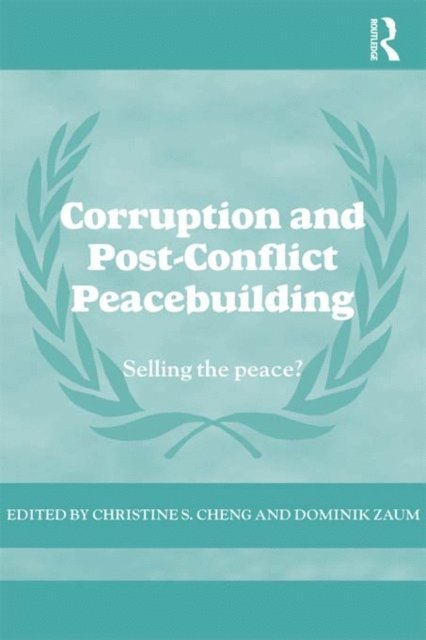
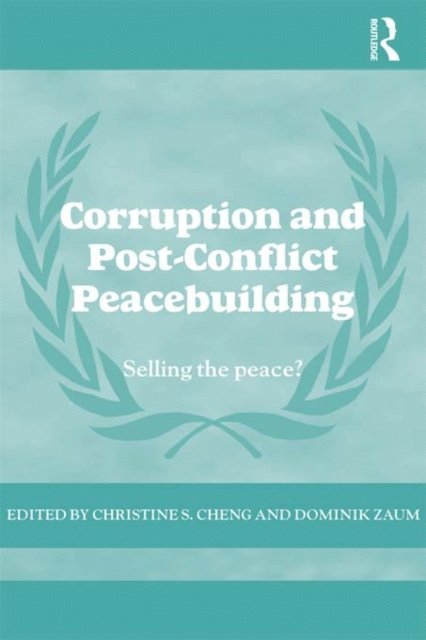
This edited volume explores and evaluates the roles of corruption in post-conflict peacebuilding.The problem of corruption has become increasingly important in war to peace transitions, eroding confidence in new democratic institutions, undermining economic development, diverting scarce public resources, and reducing the delivery of vital social services. Conflict-affected countries offer an ideal environment for pervasive corruption. Their weak administrative institutions and fragile legal and judicial systems mean that they lack the capacity to effectively investigate and punish corrupt behaviour. In addition, the sudden inflow of donor aid into post-conflict countries and the desire of peacebuilding actors (including the UN, the international financial institutions, aid agencies, and non-governmental organisations) to disburse these funds quickly, create incentives and opportunities for corruption.While corruption imposes costs and compromises on peacebuilding efforts, opportunities for exploiting public office can also be used to entice armed groups into signing peace agreements, thus stabilising post-war environments. This book explores the different functions of corruption both conceptually and through the lens of a wide range of case studies. It also examines the impact of key anti-corruption policies on peacebuilding environments. The dynamics that shape the relationship between corruption and the political and economic developments in post-conflict countries are complex. This analysis highlights that fighting corruption is only one of several important peacebuilding objectives, and that due consideration must be given to the specific social and political context in considering how a sustainable peace can be achieved. This book will be of great interest to students of peacekeeping and peacebuilding, criminology, political economy, war and conflict studies, international security and IR.
753 kr
Skickas inom 10-15 vardagar
This edited volume explores and evaluates the roles of corruption in post-conflict peacebuilding.The problem of corruption has become increasingly important in war to peace transitions, eroding confidence in new democratic institutions, undermining economic development, diverting scarce public resources, and reducing the delivery of vital social services. Conflict-affected countries offer an ideal environment for pervasive corruption. Their weak administrative institutions and fragile legal and judicial systems mean that they lack the capacity to effectively investigate and punish corrupt behaviour. In addition, the sudden inflow of donor aid into post-conflict countries and the desire of peacebuilding actors (including the UN, the international financial institutions, aid agencies, and non-governmental organisations) to disburse these funds quickly, create incentives and opportunities for corruption.While corruption imposes costs and compromises on peacebuilding efforts, opportunities for exploiting public office can also be used to entice armed groups into signing peace agreements, thus stabilising post-war environments. This book explores the different functions of corruption both conceptually and through the lens of a wide range of case studies. It also examines the impact of key anti-corruption policies on peacebuilding environments. The dynamics that shape the relationship between corruption and the political and economic developments in post-conflict countries are complex. This analysis highlights that fighting corruption is only one of several important peacebuilding objectives, and that due consideration must be given to the specific social and political context in considering how a sustainable peace can be achieved. This book will be of great interest to students of peacekeeping and peacebuilding, criminology, political economy, war and conflict studies, international security and IR.
2 424 kr
Skickas inom 10-15 vardagar
In contrast to the common perception that the United Nations is, or should become, a system of collective security, this paper advances the proposition that the UN Security Council embodies a necessarily selective approach. Analysis of its record since 1945 suggests that the Council cannot address all security threats effectively. The reasons for this include not only the veto power of the five permanent members, but also the selectivity of all UN member states: their unwillingness to provide forces for peacekeeping or other purposes except on a case-by-case basis, and their reluctance to involve the Council in certain conflicts to which they are parties, or which they perceive as distant, complex and resistant to outside involvement. The Council‘s selectivity is generally seen as a problem, even a threat to its legitimacy. Yet selectivity, which is rooted in prudence and in the UN Charter itself, has some virtues. Acknowledging the necessary limitations within which the Security Council operates, this paper evaluates the Council‘s achievements in tackling the problem of war since 1945. In doing so, it sheds light on the division of labour among the Council, regional security bodies and states, and offers a pioneering contribution to public and governmental understanding of the UN‘s past, present and future roles.