Mats Berdal – författare
270 kr
Skickas inom 10-15 vardagar
2 359 kr
Skickas inom 10-15 vardagar
768 kr
Skickas inom 10-15 vardagar
167 kr
Skickas inom 5-8 vardagar
2 220 kr
Skickas inom 10-15 vardagar
2 359 kr
Skickas inom 10-15 vardagar
270 kr
Skickas inom 10-15 vardagar
823 kr
Skickas inom 10-15 vardagar
487 kr
Skickas inom 7-10 vardagar
1 175 kr
Skickas inom 7-10 vardagar
633 kr
Läs direkt efter köp
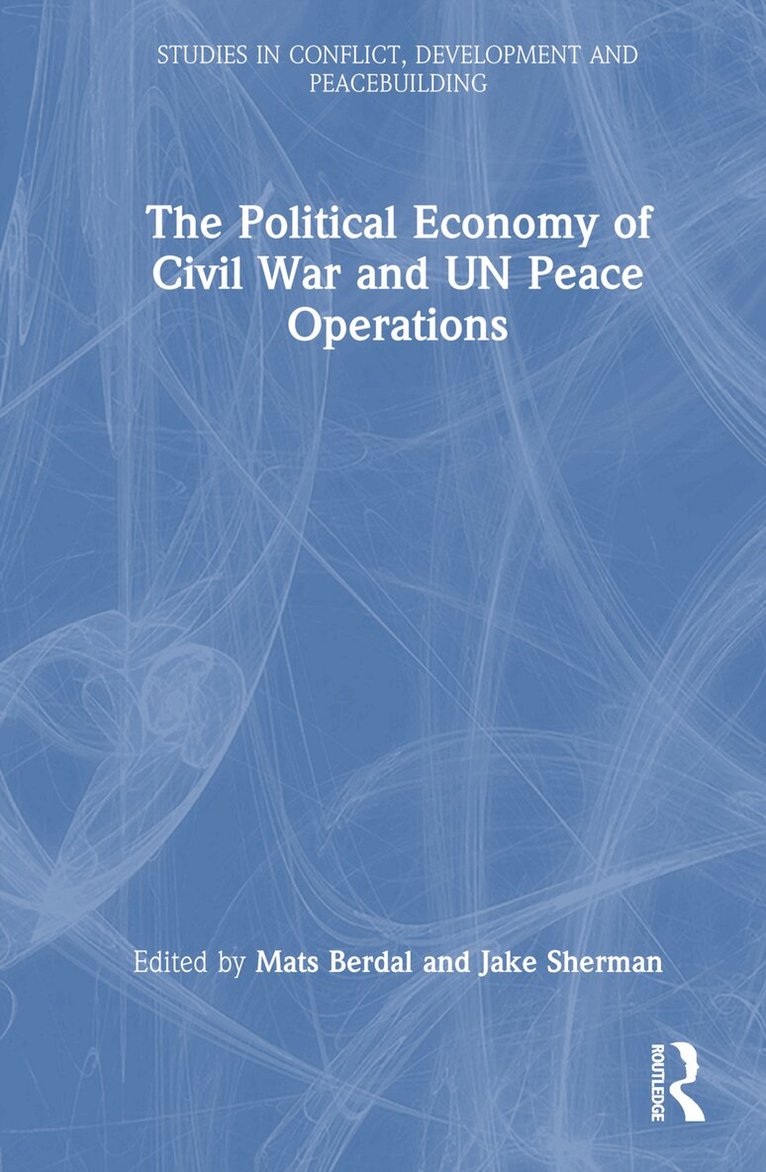
This book examines the operational and political challenges facing UN peace operations deployed in countries where civil war and protracted violence have given rise to the complex and distinctive political economies of conflict.
The volume explores the nature and impact of such political economies – informal systems of power and influence formed by the interaction of local, national, and region-wide war economies with the political agendas of conflict actors – on the course of UN peace operations. It focuses in detail on the UN’s long-running peace operations in the Democratic Republic of Congo, South Sudan, Afghanistan, Sierra Leone, Mali, and Somalia. The book is centrally concerned with the interaction of UN missions with the power structures and local conflict dynamics that shape individual mission settings, and the challenges these pose for mediation, protection of civilians, and other tasks. It also offers a critical assessment of the various ways in which the UN ‘system’, from its headquarters in New York to the field, has confronted the policy challenges posed by political economies of conflict-affected states, societies, and regions. It advances a pragmatic set of policy recommendations aimed at improving the UN’s ability to confront predatory and exploitative war economies. At the same time, the volume makes it clear that political and institutional obstacles to more effective UN action are certain to remain profound and are unlikely ever to be fully overcome let alone eradicated. Despite making some progress since the 1990s to better understand the political economy of civil wars, the UN has struggled with how to tackle informal networks of power and their consequences for efforts to end wars.
The book will be of special interest to students of war and conflict studies, statebuilding, political economy of conflict, UN interventionism and peacebuilding, and IR/Security in general.
633 kr
Läs direkt efter köp
This book examines the operational and political challenges facing UN peace operations deployed in countries where civil war and protracted violence have given rise to the complex and distinctive political economies of conflict.
The volume explores the nature and impact of such political economies – informal systems of power and influence formed by the interaction of local, national, and region-wide war economies with the political agendas of conflict actors – on the course of UN peace operations. It focuses in detail on the UN’s long-running peace operations in the Democratic Republic of Congo, South Sudan, Afghanistan, Sierra Leone, Mali, and Somalia. The book is centrally concerned with the interaction of UN missions with the power structures and local conflict dynamics that shape individual mission settings, and the challenges these pose for mediation, protection of civilians, and other tasks. It also offers a critical assessment of the various ways in which the UN ‘system’, from its headquarters in New York to the field, has confronted the policy challenges posed by political economies of conflict-affected states, societies, and regions. It advances a pragmatic set of policy recommendations aimed at improving the UN’s ability to confront predatory and exploitative war economies. At the same time, the volume makes it clear that political and institutional obstacles to more effective UN action are certain to remain profound and are unlikely ever to be fully overcome let alone eradicated. Despite making some progress since the 1990s to better understand the political economy of civil wars, the UN has struggled with how to tackle informal networks of power and their consequences for efforts to end wars.
The book will be of special interest to students of war and conflict studies, statebuilding, political economy of conflict, UN interventionism and peacebuilding, and IR/Security in general.
1 931 kr
Skickas inom 10-15 vardagar
966 kr
Läs direkt efter köp
This book looks at the political reintegration of armed groups after civil wars and the challenges of transforming ‘rebel’, ‘insurgent’ or other non-state armed groups into viable political entities.
Drawing on eight case studies, the definition of ‘armed groups’ here ranges from militias, paramilitary forces, police units of various kinds to intelligence outfits. Likewise, the definition of ‘political integration’ or ‘re-integration’ has not been restricted to the formation of political parties, but is understood broadly as active participation in politics, policy-making or public debate through parties, newspapers, social organisations, think-tanks, NGOs or public service.
The book seeks to locate or contextualise individual cases within their distinctive social, cultural and historical settings. As such it differs from much of the donor-driven literature that has tended to abstract the challenge of disarmament, demobilisation and reintegration (DDR) from their political and historical context, focusing instead on technical or bureaucratic issues raised by the DDR process. Among the issues covered by the volume as a whole, three stand out: first, the role of political settlements in creating legitimate opportunities for erstwhile leaders of armed factions; second, the ability of reintegration programmes to create genuine socio-economic opportunities that can absorb former fighters as functional members of their communities; and third, the processes involved in transforming an entire rebel movement into a viable political party, movement or, more generally, allowing it to participate in political life.
This book will be of great interest to students of security and development, peace and conflict studies, and IR in general, as well as practitioners and policymakers.
Mats Berdal is Professor of Security and Development in the Department of War Studies at King’s College London. From 2000 to 2003 he was Director of Studies at the International Institute for Strategic Studies (IISS) in London. Mats Berdal is a Visiting Professor at the National Defence and Command College, Oslo.
David Ucko is the Programme Coordinator & Research Fellow for the Conflict, Security & Development Research Group, King''s College London.
957 kr
Läs direkt efter köp
This book looks at the political reintegration of armed groups after civil wars and the challenges of transforming ‘rebel’, ‘insurgent’ or other non-state armed groups into viable political entities.
Drawing on eight case studies, the definition of ‘armed groups’ here ranges from militias, paramilitary forces, police units of various kinds to intelligence outfits. Likewise, the definition of ‘political integration’ or ‘re-integration’ has not been restricted to the formation of political parties, but is understood broadly as active participation in politics, policy-making or public debate through parties, newspapers, social organisations, think-tanks, NGOs or public service.
The book seeks to locate or contextualise individual cases within their distinctive social, cultural and historical settings. As such it differs from much of the donor-driven literature that has tended to abstract the challenge of disarmament, demobilisation and reintegration (DDR) from their political and historical context, focusing instead on technical or bureaucratic issues raised by the DDR process. Among the issues covered by the volume as a whole, three stand out: first, the role of political settlements in creating legitimate opportunities for erstwhile leaders of armed factions; second, the ability of reintegration programmes to create genuine socio-economic opportunities that can absorb former fighters as functional members of their communities; and third, the processes involved in transforming an entire rebel movement into a viable political party, movement or, more generally, allowing it to participate in political life.
This book will be of great interest to students of security and development, peace and conflict studies, and IR in general, as well as practitioners and policymakers.
Mats Berdal is Professor of Security and Development in the Department of War Studies at King’s College London. From 2000 to 2003 he was Director of Studies at the International Institute for Strategic Studies (IISS) in London. Mats Berdal is a Visiting Professor at the National Defence and Command College, Oslo.
David Ucko is the Programme Coordinator & Research Fellow for the Conflict, Security & Development Research Group, King''s College London.
309 kr
Läs direkt efter köp
The transition from war to peace is fraught with tension and the risk of a return to bloodshed. With so much at stake, it is crucial that the international community and local stakeholders make sense of the complex mosaic of challenges, to support a lasting, inclusive and prosperous peace. Recent missions, such as in Afghanistan, Somalia, or Sudan, have highlighted the fact that there can be no one-size-fits-all approach to steering countries away from violence and towards stability.
This Adelphi offers a series of economic perspectives on conflict resolution, to show how the challenges of peacebuilding can be more effectively tackled. From the need to marry diplomatic peacemaking with development efforts, and activate the private sector in the service of peacebuilding aims, to the use of taxes and natural resource revenues as a financial base for sustainable peace, this book considers how economic factors can positively shape and drive peace processes. It takes an unflinching look at the complex ways in which power and order may be manifested in conflict zones, where unpalatable compromises with local warlords can often be the first step towards a more lasting settlement. A difficult balance must be struck by peacemakers and peacebuilders in assisting countries and communities in their transitions out of war, for the consequences of failure for countries and the wider world are too grave. In distilling expertise from a range of disciplines, this Adelphi seeks to inform a more economically integrated and responsive approach to helping countries leave behind their troubled pasts and take a fuller role in constructing their futures.
309 kr
Läs direkt efter köp
The transition from war to peace is fraught with tension and the risk of a return to bloodshed. With so much at stake, it is crucial that the international community and local stakeholders make sense of the complex mosaic of challenges, to support a lasting, inclusive and prosperous peace. Recent missions, such as in Afghanistan, Somalia, or Sudan, have highlighted the fact that there can be no one-size-fits-all approach to steering countries away from violence and towards stability.
This Adelphi offers a series of economic perspectives on conflict resolution, to show how the challenges of peacebuilding can be more effectively tackled. From the need to marry diplomatic peacemaking with development efforts, and activate the private sector in the service of peacebuilding aims, to the use of taxes and natural resource revenues as a financial base for sustainable peace, this book considers how economic factors can positively shape and drive peace processes. It takes an unflinching look at the complex ways in which power and order may be manifested in conflict zones, where unpalatable compromises with local warlords can often be the first step towards a more lasting settlement. A difficult balance must be struck by peacemakers and peacebuilders in assisting countries and communities in their transitions out of war, for the consequences of failure for countries and the wider world are too grave. In distilling expertise from a range of disciplines, this Adelphi seeks to inform a more economically integrated and responsive approach to helping countries leave behind their troubled pasts and take a fuller role in constructing their futures.
753 kr
Läs direkt efter köp
This volume examines and evaluates the impact of international statebuilding interventions on the political economy of conflict-affected countries over the past 20 years. It focuses on countries that are emerging, or have recently emerged, from periods of war and protracted conflict. The interventions covered fall into three broad categories:
international administrations and transformative occupations (East Timor, Iraq, and Kosovo);
complex peace operations (Afghanistan, Burundi, Haiti, and Sudan);
governance and statebuilding programmes conducted in the context of economic assistance (Georgia and Macedonia).
This book will be of interest to students of statebuilding, humanitarian intervention, post-conflict reconstruction, political economy, international organisations and IR/Security Studies in general.
746 kr
Läs direkt efter köp
This volume examines and evaluates the impact of international statebuilding interventions on the political economy of conflict-affected countries over the past 20 years. It focuses on countries that are emerging, or have recently emerged, from periods of war and protracted conflict. The interventions covered fall into three broad categories:
international administrations and transformative occupations (East Timor, Iraq, and Kosovo);
complex peace operations (Afghanistan, Burundi, Haiti, and Sudan);
governance and statebuilding programmes conducted in the context of economic assistance (Georgia and Macedonia).
This book will be of interest to students of statebuilding, humanitarian intervention, post-conflict reconstruction, political economy, international organisations and IR/Security Studies in general.
957 kr
Läs direkt efter köp
This volume examines the causes and purposes of ''post-conflict'' violence.
The end of a war is generally expected to be followed by an end to collective violence, as the term ‘post-conflict’ that came into general usage in the 1990s signifies. In reality, however, various forms of deadly violence continue, and sometimes even increase after the big guns have been silenced and a peace agreement signed. Explanations for this and other kinds of violence fall roughly into two broad categories – those that stress the legacies of the war and those that focus on the conditions of the peace. There are significant gaps in the literature, most importantly arising from the common premise that there is one, predominant type of post-war situation. This ‘post-war state’ is often endowed with certain generic features that predispose it towards violence, such as a weak state, criminal elements generated by the war-time economy, demobilized but not demilitarized or reintegrated ex-combatants, impunity and rapid liberalization.
The premise of this volume differs. It argues that features which constrain or encourage violence stack up in ways to create distinct and different types of post-war environments. Critical factors that shape the post-war environment in this respect lie in the war-to-peace transition itself, above all the outcome of the war in terms of military and political power and its relationship to social hierarchies of power, normative understandings of the post-war order, and the international context.
This book will of much interest to students of war and conflict studies, peacebuilding and IR/Security Studies in general.
957 kr
Läs direkt efter köp
This volume examines the causes and purposes of ''post-conflict'' violence.
The end of a war is generally expected to be followed by an end to collective violence, as the term ‘post-conflict’ that came into general usage in the 1990s signifies. In reality, however, various forms of deadly violence continue, and sometimes even increase after the big guns have been silenced and a peace agreement signed. Explanations for this and other kinds of violence fall roughly into two broad categories – those that stress the legacies of the war and those that focus on the conditions of the peace. There are significant gaps in the literature, most importantly arising from the common premise that there is one, predominant type of post-war situation. This ‘post-war state’ is often endowed with certain generic features that predispose it towards violence, such as a weak state, criminal elements generated by the war-time economy, demobilized but not demilitarized or reintegrated ex-combatants, impunity and rapid liberalization.
The premise of this volume differs. It argues that features which constrain or encourage violence stack up in ways to create distinct and different types of post-war environments. Critical factors that shape the post-war environment in this respect lie in the war-to-peace transition itself, above all the outcome of the war in terms of military and political power and its relationship to social hierarchies of power, normative understandings of the post-war order, and the international context.
This book will of much interest to students of war and conflict studies, peacebuilding and IR/Security Studies in general.
2 497 kr
Skickas inom 10-15 vardagar
919 kr
Läs direkt efter köp
919 kr
Läs direkt efter köp
1 741 kr
Skickas inom 5-8 vardagar