Don S. Rice - Böcker
Visar alla böcker från författaren Don S. Rice. Handla med fri frakt och snabb leverans.
6 produkter
6 produkter
477 kr
Skickas inom 5-8 vardagar
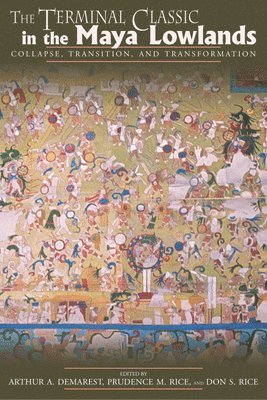
The Terminal Classic in the Maya Lowlands revisits one of the great problems in Mayan archaeology - the apparent collapse of Classic Maya civilization from roughly A.D. 830 to 950. During this period the Maya abandoned their power centers in the southern lowlands and rather abruptly ceased the distinctive cultural practices that marked their apogee in the Classic period. Archaeological fieldwork during the past three decades, however, has uncovered enormous regional variability in the ways the Maya experienced the shift from Classic to Postclassic society, revealing a period of cultural change more complex than acknowledged by traditional models.Featuring an impressive roster of scholars, The Terminal Classic presents the most recent data and interpretations pertaining to this perplexing period of cultural transformation in the Maya lowlands. Although the research reveals clear interregional patterns, the contributors resist a single overarching explanation. Rather, this volume's diverse and nuanced interpretations provide a new, more properly grounded beginning for continued debate on the nature of lowland Terminal Classic Maya civilization.
Kowoj
Identity, Migration, and Geopolitics in Late Postclassic Petén, Guatemala
Inbunden, Engelska, 2009
744 kr
Tillfälligt slut
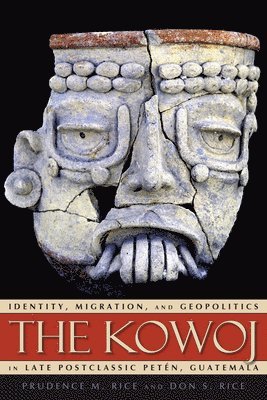
Neighbors of the better-known Itza in the central Peten lakes region of Guatemala, the Kowoj Maya have been studied for little more than a decade. The Kowoj: Identity, Migration, and Geopolitics in Late Postclassic Peten, Guatemala summarizes the results of recent research into this ethno-political group conducted by Prudence Rice, Don Rice, and their colleagues. Chapters in The Kowoj address the question "Who are the Kowoj?" from varied viewpoints: archaeological, archival, linguistic, ethnographic, and bioarchaeological. Using data drawn primarily from the peninsular site of Zacpeten, the authors illuminate Kowoj history, ritual components of their self-expressed identity, and their archaeological identification. These data support the Kowoj claim of migration from Mayapan in Yucatan, where they were probably affiliated with the Xiw, in opposition to the Itza. These enmities extended into Peten, culminating in civil warfare by the time of final Spanish conquest in 1697.The first volume to consider Postclassic Peten from broadly integrative anthropological, archaeological, and historical perspectives, The Kowoj is an important addition to the literature on late Maya culture and history in the southern lowlands. It will be of particular interest to archaeologists, historians, ethnohistorians, art historians, and epigraphers.
Del 545 - BAR International
Ecology, Settlement and History in the Osmore Drainage, Peru, Part i
Häftad, Engelska, 1989
781 kr
Skickas inom 5-8 vardagar
Del 545 - BAR International
Ecology, Settlement and History in the Osmore Drainage, Peru, Part ii
Häftad, Engelska, 1989
781 kr
Skickas inom 5-8 vardagar
Kowoj
Identity, Migration, and Geopolitics in Late Postclassic Petén, Guatemala
Häftad, Engelska, 2012
441 kr
Tillfälligt slut
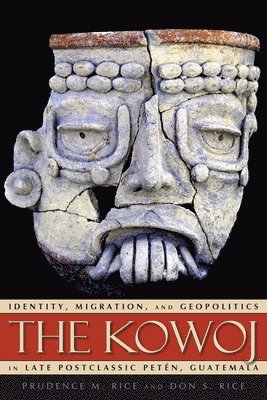
Neighbors of the better-known Itza in the central Petén lakes region of Guatemala, the Kowoj Maya have been studied for little more than a decade. The Kowoj: Identity, Migration, and Geopolitics in Late Postclassic Petén, Guatemala summarizes the results of recent research into this ethno-political group conducted by Prudence Rice, Don Rice, and their colleagues.Chapters in The Kowoj address the question "Who are the Kowoj?" from varied viewpoints: archaeological, archival, linguistic, ethnographic, and bioarchaeological. Using data drawn primarily from the peninsular site of Zacpetén, the authors illuminate Kowoj history, ritual components of their self-expressed identity, and their archaeological identification. These data support the Kowoj claim of migration from Mayapán in Yucatán, where they were probably affiliated with the Xiw, in opposition to the Itza. These enmities extended into Petén, culminating in civil warfare by the time of final Spanish conquest in 1697.The first volume to consider Postclassic Petén from broadly integrative anthropological, archaeological, and historical perspectives, The Kowoj is an important addition to the literature on late Maya culture and history in the southern lowlands. It will be of particular interest to archaeologists, historians, ethnohistorians, art historians, and epigraphers.
1 143 kr
Tillfälligt slut
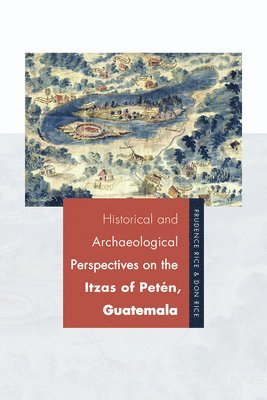
Historical and Archaeological Perspectives on the Itzas of Petén, Guatemala is the first exhaustively detailed and thorough account of the Itzas—a Maya group that dominated much of the western lowland area of tropical forest, swamps, and grasslands in Petén, Guatemala. Examining archaeological and historical evidence, Prudence Rice and Don Rice present a theoretical perspective on the Itzas’ origins and an overview of the social, political, linguistic, and environmental history of the area; explain the Spanish view of the Itzas during the Conquest; and explore the material culture of the Itzas as it has been revealed in recent surveys and excavations.The long but fragmented history of the Petén Itzas requires investigation across multiple periods and regions. Chapters in this six-part overview interweave varying data pertaining to this group—archaeological, artifactual, indigenous textual, Spanish historical—from multiple languages and academic fields, such as anthropology, archaeology, linguistics, ecology, and history. Part I introduces the lowland Itzas, northern and southern, with an emphasis on those of the central Petén lakes area. Part II discusses general Itza origins and identities in the Epiclassic period, while part III reviews Spanish perceptions and misconceptions of the Petén Itzas in their Contact-period writings. With these temporal anchors, parts IV and V present the archaeology and artifacts of the Petén Itzas, including pottery, architecture, and arrow points, from varied sites and excavations but primarily focusing on the island capital of Tayza/Nojpetén. Part VI summarizes key data and themes of the preceding chapters for a new understanding of the Petén Itzas.A companion volume to The Kowoj—a similar treatment of the Petén Itzas’ regional neighbors—Historical and Archaeological Perspectives on the Itzas of Petén, Guatemala demonstrates the unique physical, cultural, and social framework that was home to the Petén Itza, along with their backstory in northern Yucatán. Archaeologists, historians, art historians, and geographers who specialize in the Maya and the Postclassic, Contact, and Colonial periods will find this book of particular interest.Contributors: Mark Brenner, Leslie G. Cecil, Charles Andrew Hofling, Nathan J. Meissner, Timothy W. Pugh, Yuko Shiratori