Donato Romano - Böcker
Visar alla böcker från författaren Donato Romano. Handla med fri frakt och snabb leverans.
6 produkter
6 produkter
644 kr
Skickas inom 10-15 vardagar
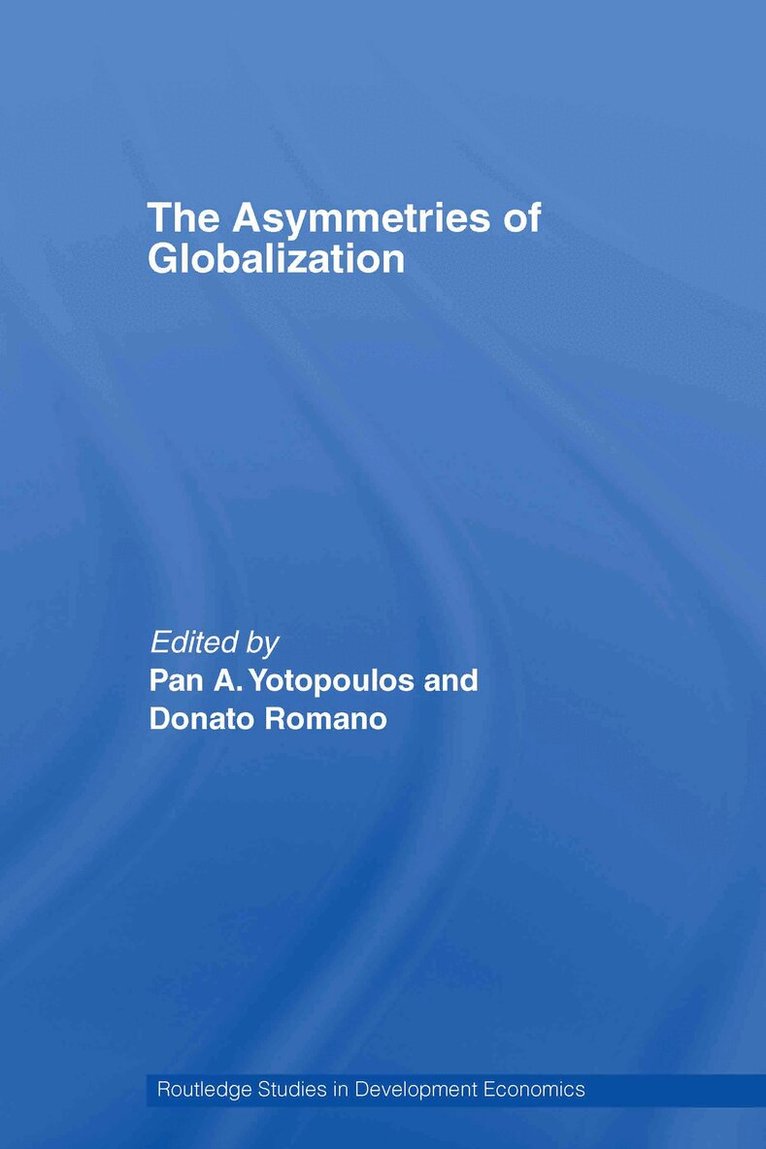
The discourse on globalization has become polarized. Proponents consider globalization as the silver bullet for targeting growth in the world economy and for poor countries specifically, while opponents see it as the poisoned arrow of exploitation and impoverishment of the Third World. Splendidly edited, The Asymmetries of Globalization deals with the 'what' and 'how' but primarily with 'why' globalization has most often negative outcomes for developing countries. It breaks new ground in approaching globalization not only as trade commodities, but also as trade in positional goods ('decommodified trade.')The two novel and munificent forms of post-Ricardian decommodified trade, trade in services and trade in hard currency in the form of currency substitution, are sculpted in the introductory chapter as the foundation of the systematic asymmetries of globalization. The analytical approach of introducing 'positional goods' in the form of decommodified trade, in the discource on globalization, is original. It is also timely in a situation where the tail of trade in 'services' has grown enough to wag the traditional trade-in-commodities dog of globalization. The balance of the chapters in this volume constitute a tapestry of case studies that elaborate and empirically investigate the causes of systematic asymmetries of globalization. The book's appeal transcends economics to make it also highly useful to students across the disciplines of sociology and political science, especially in the fields of international political economy and the politics of international trade. It will certainly enlighten all those working in the general areas of globalization, poverty and economic development.
332 kr
Skickas inom 10-15 vardagar
The discourse on globalization has become polarized. Proponents consider globalization as the silver bullet for targeting growth in the world economy and for poor countries specifically, while opponents see it as the poisoned arrow of exploitation and impoverishment of the Third World. Splendidly edited, The Asymmetries of Globalization deals with the 'what' and 'how' but primarily with 'why' globalization has most often negative outcomes for developing countries. It breaks new ground in approaching globalization not only as trade commodities, but also as trade in positional goods ('decommodified trade.')The two novel and munificent forms of post-Ricardian decommodified trade, trade in services and trade in hard currency in the form of currency substitution, are sculpted in the introductory chapter as the foundation of the systematic asymmetries of globalization. The analytical approach of introducing 'positional goods' in the form of decommodified trade, in the discource on globalization, is original. It is also timely in a situation where the tail of trade in 'services' has grown enough to wag the traditional trade-in-commodities dog of globalization. The balance of the chapters in this volume constitute a tapestry of case studies that elaborate and empirically investigate the causes of systematic asymmetries of globalization. The book's appeal transcends economics to make it also highly useful to students across the disciplines of sociology and political science, especially in the fields of international political economy and the politics of international trade. It will certainly enlighten all those working in the general areas of globalization, poverty and economic development.
Environmental Resource Valuation
Applications of the Contingent Valuation Method in Italy
Inbunden, Engelska, 1998
1 096 kr
Skickas inom 10-15 vardagar
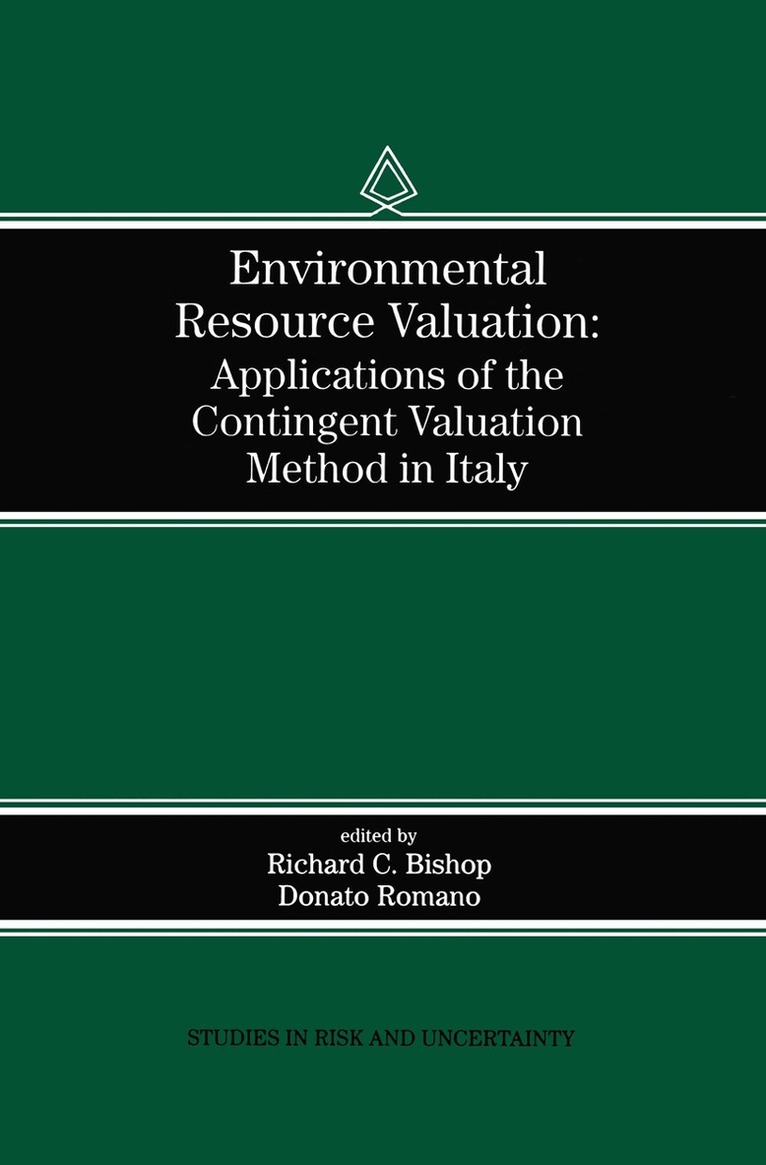
Economic values are increasingly used in policy analysis and legal settings. With the growing recognition that many of the things that benefit or harm people are outside the market system, have come increasing efforts to develop nonmarket valuation techniques. One such technique is the contingent valuation method (CVM). CVM seeks to value environmental and other nonmarket goods and services by asking individuals about their values using survey methods. These procedures are different from the "revealed-preference" methods that economists have historically employed to estimate economic values. The text questions the reasons for departing from well-established revealed-preference procedures and applying a "stated-preference" method like CVM. It argues that for nonmarket goods and services, revealed-preference methods have two shortcomings that those applying CVM hope to avoid. First, revealed-preference methods involve econometric problems that have yet to be fully overcome. The second shortcoming of revealed-preference methods is that such methods, when applied to environmental amenities, are likely to be only partial measures of value.Given the tremendous interest that exists in economic values and the limitations of revealed-preference methods, it is not surprising that interest in CVM has grown rapidly. This study reviews the application of CVM and compares American experiences in nonmarket evaluation with those in other countries.
How Close is Close? Assessing Uganda’s Progressive Refugee Policy in the Era of COVID-19
Inbunden, Engelska, 2024
1 953 kr
Skickas inom 10-15 vardagar
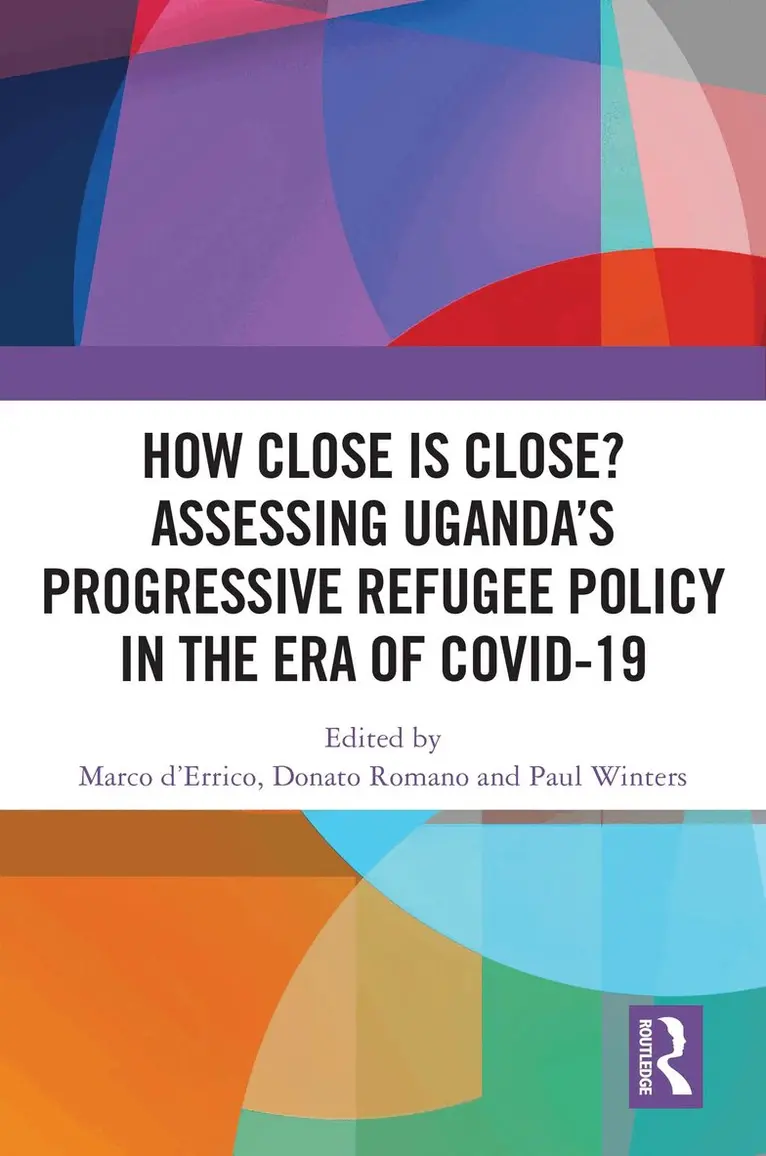
Uganda is home to 1.5 million refugees from DRC, Burundi, South Sudan and other countries. The Uganda political framework is one of the most progressive and inclusive toward refugees. Only a fraction of the refugees is likely to go back to their home countries. This book assesses Uganda’s progressive refugee policy with reference to how it functioned in the era of COVID-19 using a unique panel data collected between 2017 and 2021.The Uganda Refugee Policy (2006) and the Refugee Regulations (2010) grant refugees wide-ranging rights that include allocating land for agriculture purposes, freedom of movement, and the right to seek employment. However, the magnitude and the speed of influx of refugees in recent years have posed critical challenges to the sustainability of these progressive policies. On top of this, unpredictable and unprecedented crises have emerged, such as COVID-19 and the Ukraine war, that have threatened food security and the resilience of livelihoods, value chains and food systems. The chapters in this book assess Uganda’s progressive refugee policy with reference to how it functioned in the era of COVID-19. They focus on the following three main areas: (i) the economic relationship and coexistence between host and refugees’ communities; (ii) the success and sustainability of the current model of assistance; and (iii) the response to COVID-19 on communities’ welfare and long-term prospects. Addressing these issues is possible due to a unique panel dataset of thirteen refugee settlements and neighbouring host communities specifically collected for these purposes.Investigating the economic consequences of the integration between host and refugees’ communities and offering new evidence with specific reference to Uganda, this book will be a key resource for scholars, researchers and practitioners of development studies, African studies, economics, and sociology. It was originally published as a special issue of The Journal of Development Studies.
How Close is Close? Assessing Uganda’s Progressive Refugee Policy in the Era of COVID-19
Häftad, Engelska, 2026
675 kr
Kommande
Uganda is home to 1.5 million refugees from DRC, Burundi, South Sudan and other countries. The Uganda political framework is one of the most progressive and inclusive toward refugees. Only a fraction of the refugees is likely to go back to their home countries. This book assesses Uganda’s progressive refugee policy with reference to how it functioned in the era of COVID-19 using a unique panel data collected between 2017 and 2021.The Uganda Refugee Policy (2006) and the Refugee Regulations (2010) grant refugees wide-ranging rights that include allocating land for agriculture purposes, freedom of movement, and the right to seek employment. However, the magnitude and the speed of influx of refugees in recent years have posed critical challenges to the sustainability of these progressive policies. On top of this, unpredictable and unprecedented crises have emerged, such as COVID-19 and the Ukraine war, that have threatened food security and the resilience of livelihoods, value chains and food systems. The chapters in this book assess Uganda’s progressive refugee policy with reference to how it functioned in the era of COVID-19. They focus on the following three main areas: (i) the economic relationship and coexistence between host and refugees’ communities; (ii) the success and sustainability of the current model of assistance; and (iii) the response to COVID-19 on communities’ welfare and long-term prospects. Addressing these issues is possible due to a unique panel dataset of thirteen refugee settlements and neighbouring host communities specifically collected for these purposes.Investigating the economic consequences of the integration between host and refugees’ communities and offering new evidence with specific reference to Uganda, this book will be a key resource for scholars, researchers and practitioners of development studies, African studies, economics, and sociology. It was originally published as a special issue of The Journal of Development Studies.
Environmental Resource Valuation
Applications of the Contingent Valuation Method in Italy
Häftad, Engelska, 2012
1 064 kr
Skickas inom 10-15 vardagar
Economic values are increasingly used in policy analysis and legal settings. With the growing recognition that many of the things that benefit or harm people are outside the market system, have come increasing efforts to develop nonmarket valuation techniques. One such technique is the contingent valuation method (CVM). CVM seeks to value environmental and other nonmarket goods and services by asking individuals about their values using survey methods. These procedures are different from the `revealed-preference' methods that economists have historically employed to estimate economic values. Why depart from well-established revealed-preference procedures and apply a `stated-preference' method like CVM? For nonmarket goods and services, revealed-preference methods have two shortcomings that those applying CVM hope to avoid. First, revealed-preference methods involve econometric problems that have yet to be fully overcome. The second shortcoming of revealed-preference methods is that such methods, when applied to environmental amenities, are likely to be only partial measures of value. Given the tremendous interest that exists in economic values and the limitations of revealed-preference methods, it is not surprising that interest in CVM has grown rapidly. Environmental Resource Valuation reviews the application of CVM and compares American experiences in nonmarket evaluation with those in other countries.