• Fri frakt över 249 kr
  • •
  • Snabba leveranser
  • •
  • Billiga böcker
Kundservice

Du är på sajten för privatpersoner.

Företag, bibliotek eller offentlig verksamhet?

Du handlar på classic.bokus.com, där alla dina funktioner finns intakta.
Till classic.bokus.com
Bokus logotyp. Gå till startsidan.
  • Erbjudanden
  • Nyheter
  • Student
  • Topplistor
  • Barn & ungdom
  • Bokus Play
  • E-böcker
  • Pocketböcker
  • Spel & pussel

10% studentrabatt med kod TERM26

Sidfot

Mina sidor

    Hjälp

    • Kundservice
    • Vanliga frågor och svar
    • Frakt och leverans
    • Retur vid ångerrätt
    • Reklamera vara
    • Betalning
    • Köpvillkor
    • Allmänna villkor
    • Information om webbplatsens tillgänglighet

    Om Bokus

    • Om oss
    • Pressrum
    • För studenter
    • För företag
    • För bibliotek och offentlig verksamhet
    • För leverantörer
    • Hållbarhet

    Populärt

    • Aktuella erbjudanden
    • Presentkort
    • Studentlitteratur
    • Nya böcker
    • Topplistor
    • Signerade böcker
    • Engelska böcker

    Inspiration

    • Boktips
    • BookTok
    • Populära bokserier
    • Barnbokskaraktärer
    • Populära författare
    Logotyp för Bokus
    Följ oss på Facebook (extern länk)Följ oss på Instagram (extern länk)Följ oss på YouTube (extern länk)Följ oss på TikTok (extern länk)
    bokus @ CookiesAnpassa cookiesIntegritetspolicyKöpvillkor
    Till Citymail hemsida (extern länk)Till Budbee hemsida (extern länk)Till Postnord hemsida (extern länk)Till Schenker hemsida (extern länk)Till Early Bird hemsida (extern länk)Till Walleys hemsida (extern länk)
    1. Samhälle och politik
    2. Samhälle och kultur
    3. Kultur och medier
    4. Referensverk och tvärvetenskap

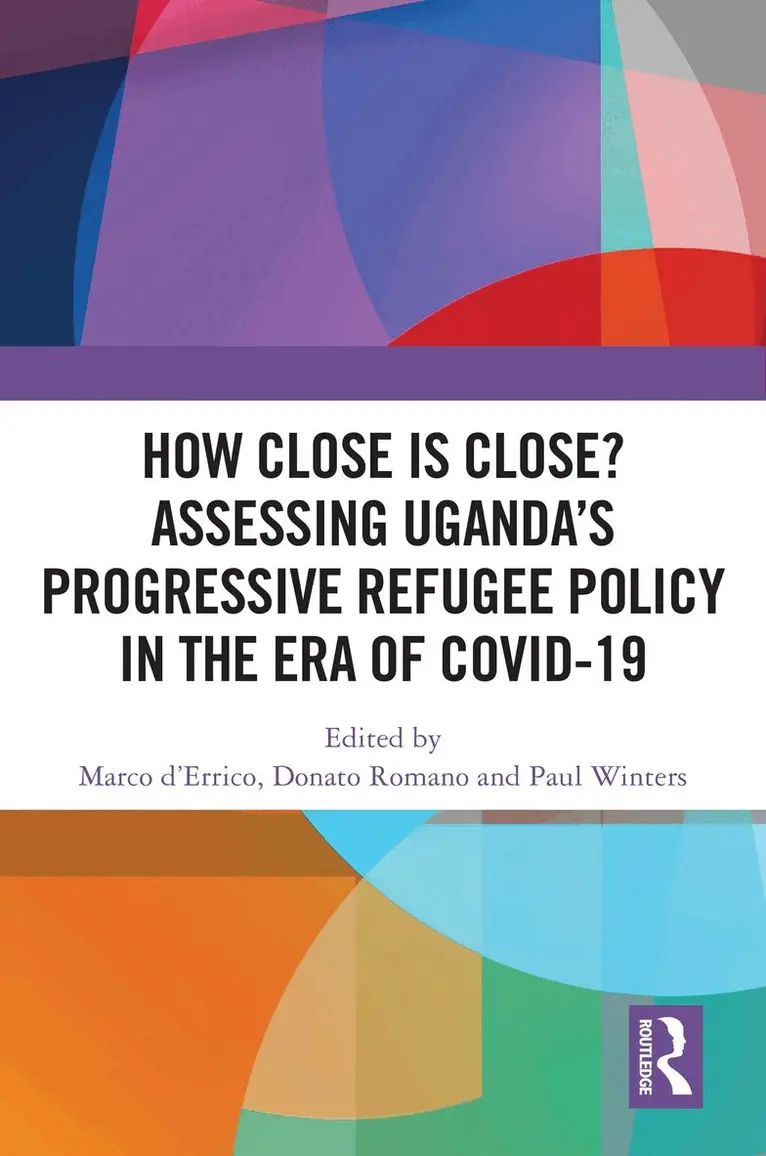
    How Close is Close? Assessing Uganda’s Progressive Refugee Policy in the Era of COVID-19

    AvMarco d’Errico,Donato Romano

    Häftad, Engelska, 2026

    684 kr

    Beställningsvara. Skickas inom 10-15 vardagar. Fri frakt över 249 kr.

    Beskrivning

    Uganda is home to 1.5 million refugees from DRC, Burundi, South Sudan and other countries. The Uganda political framework is one of the most progressive and inclusive toward refugees. Only a fraction of the refugees is likely to go back to their home countries. This book assesses Uganda’s progressive refugee policy with reference to how it functioned in the era of COVID-19 using a unique panel data collected between 2017 and 2021.The Uganda Refugee Policy (2006) and the Refugee Regulations (2010) grant refugees wide-ranging rights that include allocating land for agriculture purposes, freedom of movement, and the right to seek employment. However, the magnitude and the speed of influx of refugees in recent years have posed critical challenges to the sustainability of these progressive policies. On top of this, unpredictable and unprecedented crises have emerged, such as COVID-19 and the Ukraine war, that have threatened food security and the resilience of livelihoods, value chains and food systems. The chapters in this book assess Uganda’s progressive refugee policy with reference to how it functioned in the era of COVID-19. They focus on the following three main areas: (i) the economic relationship and coexistence between host and refugees’ communities; (ii) the success and sustainability of the current model of assistance; and (iii) the response to COVID-19 on communities’ welfare and long-term prospects. Addressing these issues is possible due to a unique panel dataset of thirteen refugee settlements and neighbouring host communities specifically collected for these purposes.Investigating the economic consequences of the integration between host and refugees’ communities and offering new evidence with specific reference to Uganda, this book will be a key resource for scholars, researchers and practitioners of development studies, African studies, economics, and sociology. It was originally published as a special issue of The Journal of Development Studies.

    Produktinformation

    • Utgivningsdatum:2026-05-21
    • Mått:174 x 246 x 8 mm
    • Vikt:260 g
    • Format:Häftad
    • Språk:Engelska
    • Antal sidor:134
    • Förlag:Taylor & Francis Ltd
    • ISBN:9781032907291

    Utforska kategorier

    • Referensverk och tvärvetenskap inom Samhälle och politik
    • Sociala och etiska frågor inom Samhälle och politik
    • Migration inom Samhälle och politik

    Mer om författaren

    Marco d'Errico is an Economist with working experience with FAO, WB, and other international organizations, as well as teaching experience with University of Bologna, Italy and Rome La Sapienza, Italy. He has vast experience on impact evaluation of resilience and food security interventions mostly in protracted crisis countries.Donato Romano is Professor of Agricultural Economics and Director of the PhD Program in Development Economics and Local Systems – DELoS at the University of Florence, Italy. His current research interests include food and nutrition security analysis, with a focus on household vulnerability and resilience, and the analysis of the impact of climate change on conflicts and violence. He has been a consultant for many international organizations including FAO, IFAD, WFP and the World Bank. He is also a member of the Board of the European Association of Agricultural Economists - EAAE. He holds a PhD in Forest Economics and Policy from the University of Florence, Italy.Paul Winters is the Keough-Hesburgh Professor of Global Affairs at the University of Notre Dame’s Keough School of Global Affairs. His research and teaching focus on rural poverty, food insecurity and climate change and the evaluation of policies and programs designed to address these issues. Prior to joining Notre Dame, he worked at the International Fund for Agricultural Development, Rome, Italy; American University in Washington, DC, USA; the Inter-American Development Bank, USA; the University of New England, Australia, and the International Potato Center in Lima, Peru. He holds a PhD in Agricultural and Resource Economics from the University of California, Berkeley, USA.

    Innehållsförteckning

    • Introduction: Assessing Uganda’s Progressive Refugee Policy in the Era of COVID-19 1. Economic Integration between Refugee Settlements and Host Communities 2. Poverty Dynamics and Poverty Traps among Refugee and Host Communities in Uganda 3. Training Refugees: Lights and Shadows in the Context of the Self-Reliance Strategy Implemented in Uganda 4. Transfers as a Means to Mitigate COVID-19 Impacts on Food Security: Evidence from Refugee and Host Communities Uganda 5. Identifying the COVID-19 Transmission Channels on Poverty and Food Security in Refugee-Hosting Districts of Uganda