Donna M. Gibson - Böcker
Visar alla böcker från författaren Donna M. Gibson. Handla med fri frakt och snabb leverans.
3 produkter
3 produkter
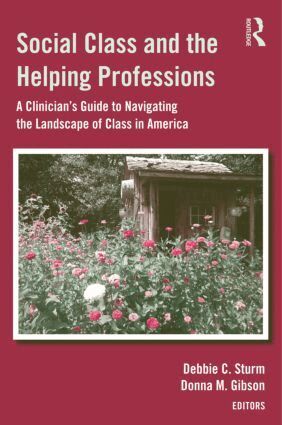
Social Class and the Helping Professions
A Clinician's Guide to Navigating the Landscape of Class in America
Inbunden, Engelska, 2012
1 953 kr
Skickas inom 10-15 vardagar
This book provides a comprehensive examination of the intersection of social class and the helping professions, including examinations of the role of social class in American culture, classism, social class and mental health, and the American Dream. It will be a valuable tool for practitioners in a variety of mental health professions, providing a clearer understanding of social class as it relates to themselves and their clients. The first section contains an introduction to the global, historical, and sociological aspects of class and an in-depth look at urban and rural poverty, the middle class, and the upper class and economic privilege. The reader will find not only an examination of these social constructs, but also an opportunity to examine their own experience with social class. The next section brings the reader into the world of their clients in more specific ways, examining the role social class plays in mental health and mental health counseling, in the family structure and in counseling families, and in the experiences people have throughout the educational process and in schools. Finally, the last section of the book discusses specific techniques and models to use in the reader’s clinical practice, including how to assess clients’ experiences of class and classism and how these experiences have shaped their worldview and view of the self. Case studies throughout demonstrate fair and accurate diagnosis, assessment, and treatment.
Social Class and the Helping Professions
A Clinician's Guide to Navigating the Landscape of Class in America
Häftad, Engelska, 2017
725 kr
Skickas inom 10-15 vardagar
This book provides a comprehensive examination of the intersection of social class and the helping professions, including examinations of the role of social class in American culture, classism, social class and mental health, and the American Dream. It will be a valuable tool for practitioners in a variety of mental health professions, providing a clearer understanding of social class as it relates to themselves and their clients. The first section contains an introduction to the global, historical, and sociological aspects of class and an in-depth look at urban and rural poverty, the middle class, and the upper class and economic privilege. The reader will find not only an examination of these social constructs, but also an opportunity to examine their own experience with social class. The next section brings the reader into the world of their clients in more specific ways, examining the role social class plays in mental health and mental health counseling, in the family structure and in counseling families, and in the experiences people have throughout the educational process and in schools. Finally, the last section of the book discusses specific techniques and models to use in the reader’s clinical practice, including how to assess clients’ experiences of class and classism and how these experiences have shaped their worldview and view of the self. Case studies throughout demonstrate fair and accurate diagnosis, assessment, and treatment.
549 kr
Skickas inom 5-8 vardagar
This timely text describes the role of program evaluation in counselor education and provides step-by-step guidance for faculty seeking to develop comprehensive Student Learning Outcome (SLO) evaluation plans to meet accountability expectations. It serves as a blueprint for demystifying the SLO process and making the switch from an input-based measure of productivity that focuses on what counseling programs do, to an outcome-based approach that concentrates on the quality of learning through evidence-based assessment of students' knowledge and skills. The first and second parts of the book lay the foundation for the SLO process and provide practical guidance for identifying and developing direct and indirect measures of student learning. Part III offers strategies for creating measures; collecting, managing, and reporting student data; and using data to ensure competence. In Part IV, counselor educators across the country offer hands-on application through a wide variety of SLO activities and rubrics linked to each of the curricular and specialty areas of the 2016 CACREP Standards.