Dorothee Brantz - Böcker
Visar alla böcker från författaren Dorothee Brantz. Handla med fri frakt och snabb leverans.
6 produkter
6 produkter
587 kr
Skickas inom 10-15 vardagar
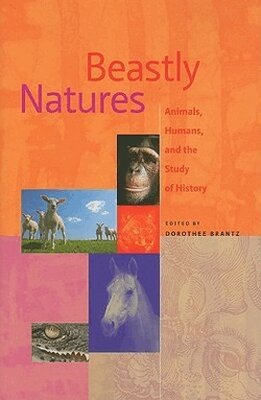
Although the animal may be, as Nietzsche argued, ahistorical, living completely in the present, it nonetheless plays a crucial role in human history. The fascination with animals that leads not only to a desire to observe and even live alongside them, but to capture or kill them, is found in all civilizations. The essays collected in Beastly Natures show how animals have been brought into human culture, literally helping to build our societies (as domesticated animals have done) or contributing, often in problematic ways, to our concept of the wild.The book begins with a group of essays that approach the historical relevance of human-animal relations seen from the perspectives of various disciplines and suggest ways in which animals might be brought into formal studies of history. Differences in species and location can greatly affect the shape of human-animal interaction, and so the essays that follow address a wide spectrum of topics, including the demanding fate of the working horse, the complex image of the American alligator (at turns a dangerous predator and a tourist attraction), the zoo gardens of Victorian England, the iconography of the rhinoceros and the preference it reveals in society for myth over science, relations between humans and wolves in Europe, and what we can learn from society’s enthusiasm for “political” animals, such as the pets of the American presidents and the Soviet Union’s “space dogs.” Taken together, these essays suggest new ways of looking not only at animals but at human history.ContributorsMark V. Barrow Jr., Virginia Tech * Peter Edwards, Roehampton University * Kelly Enright, Rutgers University * Oliver Hochadel, Universitat Autònoma de Barcelona * Uwe Lübken, Rachel Carson Center, Munich * Garry Marvin, Roehampton University * Clay McShane, Northeastern University * Amy Nelson, Virginia Tech * Susan Pearson, Northwestern University * Helena Pycior, University of Wisconsin–Milwaukee * Harriet Ritvo, Massachusetts Institute of Technology * Nigel Rothfels, University of Wisconsin–Milwaukee * Joel A. Tarr, Carnegie Mellon University * Mary Weismantel, Northwestern University
380 kr
Skickas inom 10-15 vardagar
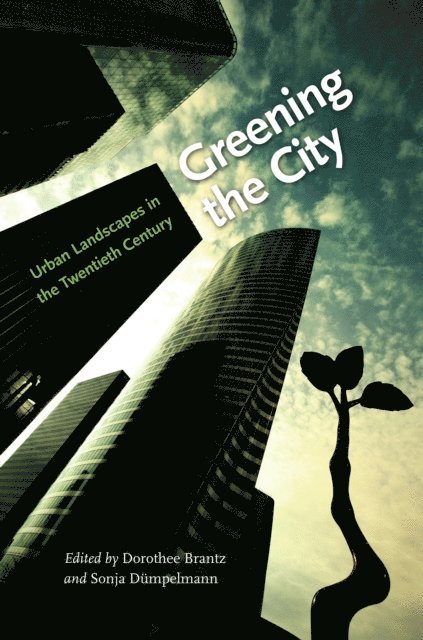
The modern city is not only pavement and concrete. Parks, gardens, trees, and other plants are an integral part of the urban environment. Often the focal points of social movements and political interests, green spaces represent far more than simply an effort to balance the man-made with the natural. A city’s history with―and approach to―its parks and gardens reveals much about its workings and the forces acting upon it. Our green spaces offer a unique and valuable window on the history of city life.The essays in Greening the City span over a century of urban history, moving from fin-de-siècle Sofia to green efforts in urban Seattle. The authors present a wide array of cases that speak to global concerns through the local and specific, with topics that include green-space planning in Barcelona and Mexico City, the distinction between public and private nature in Los Angeles, the ecological diversity of West Berlin, and the historical and cultural significance of hybrid spaces designed for sports. The essays collected here will make us think differently about how we study cities, as well as how we live in them.Contributors: Dorothee Brantz, Technische Universität Berlin * Peter Clark, University of Helsinki * Lawrence Culver, Utah State University * Konstanze Sylva Domhardt, Swiss Federal Institute of Technology, Zurich * Sonja Dümpelmann, University of Maryland * Zachary J. S. Falck, Independent Scholar* Stefanie Hennecke, Technical University Munich * Sonia Hirt, Virginia Polytechnic Institute and State University * Salla Jokela, University of Helsinki * Jens Lachmund, Maastricht University * Gary McDonogh, Bryn Mawr College * Jarmo Saarikivi, University of Helsinki * Jeffrey Craig Sanders, Washington State University
366 kr
Skickas inom 10-15 vardagar
The modern city is not only pavement and concrete. Parks, gardens, trees, and other plants are an integral part of the urban environment. Often the focal points of social movements and political interests, green spaces represent far more than simply an effort to balance the man-made with the natural. A city's history with—and approach to—its parks and gardens reveals much about its workings and the forces acting upon it. Our green spaces offer a unique and valuable window on the history of city life.The essays in Greening the City span over a century of urban history, moving from fin-de-siècle Sofia to green efforts in urban Seattle. The authors present a wide array of cases that speak to global concerns through the local and specific, with topics that include green-space planning in Barcelona and Mexico City, the distinction between public and private nature in Los Angeles, the ecological diversity of West Berlin, and the historical and cultural significance of hybrid spaces designed for sports. The essays collected here will make us think differently about how we study cities, as well as how we live in them.Contributors: Dorothee Brantz, Technische Universität Berlin; Peter Clark, University of Helsinki; Lawrence Culver, Utah State University; Konstanze Sylva Domhardt, Swiss Federal Institute of Technology, Zurich; Sonja Dümpelmann, University of Maryland; Zachary J. S. Falck, Independent Scholar; Stefanie Hennecke, Technical University Munich; Sonia Hirt, Virginia Polytechnic Institute and State University; Salla Jokela, University of Helsinki; Jens Lachmund, Maastricht University; Gary McDonogh, Bryn Mawr College; Jarmo Saarikivi, University of Helsinki; Jeffrey Craig Sanders, Washington State University.
423 kr
Skickas inom 10-15 vardagar
Although the animal may be, as Nietzsche argued, ahistorical, living completely in the present, it nonetheless plays a crucial role in human history. The fascination with animals that leads not only to a desire to observe and even live alongside them, but to capture or kill them, is found in all civilizations. The essays collected in Beastly Natures show how animals have been brought into human culture, literally helping to build our societies (as domesticated animals have done) or contributing, often in problematic ways, to our concept of the wild. The book begins with a group of essays that approach the historical relevance of human-animal relations seen from the perspectives of various disciplines and suggest ways in which animals might be brought into formal studies of history. Differences in species and location can greatly affect the shape of human-animal interaction, and so the essays that follow address a wide spectrum of topics, including the demanding fate of the working horse, the complex image of the American alligator (at turns a dangerous predator and a tourist attraction), the zoo gardens of Victorian England, the iconography of the rhinoceros and the preference it reveals in society for myth over science, relations between humans and wolves in Europe, and what we can learn from society’s enthusiasm for "political" animals, such as the pets of the American presidents and the Soviet Union’s "space dogs." Taken together, these essays suggest new ways of looking not only at animals but at human history.ContributorsMark V. Barrow Jr., Virginia Tech * Peter Edwards, Roehampton University * Kelly Enright, Rutgers University * Oliver Hochadel, Universitat Autònoma de Barcelona * Uwe Lübken, Rachel Carson Center, Munich * Garry Marvin, Roehampton University * Clay McShane, Northeastern University * Amy Nelson, Virginia Tech * Susan Pearson, Northwestern University * Helena Pycior, University of Wisconsin–Milwaukee * Harriet Ritvo, Massachusetts Institute of Technology * Nigel Rothfels, University of Wisconsin–Milwaukee * Joel A. Tarr, Carnegie Mellon University * Mary Weismantel, Northwestern University
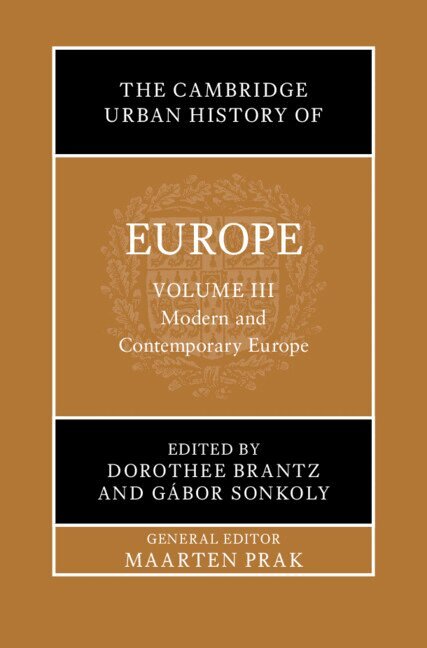
The Cambridge Urban History of Europe: Volume 3, Modern and Contemporary Europe
Inbunden, Engelska, 2025
1 961 kr
Skickas inom 7-10 vardagar
Volume III uncovers the radical transformations of European cities from 1850 until the twenty-first century. The volume explores how modern developments in urban environments, socio-cultural dynamics, the relation between work and leisure, and governance have transformed urban life. It highlights these complex processes across different regions, showcasing the latest scholarship and current challenges in the field. The first half provides an overview on the urban development of European regions in the West, North, Centre, East-South-East, and South, and the interconnectedness of European urbanism with the Americas and Africa. The second half explores major themes in European urban history, from the conceptualisation of cities, their built fabric and environment, and the continuities, rhythms, and changes in their social, political, economic, and cultural histories. Using transborder, transregional, and transdisciplinary approaches to discern traits that characterise modern and contemporary European urbanism, the volume invites readers to reconsider major paradigms of European urban history.
592 kr
Skickas inom 3-6 vardagar
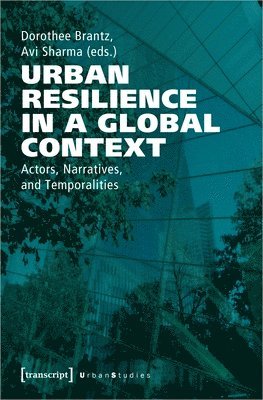
Urban Resilience is seen by many as a tool to mitigate harm in times of extreme social, political, financial, and environmental stress. Despite its widespread usage, however, resilience is used in different ways by policy makers, activists, academics, and practitioners. Some see it as a key to unlocking a more stable and secure urban future in times of extreme global insecurity; for others, it is a neoliberal technology that marginalizes the voices of already marginal peoples. This volume moves beyond praise and critique by focusing on the actors, narratives and temporalities that define urban resilience in a global context. By exploring the past, present, and future of urban resilience, this volume unlocks the potential of this concept to build more sustainable, inclusive, and secure cities in the 21st century.