Douglas Gomery - Böcker
Visar alla böcker från författaren Douglas Gomery. Handla med fri frakt och snabb leverans.
13 produkter
13 produkter
276 kr
Skickas inom 10-15 vardagar
Talks about a 1941 Warner Bros gangster film that launched Humphrey Bogart to stardom. Critics praise ""High Sierra"" not for its classic Hollywood style, but for its influences on later artists, and the way it reflected changes in American society of 1941.
1 319 kr
Tillfälligt slut
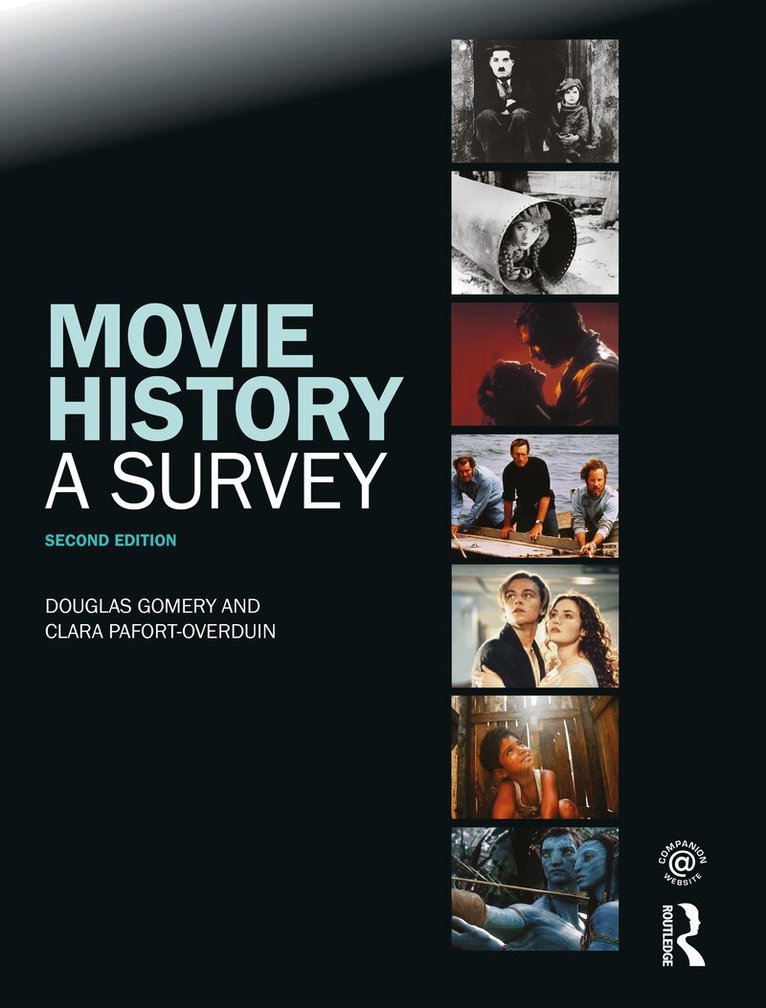
Covering everything from Edison to Avatar, Gomery and Pafort-Overduin have written the clearest, best organized, and most user-friendly film history textbook on the market. It masterfully distills the major trends and movements of film history, so that the subject can be taught in one semester. And each chapter includes a compelling case study that highlights an important moment in movie history and, at the same time, subtly introduces a methodological approach. This book is a pleasure to read and to teach. Peter Decherney, University of Pennsylvania, USA In addition to providing a comprehensive overview of the development of film around the world, the book gives us examples of how to do film history, including organizing the details and discussing their implications.Hugh McCarney, Western Connecticut State University, USADouglas Gomery and Clara Pafort-Overduin have created an outstanding textbook with an impressive breadth of content, covering over 100 years in the evolution of cinema. Movie History: A Survey is an engaging book that will reward readers with a contemporary perspective of the history of motion pictures and provide a solid foundation for the study of film. Matthew Hanson, Eastern Michigan University, USAHow can we understand the history of film?Historical facts don’t answer the basic questions of film history. History, as this fascinating book shows, is more than the simple accumulation of film titles, facts and figures. This is a survey of over 100 years of cinema history, from its beginnings in 1895, to its current state in the twenty-first century. An accessible, introductory text, Movie History: A Survey looks at not only the major films, filmmakers, and cinema institutions throughout the years, but also extends to the production, distribution, exhibition, technology and reception of films. The textbook is divided chronologically into four sections, using the timeline of technological changes:Section One looks at the era of silent movies from 1895 to 1927; Section Two starts with the coming of sound and covers 1928 until 1950; Section Three runs from 1951 to 1975 and deals with the coming and development of television; and Section Four focuses on the coming of home video and the transition to digital, from 1975 to 2010. Key pedagogical features include:timelines in each section help students to situate the films within a broader historical context case study boxes with close-up analysis of specific film histories and a particular emphasis on film receptionlavishly illustrated with over 450 color images to put faces to names, and to connect pictures to film titlesmargin notes add background information and clarityglossary for clear understanding of the key terms describedreferences and further reading at the end of each chapter to enhance further study.A supporting website is available at www.routledge.com/textbooks/moviehistory, with lots of extra materials, useful for the classroom or independent study, including:additional case studies – new, in-depth and unique to the websiteinternational case studies – for the Netherlands in Dutch and Englishtimeline - A movie history timeline charting key dates in the history of cinema from 1890 to the present dayrevision flash cards – ideal for getting to grips with key terms in film studiesrelated resources – on the website you will find every link from the book for ease of use, plus access to additional online materialstudents are also invited to submit their own movie history case studies - see website for detailsWritten by two highly respected film scholars and experienced teachers, Movie History is the ideal textbook for students studying film history.
734 kr
How can we understand the history of film? Historical facts don’t answer the basic questions of film history. History, as this fascinating book shows, is more than the simple accumulation of film titles, facts and figures. This is a survey of over 100 years of cinema history, from its beginnings in 1895, to its current state in the 21st century. An accessible, introductory text, Movie History: A Survey looks at not only the major films, filmmakers, and cinema institutions throughout the years, but also extends to the production, distribution, exhibition, technology and reception of films. The textbook is divided chronologically into four sections, using the timeline of technological changes Written by two highly respected film scholars and experienced teachers, Movie History is the ideal textbook for students studying film history.
2 790 kr
Skickas inom 5-8 vardagar
The coming of sound to film was an event whose importance can hardly be overestimated; sound transformed not only the Hollywood film industry but all of world cinema as well. As economic and film historian Douglas Gomery explains, the business of film became not only bigger but much more complex. As sound spread its power, the talkies became an agent of economic and social change through the globe, extending America's reach in ways that had never before been imaginable.This is an essential work for anyone interested in early film, film history and economics, and the history of the American media.
597 kr
Skickas inom 10-15 vardagar
The coming of sound to film was an event whose importance can hardly be overestimated; sound transformed not only the Hollywood film industry but all of world cinema as well. As economic and film historian Douglas Gomery explains, the business of film became not only bigger but much more complex. As sound spread its power, the talkies became an agent of economic and social change through the globe, extending America's reach in ways that had never before been imaginable.This is an essential work for anyone interested in early film, film history and economics, and the history of the American media.
2 088 kr
Skickas inom 10-15 vardagar
This thorough update to Benjamin Compaine's original 1979 benchmark and 1982 revisit of media ownership tackles the question of media ownership, providing a detailed examination of the current state of the media industry. Retaining the wealth of data of the earlier volumes, Compaine and his co-author Douglas Gomery chronicle the myriad changes in the media industry and the factors contributing to these changes. They also examine how the media industry is being reshaped by technological forces in all segments, as well as by social and cultural reactions to these forces. This third edition of Who Owns the Media? has been reorganized and expanded, reflecting the evolution of the media industry structure. Looking beyond conventional wisdom and expectations, Compaine and Gomery examine the characteristics of competition in the media marketplace, present alternative positions on the meanings of concentration, and ultimately urge readers to draw their own conclusions on an issue that is neither black nor white. Appropriate for media practitioners and sociologists, historians, and economists studying mass media, this volume can also be used for advanced courses in broadcasting, journalism, mass communication, telecommunications, and media education. As a new benchmark for the current state of media ownership, it is invaluable to anyone needing to understand who controls the media and thus the information and entertainment messages received by media consumers.
1 064 kr
Skickas inom 10-15 vardagar
This thorough update to Benjamin Compaine's original 1979 benchmark and 1982 revisit of media ownership tackles the question of media ownership, providing a detailed examination of the current state of the media industry. Retaining the wealth of data of the earlier volumes, Compaine and his co-author Douglas Gomery chronicle the myriad changes in the media industry and the factors contributing to these changes. They also examine how the media industry is being reshaped by technological forces in all segments, as well as by social and cultural reactions to these forces. This third edition of Who Owns the Media? has been reorganized and expanded, reflecting the evolution of the media industry structure. Looking beyond conventional wisdom and expectations, Compaine and Gomery examine the characteristics of competition in the media marketplace, present alternative positions on the meanings of concentration, and ultimately urge readers to draw their own conclusions on an issue that is neither black nor white. Appropriate for media practitioners and sociologists, historians, and economists studying mass media, this volume can also be used for advanced courses in broadcasting, journalism, mass communication, telecommunications, and media education. As a new benchmark for the current state of media ownership, it is invaluable to anyone needing to understand who controls the media and thus the information and entertainment messages received by media consumers.
1 239 kr
Skickas inom 7-10 vardagar
This powerful history of broadcasting in the United States goes beyond traditional accounts to explore the field's important social, political, and cultural ramifications.It examines how broadcasting has been organized as a business throughout much of the 20th century, and focuses on the aesthetics of programming over the years Surveys four key broadcasting periods from 1921 to 1996, drawing on a range of new sources to examine recent changes in the field, including coverage of the recent impact of cable TV and home videoIncludes new data from collections at the Library of Congress and the Library of American BroadcastingIdeal for anyone seeking a readable history of the field, offering the most current coverage available
518 kr
Skickas inom 7-10 vardagar
This powerful history of broadcasting in the United States goes beyond traditional accounts to explore the field's important social, political, and cultural ramifications.It examines how broadcasting has been organized as a business throughout much of the 20th century, and focuses on the aesthetics of programming over the years Surveys four key broadcasting periods from 1921 to 1996, drawing on a range of new sources to examine recent changes in the field, including coverage of the recent impact of cable TV and home videoIncludes new data from collections at the Library of Congress and the Library of American BroadcastingIdeal for anyone seeking a readable history of the field, offering the most current coverage available
210 kr
Skickas inom 5-8 vardagar
1 520 kr
Skickas inom 10-15 vardagar
Despite being one of the biggest industries in the United States, indeed the World, the internal workings of the 'dream factory' that is Hollywood is little understood outside the business. The Hollywood Studio System: A History is the first book to describe and analyse the complete development, classic operation, and reinvention of the global corporate entitles which produce and distribute most of the films we watch. Starting in 1920, Adolph Zukor, Head of Paramount Pictures, over the decade of the 1920s helped to fashion Hollywood into a vertically integrated system, a set of economic innovations which was firmly in place by 1930. For the next three decades, the movie industry in the United States and the rest of the world operated by according to these principles. Cultural, social and economic changes ensured the dernise of this system after the Second World War. A new way to run Hollywood was required. Beginning in 1962, Lew Wasserman of Universal Studios emerged as the key innovator in creating a second studio system. He realized that creating a global media conglomerate was more important than simply being vertically integrated. Gomery's history tells the story of a 'tale of two systems 'using primary materials from a score of archives across the United States as well as a close reading of both the business and trade press of the time. Together with a range of photographs never before published the book also features over 150 box features illuminating aspect of the business.
489 kr
Skickas inom 10-15 vardagar
Despite being one of the biggest industries in the United States, indeed the World, the internal workings of the 'dream factory' that is Hollywood is little understood outside the business. The Hollywood Studio System: A History is the first book to describe and analyse the complete development, classic operation, and reinvention of the global corporate entitles which produce and distribute most of the films we watch. Starting in 1920, Adolph Zukor, Head of Paramount Pictures, over the decade of the 1920s helped to fashion Hollywood into a vertically integrated system, a set of economic innovations which was firmly in place by 1930. For the next three decades, the movie industry in the United States and the rest of the world operated by according to these principles. Cultural, social and economic changes ensured the dernise of this system after the Second World War. A new way to run Hollywood was required. Beginning in 1962, Lew Wasserman of Universal Studios emerged as the key innovator in creating a second studio system. He realized that creating a global media conglomerate was more important than simply being vertically integrated. Gomery's history tells the story of a 'tale of two systems 'using primary materials from a score of archives across the United States as well as a close reading of both the business and trade press of the time. Together with a range of photographs never before published the book also features over 150 box features illuminating aspect of the business.
495 kr
Skickas inom 7-10 vardagar
While not a production study, this book attempts to provide an insight into the inner workings of the television industry. As such its central concern is with processes, not texts or techniques or histories. 'Television Industries' focuses on the essential elements of the industry: the policy and regulatory frameworks, the swiftly changing world of video production technology, all of which provides the backdrops against which broadcasters shape and sell their products. The book also examines the working practices of scheduling, budgeting, selling advertising air-time and so forth. Where issues may be familiar to readers (for example debates around public service broadcasting) the entries aim to be explanatory and fresh. Of course, it's not possible to cover every aspect of what is a complex and ever changing industry. Nonetheless, the aim is to provide a starting point for students and new scholars as they start to research into the nature of the broadcasting industry. Hence, this volume is extensively cross-referenced, to guide the reader as they tease out for themselves some of the complexity of this industry. There are several other elements that are distinctive about this volume. Perhaps the most striking of these is its blend of contributions from the UK and US. This book will raise as many questions as it provides answers. It aims to make a contribution to the on-going debates in the now well-established world of television studies with fresh perspectives on some familiar, and some not so familiar, landscapes. Fully illustrated, 'Television Industries' is intended as an authoritative and accessible guide to the inner workings of the television industry.