Douglas W. Bristol Jr. - Böcker
Visar alla böcker från författaren Douglas W. Bristol Jr.. Handla med fri frakt och snabb leverans.
3 produkter
3 produkter
543 kr
Tillfälligt slut
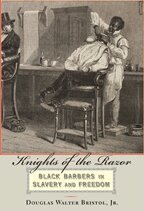
Black barbers, reflected a freed slave who barbered in antebellum St. Louis, may have been "the only men in their community who enjoyed, at all times, the privilege of free speech." The reason, of course, lay in their temporary-but absolute-power over a client. With a flick of the wrist, 19th-century black barbers could have slit the throats of the white men they shaved. In Knights of the Razor, Douglas Walter Bristol, Jr., explores this extraordinary relationship in the largely untold story of African American barbers, North and South, from the American Revolution to the First World War. Besides establishing the modern-day barbershop, these barbers used their skilled trade to navigate the many pitfalls that racism created for ambitious black men. They dominated an upscale market that catered to prosperous white men. At the same time, their respect for labor itself preserved their ties to the black community. Successful barbers assumed leadership roles in their localities, helping to form a black middle class despite pervasive racial segregation.They advocated economic independence from whites and founded insurance companies that became some of the largest black-owned corporations. Bristol engagingly narrates this story of skilled blacks and elite whites. More broadly, he offers a thoughtful study of the nuances of race relations and the ingenuity of black enterprise. Knights of the Razor tackles a rich and tangled subject.
358 kr
Skickas inom 5-8 vardagar
Black barbers, reflected a freed slave who barbered in antebellum St. Louis, may have been the only men in their community who enjoyed, at all times, the privilege of free speech. The reason lay in their temporary-but absolute-power over a client. With a flick of the wrist, they could have slit the throats of the white men they shaved. In Knights of the Razor, Douglas Walter Bristol, Jr., explores this extraordinary relationship in the largely untold story of African American barbers, North and South, from the American Revolution to the First World War. In addition to establishing the modern-day barbershop, these barbers used their skilled trade to navigate the many pitfalls that racism created for ambitious black men. Successful barbers assumed leadership roles in their localities, helping to form a black middle class despite pervasive racial segregation. They advocated economic independence from whites and founded insurance companies that became some of the largest black-owned corporations.
Integrating the US Military
Race, Gender, and Sexual Orientation since World War II
Häftad, Engelska, 2017
363 kr
Skickas inom 7-10 vardagar
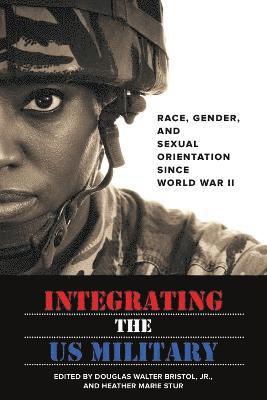
One of the great ironies of American history since World War II is that the military-typically a conservative institution-has often been at the forefront of civil rights. In the 1940s, the 1970s, and the early 2000s, military integration and promotion policies were in many ways more progressive than similar efforts in the civilian world. Today, the military is one of the best ways for people from marginalized groups to succeed based solely on job performance. Integrating the US Military traces the experiences of African Americans, Japanese Americans, women, and gay men and lesbians in the armed forces since World War II. By examining controversies from racial integration to the dismantling of "Don't Ask, Don't Tell" to the recent repeal of the ban on women in combat, these essays show that the military is an important institution in which social change is confirmed and, occasionally, accelerated. Remarkably, the challenges launched against the racial, gender, and sexual status quo in the postwar years have also broadly transformed overarching ideas about power, citizenship, and America's role in the world.The first comparative study of legally marginalized groups within the armed services, Integrating the US Military is a unique look at the history of military integration in theory and in practice. The book underscores the complicated struggle that accompanied integration and sheds new light on a broad range of comparable issues that affect civilian society, including affirmative action, marriage laws, and sexual harassment.